Unknown's avatar

Slowing Down with Art: Living in Italy and Falling for Fra Angelico

Living in Italy has changed the way I experience life and art. So much of Italy is old; our city has Roman, Medieval, and Renaissance structures and art. Being surrounded by centuries of art has slowed me down, encouraged deeper looking, and turned curiosity into long-term study rather than fleeting admiration.

Where My Love of Art Began

I have enjoyed art since I was young. On my first trip to Europe at age 17, I encountered works I didn’t fully understand, yet found beautiful and intriguing. Years later, as a senior in college, my schedule finally allowed room for a few “fun” classes alongside my math and science requirements, and I took an Art History course. That class transformed how I looked at art—not just as something beautiful, but as a reflection of its time and place, shaped by the artist’s life and influencing generations to come.

Learning One Artist at a Time

Over the years, museum visits in both the U.S. and Europe deepened that appreciation. After moving to Italy about six years ago, my relationship with Italian art grew more personal and immersive. In 2022, I read The Agony and the Ecstasy by Irving Stone, a historical novel about Michelangelo that inspired a quest to see his surviving sculptures in Italy (and a few beyond). Once I completed that journey, I began studying artists one at a time—Giotto, Botticelli, Leonardo, Raphael, Lippi, and others—allowing each to unfold slowly.
This Year’s Focus: Fra Angelico

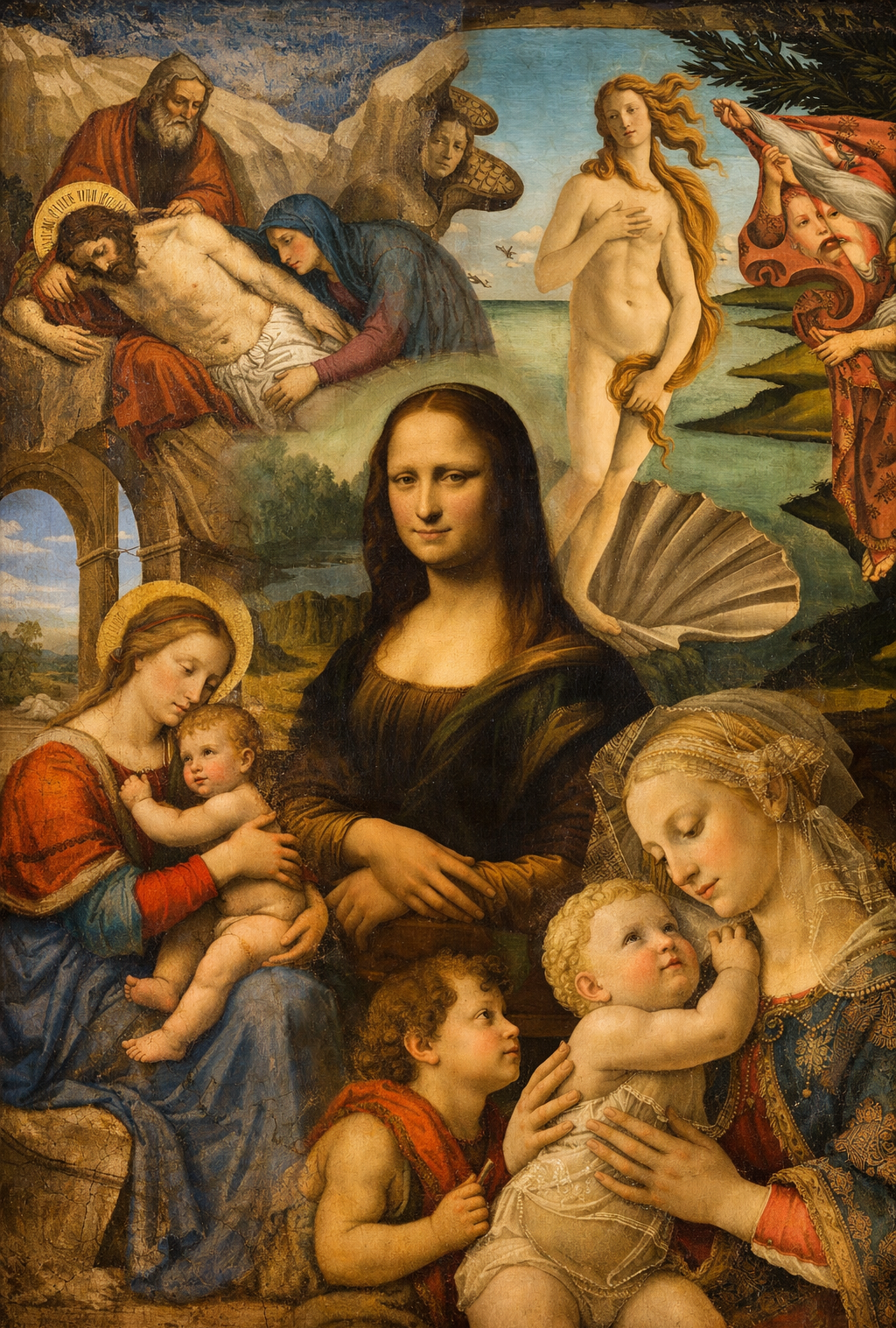
This year, my focus (okay… perhaps my obsession) was Fra Angelico. His name may not be as recognizable, but he has completely captured my heart. Living at the transition between the late Middle Ages and the early Renaissance, his work evolved from flatter, more symbolic forms to the more naturalistic, three-dimensional style of the Renaissance. A Dominican monk, Fra Angelico was less interested in spectacle than in creating art for quiet devotion and prayer.

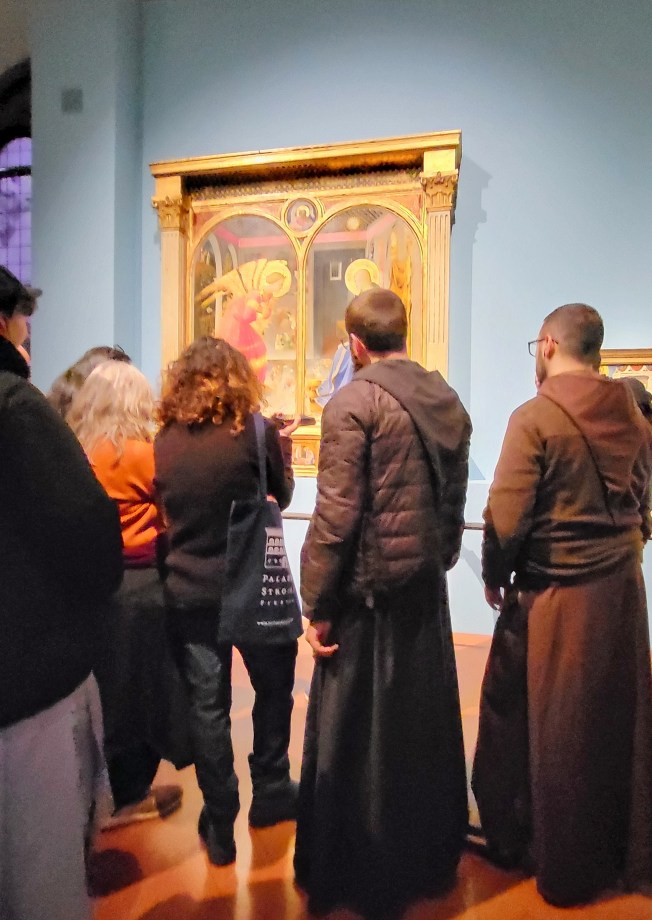
In the fall of 2025, a major Fra Angelico exhibition opened in Florence, split between the Museo di San Marco and Palazzo Strozzi. Jim and I went with a friend from Florence, committing to a full day immersed in his work, with a leisurely lunch in between to reset and reflect. Even so, by early afternoon we were overwhelmed—the exhibition included more than 140 works. My goal was simply to take it all in at an overview level, knowing I would return later to spend more time with selected pieces.

A side note… do you know that there is an illness that occurs in Florence from seeing too much beautiful art. Those inflicted experience rapid heartbeat, dizziness, fainting, confusion, and even hallucinations from overwhelming artistic beauty. It sounds dramatic, but it’s real… google “Stendhal Syndrome”. I’ve never experienced these severe symptoms, but I definitely reach a wall when viewing “too much art” that causes me to lower my gaze to the floor and head to the exit.

And so, we returned to Florence for a two-night stay. I spent one afternoon at Palazzo Strozzi and the next morning at the Museo di San Marco. I also really limited the pieces that I looked at. Jim opted out of my second Fra Angelico deep dive and wandered around the city on his own.
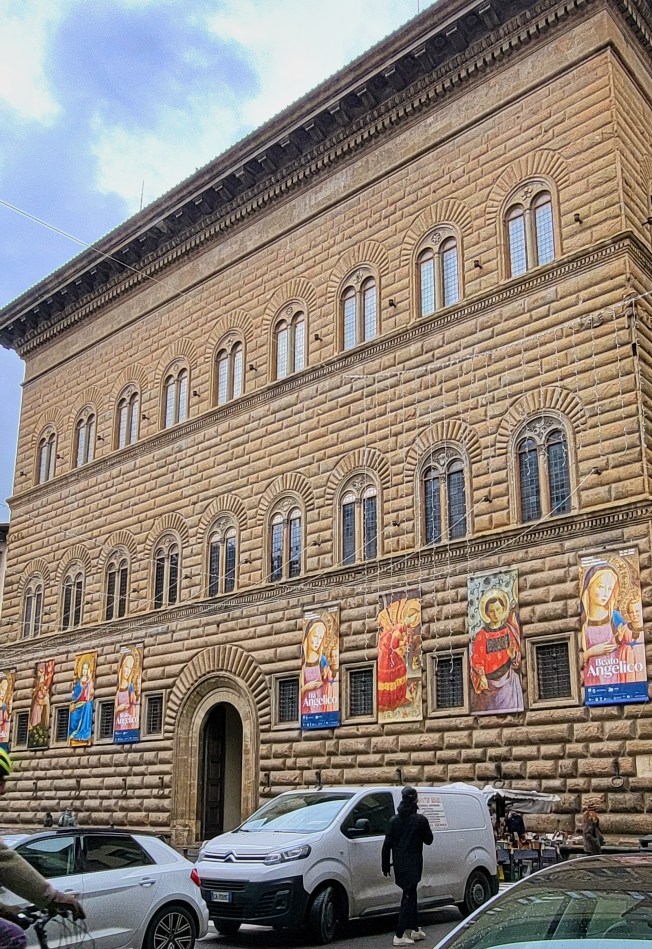
  • Palazzo Strozzi, with lots of banners for the special exhibit
  • Lots of people enjoying the exhibit, including these monks

My favorite part of the exhibition was at the Museo di San Marco which also houses many of his works permanently. The building was once a Dominican convent where Fra Angelico lived. Each monk had a small room, or “cell,” used for sleep, meditation, and prayer. What makes San Marco extraordinary is that Fra Angelico painted frescoes in each cell—not for public admiration, but for the private devotion of the monk who lived there. Most are simple, a few more complex, but all were created to support quiet meditation and prayer.

On that same floor, in the hallway, is Fra Angelico’s most famous fresco, The Annunciation, depicting the angel Gabriel telling Mary that she will bear the Son of God. There are many fascinating technical aspects to this work, but what moves me most is Mary’s gentle expression and the soft, calming colors that create a sense of peace and stillness. Fra Angelico does not paint to impress—he paints to slow the viewer down.

Fra Angelico also created large altarpieces and fulfilled commissions by the wealthy patrons of the day, demonstrating that his deeply contemplative style was equally at home in major public commissions.

Here are three versions of The Annunciation for different places and intended uses:
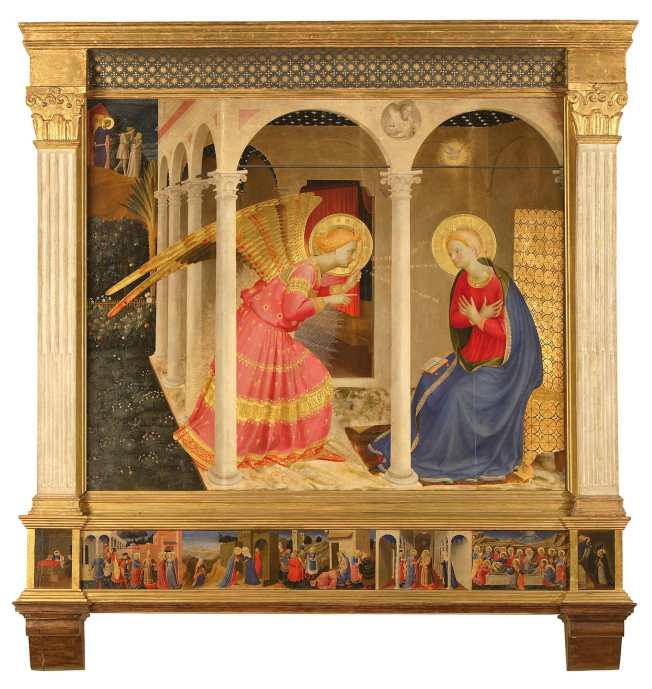
  • Annunciation of Cortona is an altarpiece intended for display in a church. Lots of gold, deep colors, decorations and complexity.
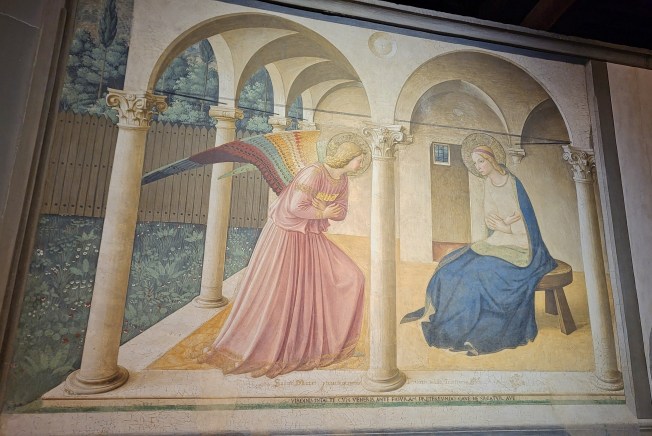
  • The Annunciation at San Marco is at the entrance to the residents' area of the convent, in the hallway. The monks would see this every day. Gentle colors, simpler composition. No gold.
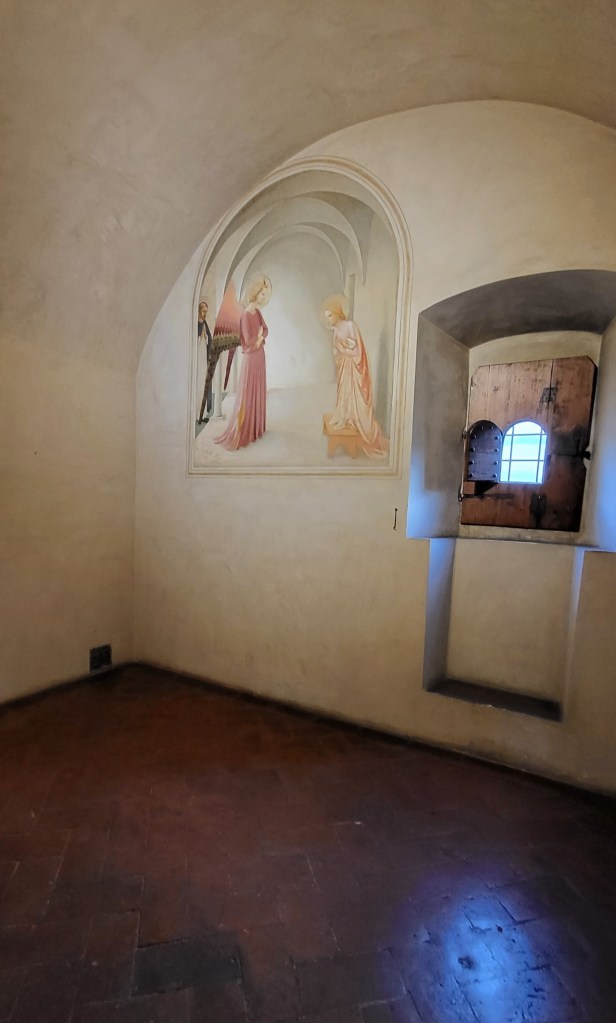
  • The Annunciation in one of the cells or rooms of the convent. The fresco is even simpler with just the essence of the story, intended for prayer and mediation.
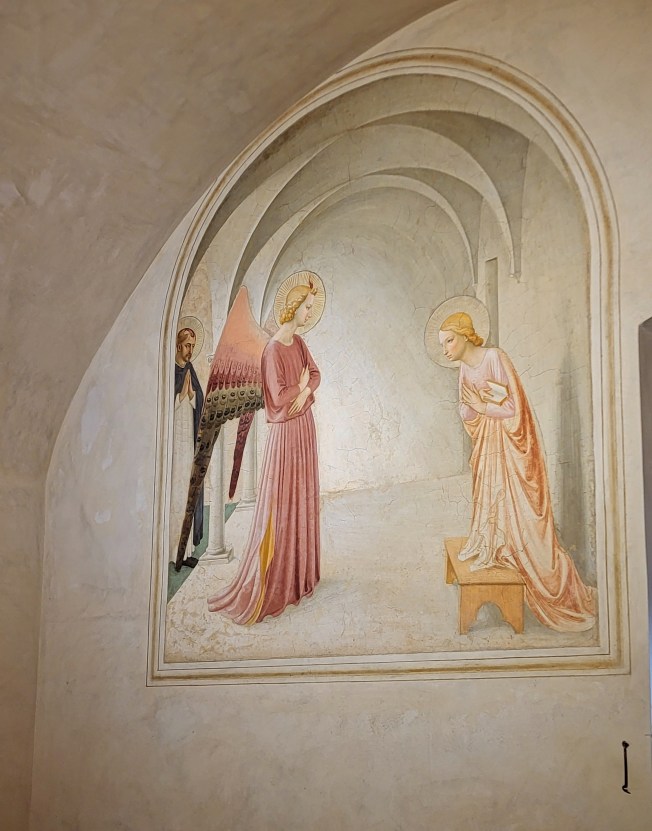
  • Closeup of the Annunciation in a cell. As founder of the Dominican Order, Saint Dominic appears as a model of prayerful contemplation for the friars living in the cells.

Although this exhibit ends on 25 January 2026, many of his works are permanently on display at the Museo di San Marco. If you visit Florence, I strongly recommend that you visit. It is a two-minute walk from the Galleria dell’Accademia which houses Michaelangelo’s David.

Who’s Next?

So, who will I study next? My current plan is Luca della Robbia and Donatello. And yes, Donatello will complete my study of the Teenage Mutant Ninja Turtles. 😊

Living in Italy makes this kind of slow, immersive exploration possible. Art here isn’t something you rush through —it becomes a companion over time. Studying one artist deeply, returning again and again, and letting understanding unfold gradually has been one of the great gifts of living here, and it’s a journey I’m grateful to continue.

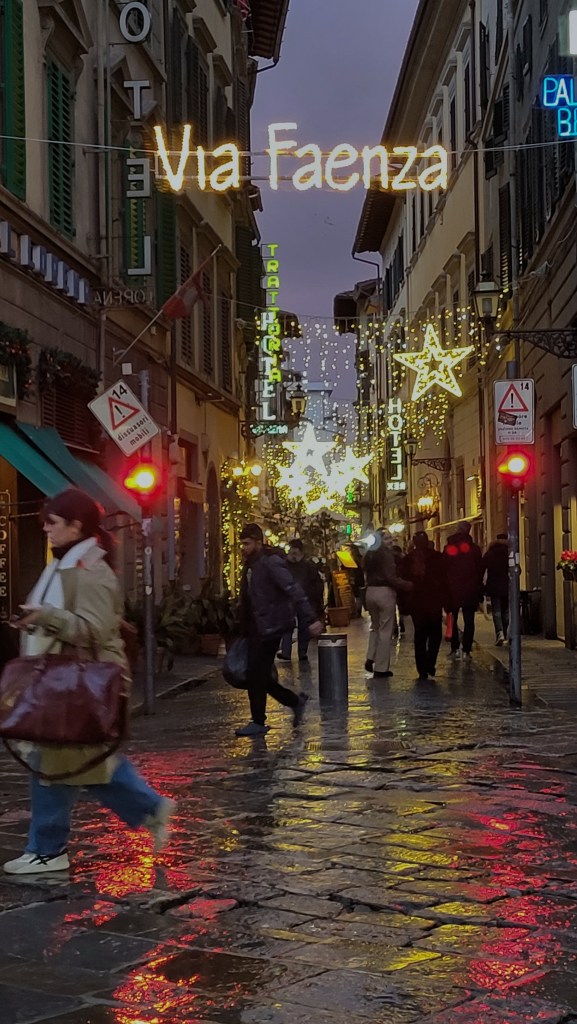
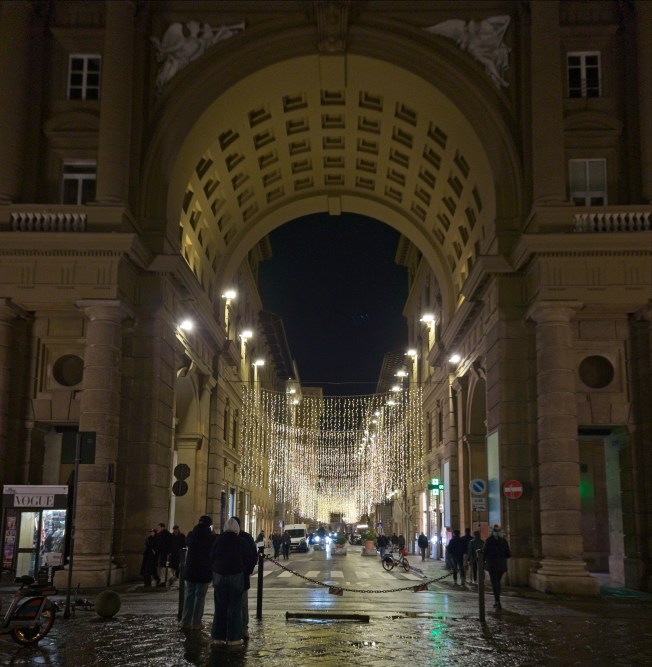
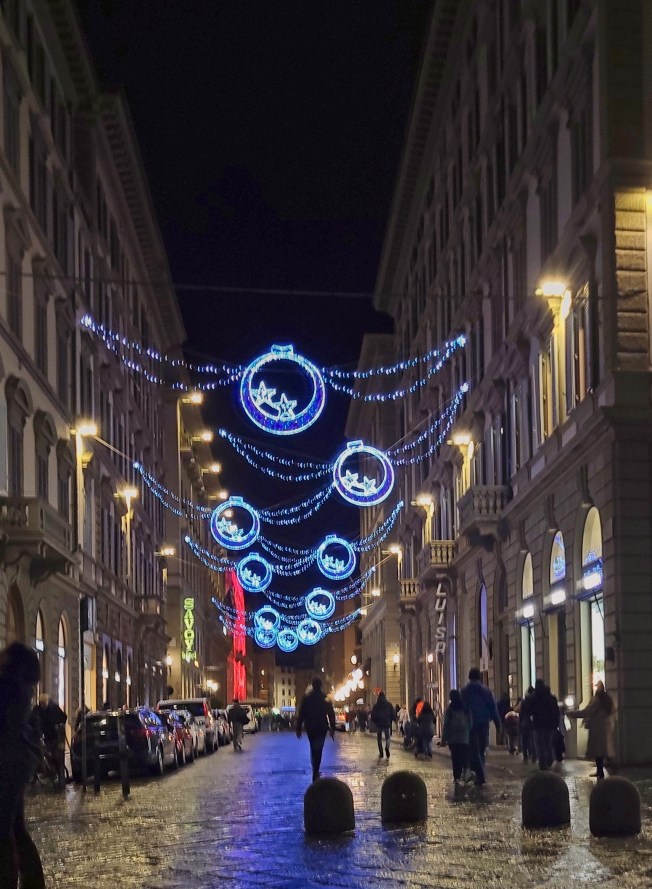
In closing, here are some of the Christmas lights we saw as a bonus on our weekend visit to Florence. Not all serious art, but also glitzy lights!
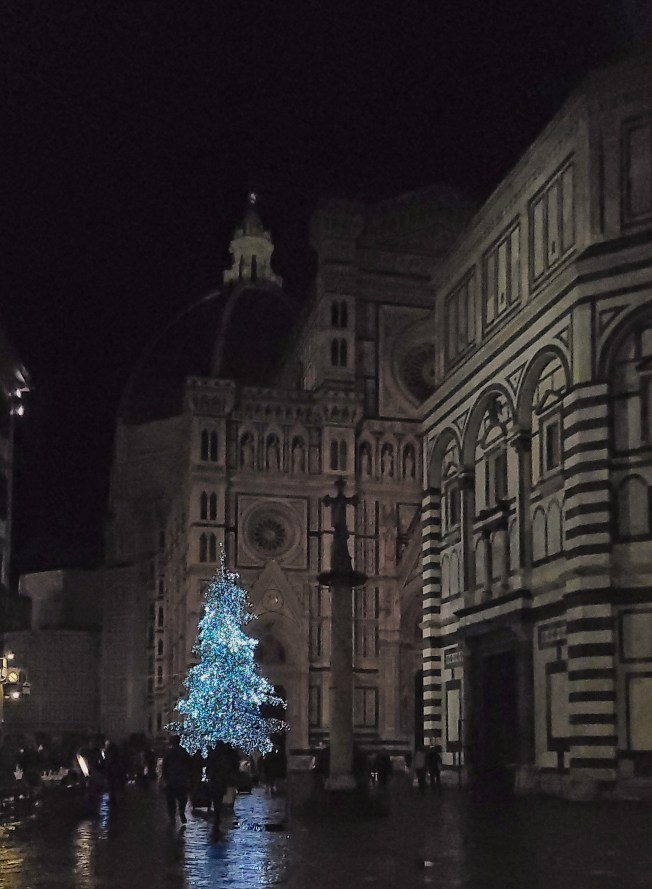
  • Christmas tree in front of the Duomo
  • Christmas lights near Piazza Repubblica, where we stayed.
Unknown's avatar

Mini-vacation to Florence

With the Covid pandemic coming under control, the Government has relaxed some of the restrictions. We wanted to visit Florence for several reasons, so we decided to head there for Saturday and Sunday (May 8 & 9, 2021).

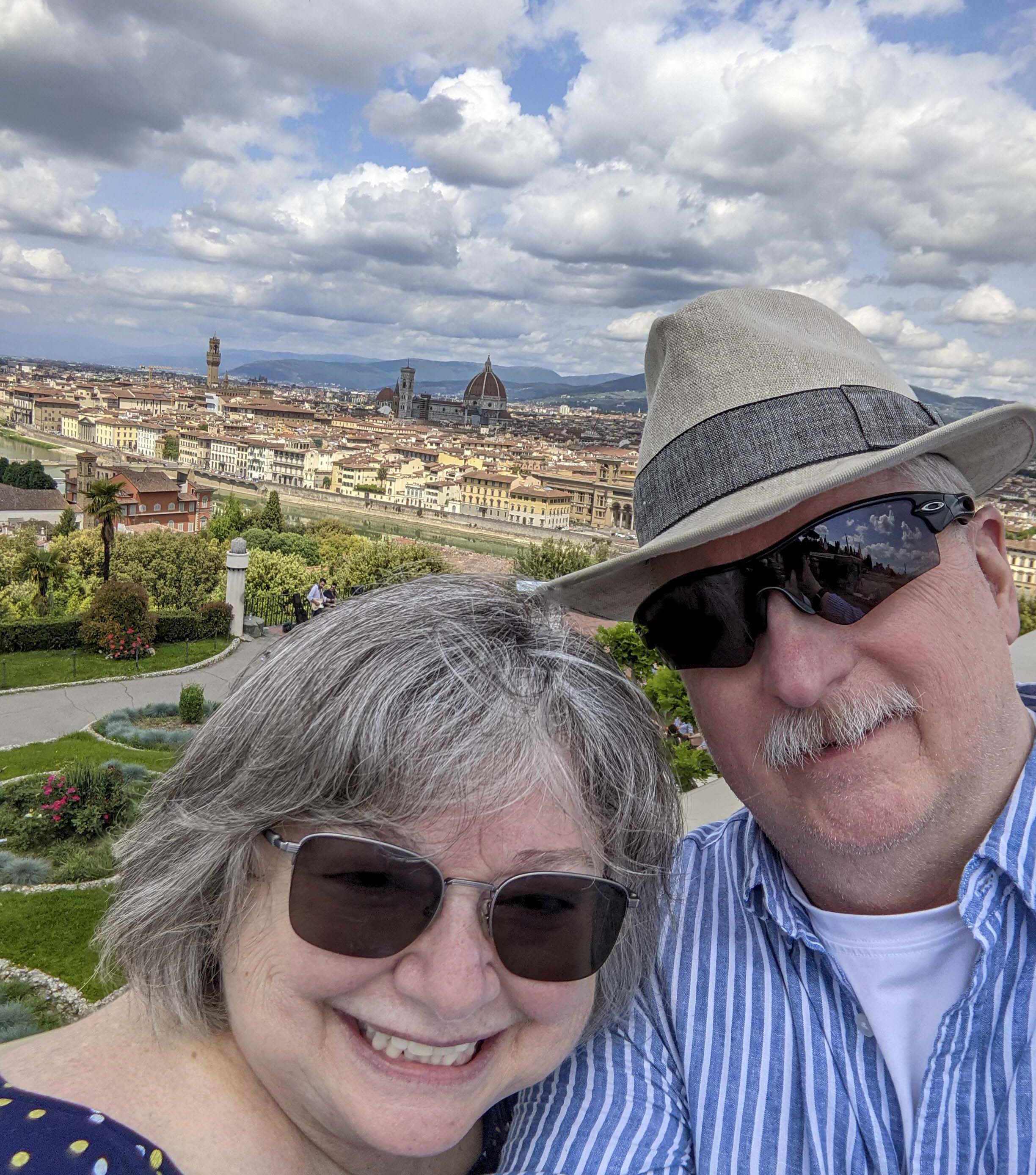
After our first trip to Italy, Mike M. asked me if I had been to Piazzale Michelangelo. It sounded so wonderful, but no… we hadn’t visited it. I vowed that I would visit it in the future and we have now done so many times now. On Saturday, it was our first stop of our mini-vacation. From this grand piazza, you can see all of the gorgeous city of Florence. And we even listened some live blues music while enjoying the view.

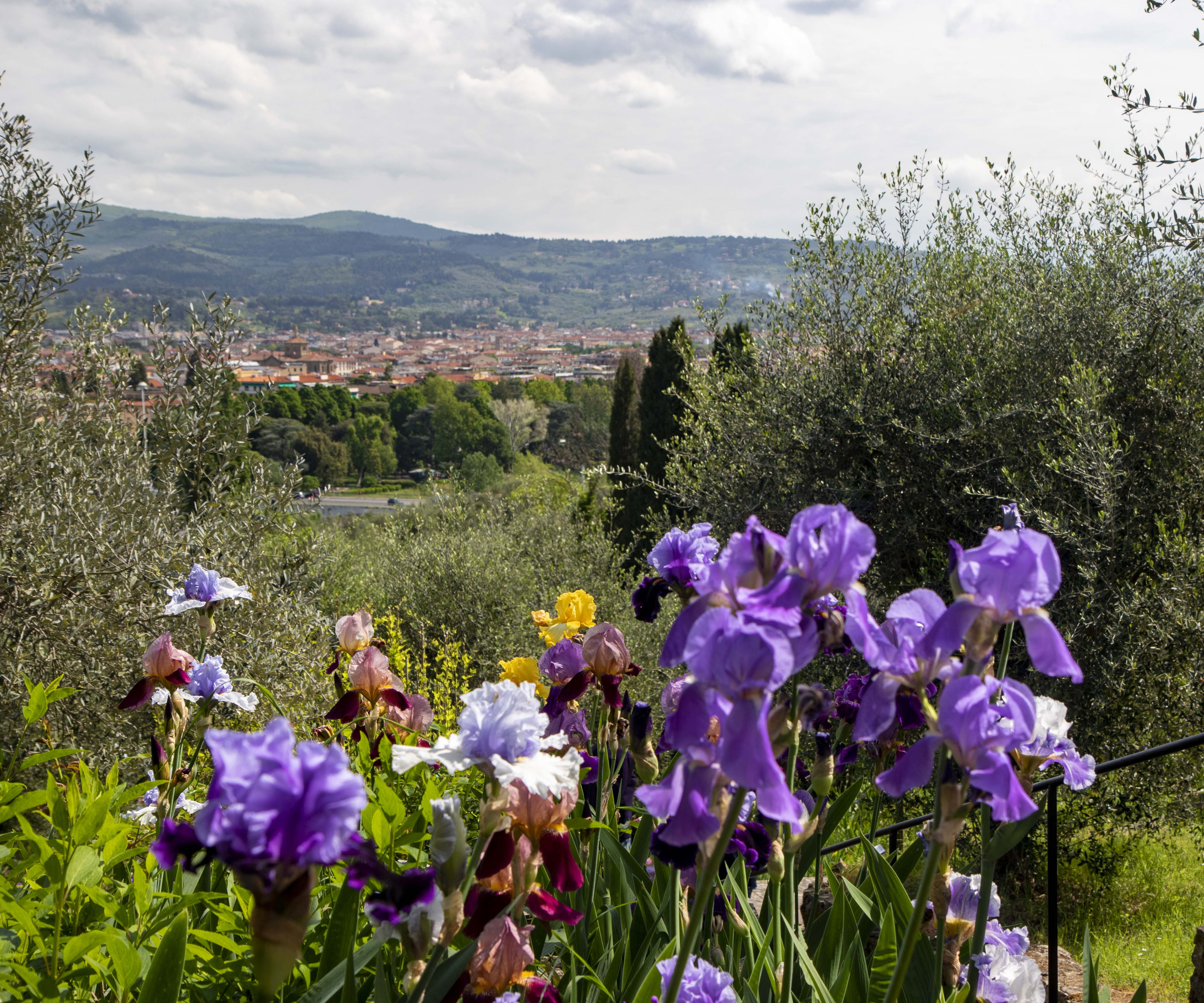
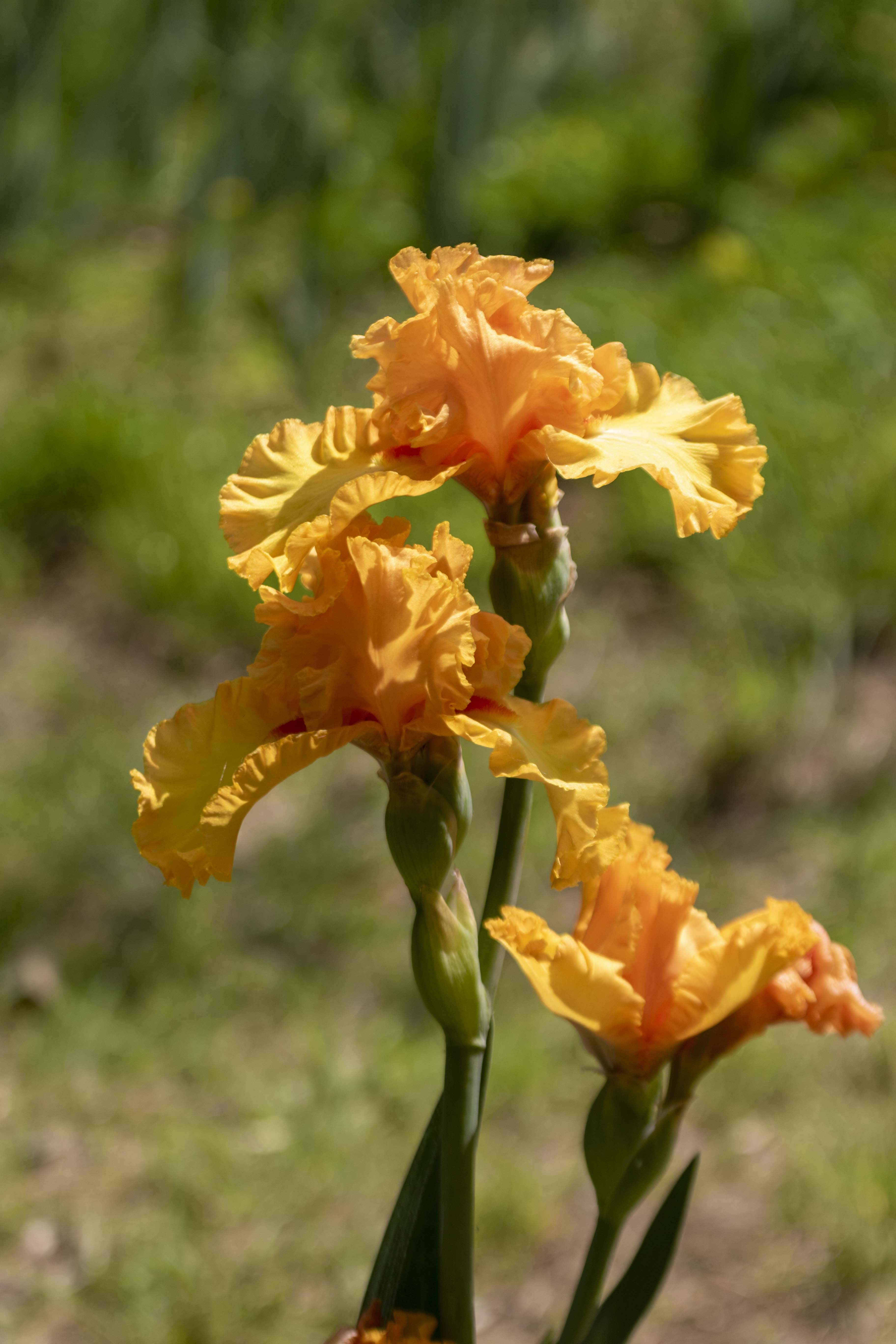
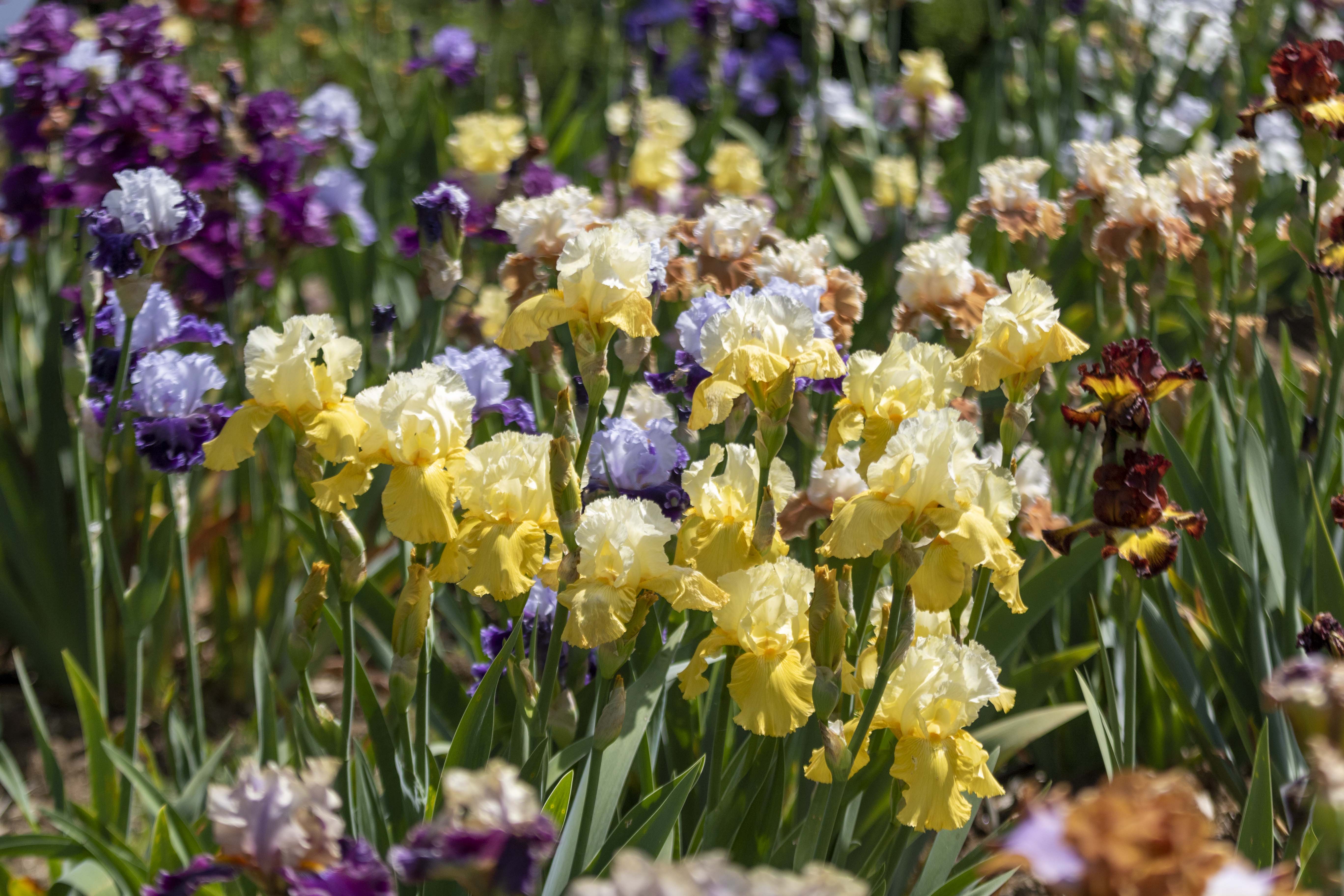
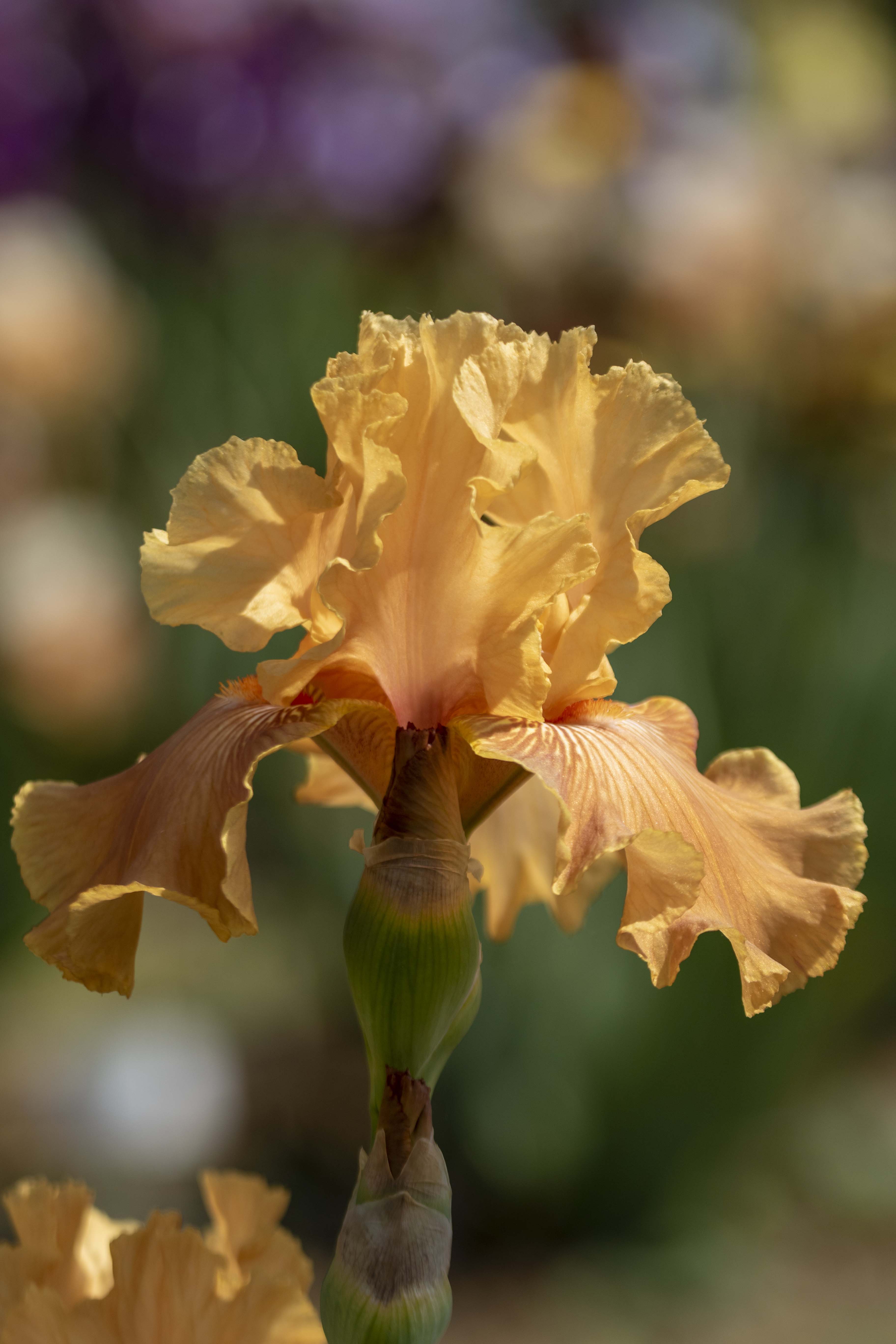
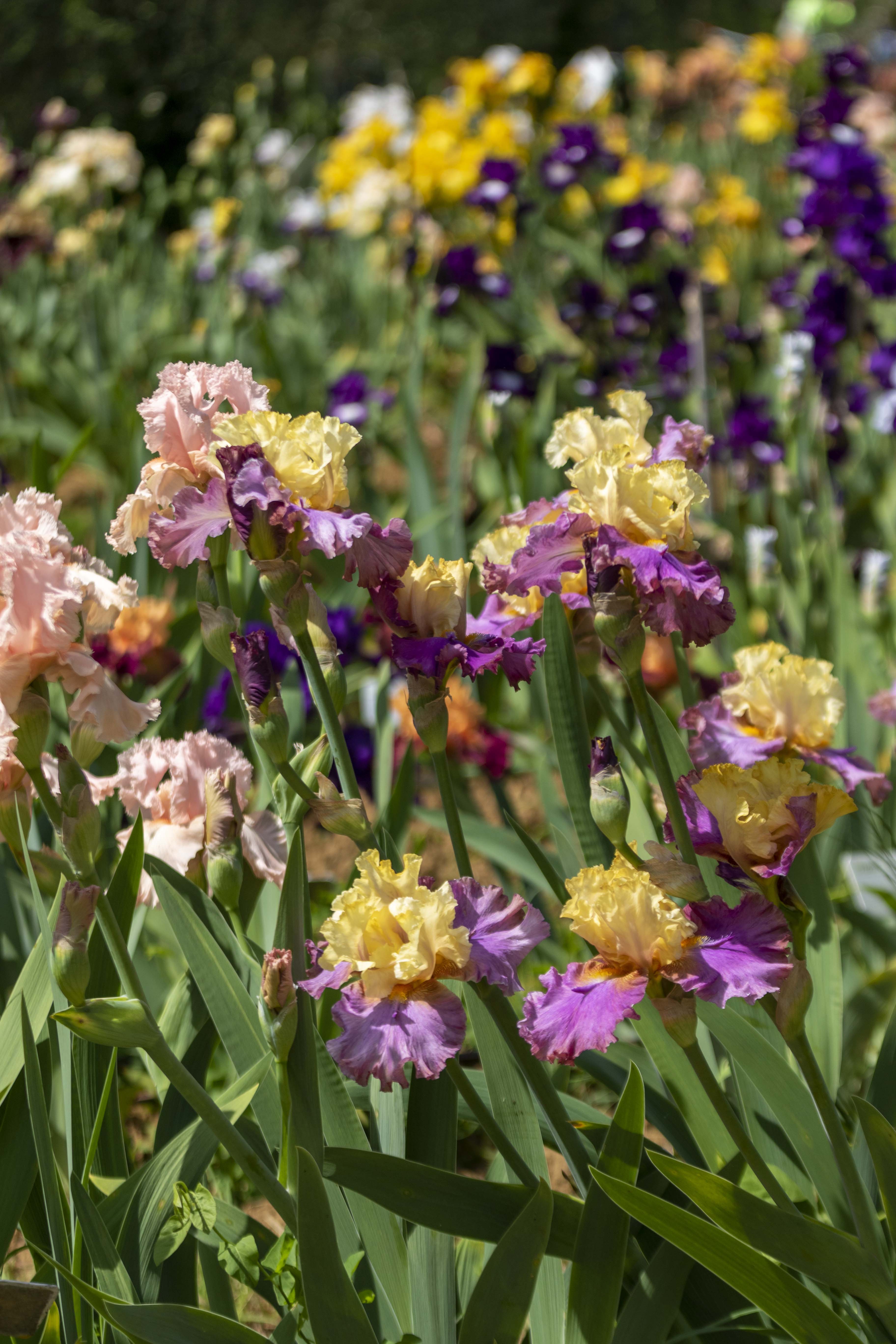
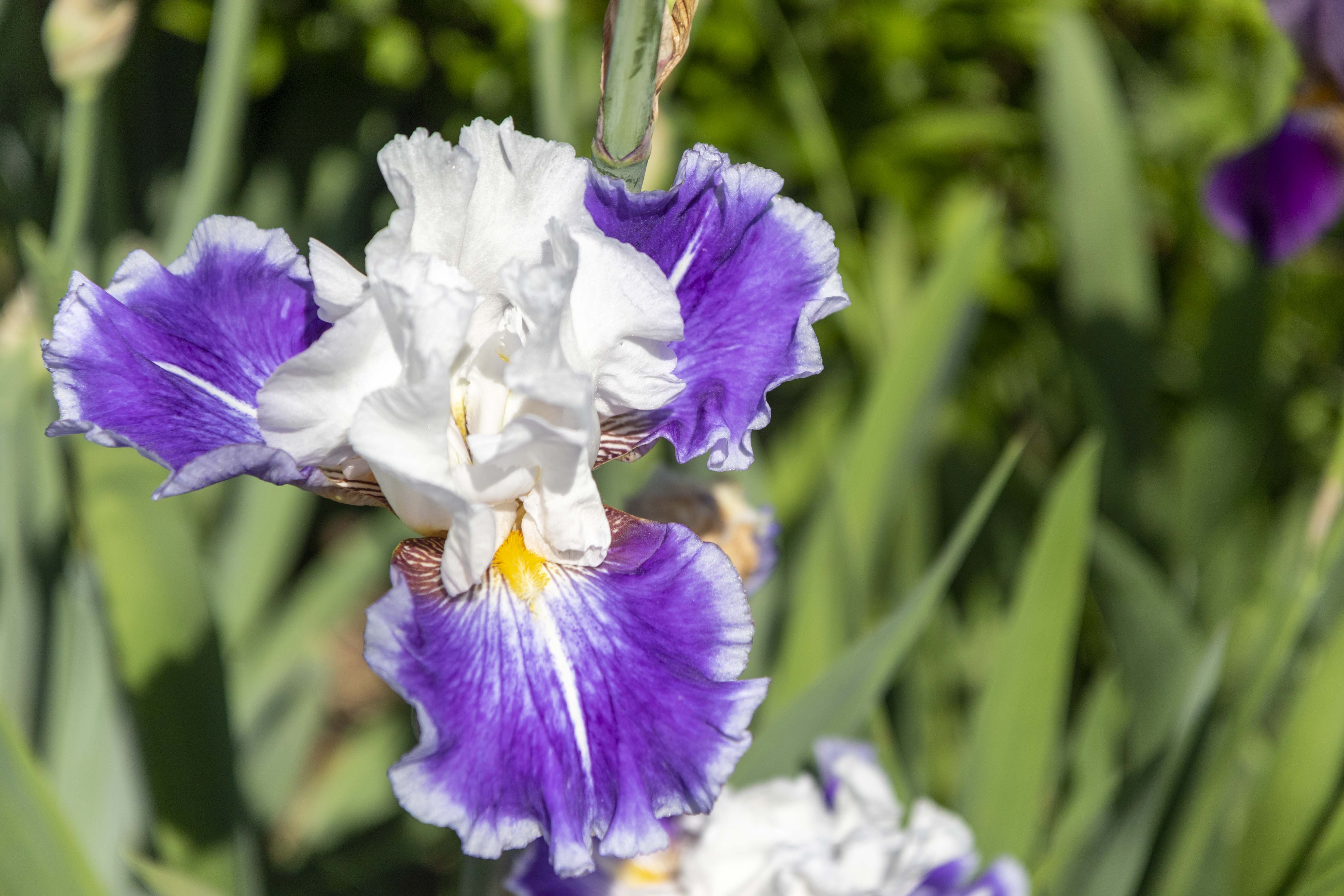
I had read that the Irises were in bloom and so we searched for this special garden and found it (along with a lot of other people). The Irises were spectacular!

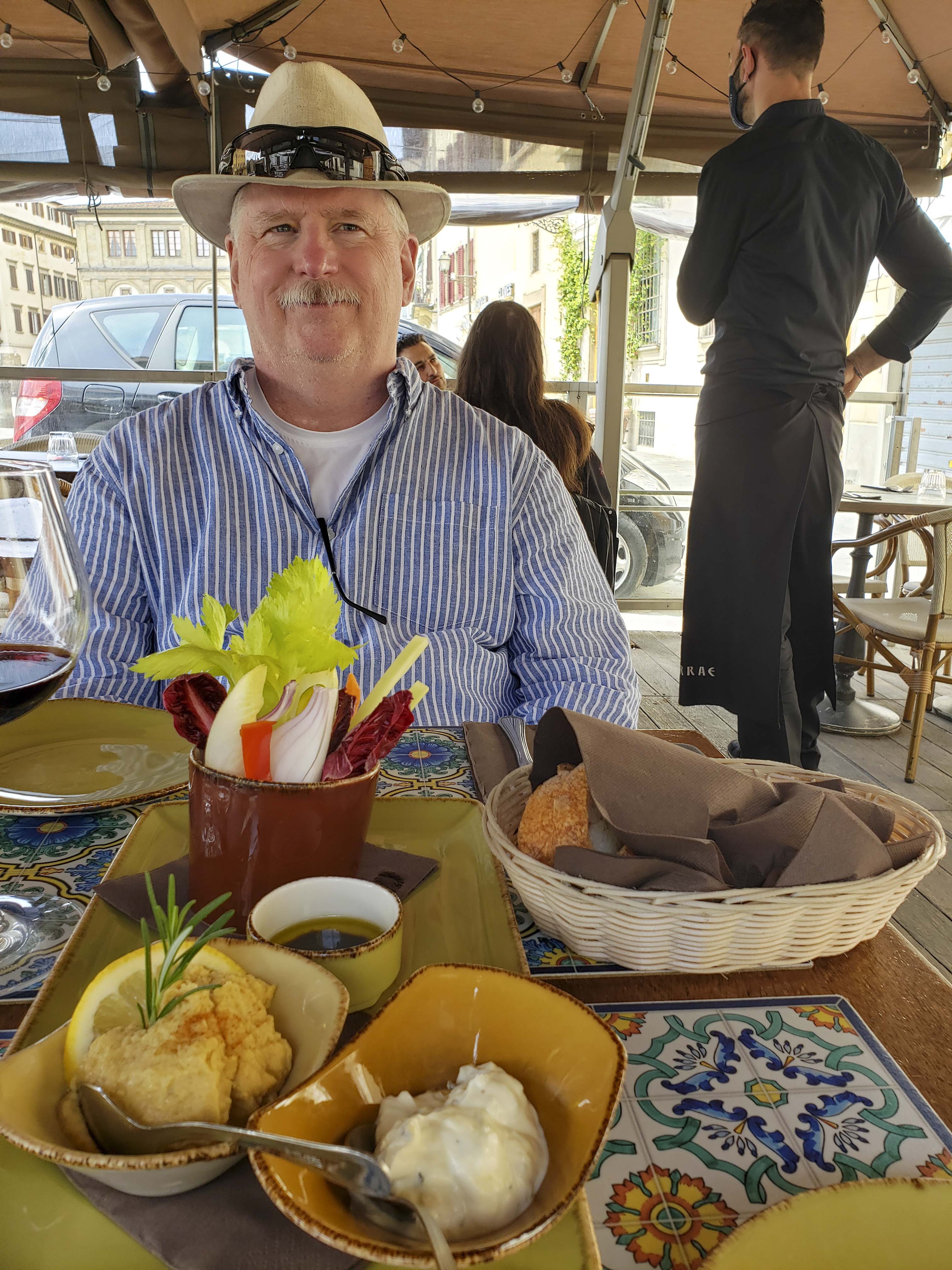
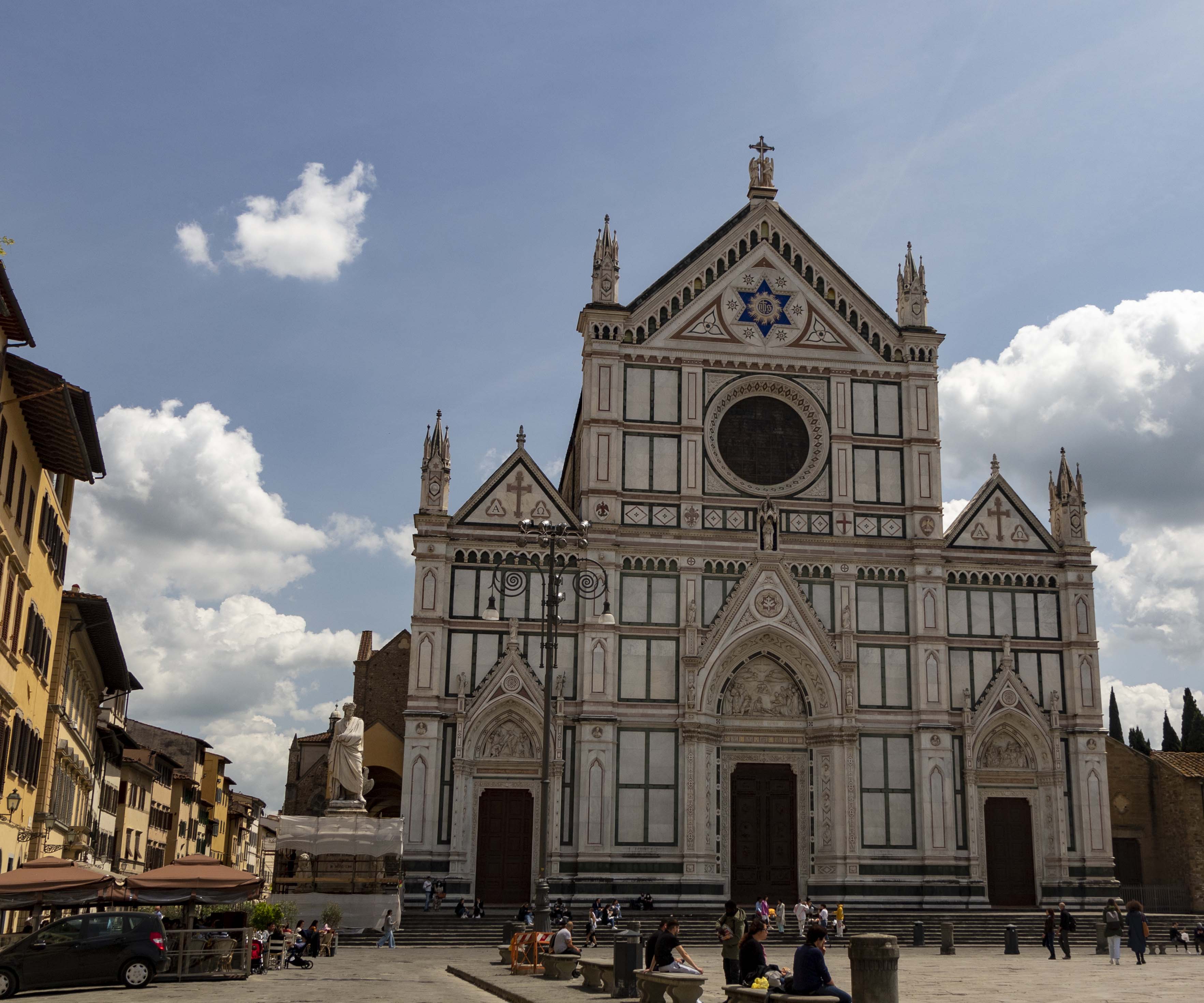
We enjoyed a nice lunch at the restaurant right next to Chiesa Santa Croce (with brown umbrellas in photo below). This is one of our favorite piazzas in Florence, so it was nice to return. We’ve been trying hummus whenever we see it on the menu and especially appreciated all of the fresh vegies as dippers. Although hummus isn’t considered a traditional Italian dish, chickpeas are used in many different dishes here. My favorite is cecina.

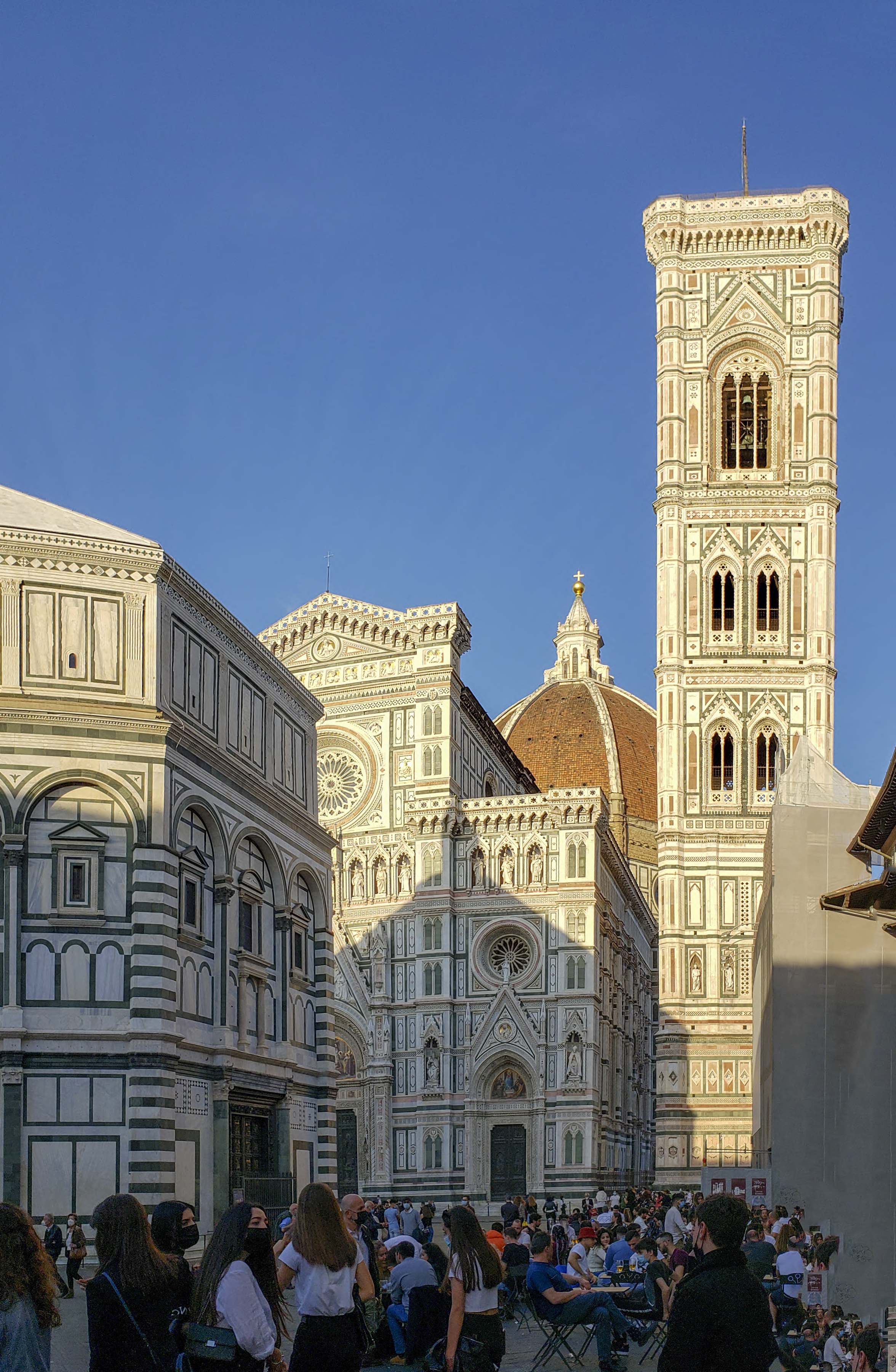
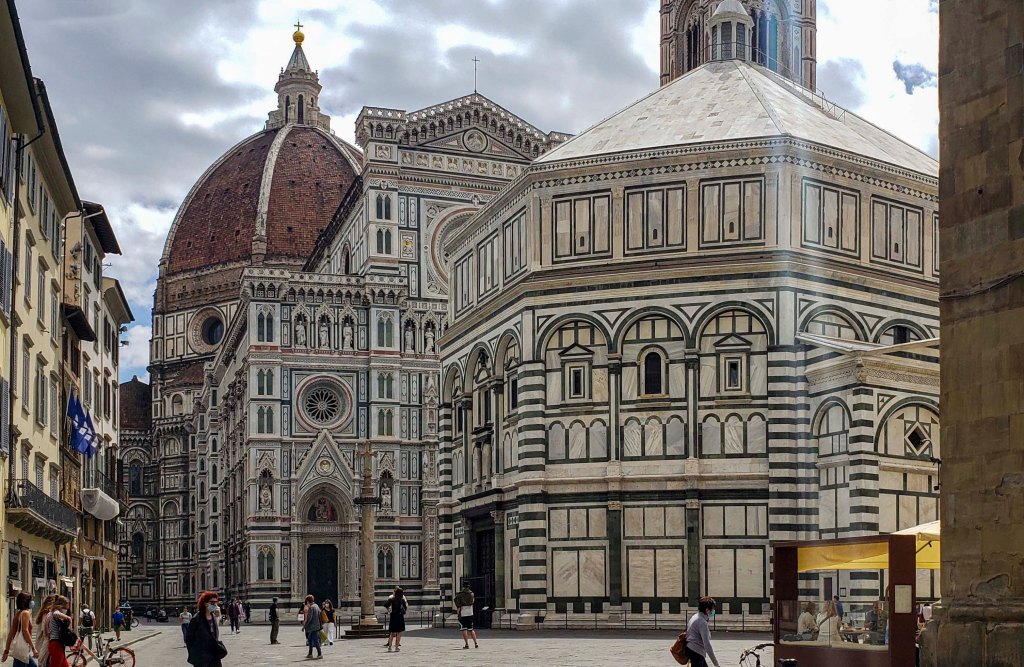
We walked around some of the main sights of Florence and were pleased to see that there were more people now on the streets and around these sights. Here’s a few pics of the unique and beautiful Florence duomo. Gotta love that dome – no one still knows for sure how it was built and why it is still standing!

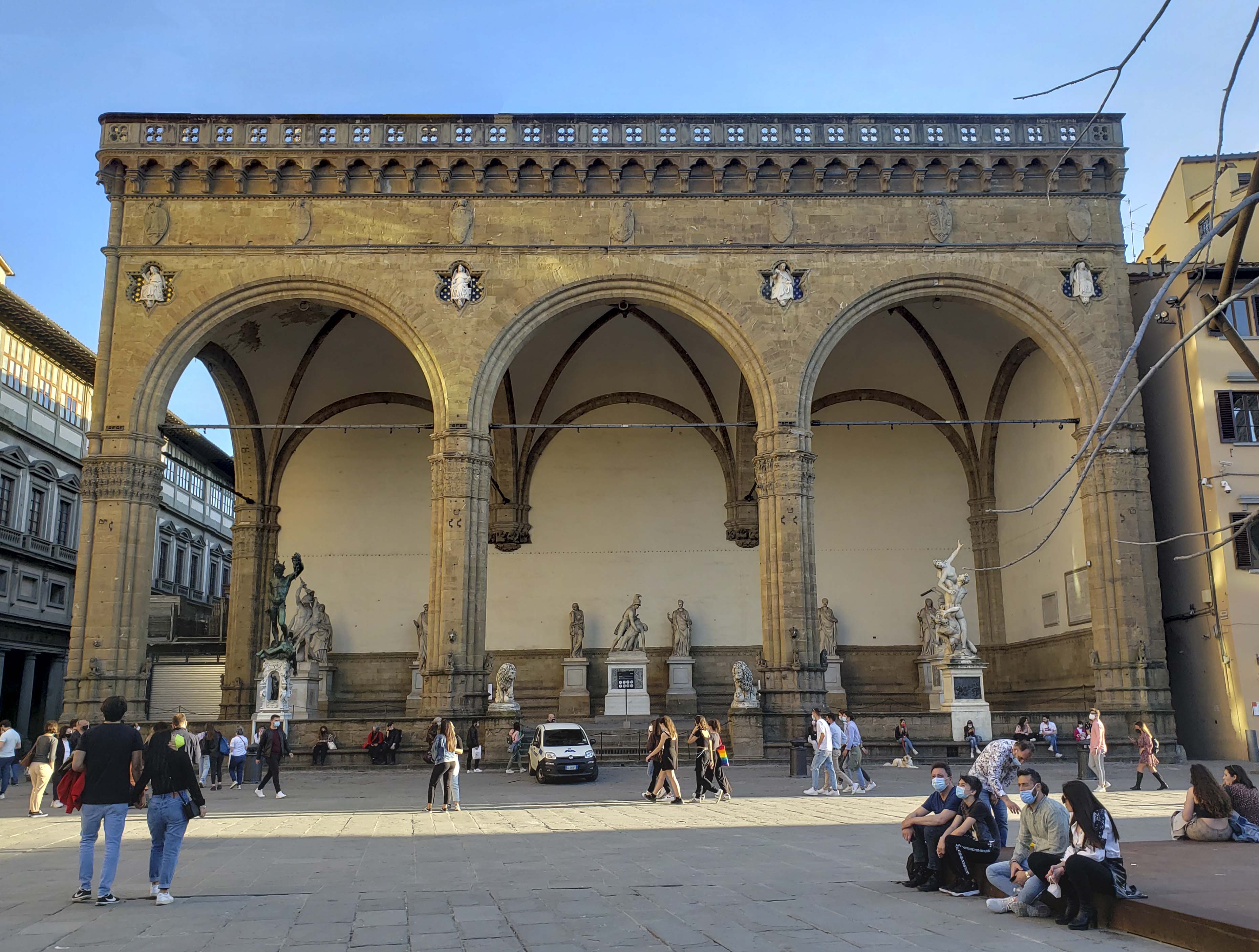
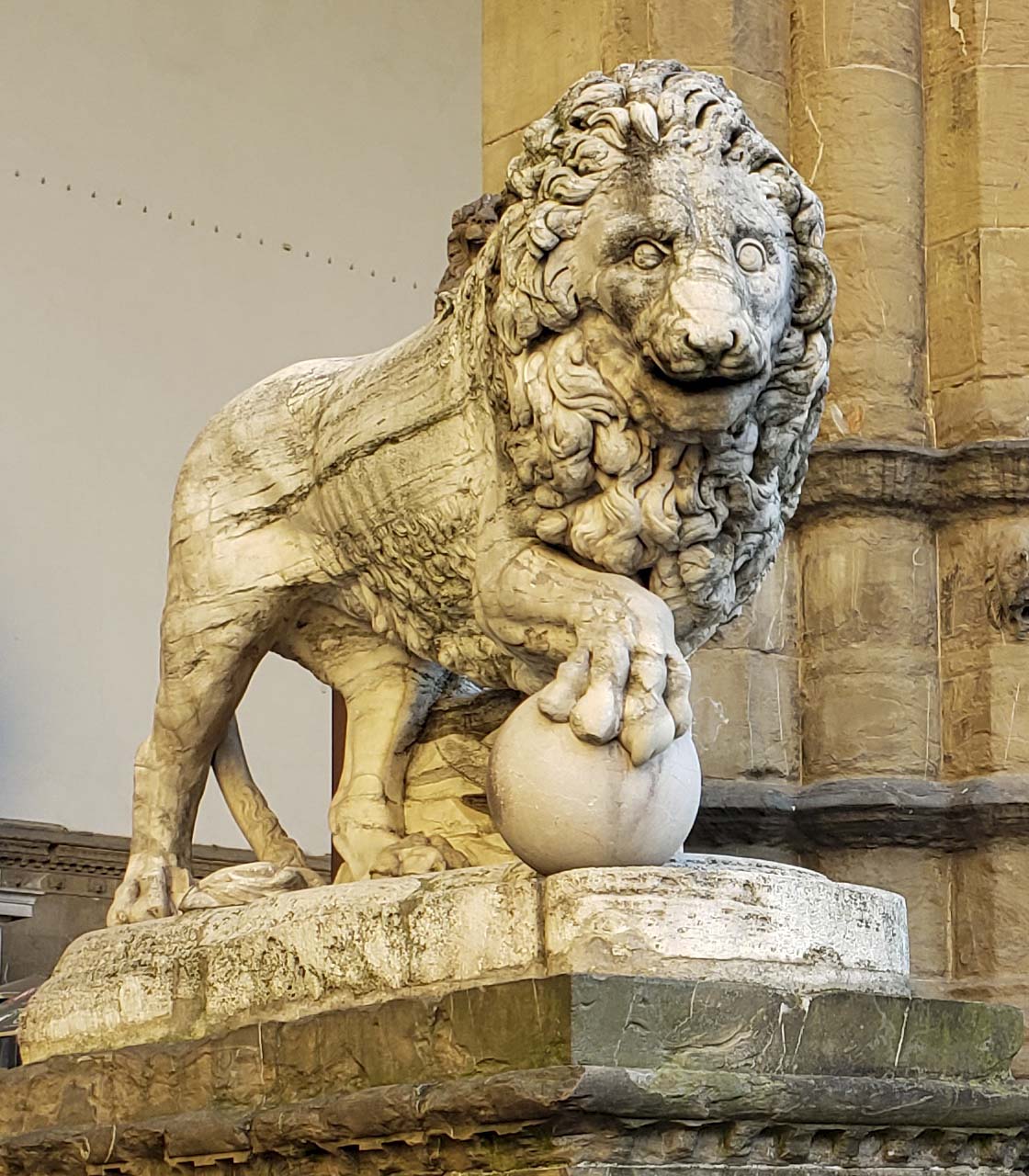
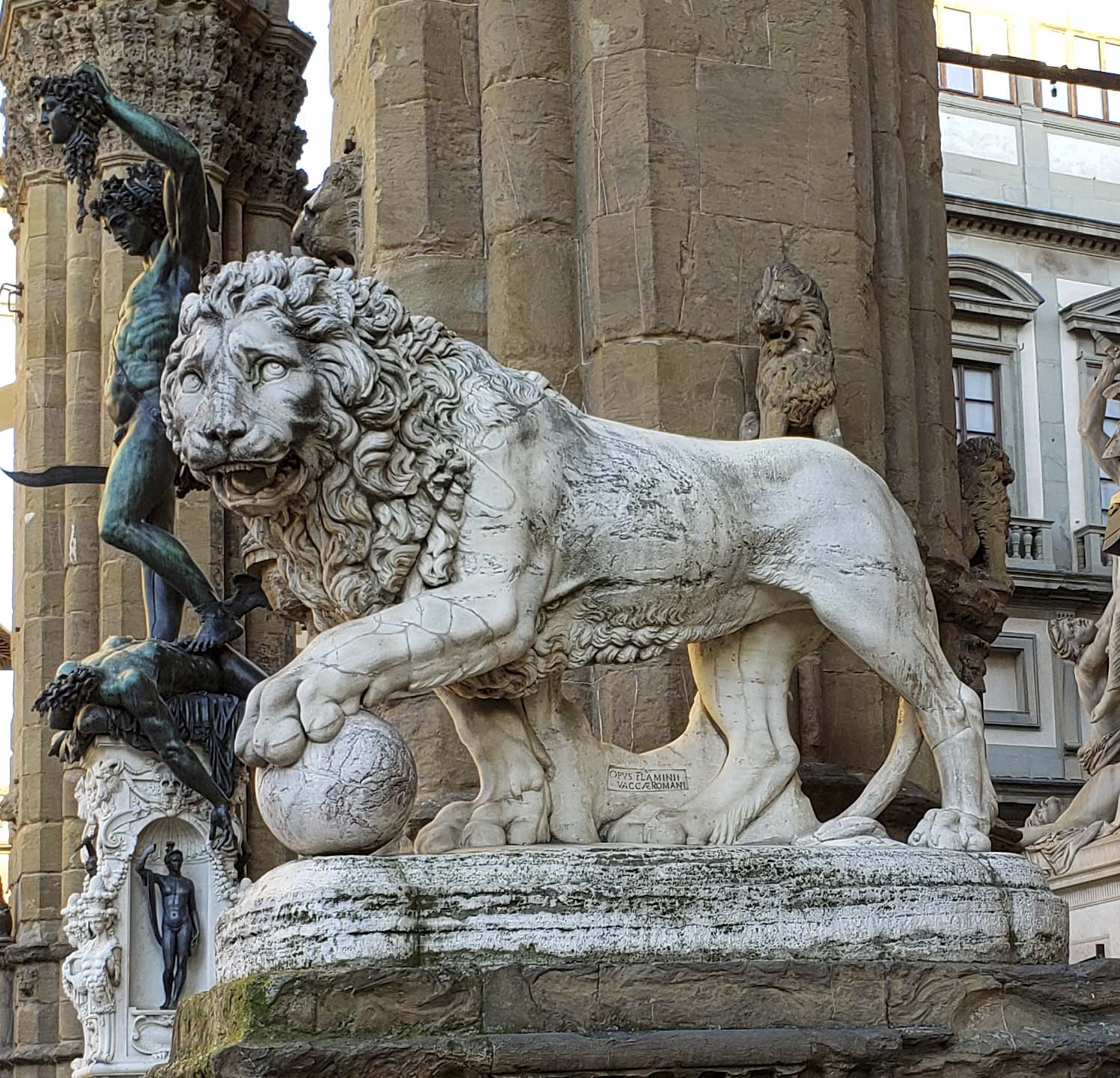
I wanted to spend some looking at and reading about the sculptures in the Loggia dei Lanzi so was a bit disappointed that people are still being kept from this open air exhibit. I suppose too many people could gather in the area… It was built between 1376 and 1382 and the various sculptures have been exhibited in the space since then. I like the two lions on the steps: the one on the right dates from Roman times, the other on the left was sculpted by Flaminio Vacca in 1598 and was originally placed in the Villa Medici in Rome before being moved to the Loggia in 1789. The history here is mind boggling!

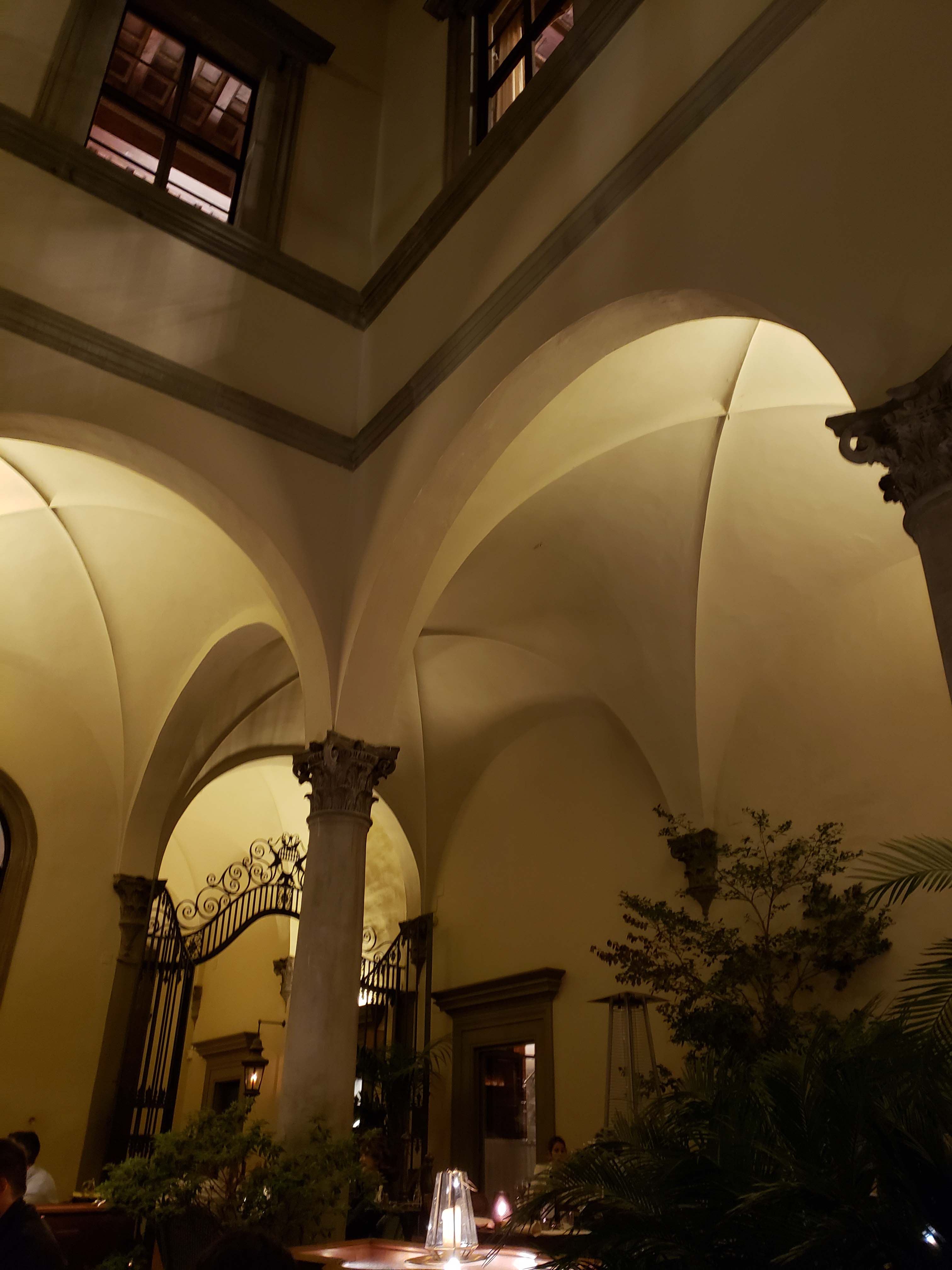
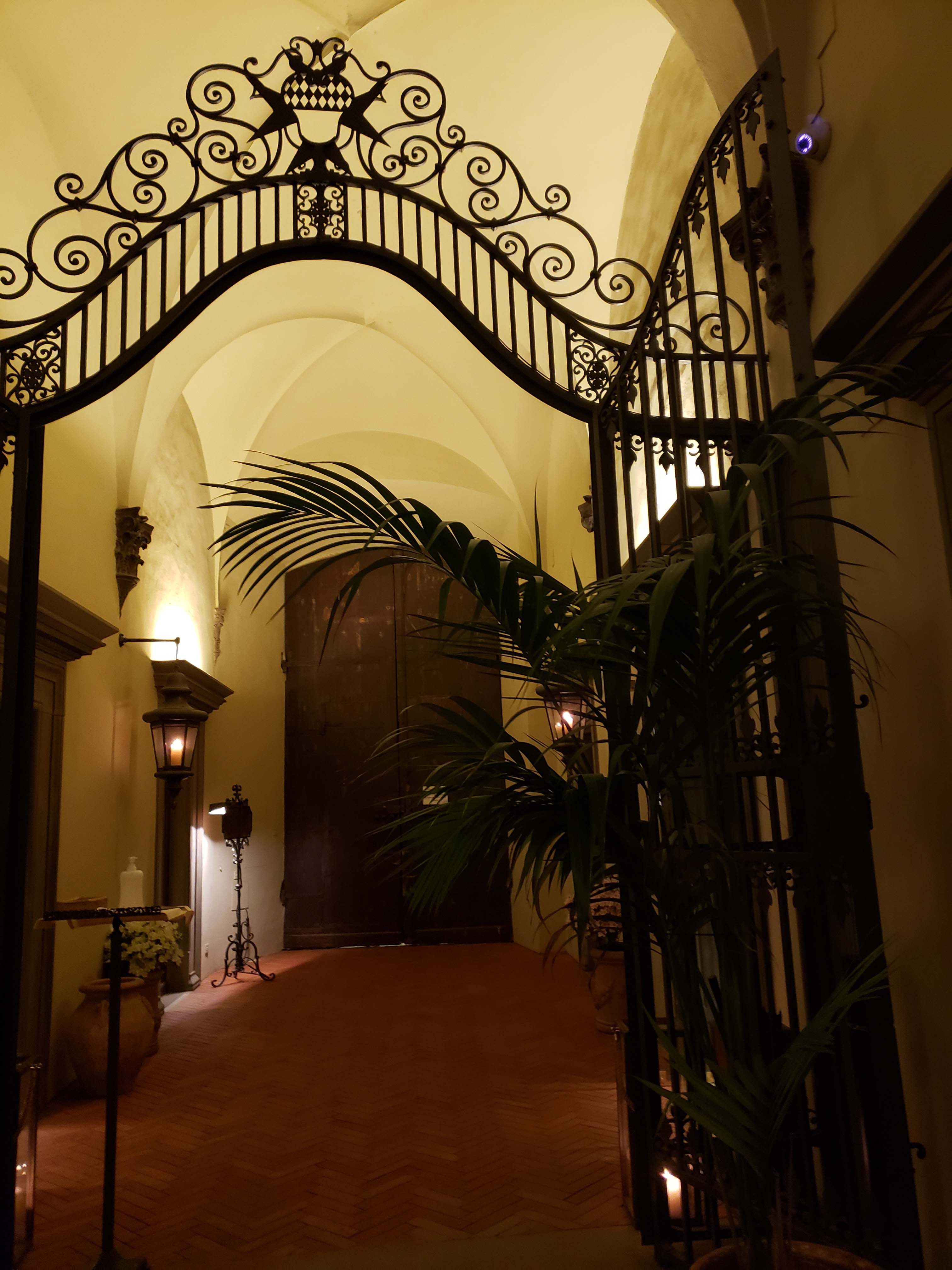
For dinner we ate at Cantinetta Antinori, our favorite restaurant in Florence. Antinori is one of the biggest wine producers in Italy and the restaurant is located in the family’s Palazzo. Because the COVID rules allow only outdoor dining, everyone was sitting in the Palazzo’s courtyard. It was a delightful setting, great food, and tastes of many of their less well-known wines.

Apparently I was tired of taking pictures, because I have none for Sunday! But it was a lovely day… We went to Mosaico, an English-speaking church that we’ve visited before. Then visited a friend that has recently opened a store/bistro that sells Italian and French (yep, French!) cheese and wine. We enjoyed visiting with Rebecca, savoring many new and interesting cheeses and buy several items from the shop. When you next visit Florence, be sure to stop in at Formaggioteca Terroir.

Coronavirus Update

Tourists are now allowed back into Italy! Yay! We are still waiting for some of the specific rules, but generally tourists will need to prove that they don’t have COVID before entering. We are still wearing masks in public (inside and outside) and haven’t heard much discussion of the relaxation of these rules. Restaurants are opened for outdoor dining but starting June 1st, we can eat inside, at least for lunch. This is important because we’ve been having lots of rain, so the restaurants have hustled to get tables available outdoors with umbrellas.

Italy got a slow start in distributing the vaccines, but the pace is definitely increasing. I have received two doses of Pfizer and Jim is scheduled for the Johnson and Johnson vaccine on June 7th.

Despite the improvements, we have a conservative travel plan for 2021. We plan on exploring various parts of Italy in 2021 and then to visit other European countries in 2022.

If you are planning to visit Italy, please let us know. Lucca is a great city to visit and to use as a base for many days of exploring Tuscany (Florence, Siena, wineries, hilltop towns, beaches, etc.) as well as Cinque Terre. If you can’t make it to Lucca but will be spending some time in Florence, we can come for a drink or a meal. Italy is looking forward to the return of the tourists! We are looking forward to visitors too!
Unknown's avatar

Day Trips and Driving

When we arrived in Lucca in March, we planned to rent a car for a week to buy stuff for our new apartment and pick up wine we were storing in Florence. Three months later, it finally happened. And we were able to take some fun day trips as well. This blog post will describe our adventures with plenty of pictures. And give you a bit of insight into the fun and challenges of driving here.

The Beauty of Lucca… so many nearby day trips!
You probably aren’t interested in our trip to IKEA or stocking up on heavy and bulky foods at the supermarket. So, I’ll focus on our day trips to Florence, Bolgheri, and Cinque Terre.

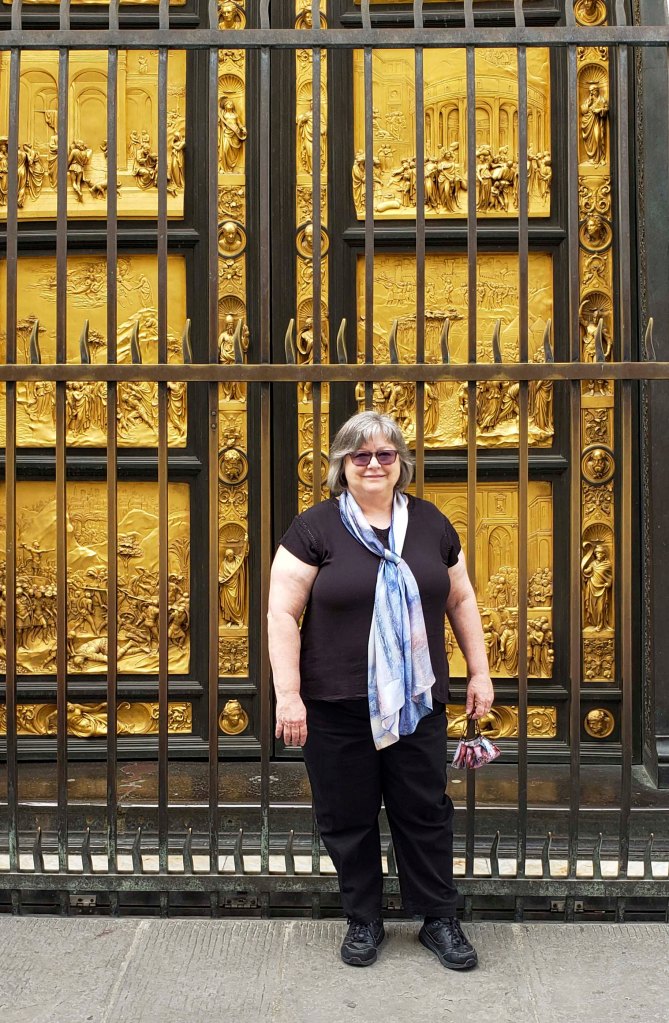
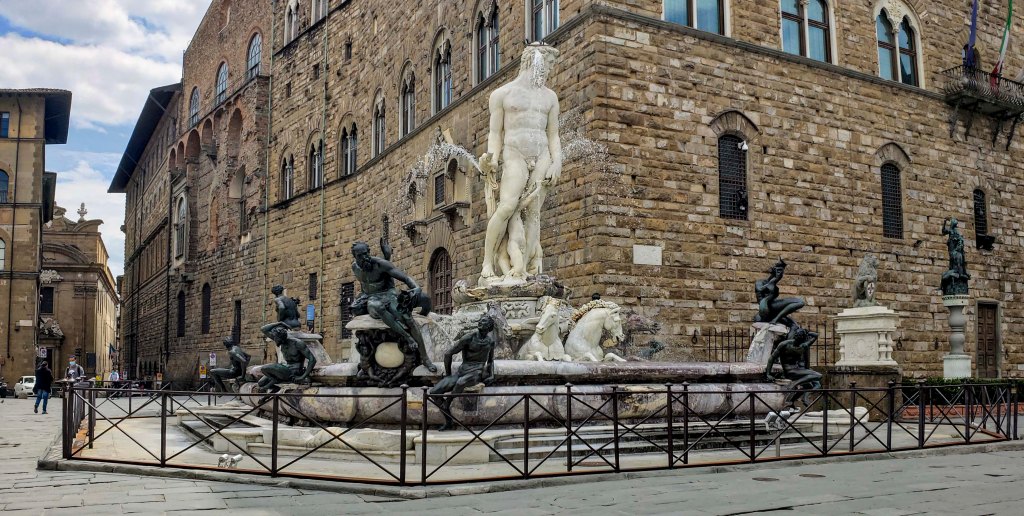
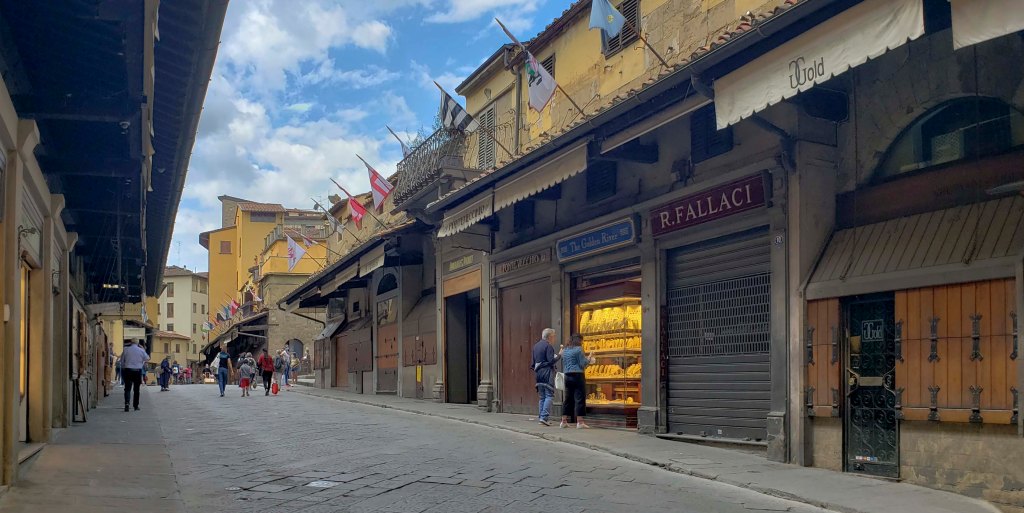
Florence: Jim and I walked through the biggest tourist areas in Florence: the Duomo/Cathedral, Palazzo Vecchio/town hall, the center court of the Uffizi museum, and across the Ponte Vecchio/old bridge. I estimate that the tourist crowd was about 5% of the usual size. Many stores were closed and museums are starting to open, but with limited hours. It was a great opportunity to take pictures of some of Florence’s great sights, but it was also quite sad. For example, there are usually big crowds in front of the gorgeous Gates of Paradise and you could never expect to get a picture without bunches of strangers… not now. Ponte Vecchio is usually packed with tourists looking at overpriced gold jewelry in the shops that line both sides of the bridge… not now.

We had lunch with Rebecca of Grape Tours. We met Rebecca and Pierre, her husband, in September 2014 when we went on their four-day Tuscan Wine Tour. And we’ve stayed in touch since. We are signed up for their Sicily Wine Tour in October. There is still room on the trip for you to join us! We had lunch at Le Volpe e Uva, a great place for wine and food, one block off of one of the main tourist areas. Seek it out!

We also picked up that wine that had been stored for a few years at an enoteca by the train station and bought a few more bottles to show our appreciation. Our wine cellar is growing again, but it will NOT get too large!

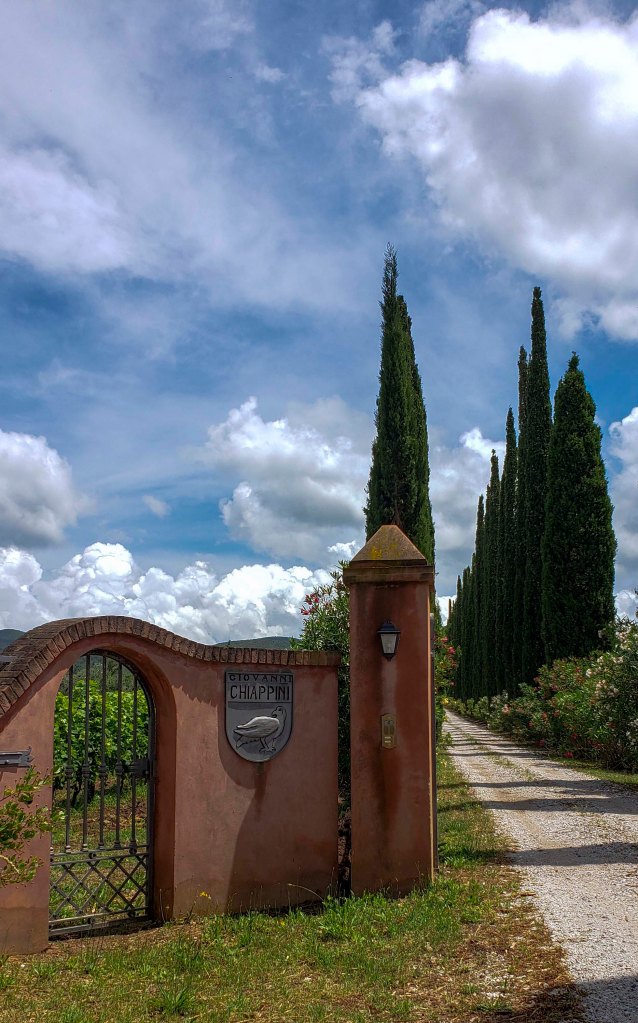
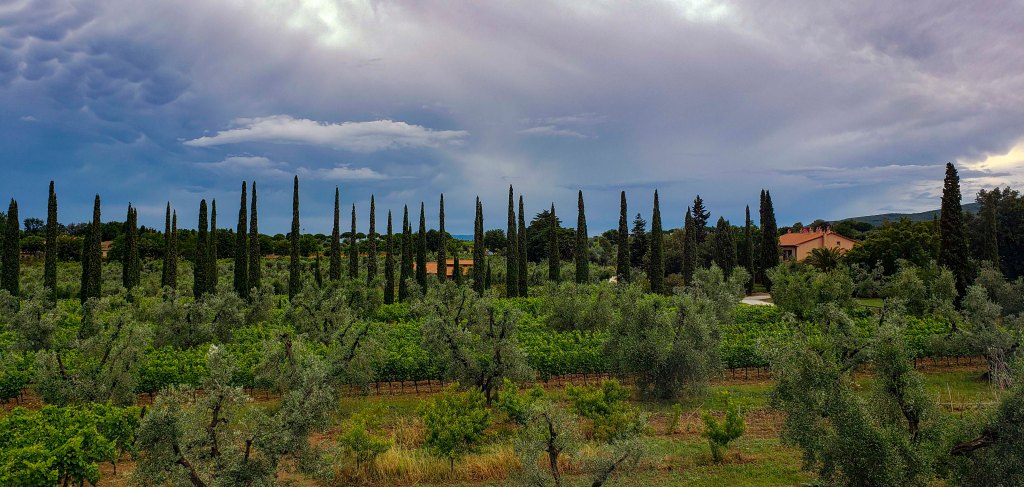
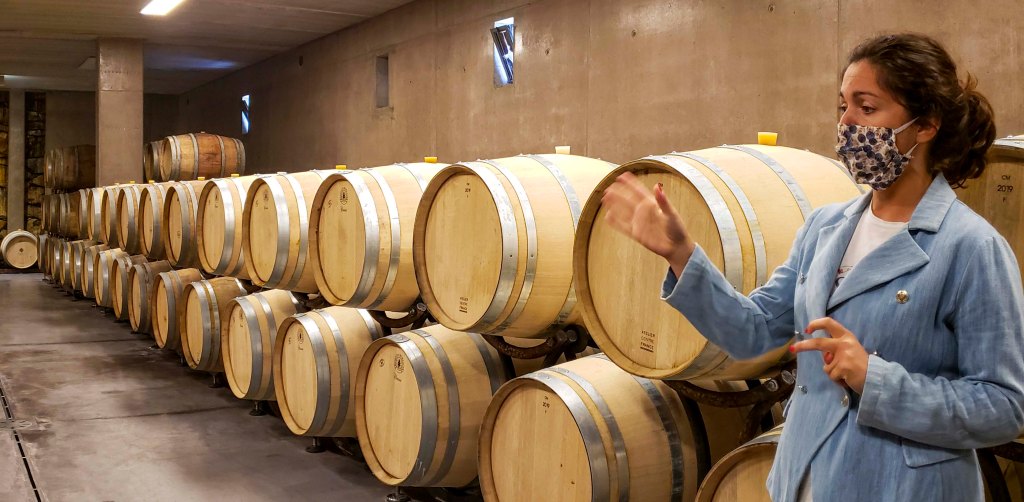
Bolgheri: Bolgheri is a small coastal town about an hour from Lucca with numerous wineries that make some of the best and most expensive wines of Italy. The two “biggies” are Ornellaia and Tenuta San Guido (Sassicaia). Several years ago, Jim and I visited Ornellaia; this week we went to Chiappini, a family-owned organic winery that is next door to Ornellaia. We went with Pasquale, an Italian friend of ours, who knows many of the family of these small & great wineries. The wines were delightful and just being at a winery was wonderful. We tasted several wines than bought a few bottles. We ate lunch at a local enoteca and enjoyed some yummy gelato with views of Bolgheri out to the sea.

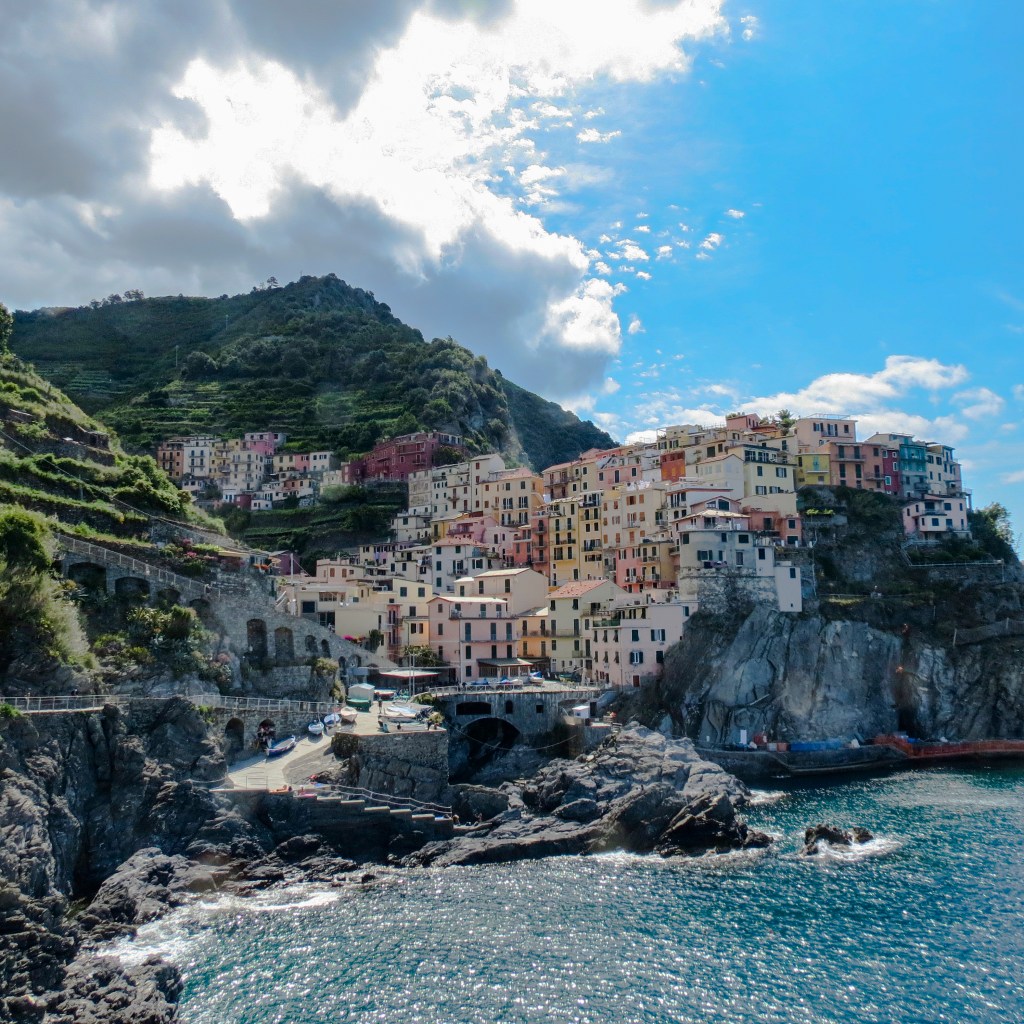
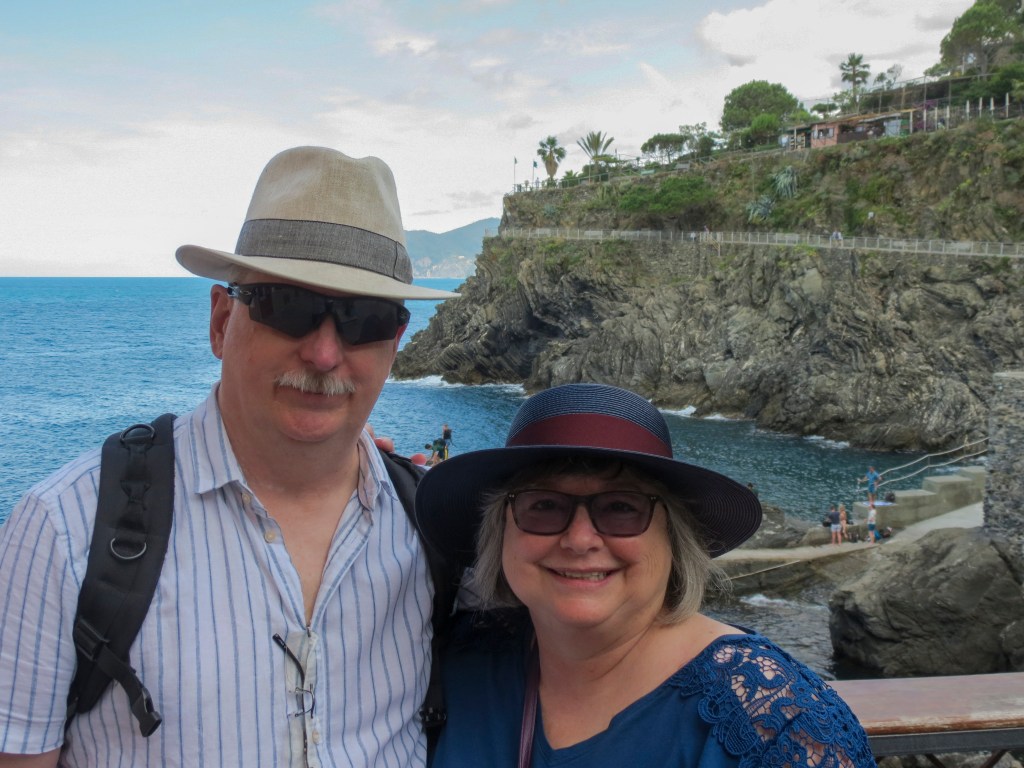
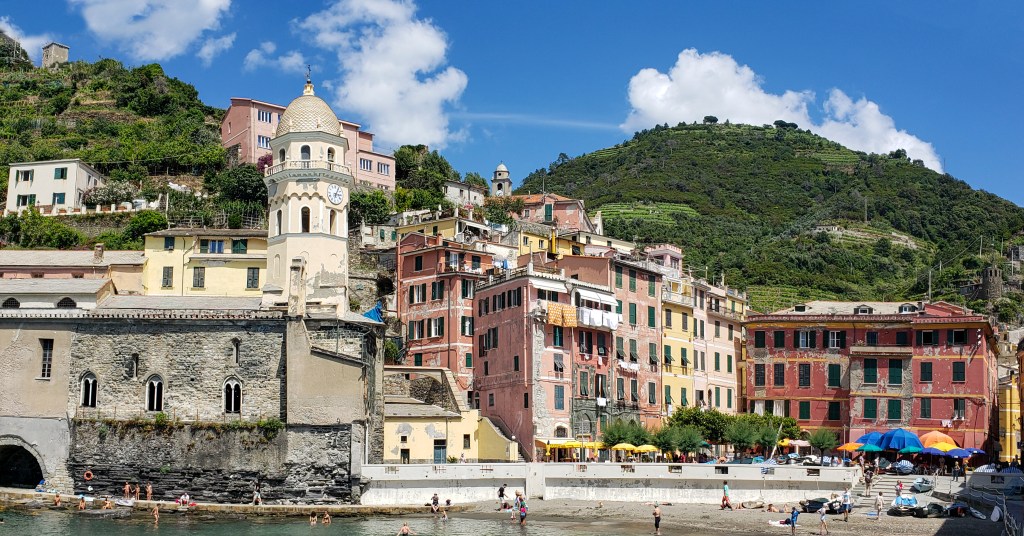
Cinque Terre: When planning vacations to Italy, we often considered visiting Cinque Terre, five fishing villages perched high on the Italian Riviera. In fact, we even did a puzzle of one of the villages. But each time, we concluded that it would be too crowded. Those villages are packed with people coming to see some of the scenic views in Italy. Well, they aren’t too crowded now! So, off we went with our friends Victoria and Brian to visit two of the towns – Manarola and Vernazza. They had been several times before and talked about how nice to visit without the heavy crowds. There were tourists visiting, but not too many.

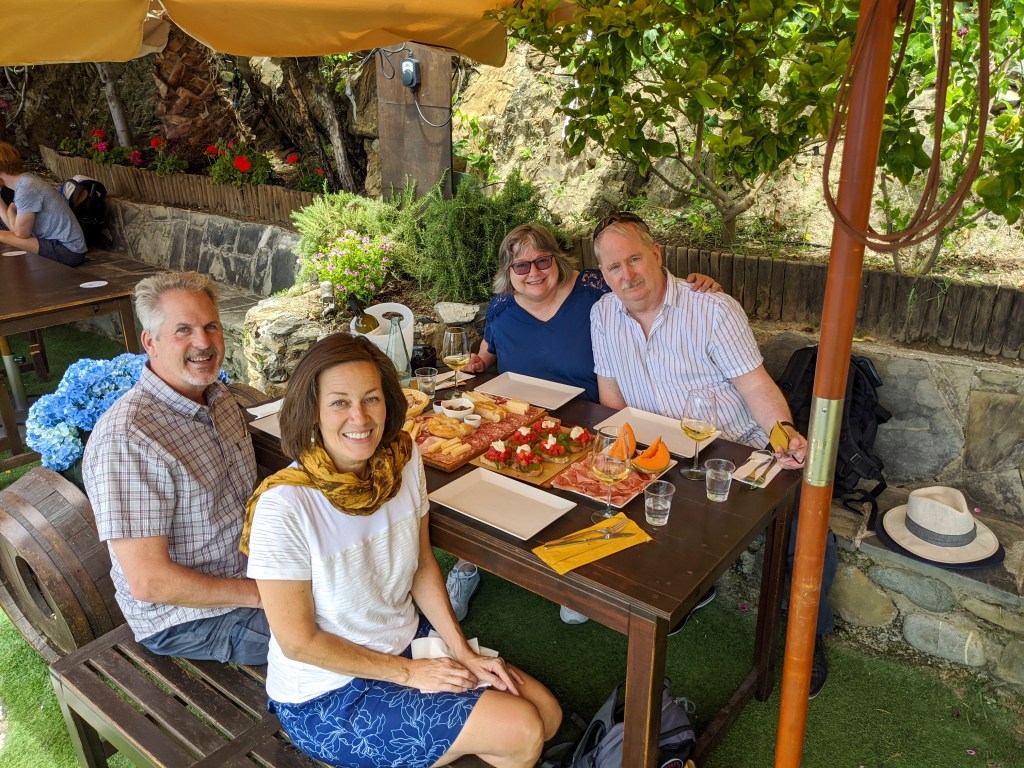
Our first stop was Manarola. We wandered through the city, then ate lunch at Nessun Dormire and enjoyed a slow meal of bruschetta with pesto, salami, cheese, melon with prosciutto, and a local white wine – with THE most incredible view.

Manarola

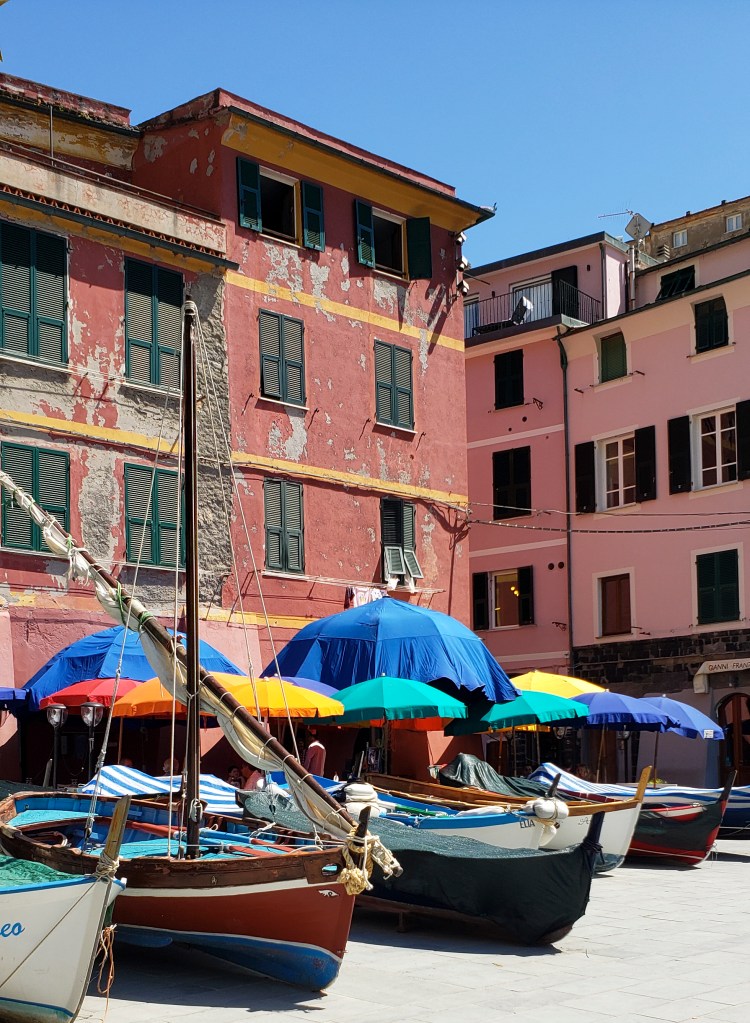
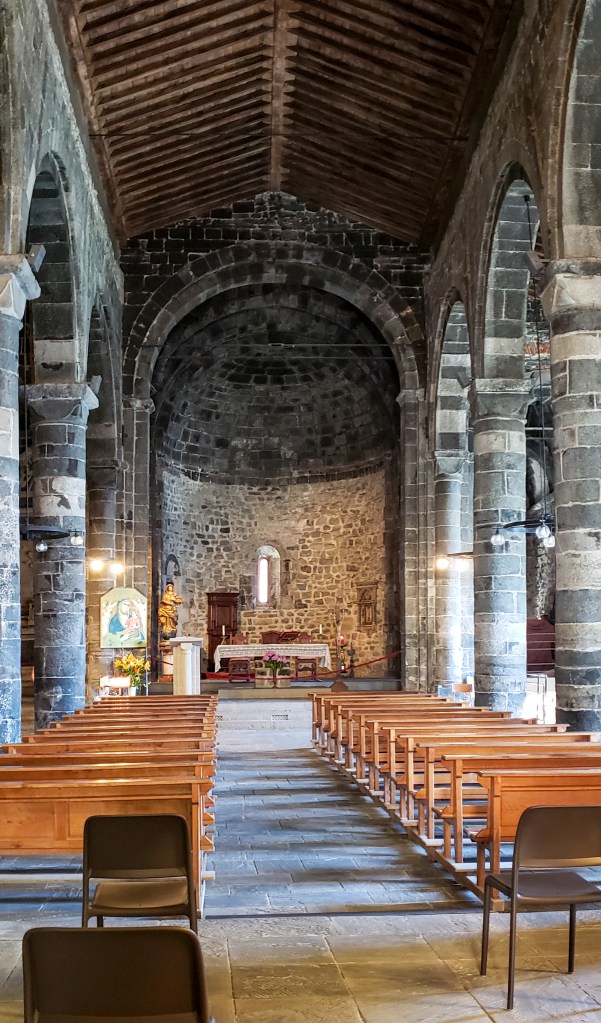
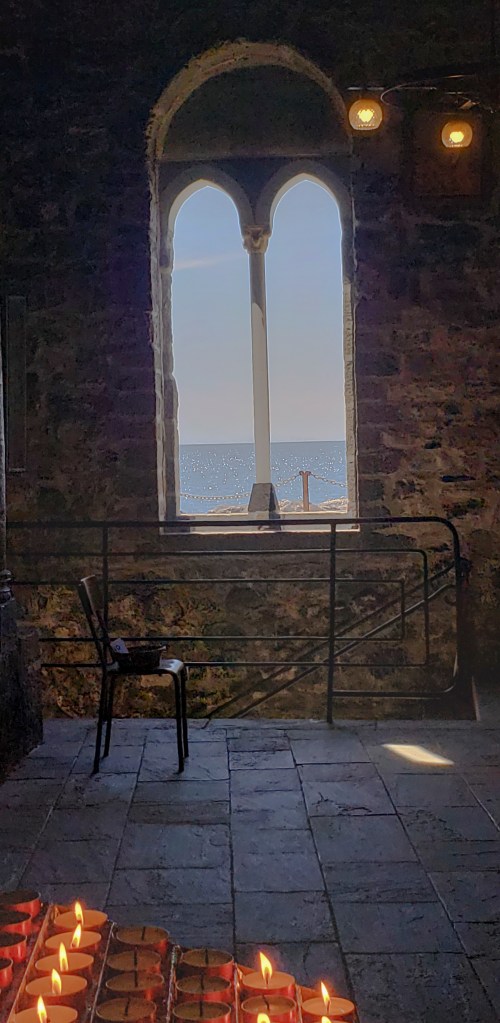
After Manarola, we jumped on the train that goes between the five villages and we got off at Vernazza. Typically the trains run every 20 minutes, but now are running one per hour. We wandered around Vernazza and stopped for some delicious Italian gelato. We visited the town’s main church and wondered if it would be difficult to concentrate on the service with such spectacular views out the windows!

Vernazza

Everyday life in Lucca… car rentals and driving

We don’t have a car in Lucca, so get around town via walking and bicycling. Plenty of food stores, restaurants, clothing stores, pharmacies, etc. are very close by. But after staying in Lucca for 3 months, I was ready to wander a bit further.

So, we rented a car for a week, starting June 8th. We requested a standard SUV through the local AVIS office so that we’d have plenty of room for some furniture that we plan on buying.  Jim walked about 20 minutes to the car rental place, was given a mid-sized crossover, and returned to our house.

Our apartment building has a parking lot and we are allotted one space – quite an unusual feature inside the walls of Lucca. To get to our parking lot you need to drive through a ZTL, a zone that is tightly restricted to residents and others with specific needs. Because of the coronavirus, the rules have been relaxed through the end of August, so we didn’t need to get any special permission to drive through our ZTL. On our second trip to Italy we got two tickets in Florence for driving through the ZTL and did not want to have to pay the big fines again!

Jim has driven a lot in Italy and is quite comfortable doing so. I’m the navigator and am quite comfortable in that role. In fact before last week, I had never driven in Italy. But I drove around the outside of the Lucca walls (lots of traffic circles and relatively heavy traffic) and once to Pisa on the autostrada/highway. I would say that the drivers are more aggressive here than in Virginia, the lanes are narrower and there are traffic circles everywhere! Oh, and if you are looking for the pictures of that tower, we went to Pisa for the shopping – there is an IKEA there! After our first (of several!) trips to IKEA, the car was stuffed with furniture, household goods and more stuff!

For now, we plan on renting a car as needed. We can use our International Driver’s License for one year then will need to get an Italian driver’s license. The test is MUCH harder than in America AND it is in Italian. Most ex-Pats study a lot for 3 months to take the test, then end up taking it a few times before passing.

Coronavirus update

In the town of Lucca, there was one new case of COVID-19 for the week ending June 14th. We are learning to live with the virus. In town most people have masks on, around their neck (to allow quick replacement) or stashed on their arms (???).

Stores are very careful to follow the rules. Masks and hand sanitizer are required and many stores allow only one customer at a time, so queues on the street on common. Some stores take your temperature before letting you enter; a nearby supermarket even uses an infrared sensor! In more open area such as the Walls of Lucca, about 25% of the people are wearing masks and the others only put them on as needed. There are a few areas of town where young people gather during the evenings and they not do proper social distancing. ☹

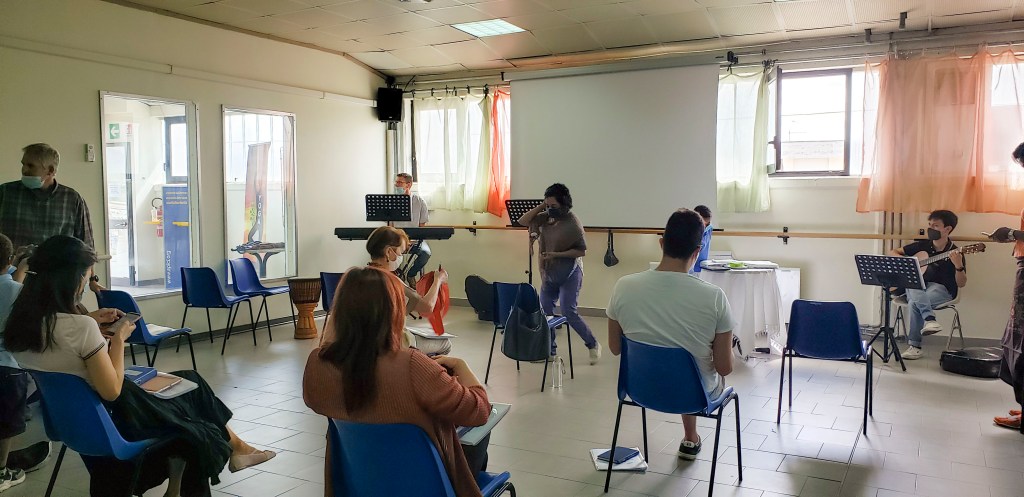
Our church met face-to-face for the first time on Sunday, being very careful to leave lots of space between family groupings. After the service, we went outside to chat with each other. It felt great to be doing something as normal as going to church!

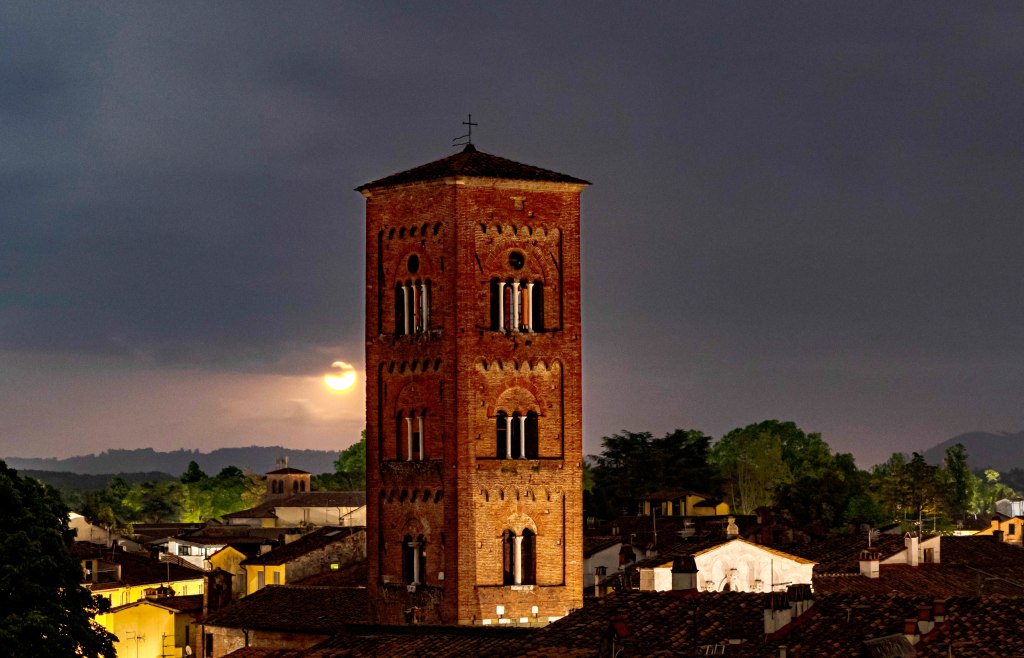
And one final picture from Lucca… the moon next to a church’s bell tower: