Unknown's avatar

Stone, Sea, and Sun: A Journey South

April 25 – May 7, 2026

Italy is made up of 20 regions, think of them as the Italian equivalent of USA’s states. Jim and I made a promise to ourselves after we moved to Italy: we want to visit all of them. This trip let us tick three off the list in one go: Basilicata, Puglia, and Molise. This trip was our best “let’s explore a new region.” We saw a lot, did a lot, but had enough down time to enjoy it all.

We hadn’t expected it, but the unofficial themes of the trip emerged quickly: birds everywhere we looked, and wildflowers carpeting every hillside and roadside. What lovely surprises!
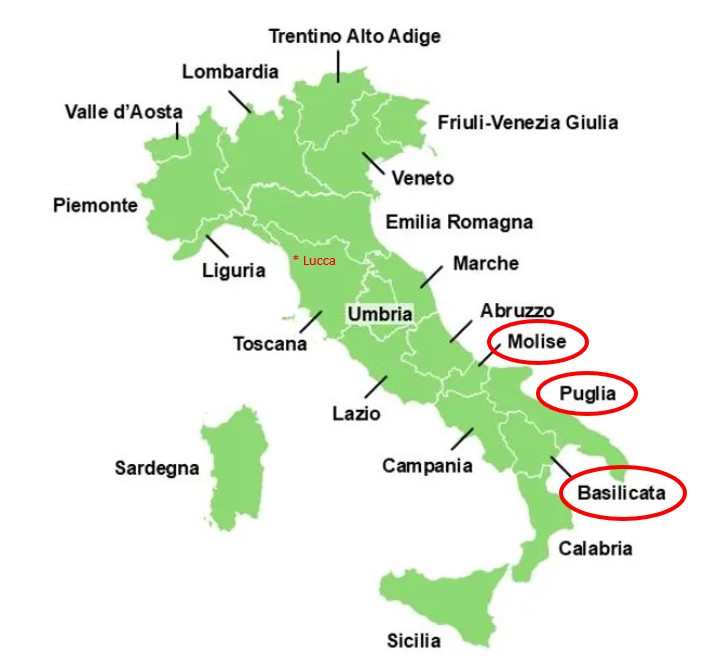
Part 1 – The Volcanic South: Venosa & Matera

Our first stop was an overnight in Venosa, a friendly town in the northern part of Basilicata. We happened to arrive on April 25th, Liberation Day, a national holiday, and the whole town was out celebrating. There was a festive energy in the air that made the most ordinary piazza feel like a party. Very big and imposing castle in the main piazza, along with nice Roman ruins and a half-built basilica made this town more than just an overnight stop.
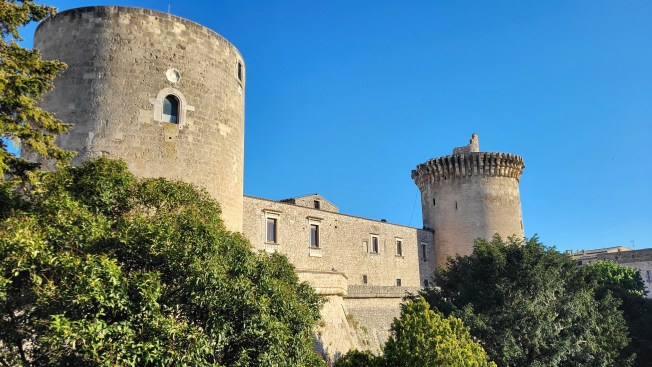
Venosa castle in town
This beautiful castle dominated Venosa’s main piazza.
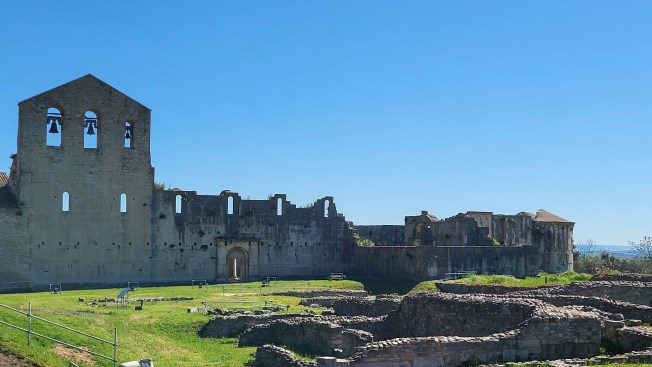
Venosa abby and roman ruins
Just outside of Venosa, an archaeological park preserves the ruins of the ancient Roman colony of Venusia, birthplace of the poet Horace, alongside a massive 13th-century unfinished basilica. It’s like visiting a construction site of a medieval church when all of the workers have left for the day.

We then visited the Elena Fucci winery, where we tasted her Aglianico del Vulture — a rich, volcanic red wine that is one of the south’s best-kept secrets. The name comes from the ancient volcano nearby, and you can almost taste the mineral intensity of that land in the glass.
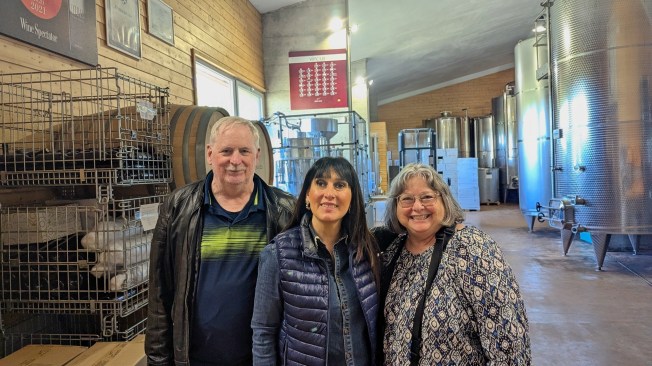
Elena Fucci, Jim and JoAn
Elena Fucci, Jim and JoAn. Unlike many Italian wineries with centuries of heritage, Elena Fucci built hers from old family vines that had never been sold commercially.

The drive to Matera was a delight in itself. Birds of prey circled above the ravines, and we pulled over more than once just to watch them and take pictures. Basilicata is a rugged, largely untouched landscape of rolling hills, deep ravines, and ancient volcanic peaks.
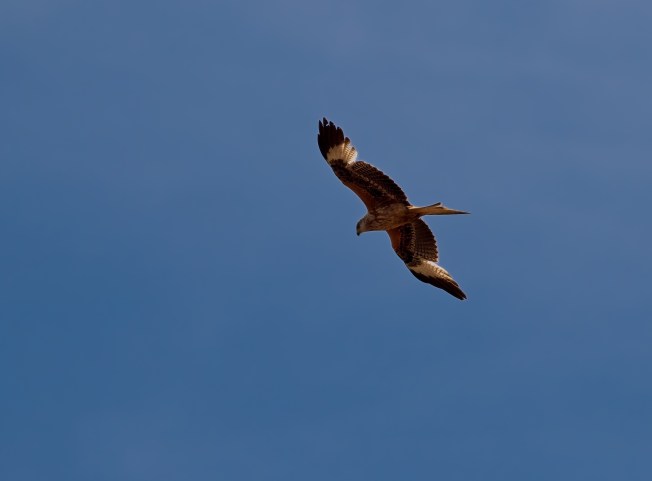
Red Kite
We saw both Red and Black Kites soaring over the countryside.

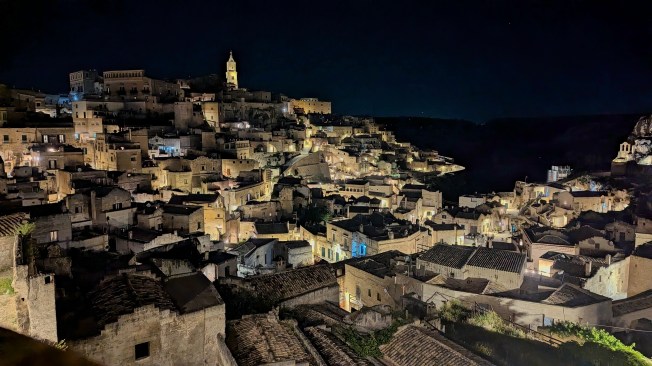
Matera is difficult to describe – not beautiful in the typical Italian sense, but striking. It is one of the oldest continuously inhabited cities on earth, with cave dwellings carved into the limestone ravines, called the Sassi, that date back over 9,000 years. In the 1950s, the Italian government considered the Sassi a national embarrassment and forcibly relocated its residents to modern housing; decades later, UNESCO declared those same caves a World Heritage Site. Today the Sassi have been transformed into boutique hotels, restaurants, and museums. Matera’s striking landscape has drawn filmmakers for decades, serving as the backdrop for Mel Gibson’s “The Passion of the Christ”, the James Bond thriller “No Time to Die” and many more.

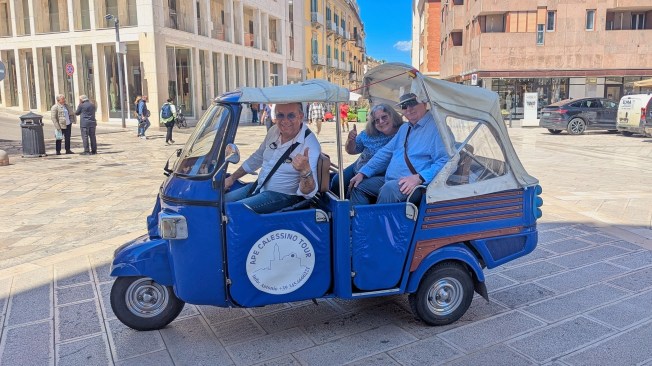
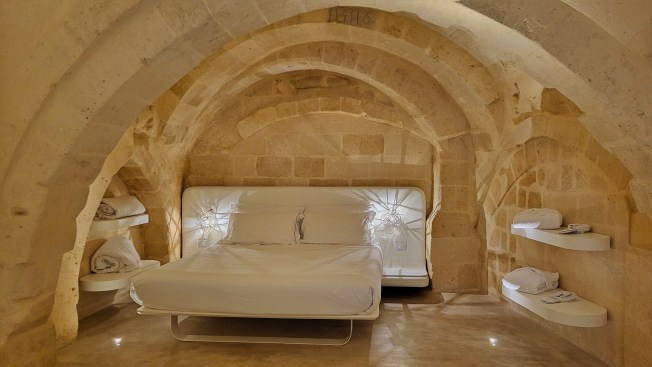
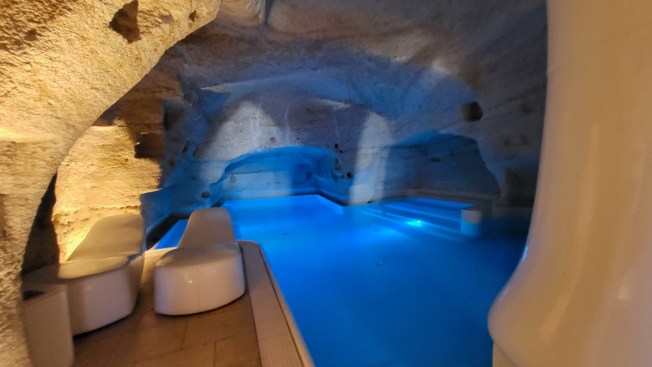
We stayed in the old part of town in a hotel where our room had literally been carved out of the rock. The spa was a bonus and a very welcome one after a day of walking. Getting around the Sassi on foot is rather difficult, with lots of iffy steps, the streets wind and double back on themselves in ways that make maps almost useless. We took a tour in an Ape, one of those tiny three-wheeled vehicles that are perfectly suited to navigating narrow lanes. It was the best possible way to get our bearings. It’s an odd feeling to know that you are just a few minutes away from your destination but you aren’t sure how to get there!
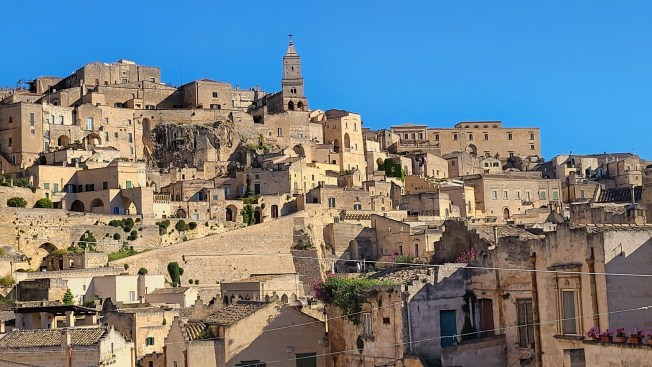
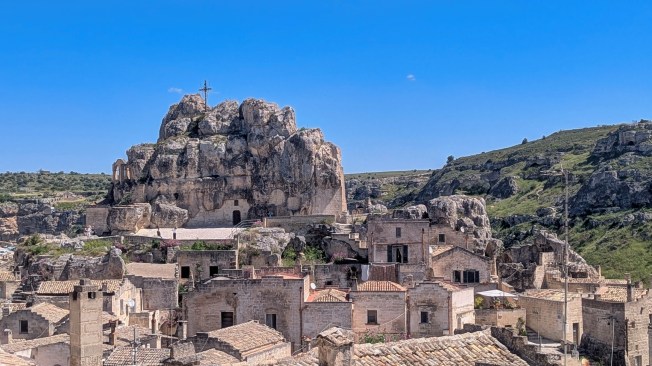
Matera during the day
The Sassi of Matera: 9,000 years of human habitation carved into limestone, once considered an embarrassment, now appreciated for its history and raw beauty.
Matera church in rocks
The Sassi churches of Matera were carved directly from the cliff face, sacred spaces hidden inside the stone itself.
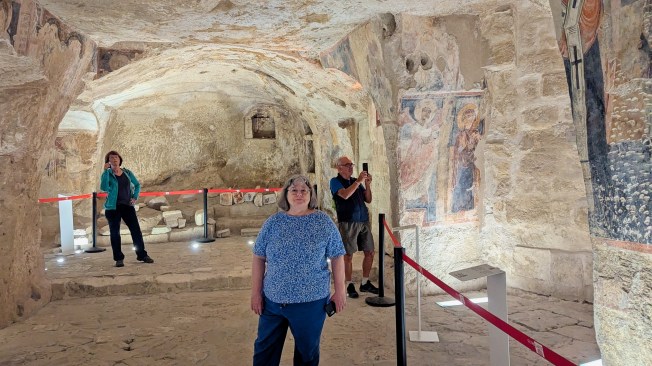
Matera inside of church
Standing inside a cave church in the Sassi, surrounded by Byzantine frescoes still vivid after a thousand years.
Matera Ape tour
We zipped around Matera’s tiny streets (but not the steps!) in this Ape.
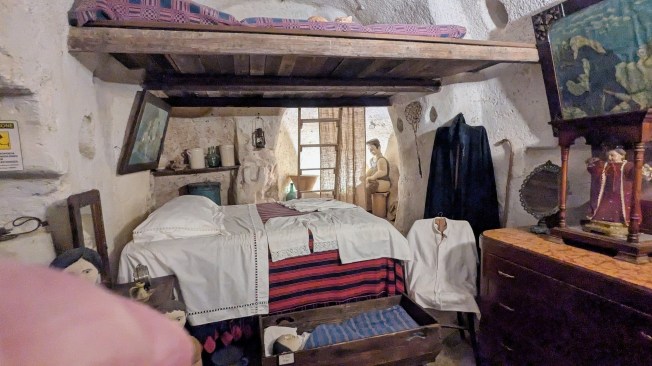
Matera inside cave home
A reconstructed cave home in the Sassi, one room for the whole family, and often the animals too. In the 1950s, the Italian government declared these dwellings uninhabitable and forcibly relocated some 15,000 residents to modern housing.
Matera hotel room
We stayed in a beautiful cave hotel room. Today it is ruggedly elegant.
Matera spa
Our hotel had a beautiful spa carved out of the rock, including this wonderful hot mineral pool.
Matera at night
Nine thousand years of history, lit up for the night.

Part 2 – Baroque Puglia: Lecce

If Matera is all drama and geology, Lecce is all elegance and exuberance. Known as the Florence of the South, Lecce built its reputation during the 17th century when the Catholic Church funded a building boom of extraordinary ambition. Local craftsmen worked a uniquely soft, creamy-colored limestone into facades so intricately carved they look almost lacy. The style became known as Barocco Leccese, and it is unlike anything else in Italy.

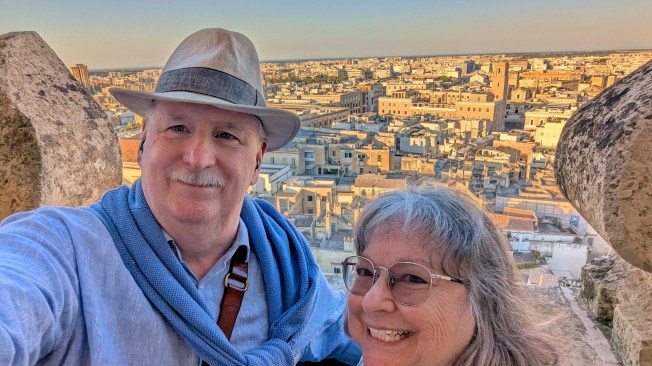
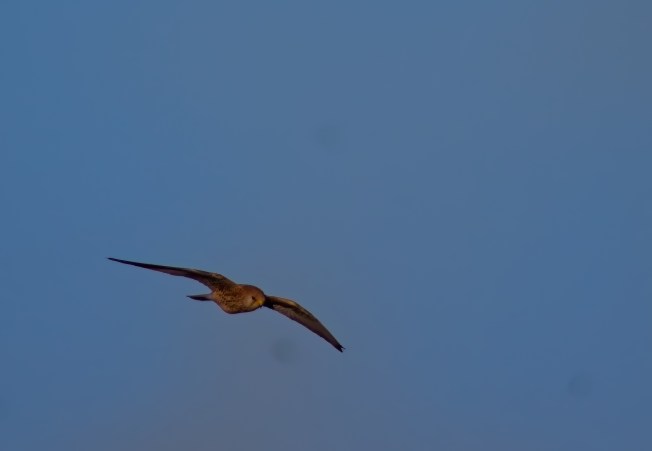
On two different evenings we went up the bell tower of the Duomo to watch the city change in the fading light. The first evening was about the architecture — the way the golden stone glows at sunset is something you have to see to believe. The second evening was about the birds. Kestrels and swifts by the hundreds flew around the tower in formations that seemed almost choreographed. We stayed up there longer than we intended both times.
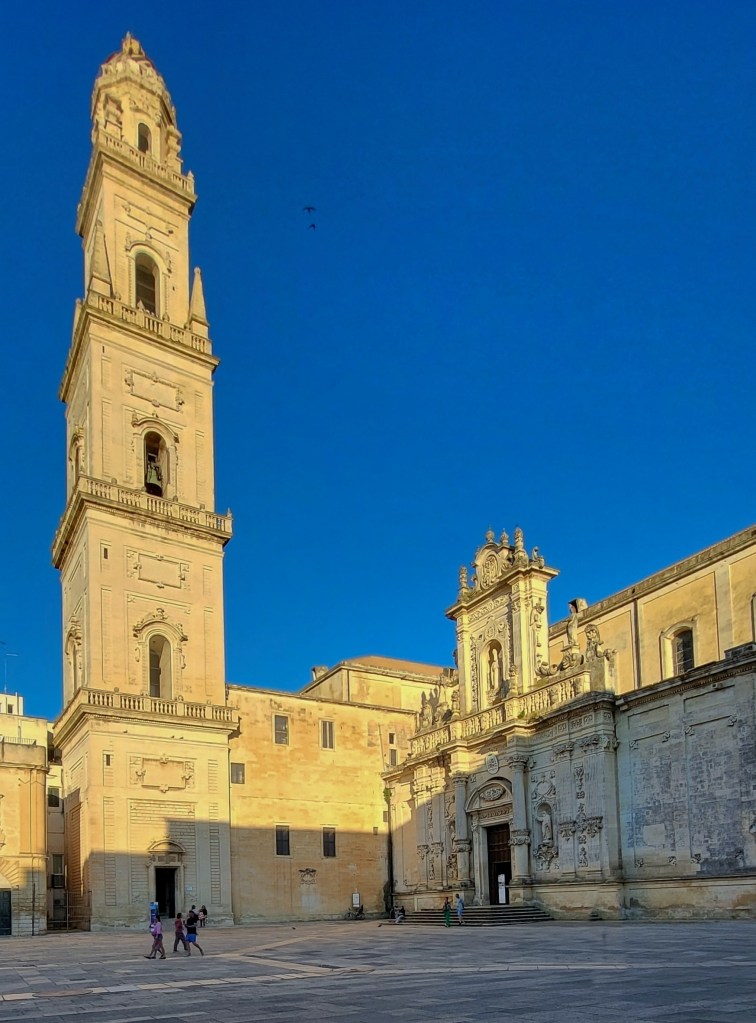
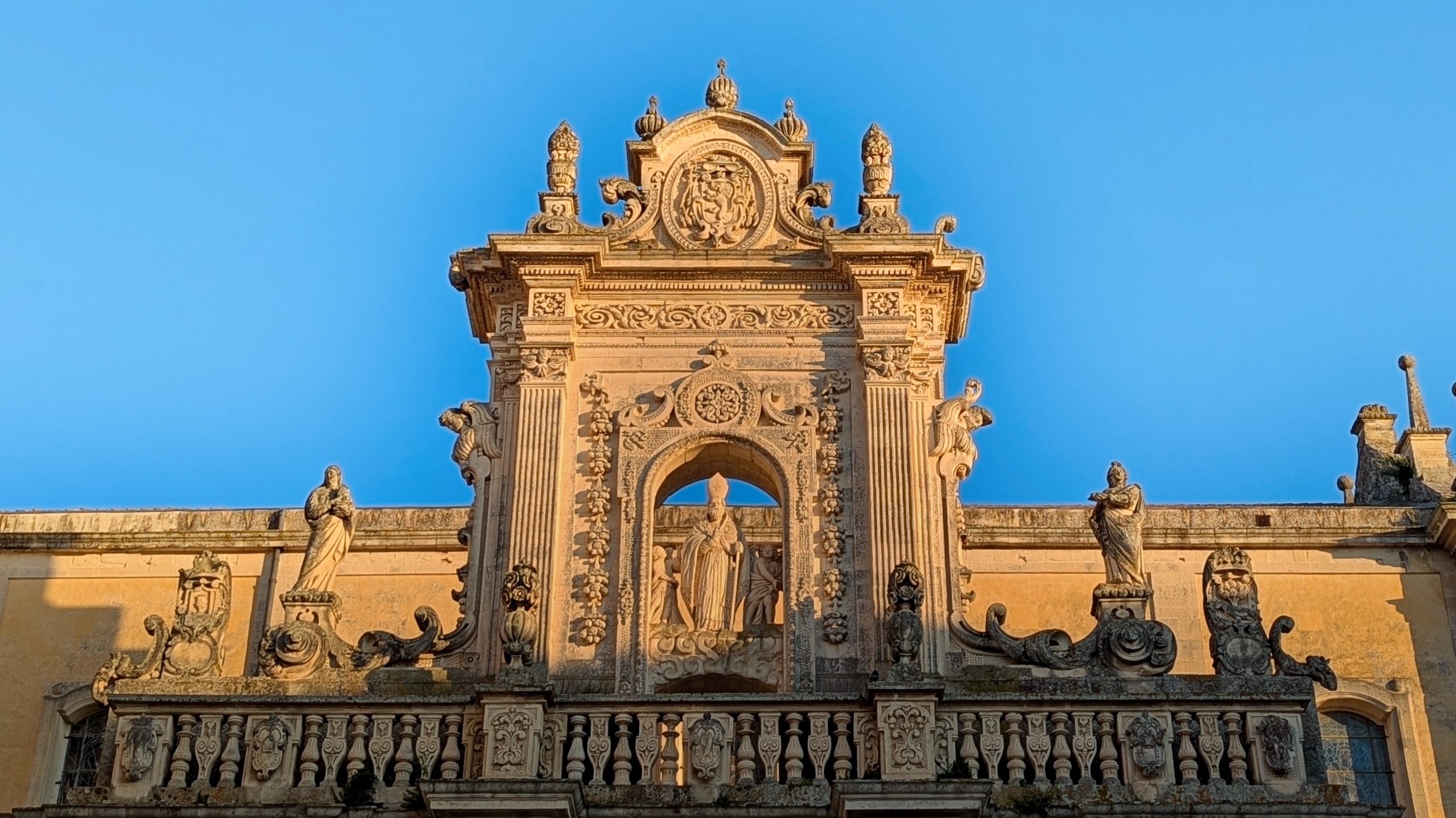
Lecce Duomo and Bell tower
Late afternoon light on the Piazza del Duomo and its grand bell tower.
Lecce Duomo detail
Lecce Baroque in detail: saints, scrolls, and sculptural flourishes cascading across the golden facade of the Duomo at sunset.
Lecce, in Bell Tower
Goofy selfie from the bell tower with the beautiful golden city in the background.
Eurasian Kestrel in flight
We saw Eurasian Kestrels in Lecce and Eurasian and Lesser Kestrels in the countryside.
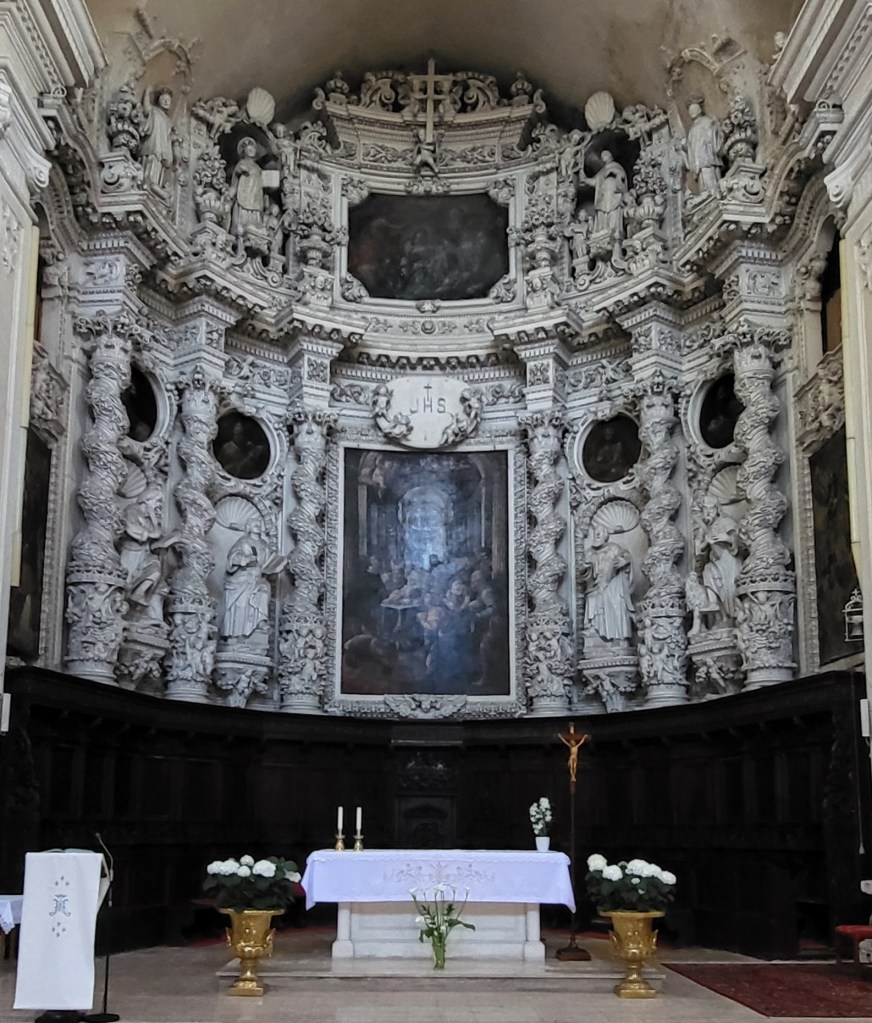
The Altare Maggiore of the Chiesa del Gesù
The Altare Maggiore of the Chiesa del Gesù — twisted columns, intricate sculpture, and the warm glow of local stone. Lecce Baroque at its most extravagant, dated to 1699.
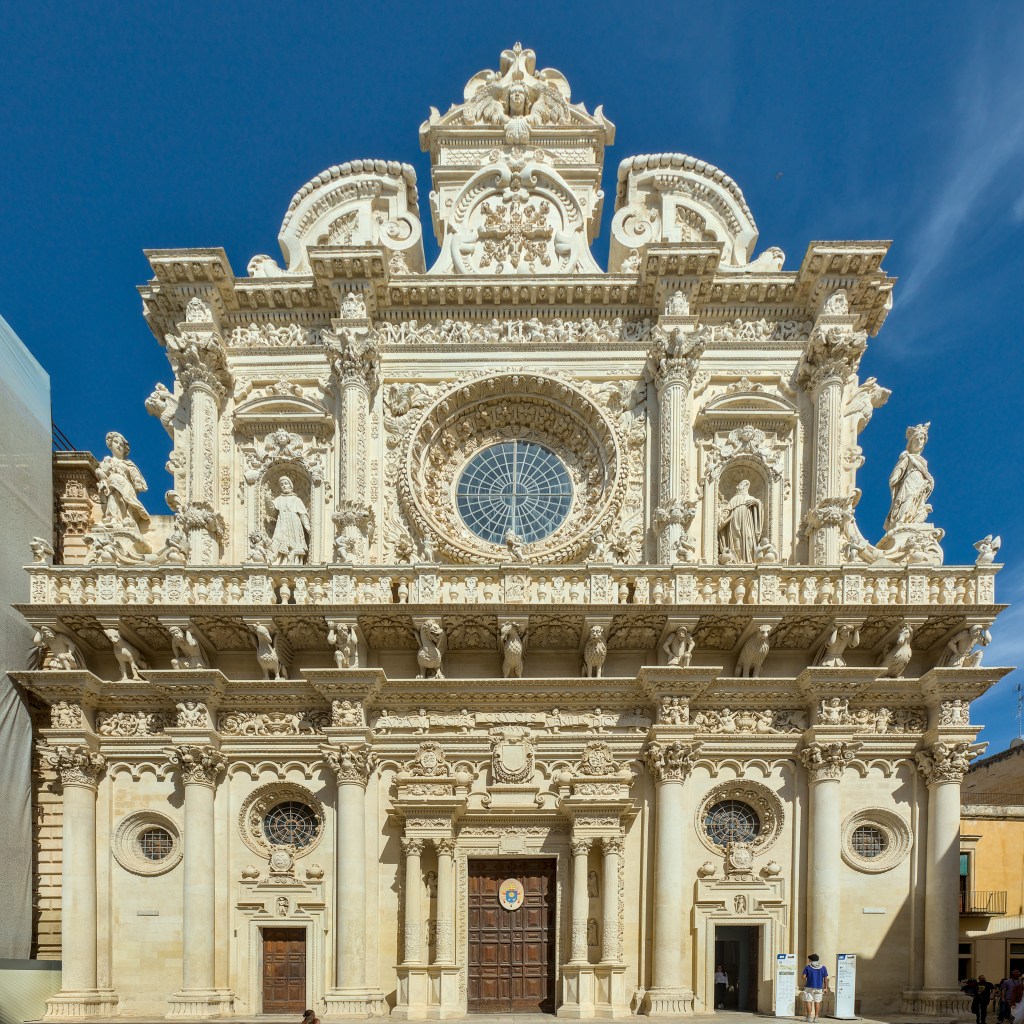
The Basilica di Santa Croce
The Basilica di Santa Croce: Somewhere behind all that carving, there’s a church.

Our wine visit took us to the Leone de Castris winery, one of Puglia’s most historic producers. We tasted several wines, but the highlight was their Five Roses rosé, which has long been one of our favorites. We finally learned the story behind the name — which I’ll leave for you to discover if you visit. Some stories are better told in person.

Part 3 – Trulli, Coast & Countryside: Ostuni → Alberobello → Trani

I plan our trips carefully, but I’ve learned over the years that the willingness to adapt is just as important as the planning. This stretch of the trip gave me several opportunities to do that.

Ostuni, the White City, perched brilliantly above the olive-covered plain, was on our list, but the day we’d earmarked for it turned out to be stormy. Rather than wander a hilltop town in the rain, we pivoted to a nearby cave system that friends had recommended: the Grotte di Castellana. What an unexpected treat. The caves are vast and otherworldly, and they kept us completely dry while the weather sorted itself out above ground.

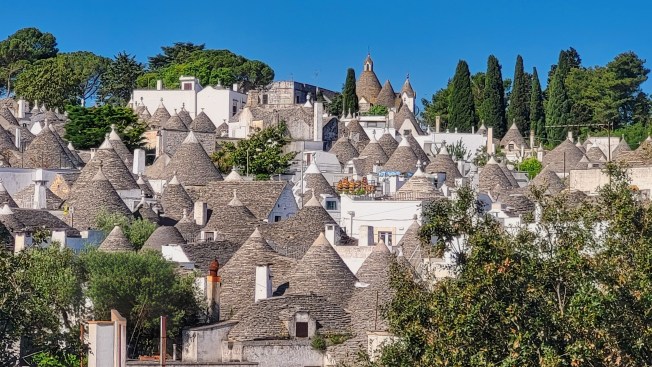
From there we headed to Alberobello, the capital of the trulli. These remarkable cone-roofed limestone dwellings date back to the 15th century, when local farmers built them without mortar on orders from the ruling Count of Conversano, the idea being that a mortarless building could be quickly dismantled if a royal inspector came to levy taxes on permanent structures. The trulli were essentially a centuries-long tax dodge, which somehow makes them even more charming. The town was designated a UNESCO World Heritage Site in 1996 and today has over 1,500 of these extraordinary structures.

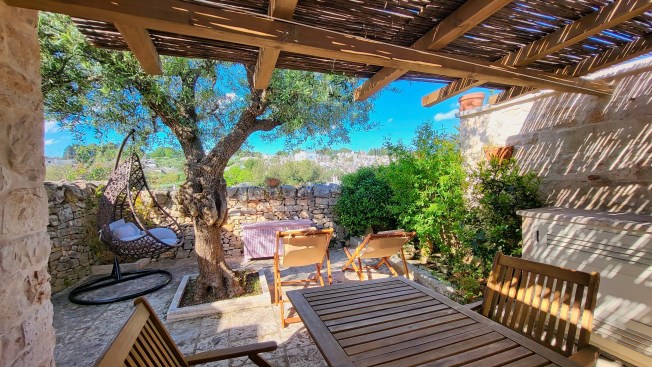
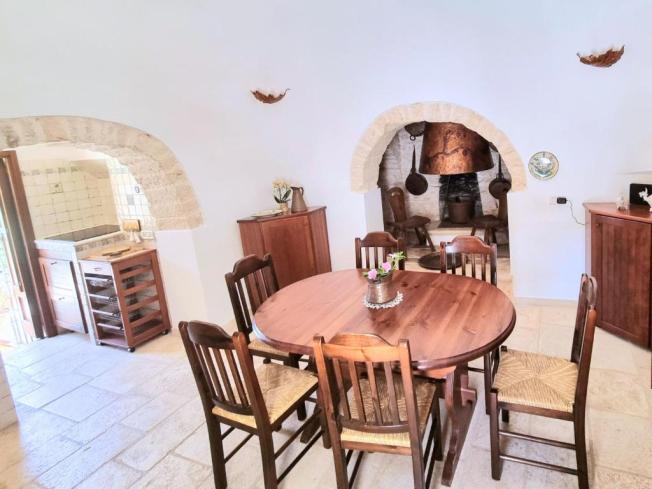
We didn’t just look at the trulli — we stayed in one. Our trullo had a terrazza with an amazing view over a hillside covered in those conical roofs, one cone after another as far as we could see -and even one trullo church! We took a walking tour, wandered on our own, but found that living inside one (the thick stone walls, the cool air, the unexpected coziness) told us more than any guidebook could.
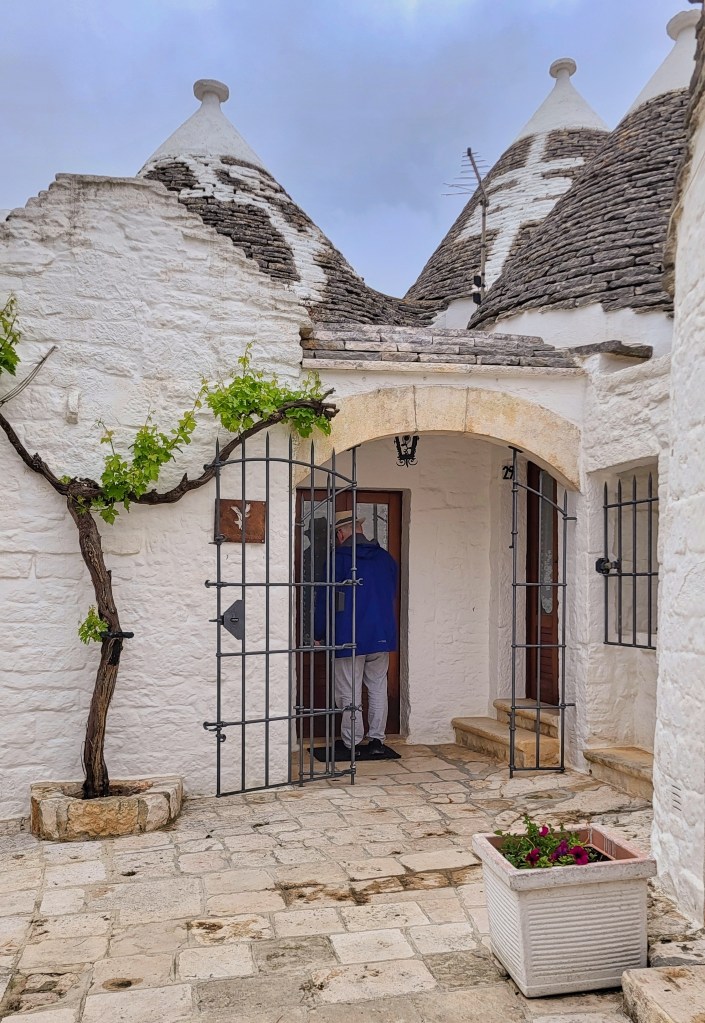
Alberobello, our trullo
We rented this adorable trullo for two nights.
Alberobello, our trullo inside
Inside was cozy and modern, but you could still see the traditional elements of a Trullo like the fireplace and the shape of the ceiling.
Alberobello, our terrazza
We had a spacious and comfy terrazza with an incredible view of the town’s hill filled with Trulli!
Alberobello, view from our terrazza
This view doesn’t get old… This part of town was very touristy and most of the trullis were shops, restaurants, or museums. But still adorable!
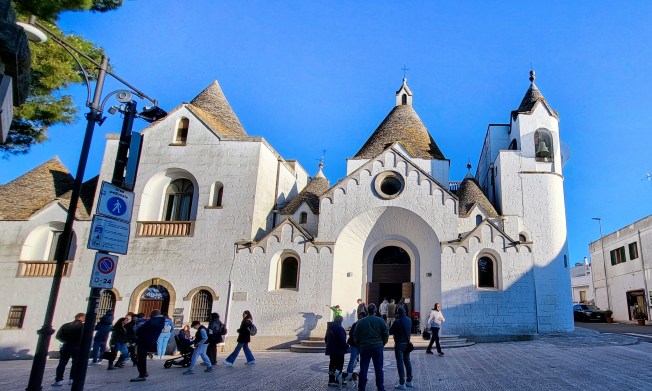
Alberobello, Trullo church
Even this church gets a conical roof in Alberobello!
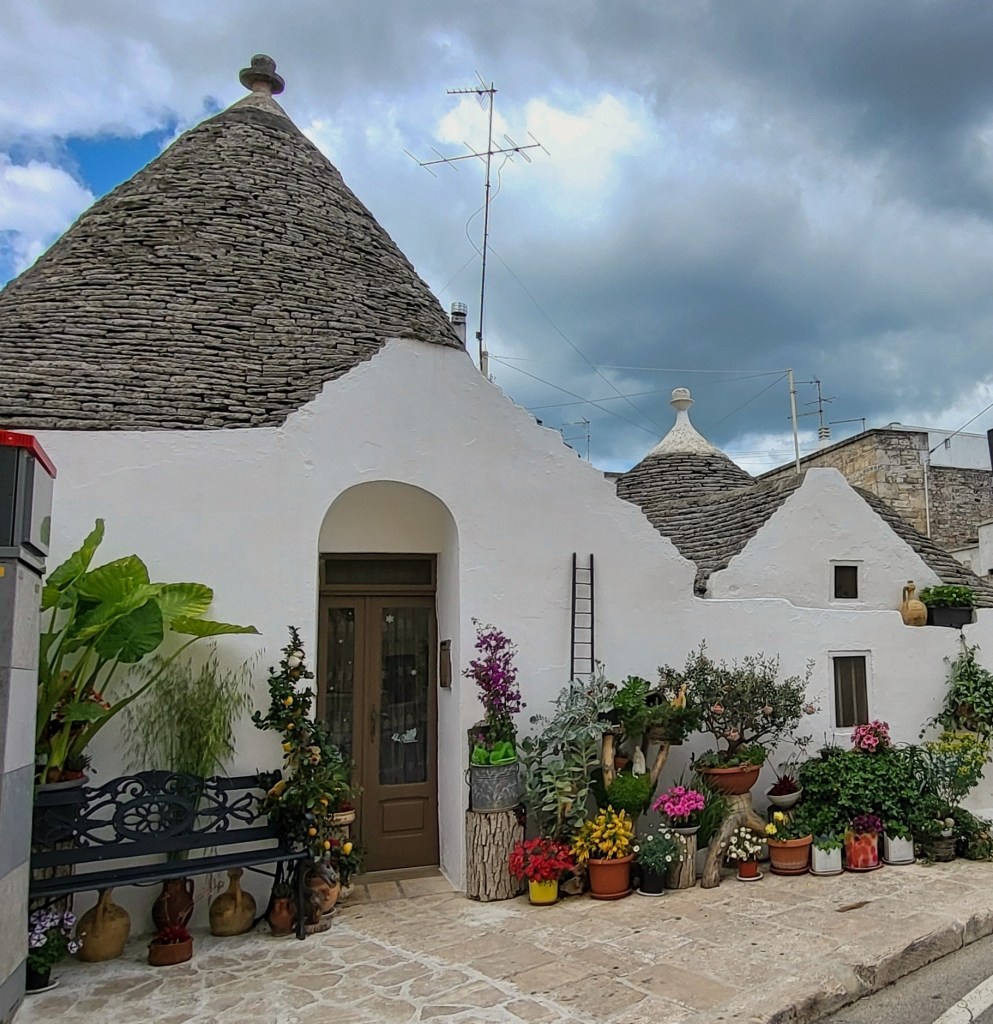
Alberbello adordable Trullo
This had to be one of the cutest Trulli that we saw. Our walking tour guide explained that if there were flowers out front, that someone lived in the Trullo. That makes it even more special!
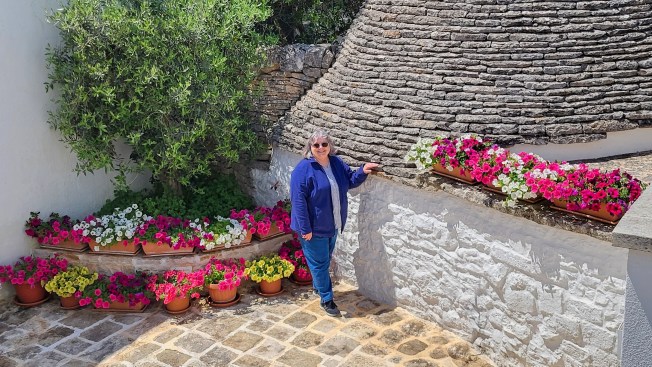
Alberbello pretty terrazza
Some stores had beautiful terrazze that you could visit – and I loved the flowers on this one!

We made another unplanned detour when we dropped a winery visit in favor of a day in Bari. The highlight, without question, was enjoying the back street where women were making orecchiette pasta by hand, just as their grandmothers had; rolling and shaping each little ear of pasta on wooden boards set out in the open air. We bought a bag and were surprised at the thickness of the pasta… not quite our favorite, but I am glad that we experienced it! As for the city itself, a friend had warned us that Bari is “Puglia’s version of Naples” — chaotic, crowded and loud. He wasn’t wrong. We appreciated the orecchiette women and moved on.
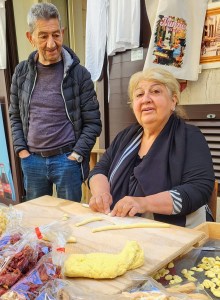
Bari pasta lady
Flour, hands, and a lifetime of practice. Bari’s famous street pasta makers are a living tradition.

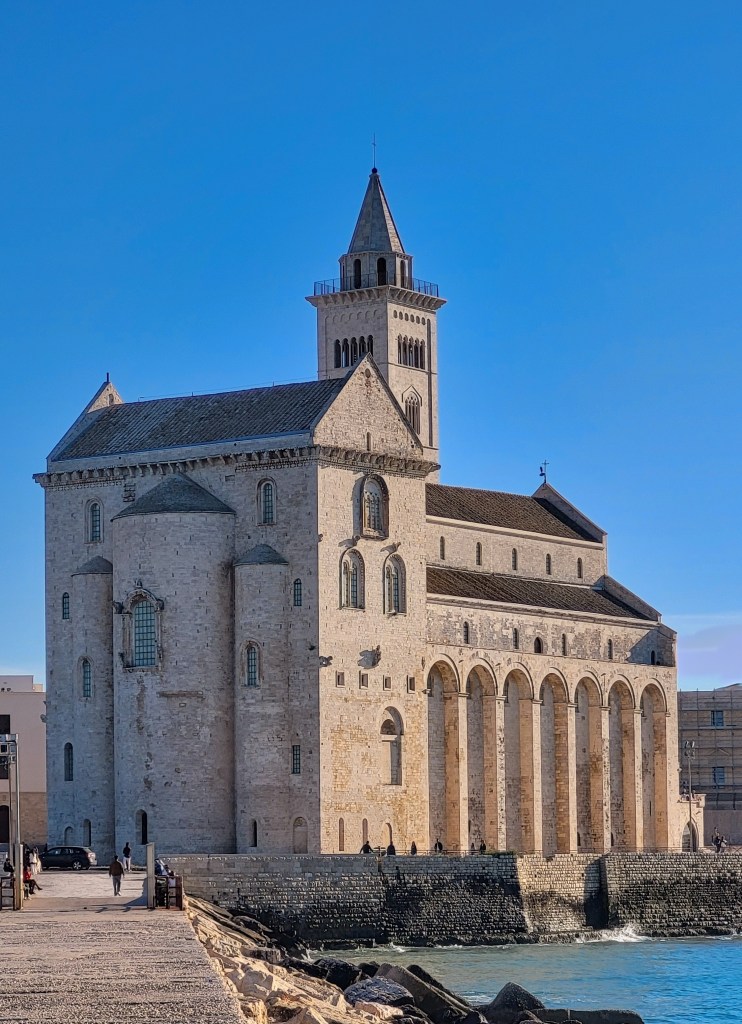
Our final stop for this part of the trip was Trani, a coastal city that doesn’t get nearly the attention it deserves. It flourished in the 11th and 12th centuries as a powerful maritime hub and a departure point for the Crusades, and its glorious Romanesque cathedral is built from a blush-toned local stone and seems to rise directly from the Adriatic Sea. The city had a wonderful ease to it: people out walking, enjoying themselves, not overwhelmed by visitors. After some of the more tourist-heavy stops on this trip, it felt like a gift.

We got a bonus we hadn’t planned on. Driving back to our apartment one afternoon after visiting Castel del Monte, we stumbled into the tail end of a procession for the town’s patron saint, exactly the kind of scene you imagine when you dream of southern Italy. Priests in robes, banners swaying overhead, and a brass band filling the streets with horns and tubas. It was like something out of a movie, and I wished we’d known about it in time to see the whole thing. No pics, only fleeting views…
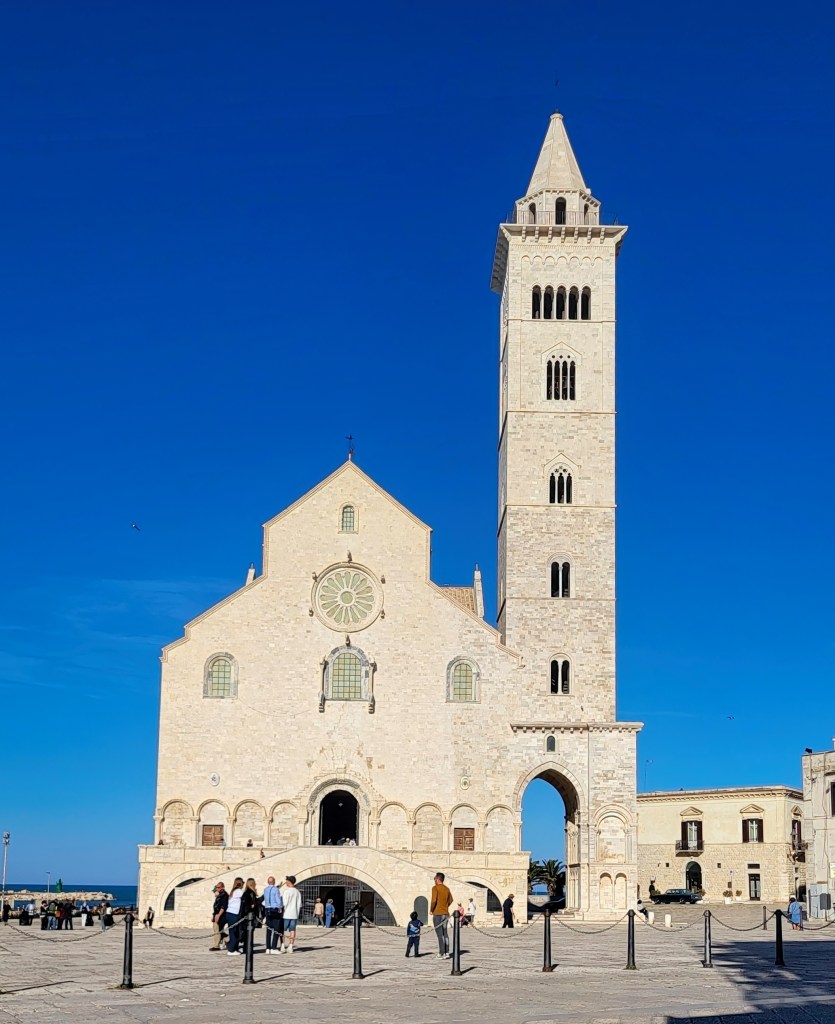
Trani duomo
Trani’s cathedral dominates the seafront piazza — Romanesque architecture at its best.
Trani Duomo seafront
Where stone meets sea: Trani’s 11th-century cathedral standing watch over the Adriatic as it has for nearly a thousand years.
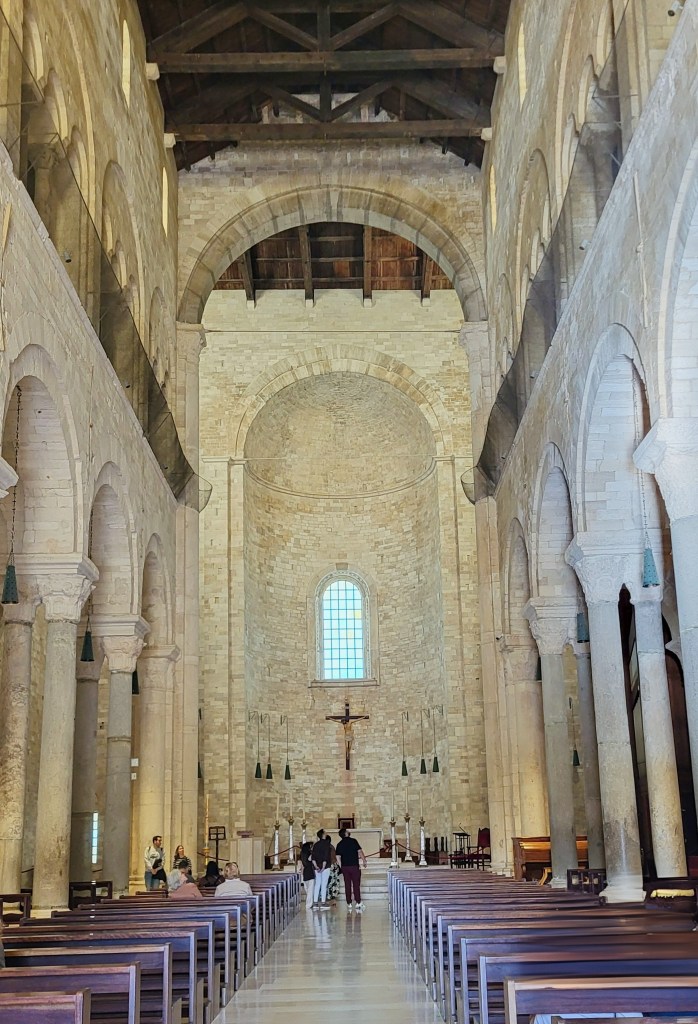
Trani Duomo interior
Romanesque restraint at its finest: the interior of Trani’s duomo lets the stone do all the talking.
Castel del Monte
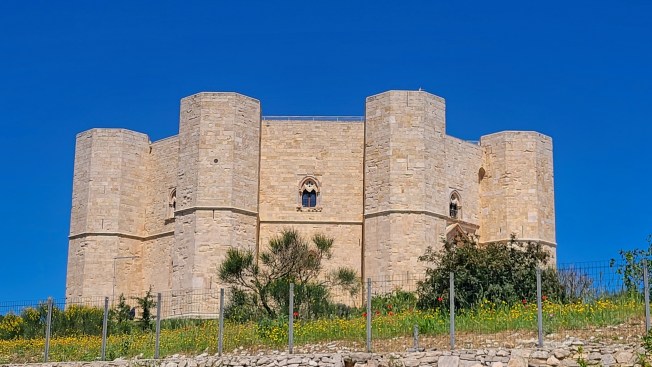
Castel del Monte: Frederick II’s geometric masterpiece rises from the Apulian plateau — eight towers, eight sides, and eight centuries of mystery.
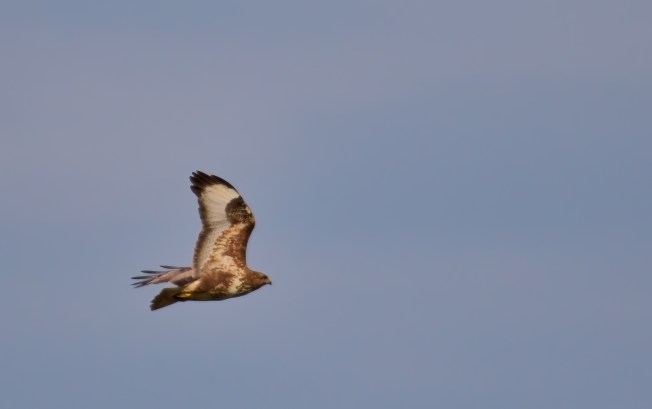
Eurasian Marsh Harrier
Lots of birds of prey in the countryside near the Castel del Monte, including this Eurasian Marsh Harrier.
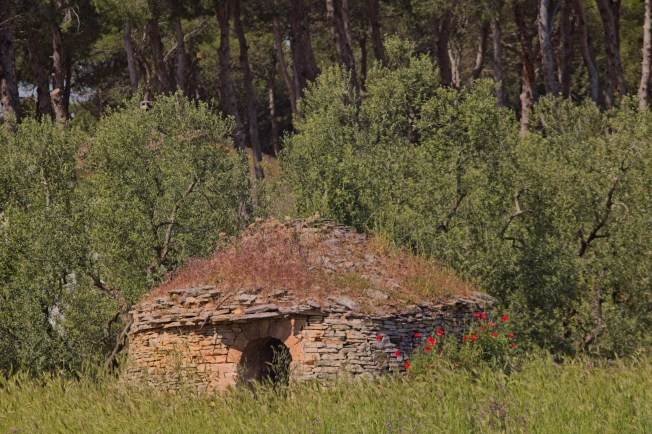
Trullo in countryside
The countryside is scattered with trulli, many of which are still used today to store equipment and supplies for local farms.

Part 4 – Forest, Frontier & the Road Home: TorreVento → Foresta Umbra → Molise

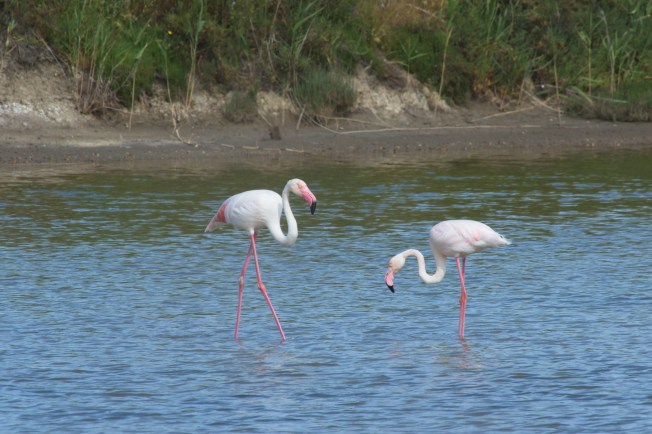
We made one more winery stop in the foothills near Castel del Monte before heading north: TorreVento, set amid vineyards and wildflowers and more of those wonderful birds. Then we pointed the car toward the Gargano Peninsula and the Foresta Umbra, the Shady Forest. On the drive up to the forest, we passed two roadside shallow ponds filled with flamingos – quite a surprise! We pulled over, stared and took lots of pictures.
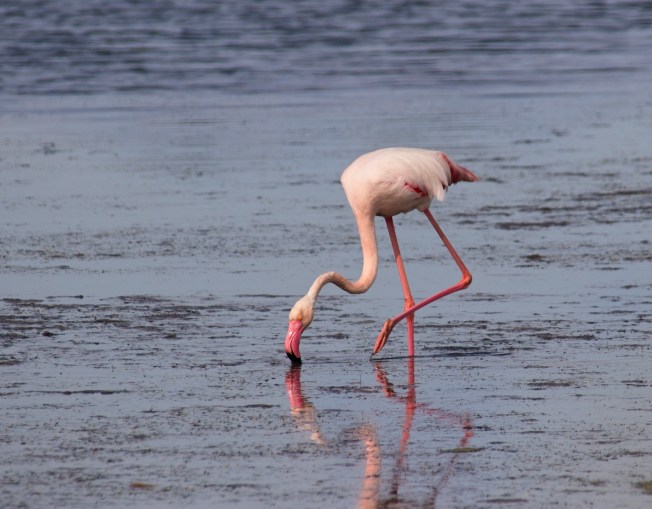
Greater Flamingo
We spotted Greater Flamingos in two shallow ponds right along the road. What a surprise!
Greater Flamingo pair
And here is a lovely pair of Greater Flamingos.
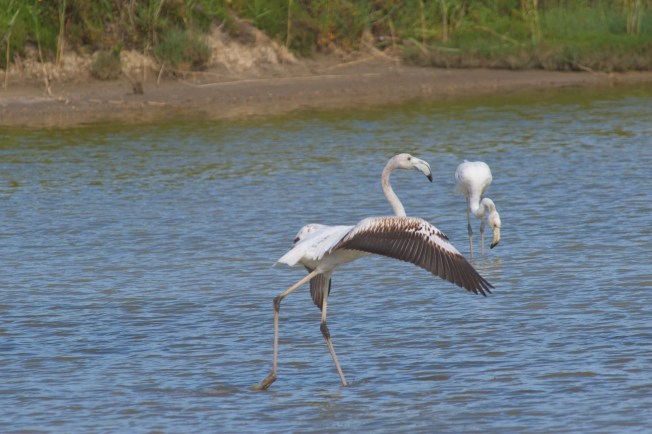
Juvenile Greater Flamingo ready to fly
Young flamingos are born with grey-white plumage — the iconic pink comes only with time and diet. It’s the carotenoid pigments in their food, primarily brine shrimp and algae, that eventually turn them the color we know.

The Foresta Umbra is the ancient heart of the Gargano National Park, one of the last remnants of the primeval beech and oak forest that once blanketed much of Central Europe. Its beech forests are now a UNESCO World Heritage Site, and driving into them you understand why — the trees are enormous, the light filtered and green, the silence deep.

Getting to the forest, however, tested our nerves. The road up was technically two-way but wide enough for only one car. We inched past four or five oncoming vehicles in a series of white-knuckle negotiations, each car easing half off the road to let the other squeeze by. The views were stunning, but the circumstances made it difficult to enjoy.

The destination was worth every hairpin turn. We stayed at the ELDA Hotel, a lovely property tucked right in the midst of the forest, in a cottage outside the main building with a table set perfectly for sitting outside, watching birds, and playing cribbage. We took a lovely walk through the old-growth forest to a quiet pond. The birdsong there was remarkable. I’ve been to a lot of beautiful places, but that morning walk felt like something set apart.
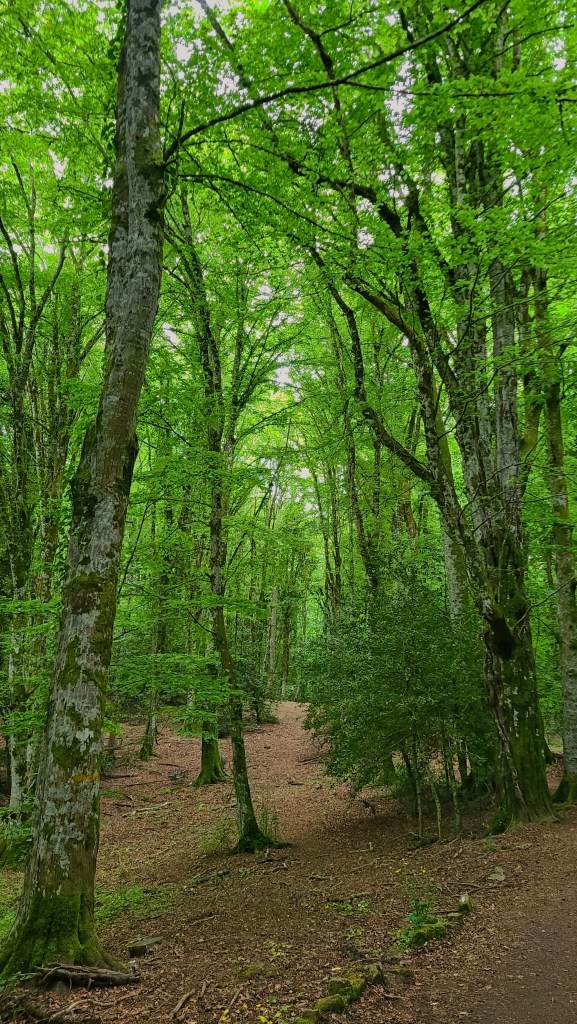
Foresta Umbra
Foresta Umbra, the peace and serenity of an old-growth forest.

From the forest we crossed into Molise —the third region of this trip. Molise is tiny and largely overlooked region, which turns out to be precisely its appeal. The landscape is beautiful and peaceful: forested mountains, green valleys, and agricultural plains. We visited the Claudio Cipressi winery, and his story is worth telling. In 1990, an agronomist friend mentioned almost in passing that Molise farmers used to grow a grape called Tintilia. The variety had nearly vanished; it was too difficult to farm, too obscure to bother with, and quite acidic. Cipressi, who had come to winemaking from a completely different career, became obsessed. He cultivated the grape, submitted it to university researchers, and eventually helped get Tintilia officially recognized as a unique indigenous variety and entered on Italy’s national registry. He tweaked his vinification process until he could consistently produce a well-balanced wine, albeit with several years of aging before its release. Today he is widely credited with saving it from extinction. The wine is wonderful and the landscape around the winery was breathtaking. We bought way too much.
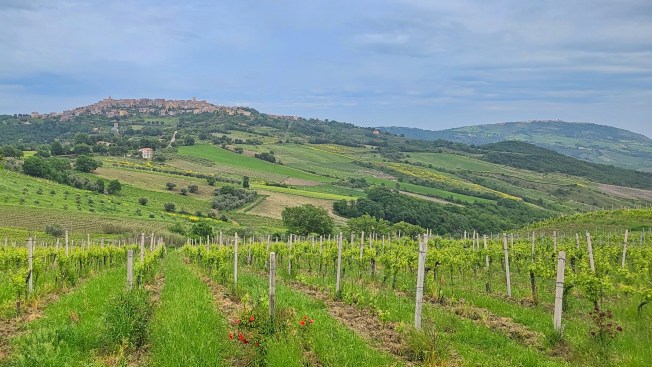
Molise vineyard
The rolling hills of Molise with Claudio Cipressi’s beautiful vineyard.
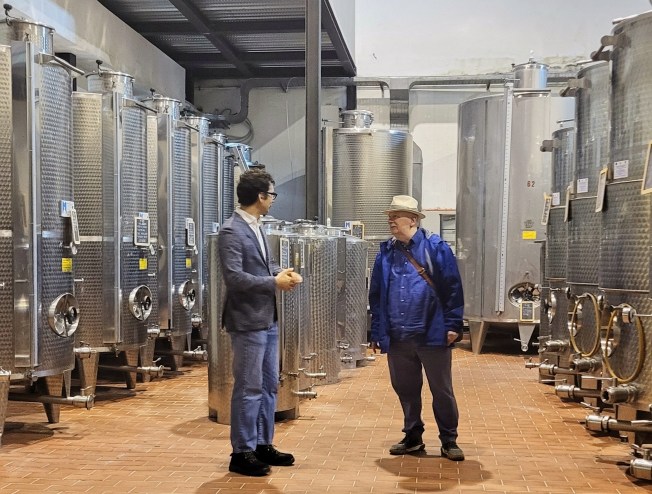
Claudio Cipressi winery
Jim is always very engaged during any wine tour with lots of questions about production methods.

We drove home via an overnight stop outside Orvieto, arriving back in Lucca by noon the next day. Nearly two weeks, three regions, flamingos by the road, orecchiette women, cave hotels, a nearly-lost grape variety, and more birds than we could count — but no itinerary could have planned for the wildflowers that added their own vivid surprise to every road we traveled, from the rocky hillsides of Basilicata to the sun-drenched fields of Puglia. What a trip!
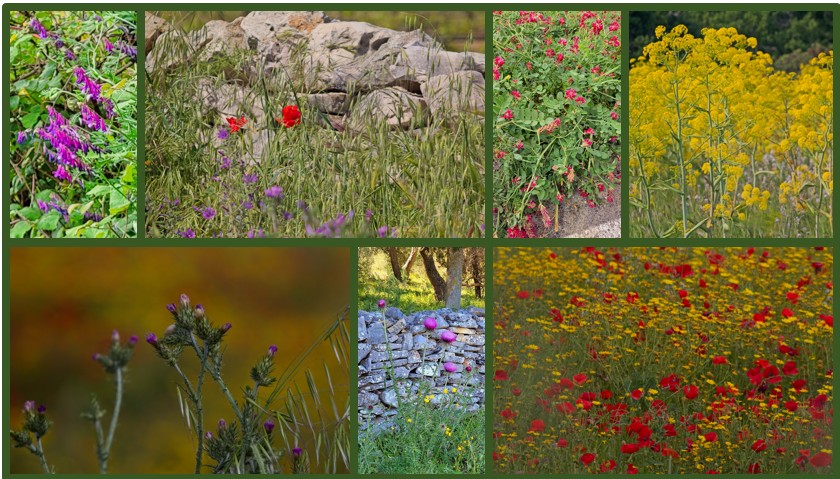
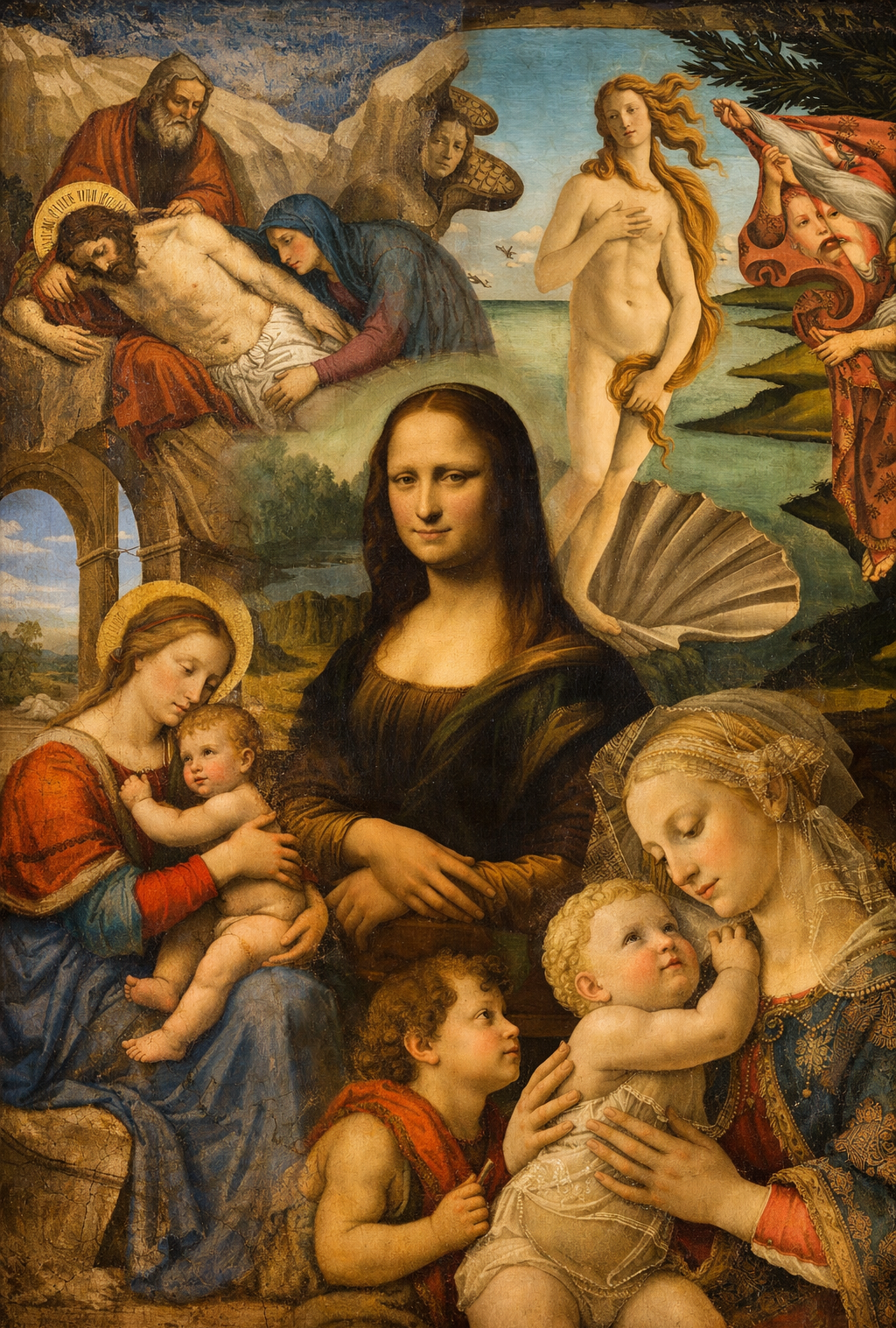
Wildflower collage

Unknown's avatar

Slowing Down with Art: Living in Italy and Falling for Fra Angelico

Living in Italy has changed the way I experience life and art. So much of Italy is old; our city has Roman, Medieval, and Renaissance structures and art. Being surrounded by centuries of art has slowed me down, encouraged deeper looking, and turned curiosity into long-term study rather than fleeting admiration.

Where My Love of Art Began

I have enjoyed art since I was young. On my first trip to Europe at age 17, I encountered works I didn’t fully understand, yet found beautiful and intriguing. Years later, as a senior in college, my schedule finally allowed room for a few “fun” classes alongside my math and science requirements, and I took an Art History course. That class transformed how I looked at art—not just as something beautiful, but as a reflection of its time and place, shaped by the artist’s life and influencing generations to come.

Learning One Artist at a Time

Over the years, museum visits in both the U.S. and Europe deepened that appreciation. After moving to Italy about six years ago, my relationship with Italian art grew more personal and immersive. In 2022, I read The Agony and the Ecstasy by Irving Stone, a historical novel about Michelangelo that inspired a quest to see his surviving sculptures in Italy (and a few beyond). Once I completed that journey, I began studying artists one at a time—Giotto, Botticelli, Leonardo, Raphael, Lippi, and others—allowing each to unfold slowly.

This Year’s Focus: Fra Angelico

This year, my focus (okay… perhaps my obsession) was Fra Angelico. His name may not be as recognizable, but he has completely captured my heart. Living at the transition between the late Middle Ages and the early Renaissance, his work evolved from flatter, more symbolic forms to the more naturalistic, three-dimensional style of the Renaissance. A Dominican monk, Fra Angelico was less interested in spectacle than in creating art for quiet devotion and prayer.

In the fall of 2025, a major Fra Angelico exhibition opened in Florence, split between the Museo di San Marco and Palazzo Strozzi. Jim and I went with a friend from Florence, committing to a full day immersed in his work, with a leisurely lunch in between to reset and reflect. Even so, by early afternoon we were overwhelmed—the exhibition included more than 140 works. My goal was simply to take it all in at an overview level, knowing I would return later to spend more time with selected pieces.

A side note… do you know that there is an illness that occurs in Florence from seeing too much beautiful art. Those inflicted experience rapid heartbeat, dizziness, fainting, confusion, and even hallucinations from overwhelming artistic beauty. It sounds dramatic, but it’s real… google “Stendhal Syndrome”. I’ve never experienced these severe symptoms, but I definitely reach a wall when viewing “too much art” that causes me to lower my gaze to the floor and head to the exit.

And so, we returned to Florence for a two-night stay. I spent one afternoon at Palazzo Strozzi and the next morning at the Museo di San Marco. I also really limited the pieces that I looked at. Jim opted out of my second Fra Angelico deep dive and wandered around the city on his own.

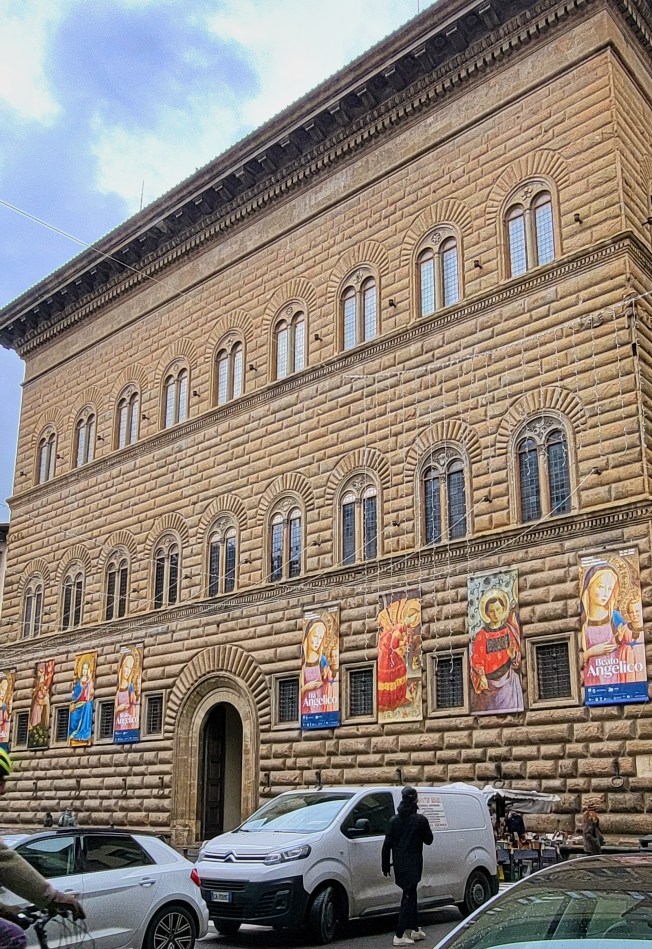
  • Palazzo Strozzi, with lots of banners for the special exhibit
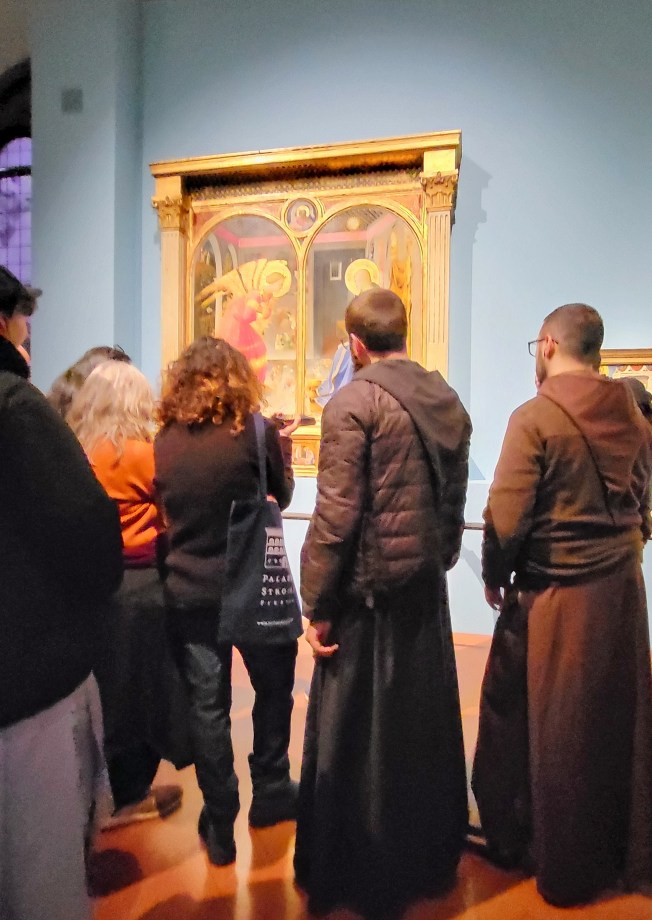
  • Lots of people enjoying the exhibit, including these monks

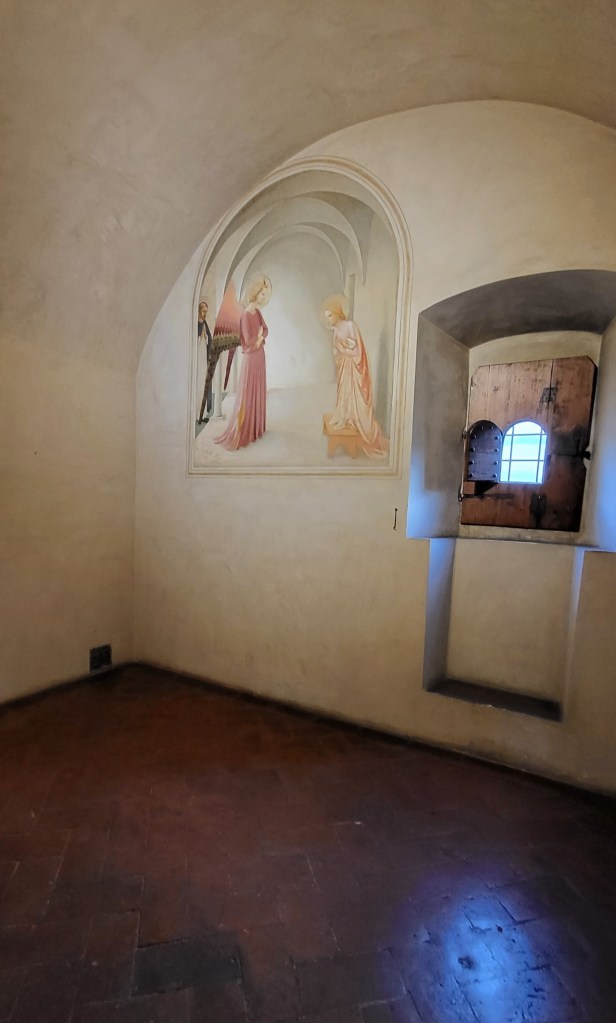
My favorite part of the exhibition was at the Museo di San Marco which also houses many of his works permanently. The building was once a Dominican convent where Fra Angelico lived. Each monk had a small room, or “cell,” used for sleep, meditation, and prayer. What makes San Marco extraordinary is that Fra Angelico painted frescoes in each cell—not for public admiration, but for the private devotion of the monk who lived there. Most are simple, a few more complex, but all were created to support quiet meditation and prayer.

On that same floor, in the hallway, is Fra Angelico’s most famous fresco, The Annunciation, depicting the angel Gabriel telling Mary that she will bear the Son of God. There are many fascinating technical aspects to this work, but what moves me most is Mary’s gentle expression and the soft, calming colors that create a sense of peace and stillness. Fra Angelico does not paint to impress—he paints to slow the viewer down.

Fra Angelico also created large altarpieces and fulfilled commissions by the wealthy patrons of the day, demonstrating that his deeply contemplative style was equally at home in major public commissions.

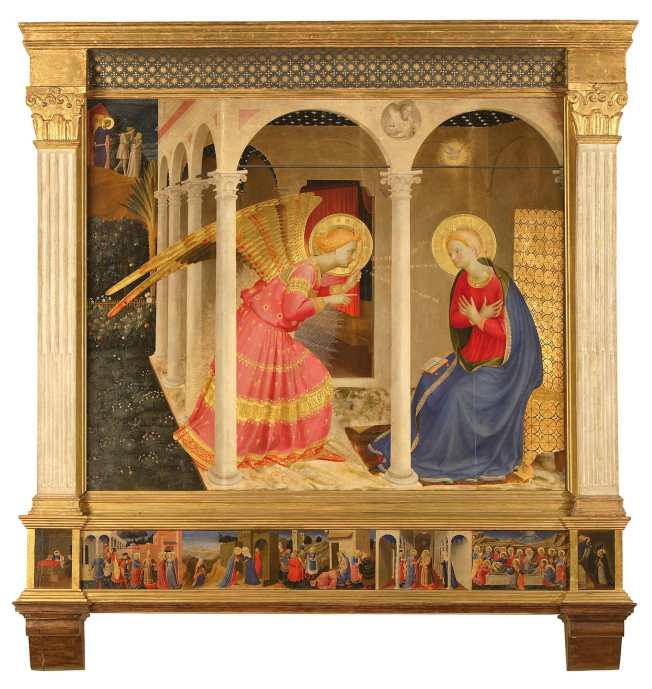
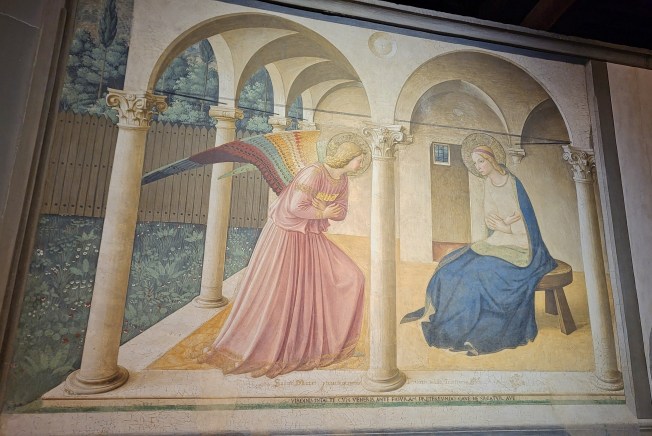
Here are three versions of The Annunciation for different places and intended uses:

  • Annunciation of Cortona is an altarpiece intended for display in a church. Lots of gold, deep colors, decorations and complexity.
  • The Annunciation at San Marco is at the entrance to the residents' area of the convent, in the hallway. The monks would see this every day. Gentle colors, simpler composition. No gold.
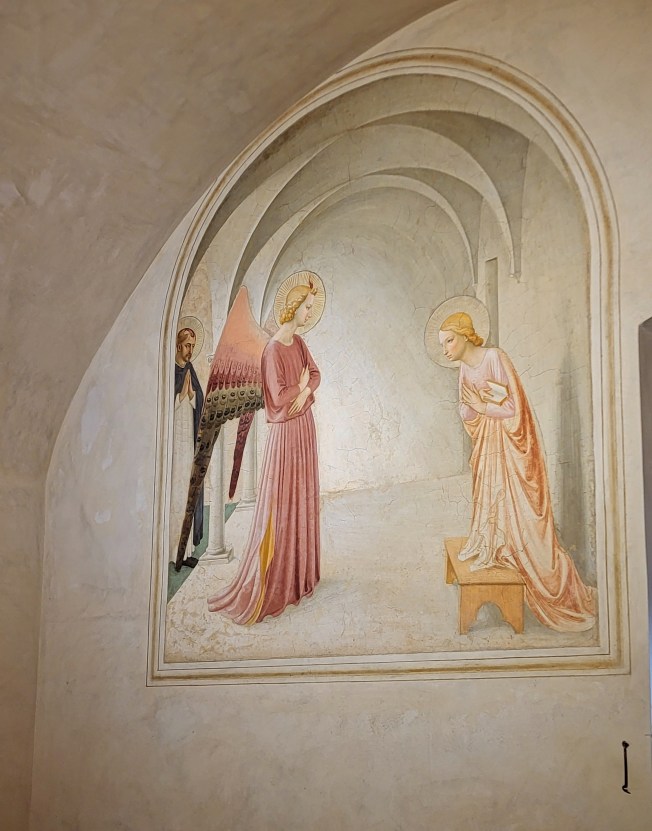
  • The Annunciation in one of the cells or rooms of the convent. The fresco is even simpler with just the essence of the story, intended for prayer and mediation.
  • Closeup of the Annunciation in a cell. As founder of the Dominican Order, Saint Dominic appears as a model of prayerful contemplation for the friars living in the cells.

Although this exhibit ends on 25 January 2026, many of his works are permanently on display at the Museo di San Marco. If you visit Florence, I strongly recommend that you visit. It is a two-minute walk from the Galleria dell’Accademia which houses Michaelangelo’s David.

Who’s Next?

So, who will I study next? My current plan is Luca della Robbia and Donatello. And yes, Donatello will complete my study of the Teenage Mutant Ninja Turtles. 😊

Living in Italy makes this kind of slow, immersive exploration possible. Art here isn’t something you rush through —it becomes a companion over time. Studying one artist deeply, returning again and again, and letting understanding unfold gradually has been one of the great gifts of living here, and it’s a journey I’m grateful to continue.

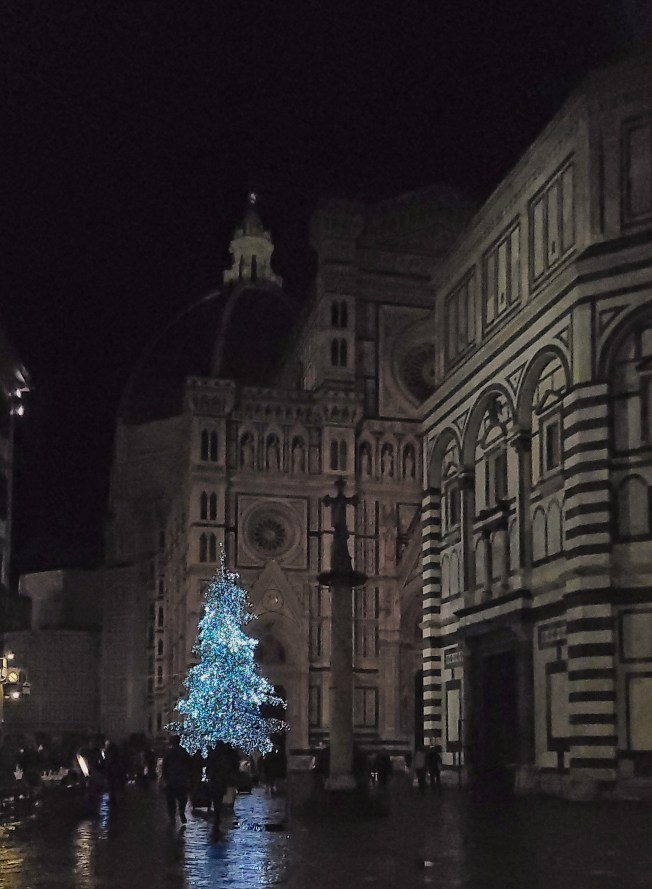
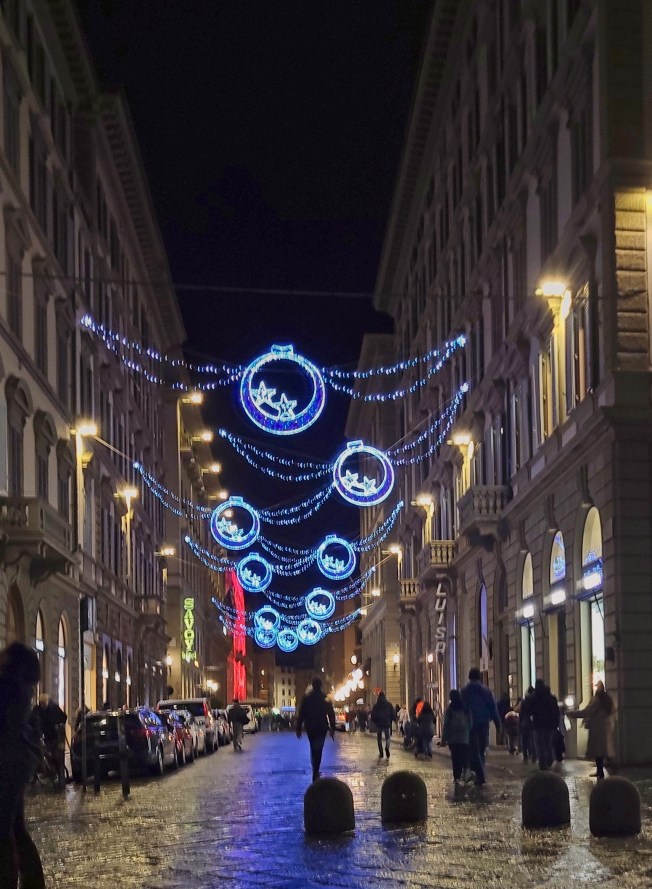
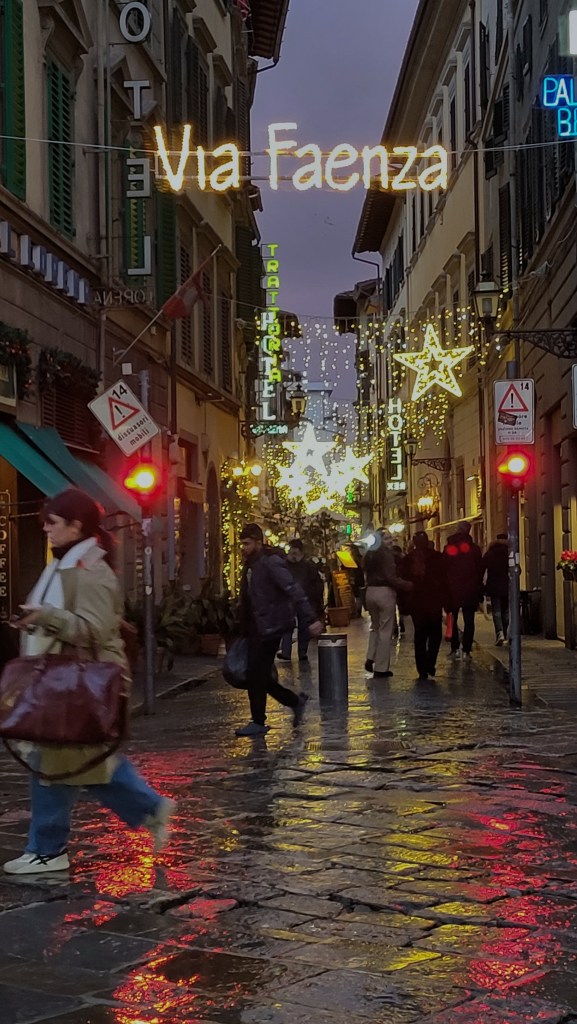
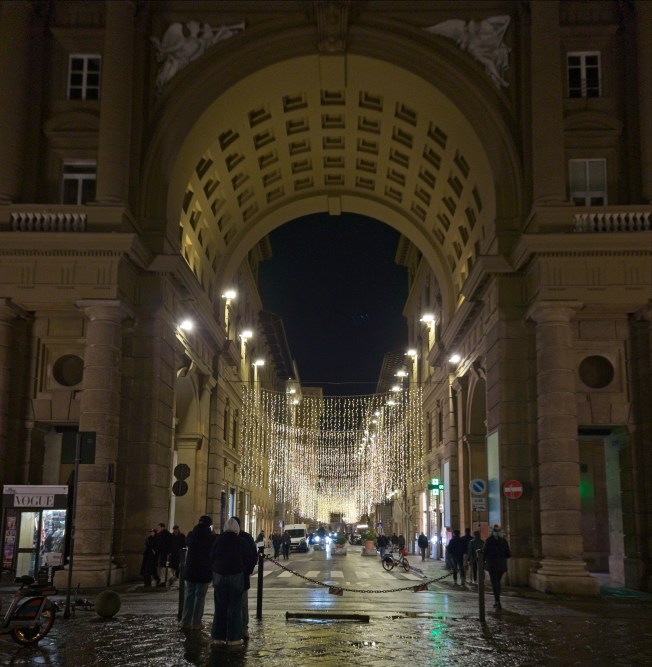
In closing, here are some of the Christmas lights we saw as a bonus on our weekend visit to Florence. Not all serious art, but also glitzy lights!

  • Christmas tree in front of the Duomo
  • Christmas lights near Piazza Repubblica, where we stayed.
Unknown's avatar

Another Milestone in Our Italian Immigration Adventure

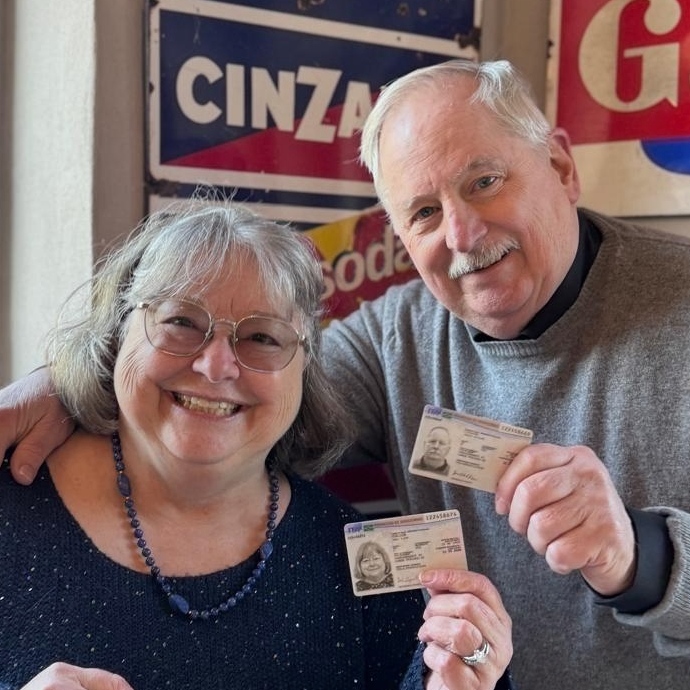
Saturday we reached a big milestone — we now have our permanent carta di soggiorno, or permission to stay in Italy indefinitely.
How We Got Here

  1. 2017–2019: What began as a dream of moving to Italy slowly turned into a rough idea, then a sketch of a plan, and eventually into a detailed, deliberate decision.
  2. 2019: We applied for Elective Residency visas while still living in the U.S.
  3. 2020–2022: After moving to Italy, we began the bureaucratic marathon:
    • Annual permesso di soggiorno
    • Official residency
    • Carta d’identità (national ID card)
    • Tessera sanitaria (health card)
      All of this took from March 2020 to January 2022.
  4. Driver’s Licenses: After one year in Italy, you must get an Italian driver’s license. The written test is notoriously difficult — even for Italians. After lots of studying, we both passed. Jim even passed the motorcycle exam, so a Ducati may be in our future.
  5. Annual Renewals: Every year we had to apply for a new permesso di soggiorno and tessera sanitaria. The permesso expires after one year but sometimes takes longer than that to receive, so you pick it up already expired and start all over again. A never-ending loop.
  6. Year Five: After five years of residency, we became eligible for a permanent carta di soggiorno — and we applied right away.

Each application required piles of documents. I’ve lost count of how many times I’ve submitted our 14-page lease (always printed double-sided!).

The Stressful Part: The Suitability Certification

To apply for the permanent carta di soggiorno, we needed:

  • Everything required for a regular permesso, plus:
  • Italian language certificate (A2 level)
  • Criminal record in Italy
  • Certification that our home is “suitable for habitation”

We provided all documents except the last one. The last one was the hardest. Our apartment easily meets the standards, but the city wanted a properly scaled floor plan and additional documents we didn’t originally know were required. We asked the owners, the building association, a neighbor, even the building’s architect (who we know personally). Still — we could not get the last document.

Then, out of the blue, Tony (our Italian fixer for all things bureaucratic) told us our permanent carta di soggiorno had been approved and was ready to pick up. We still don’t know how or why, but we are so grateful. Truly an answered prayer.

What’s Next?

Our lease expires in two- and one-half years. Rent will probably increase after eight years at the same rate — which is fair — or the owners may decide to sell. If that happens, we don’t know what we’ll do. Long-term rentals in Lucca are currently scarce because of the conversion to short-term rentals. Maybe things will change in two years. Maybe we’ll compromise. Maybe we’ll move to another city. Buying isn’t likely — the tax implications and housing market are complicated and very different from the U.S.

Mostly, we’ll continue our retired life in Lucca. We usually have a major trip or event about once a month. In between, we plan for those adventures, study Italian, enjoy our hobbies, spend time with friends, and appreciate the simple rhythms of daily life.

After ten years of residency, we’ll be eligible to apply for Italian citizenship. That requires a B1-level language certification. I’ve already passed mine; Jim is studying for his now. We decided it’s easier to take the test at age 66 than at 71, and we’d prefer not to do it under pressure.

Reflections

I often say Italy “dares” you to live here. The bureaucracy can be slow, confusing, and sometimes absurd. Expats usually respond in one of two ways: frustration or acceptance. We realized we had officially joined the second group the day we waited 45 minutes for new tessere sanitarie, only to be told (in very polite Italian) that the computer was down and nobody knew when it would be fixed. Jim suggested we try again tomorrow; I suggested we give it a week. There wasn’t much point stressing; an expired health card doesn’t really change anything.

People often ask if we like living in Italy better than in America. The truth is, two big life changes happened at the same time: we retired and we moved to Italy. I can’t compare working life in America to retired life in Italy. What I can say is this: even knowing everything we know now — every document, every line, every impossible requirement — we would still do it again.
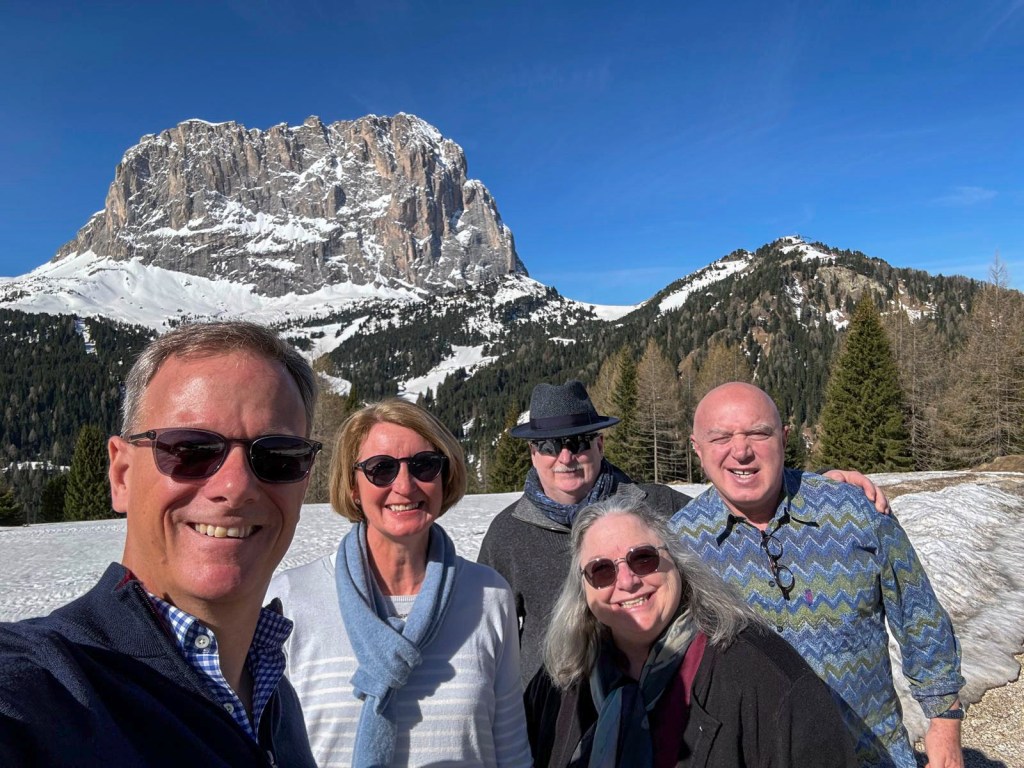
And we’re staying.

Unknown's avatar

Discovering Spello: The Art of Le Infiorate Festival

In June, Jim and I spent twelve days exploring Umbria, the stunning region just southeast of Tuscany. I shared plenty of photos on Facebook of the towns we visited — each beautiful in its own way — but I held back on Spello. Why? Because what we experienced there simply cannot be captured in a few pictures or captions. Spello deserves more. It deserves more — a story.

And that story is about Le Infiorate.

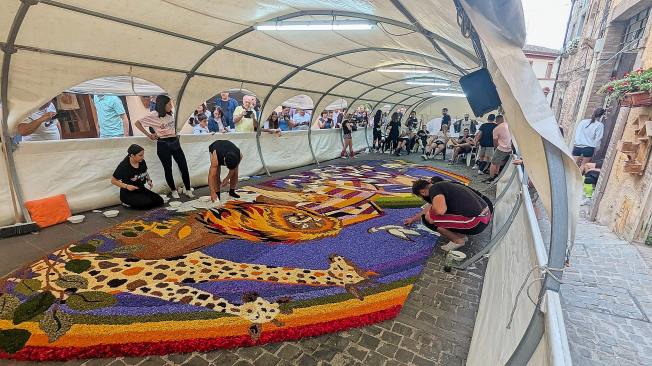
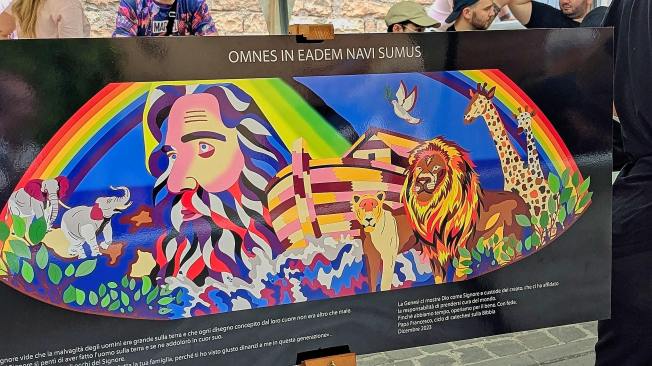
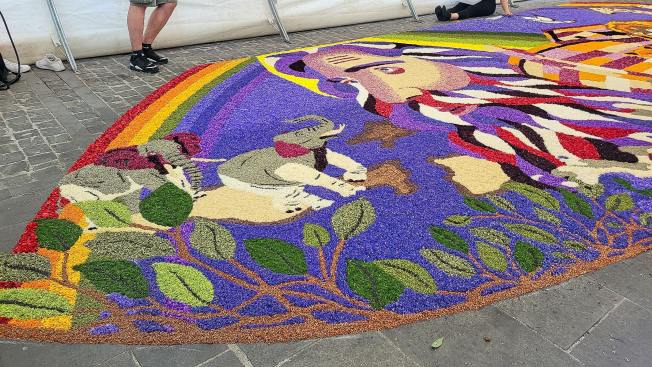
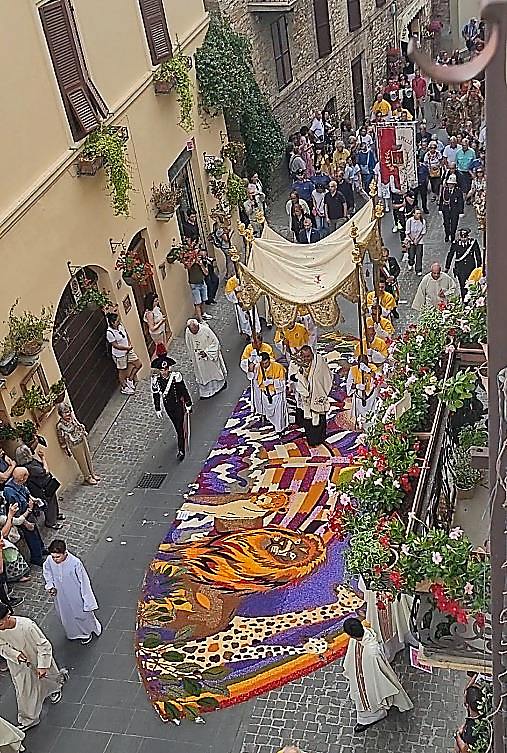
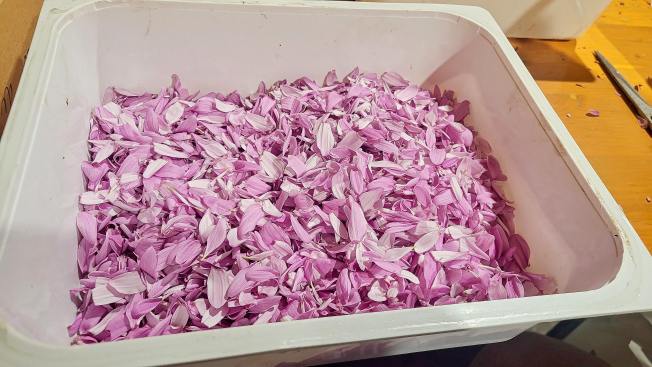
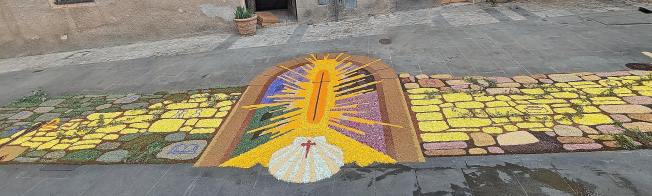
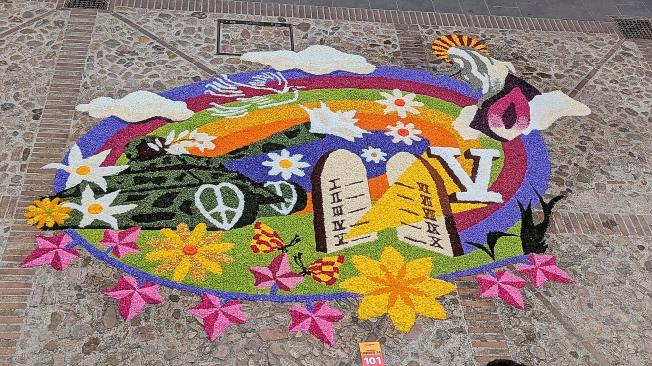
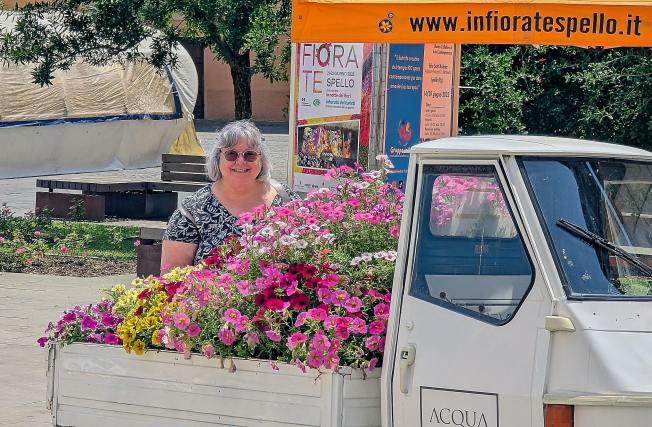
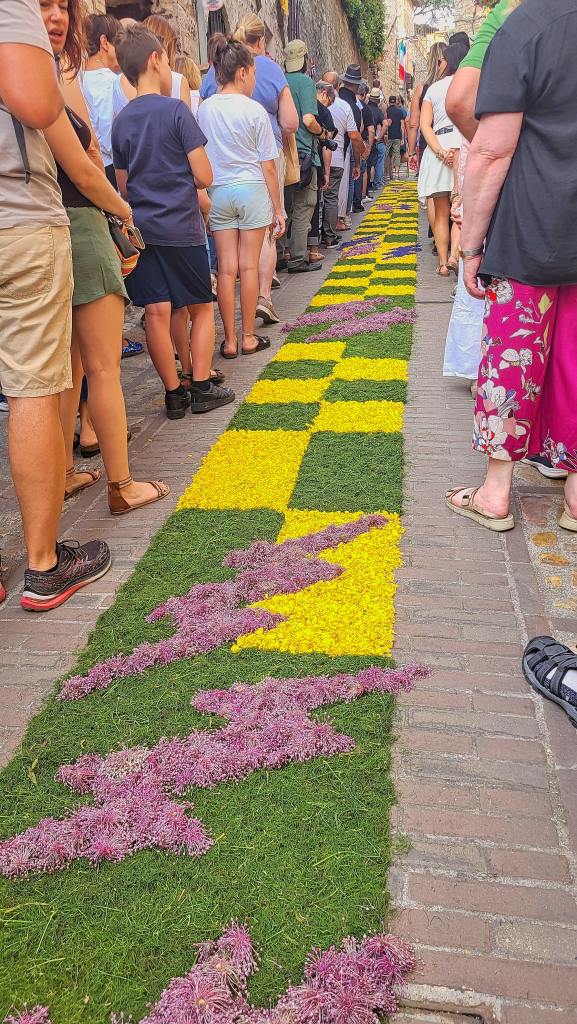
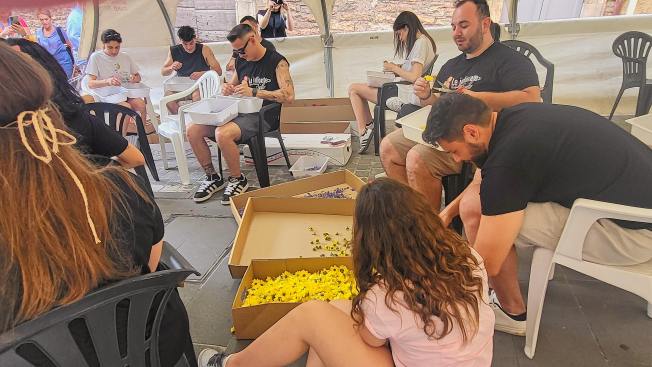
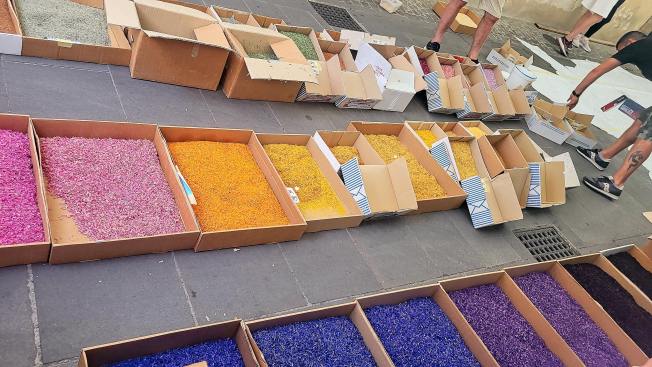
Every year, on the feast of Corpus Domini (Corpus Christi), the streets of Spello are transformed into a living canvas—flower carpets that stretch for meters, designed and laid down entirely by hand using flower petals, leaves, and seeds. No glue or adhesives are allowed; instead, water is misted on to keep the petals fresh and in place. The effect is dazzling: sacred art underfoot, created in the middle of the night, and gone by sunset the next day. The official website is https://www.infioratespello.it/.

Here’s a brief overview of the main events of Le Infiorate:

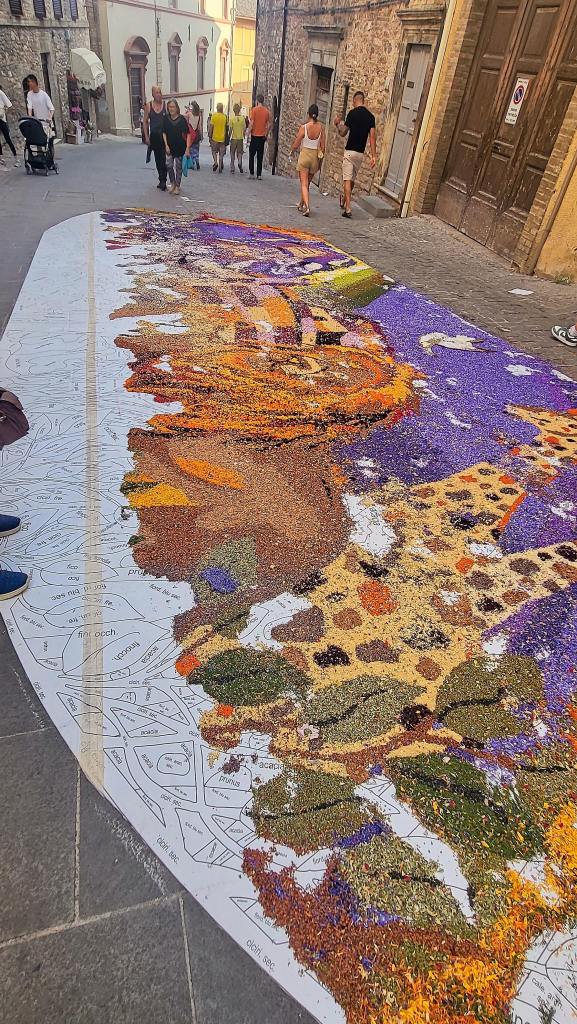
  • Saturday Morning–Afternoon: Local groups mark the street with large design templates and set up tents to cover the designs from wind and rain.
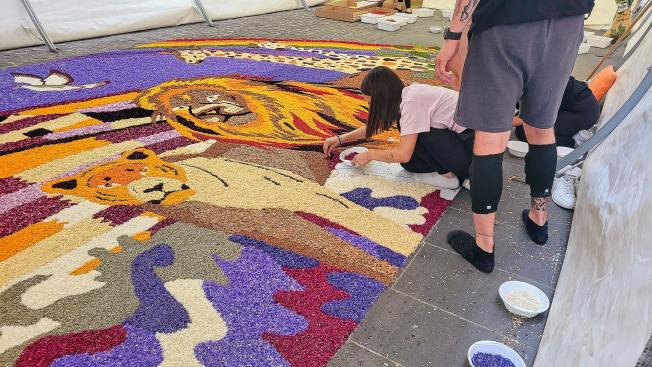
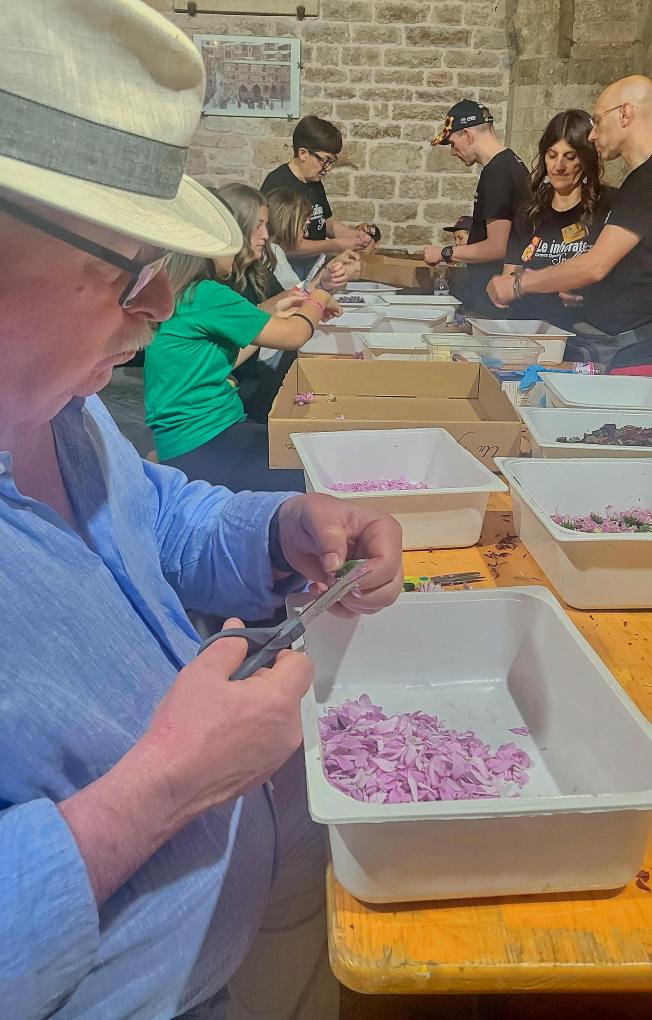
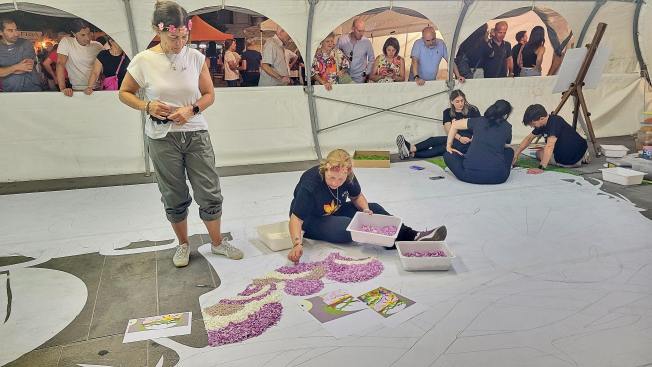
  • Saturday starting at 6pm: Volunteers begin work and continue through the night, preparing thousands of flower petals, carefully separating colors and textures, then placing petals by hand onto the designs using tweezers, cards, and their hands — with plenty of chatting, singing, and sharing food.
  • Sunday at 8am: All designs must be completed, because the judges start their walk through town assessing each carpet in several categories.
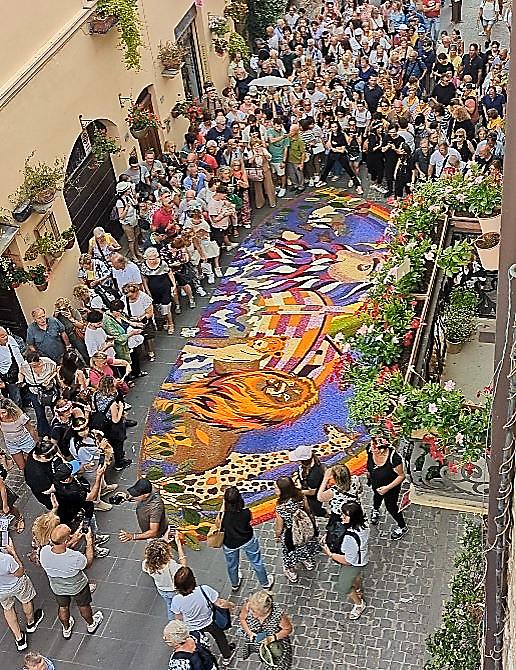
  • Sunday at 11am: A religious procession passes over the flower carpets, a symbolic act that also marks the end of their brief lifespan.
  • Sunday Evening: The streets are cleaned, and the petals are swept away, leaving only memories—and lots of photos—of this fleeting, floral art.

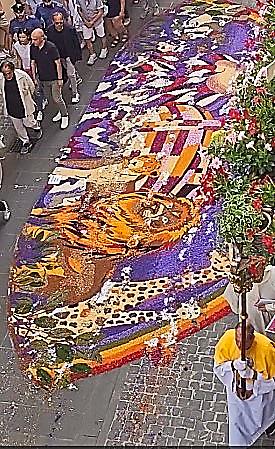
We arrived on Saturday morning and, to our surprise, discovered that our apartment was right along the procession route. Throughout the day, we explored the town and saw around 60 different flower carpets designs. However, we paid special attention to the one just outside our door. I used photos of that particular design to illustrate the Infiorate process.

There is a tremendous amount of work needed to prepare the flowers, so some groups invite visitors to help. We found one of these groups and helped for about an hour. So much fun to participate in the activity!

The designs are created and judged in four categories:

  1. CARPETS / QUADs: flower displays of at least 24 square meters that represent a religious theme in a figurative, abstract, or symbolic manner. These dimensions are reduced for particular narrow streets.
  2. FIGURATIVE CARPETS: flowered carpets measuring at least 12 linear meters or 12 square meters, but less than 24 square meters, in which at least one figurative element is present.
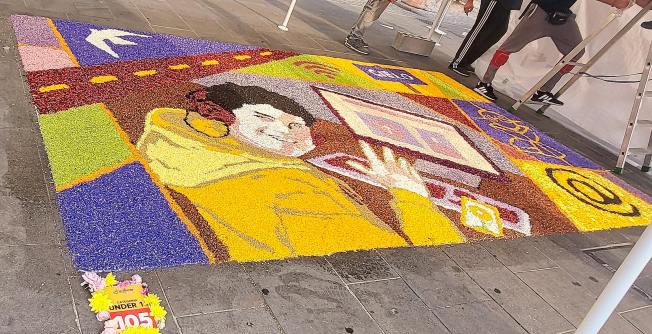
  3. UNDER-14: flowered carpets measuring at least 12 square or linear meters created by groups whose members are under 14 years of age.
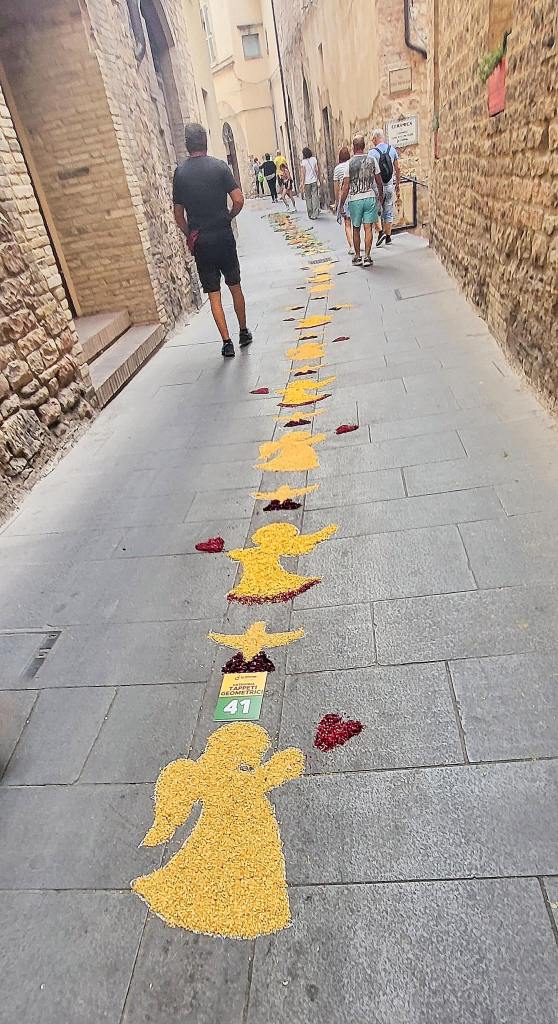
  4. GEOMETRIC CARPETS: flower carpets of at least 12 linear meters, in which the repetitiveness of the shapes prevails.

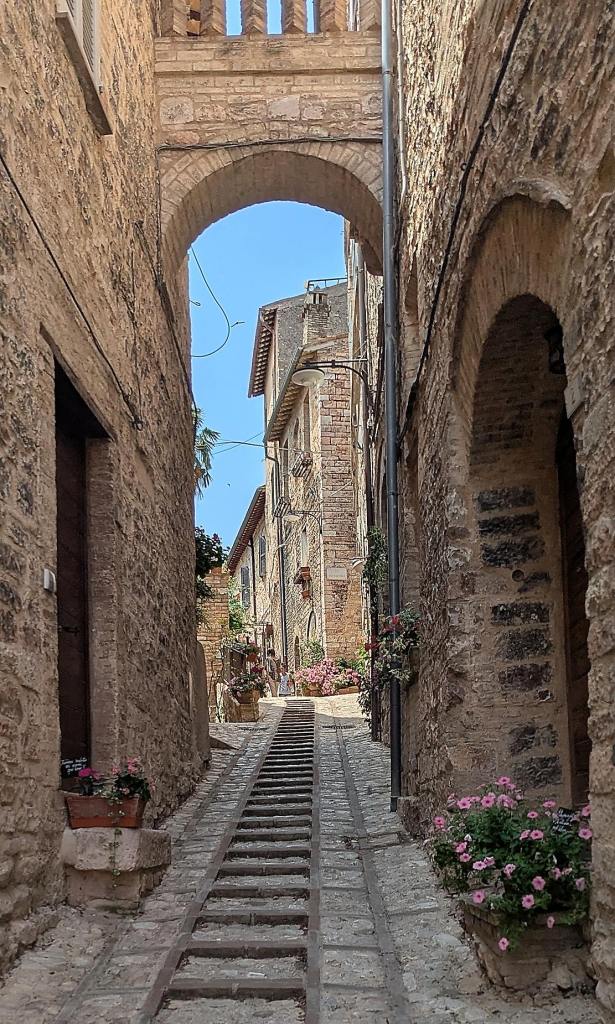
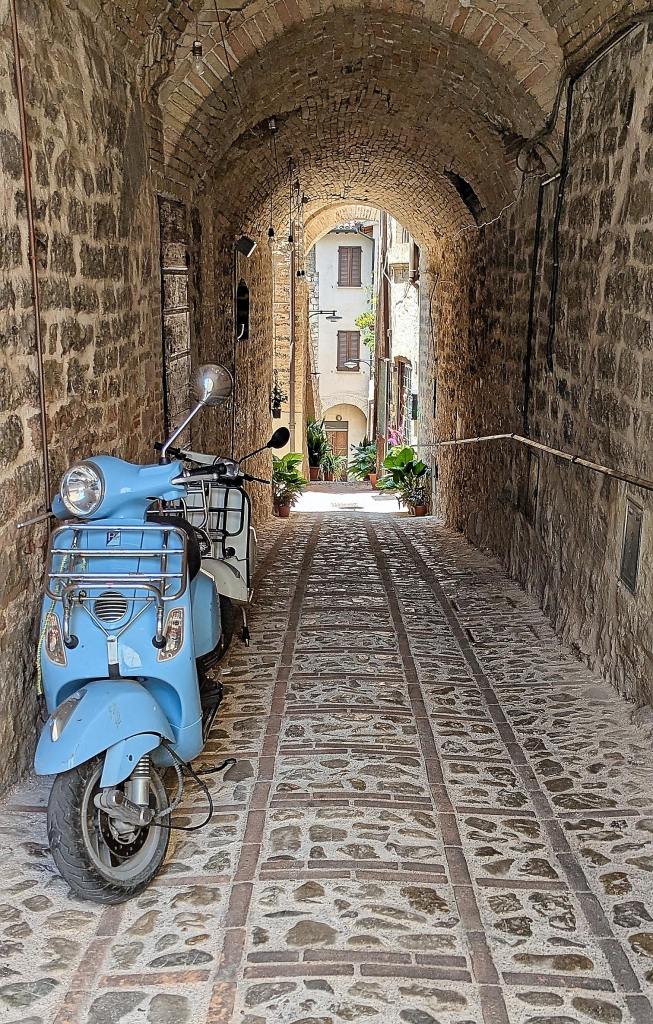
Here are pictures of designs in each of these categories, along with some street scenes.

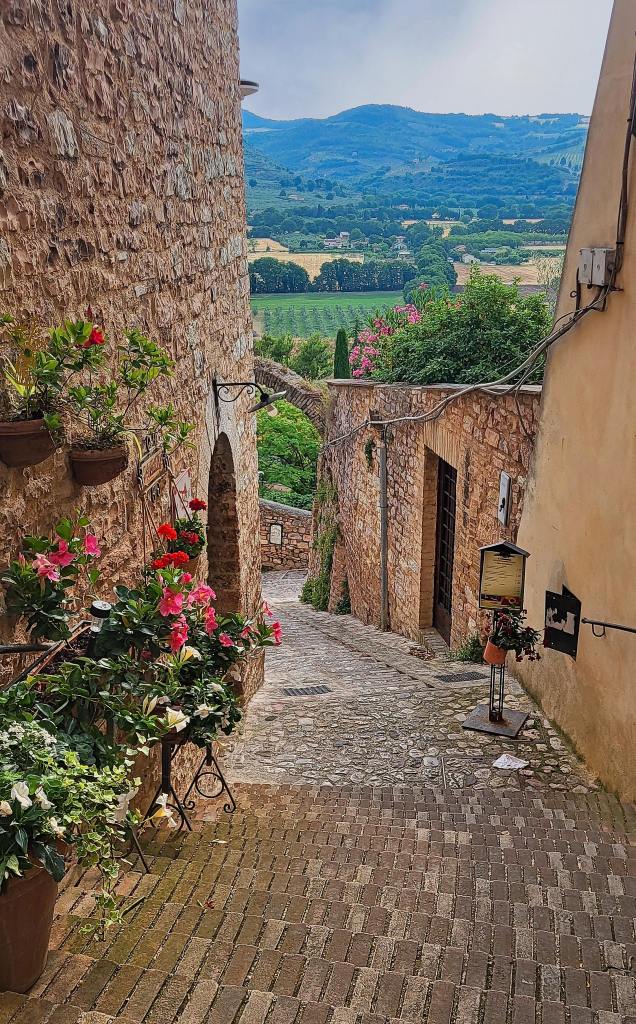
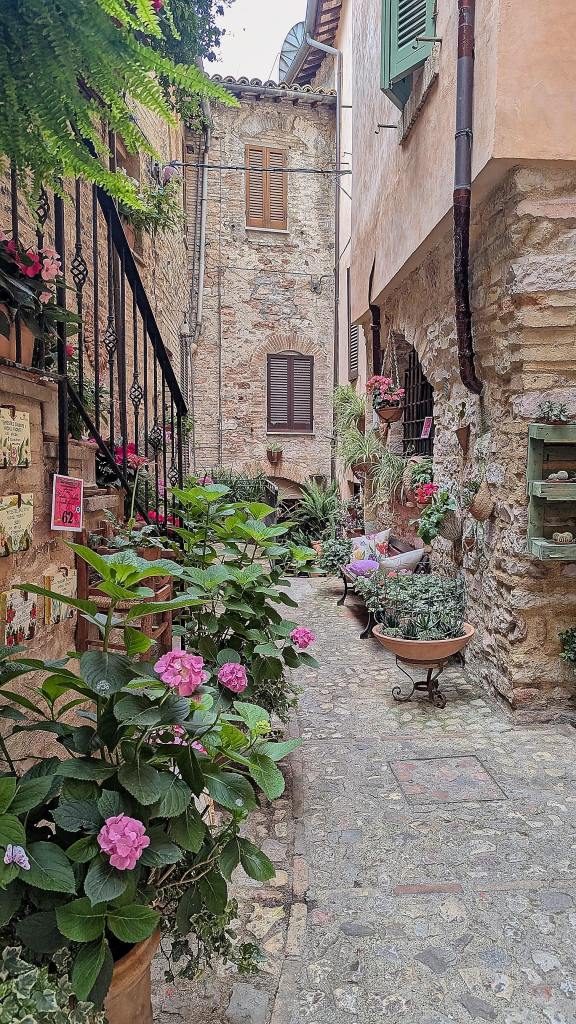
Another flower contest, Finestre, balconi e vicoli fioriti, is also held that brings color and creativity to windows, balconies, and alleyways. Displays are judged on beauty, originality, and how well they highlight the town’s historic architecture. These blooms give Spello a lasting charm. Here are some photos that capture that beauty.

If you are considering visiting Spello for Le Infiorate, here are a few tips for you:

  • Go! It is worth it!
  • The 24-hour period from 4pm Saturday to 4pm Sunday gives you an opportunity to watch (and participate!) in the preparation activities, see the completed designs, and watch the procession. If you can only go on Sunday, get there as early as possible, preferably well before 8am.
  • Stay in the town of Spello if possible. I made reservations six months in advance and there were few rooms available. Plan early, but also check for openings later if that is your only choice.
  • Reserve a parking space online then walk into the city. We brought only what we would need for the two nights, because the hills are steep!
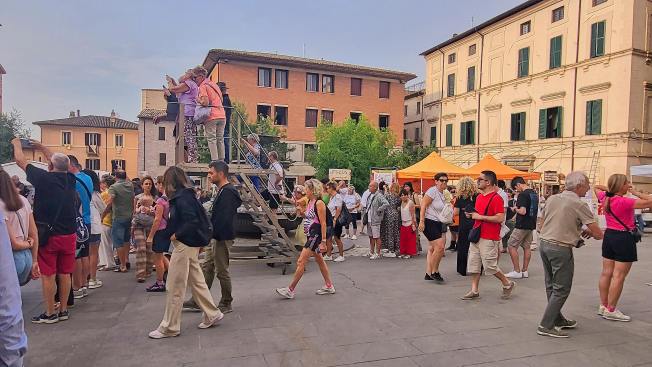
  • Be prepared for crowds and focus on the beauty and community spirit instead.

Le Infiorate may last only a single weekend, but the spirit of creativity, community, and beauty lingers all year. Whether you come for the fleeting floral carpets or stroll through flower-filled alleyways in another season, Spello offers something truly special. It’s a town that celebrates art, honors tradition, and welcomes visitors with open arms—and, of course, plenty of petals.

We’re so grateful to have been a small part of it.

Unknown's avatar

Alpine Splendor and Verona’s Charms

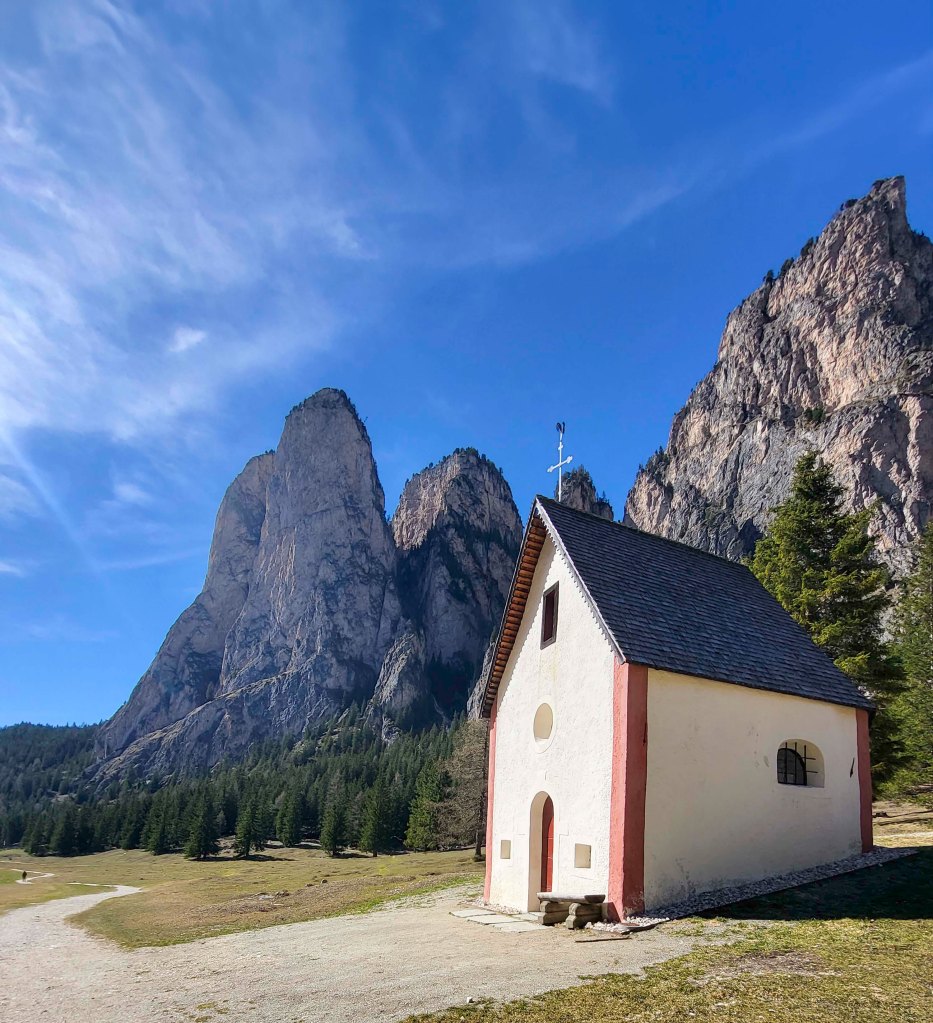
When people visit Italy for the first time (or two), the biggest destinations that come to mind are Rome, Florence, and Venice. Each has spectacular and unique sights to see – and also lots and lots of tourists. After a few visits to Italy, people often want to visit locations that feel more authentic without the throngs of tourists. We visited two of these locations recently – the Dolomites of Northern Italy’s Alps and Verona, known as the city of Romeo and Juliet. I also visited Mantua (called Mantova in Italy) which is filled with important art and history and seems to be mostly visited by Italian schoolchildren. This blog post will highlight my visits to these lesser-known but wonderful locations.

Diana and Jed are friends from Lucca; they recently purchased a condo in the Dolomites so that they could enjoy the winters skiing. And from their property, they are just a few steps from the ski lifts! They invited Pasquale, Jim and I to visit in April, with a special request – that Pasquale set up a few visits to wineries in the area, using his in-depth knowledge of Italian wine producers. This turned out to be a bit of a challenge because many wineries were unavailable due to “out of season” or they were preparing for Italy’s largest wine show in just a few days – more on this later. We visited three:

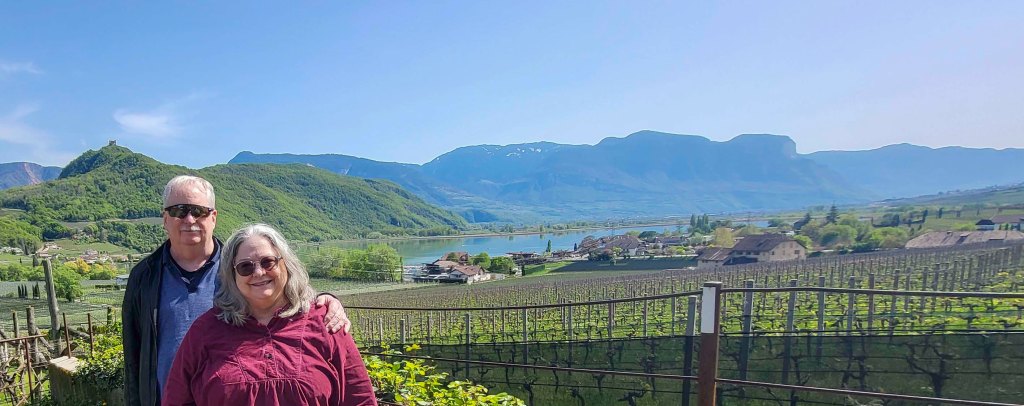
  • Weingut Lieselehof – on a beautiful mountainside near a lake. And they have a very interesting “wine museum” that has over 100 different types of grapes growing from all over the world. They study how they grow in this environment and are particular interested in disease-resistant varieties.
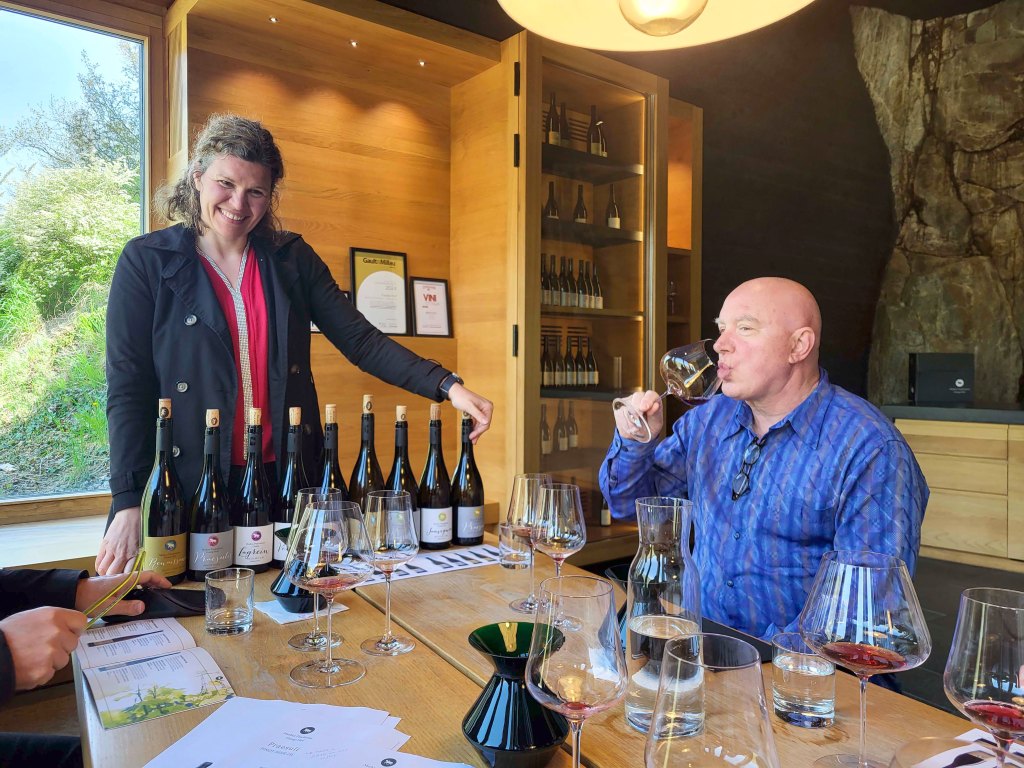
  • Markus Prackwieser Gump Hof – a wonderful family-owned winery that weaved the story of family, local history, and hard work together leading up to a wonderful wine tasting. Our favorite winery of the three.
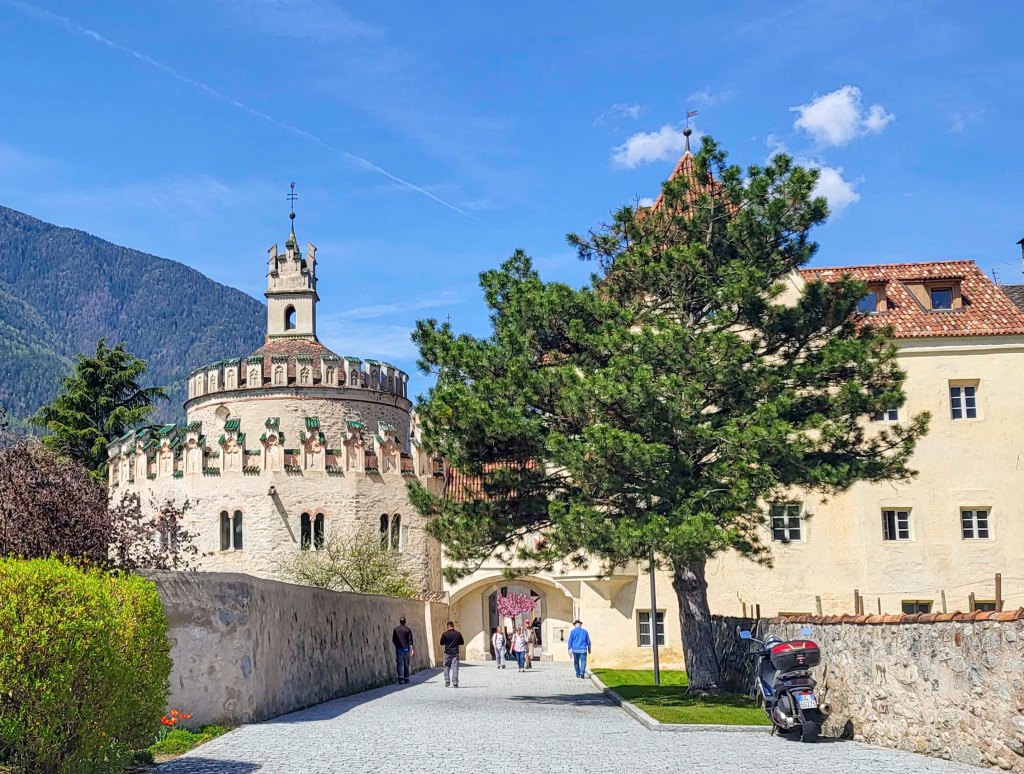
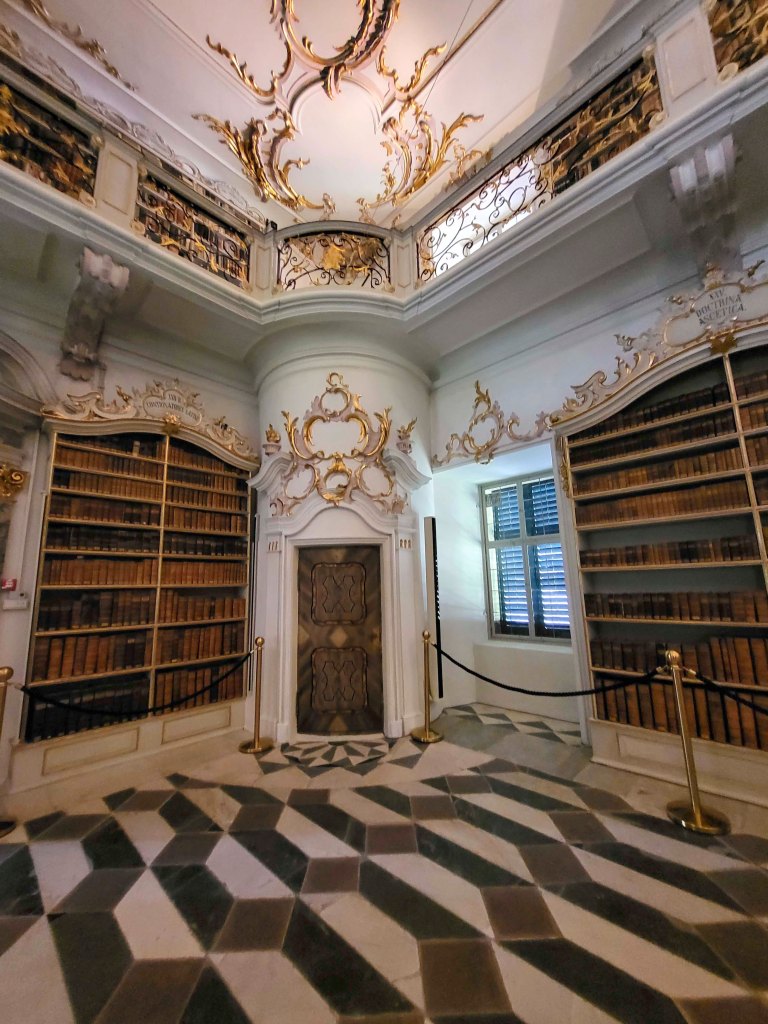
  • Kloster Neustift Abbazia di Novacella – a winery and an abbey together! This was quite a large winery that produces LOTS of different wines. The grounds, abbey and library were gorgeous. Too bad the wine wasn’t as good.

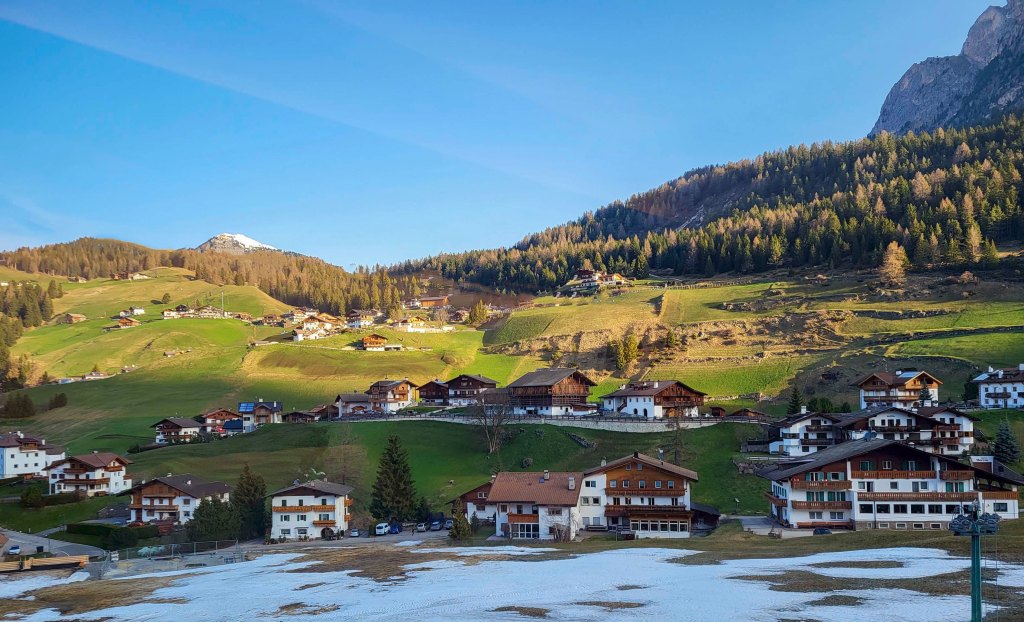
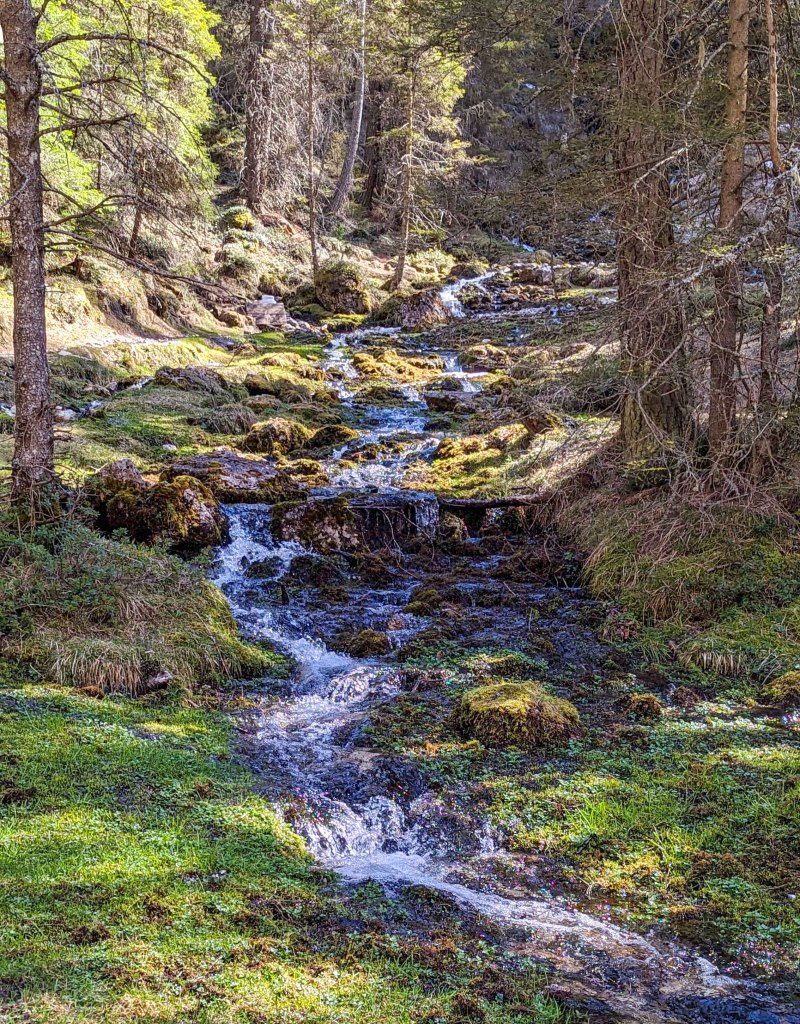
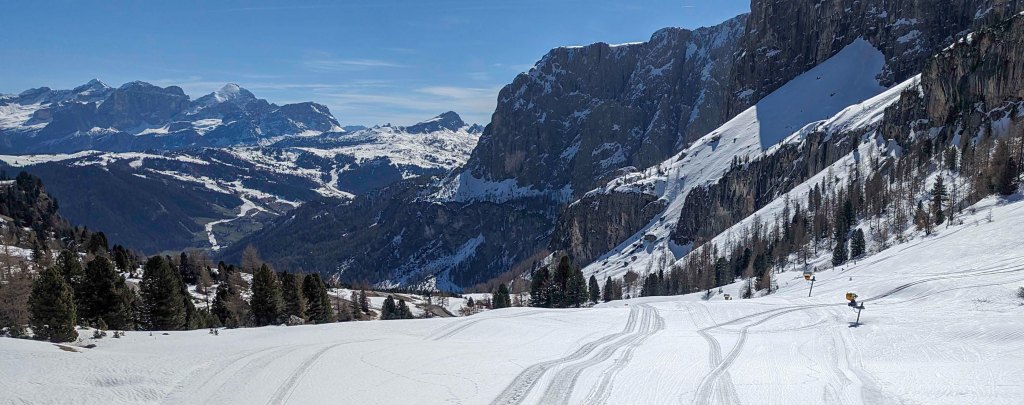
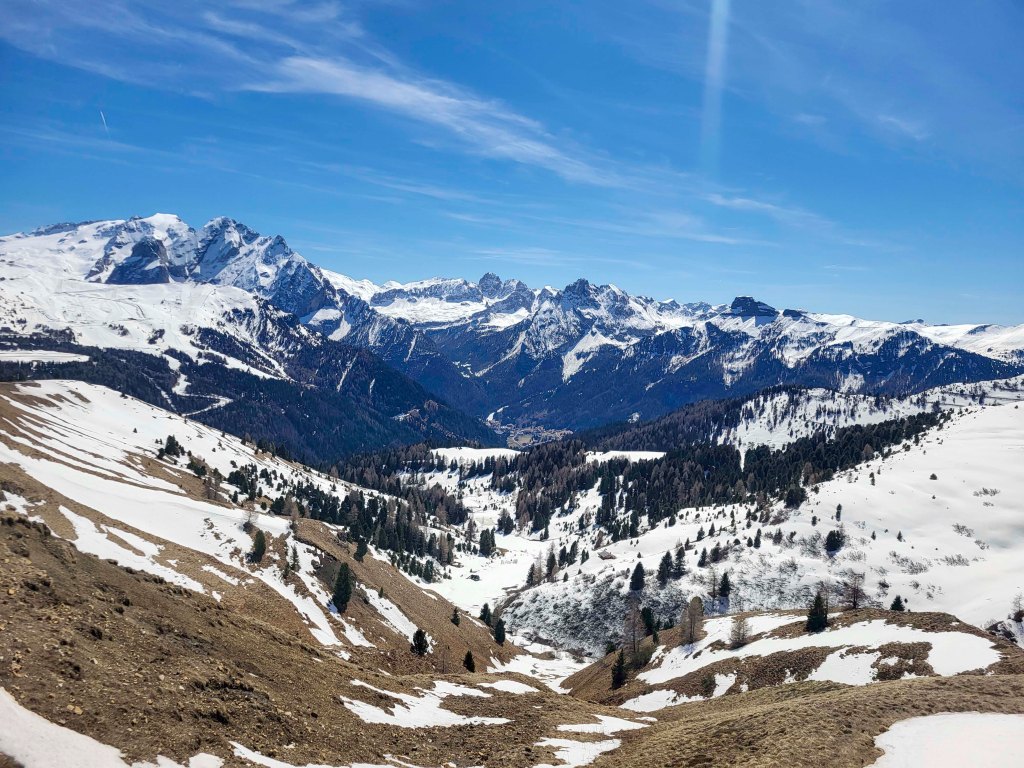
The following day, Jed and Diana took us on a drive around “their mountain”. The views were spectacular and even though it was quite late in the season, we were able to watch people ski. I was surprised to learn that you can ski from town to town and essentially spend all day skiing through the entire area. I was also surprised to learn that the weather could be so warm with snow still blanketed everything. I brought all of the wrong clothes. Diana and Jed are great hosts – they prepared several wonderful meals for us and we even played billiards in their cantina! What a fun visit!

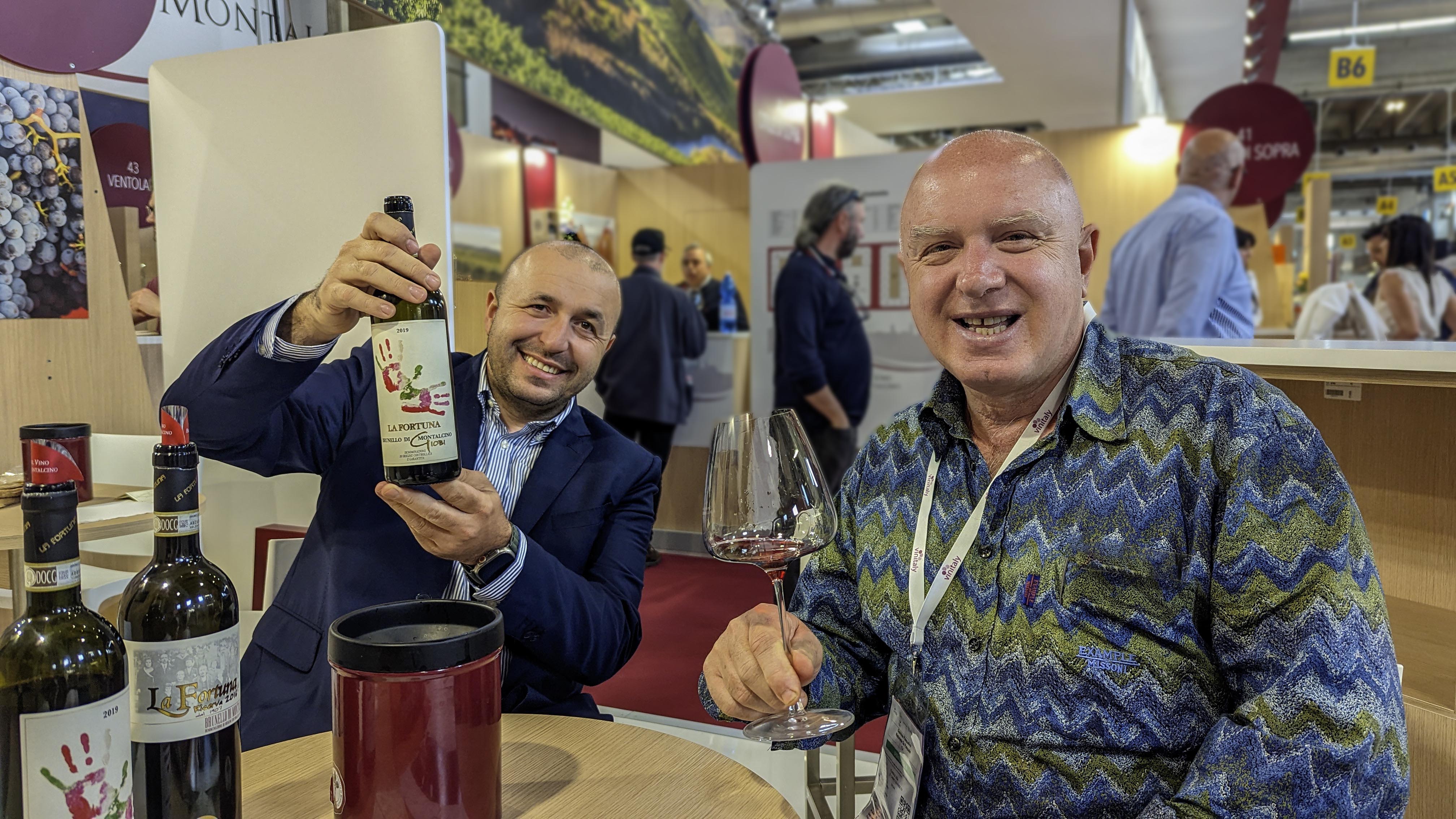
We then headed south to Verona. Jim and Pasquale attended VinItaly, the largest wine event of the year in Italy. It gives them an opportunity to enjoy old favorites, discover hidden gems, and visit with producers and wine lovers. There are thousands of wines to try, and they typically taste (then spit) over 100 wines per day!

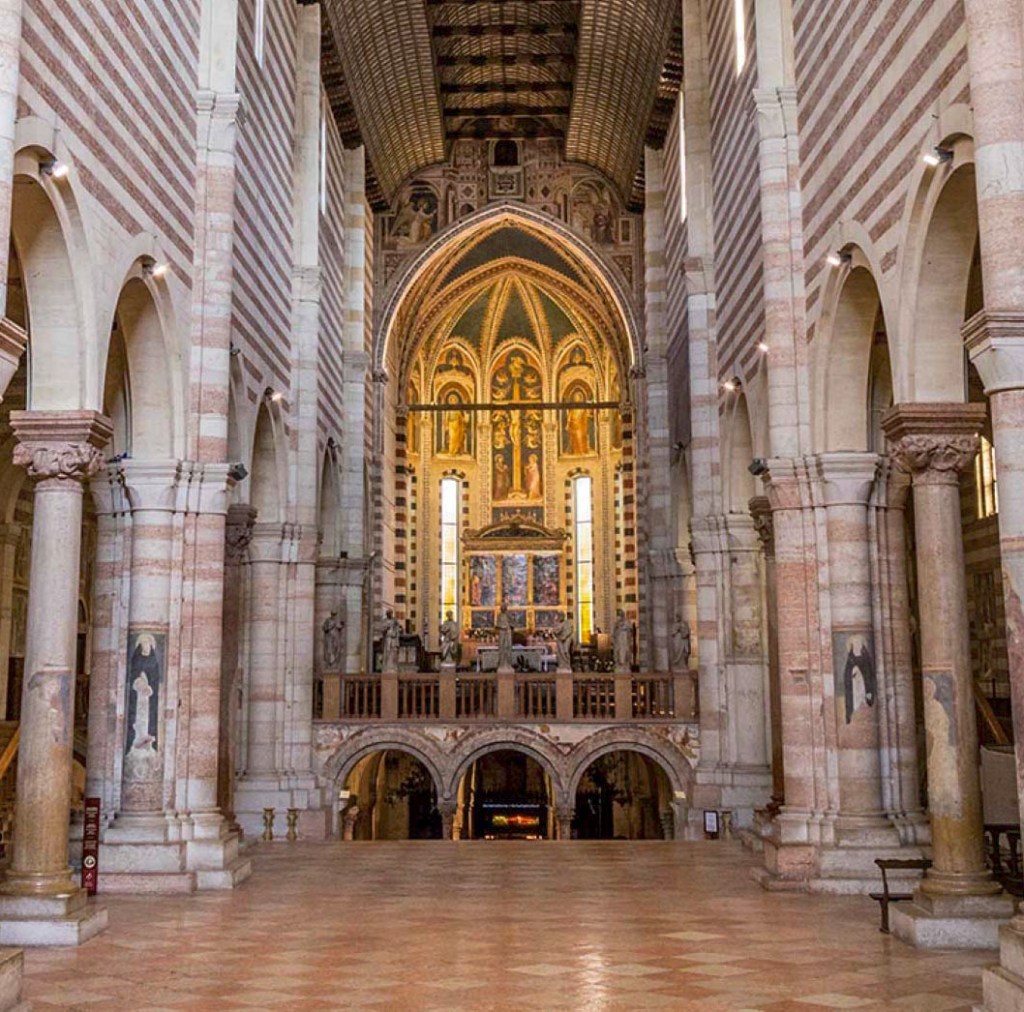
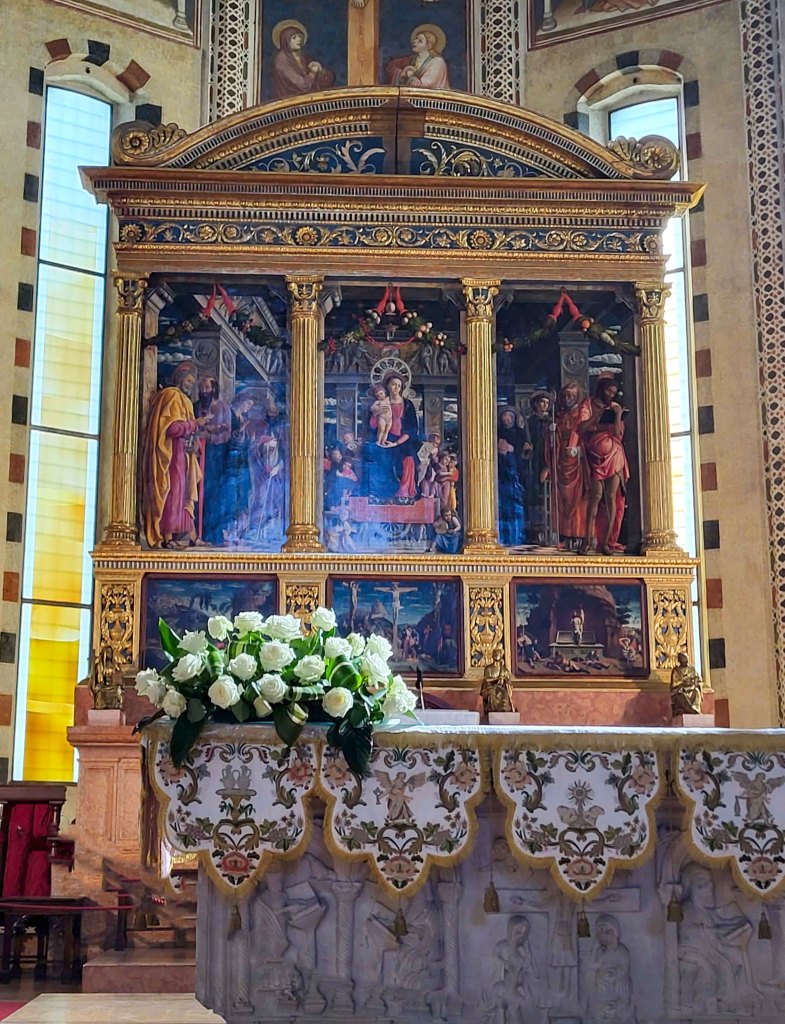
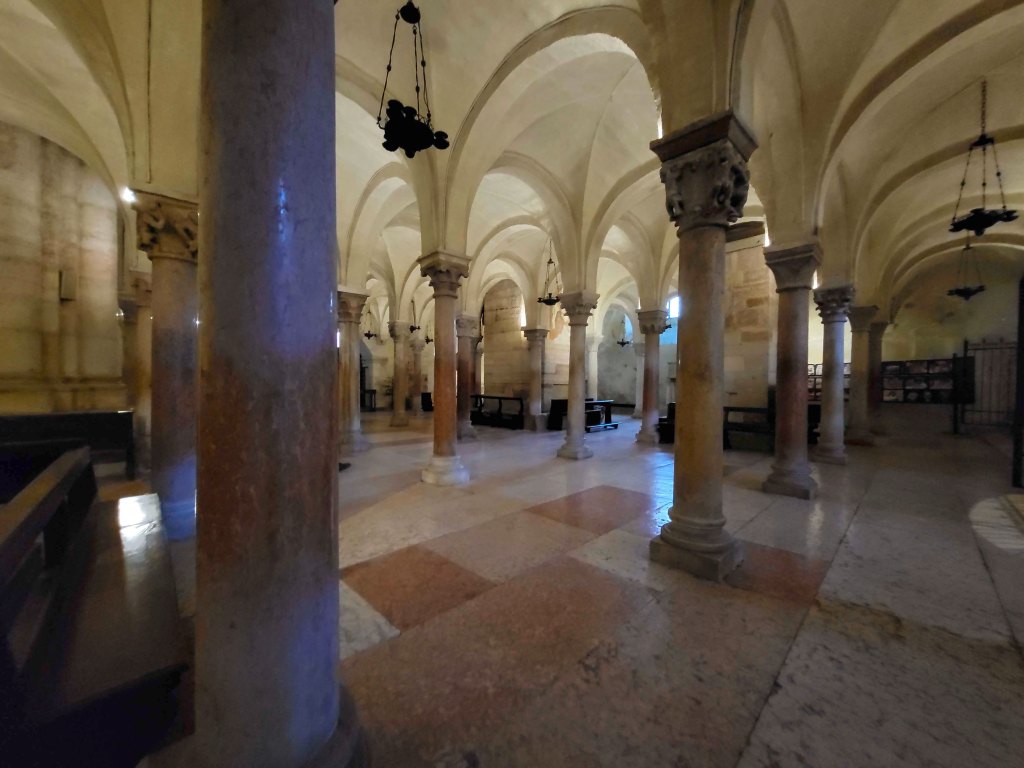
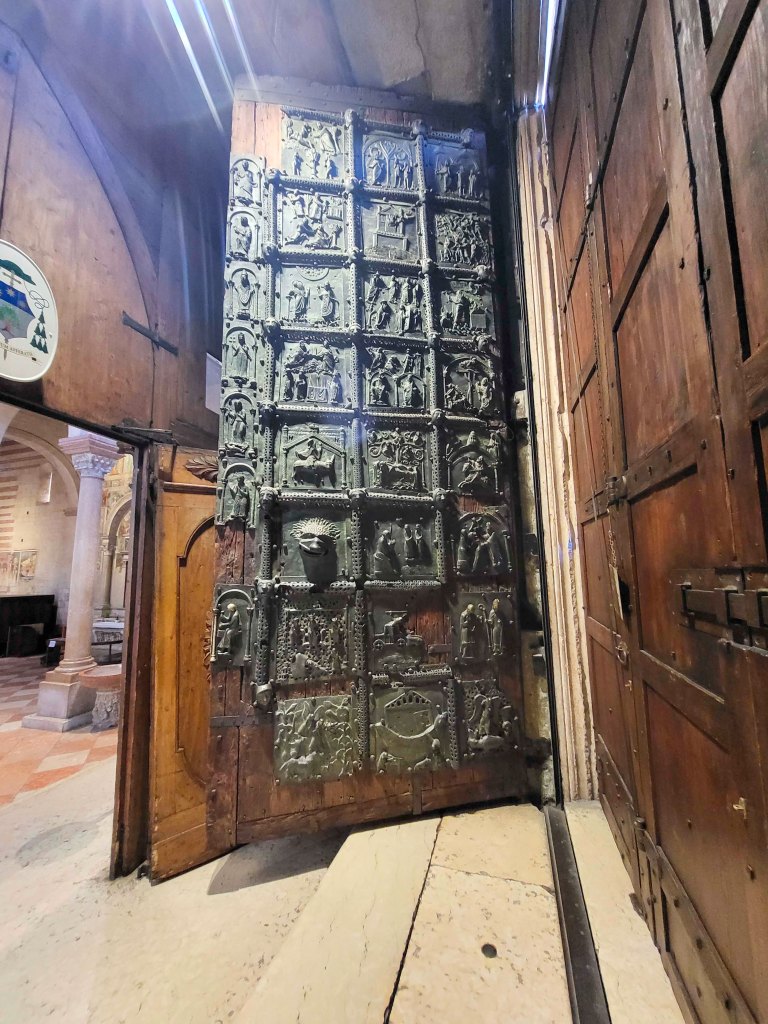
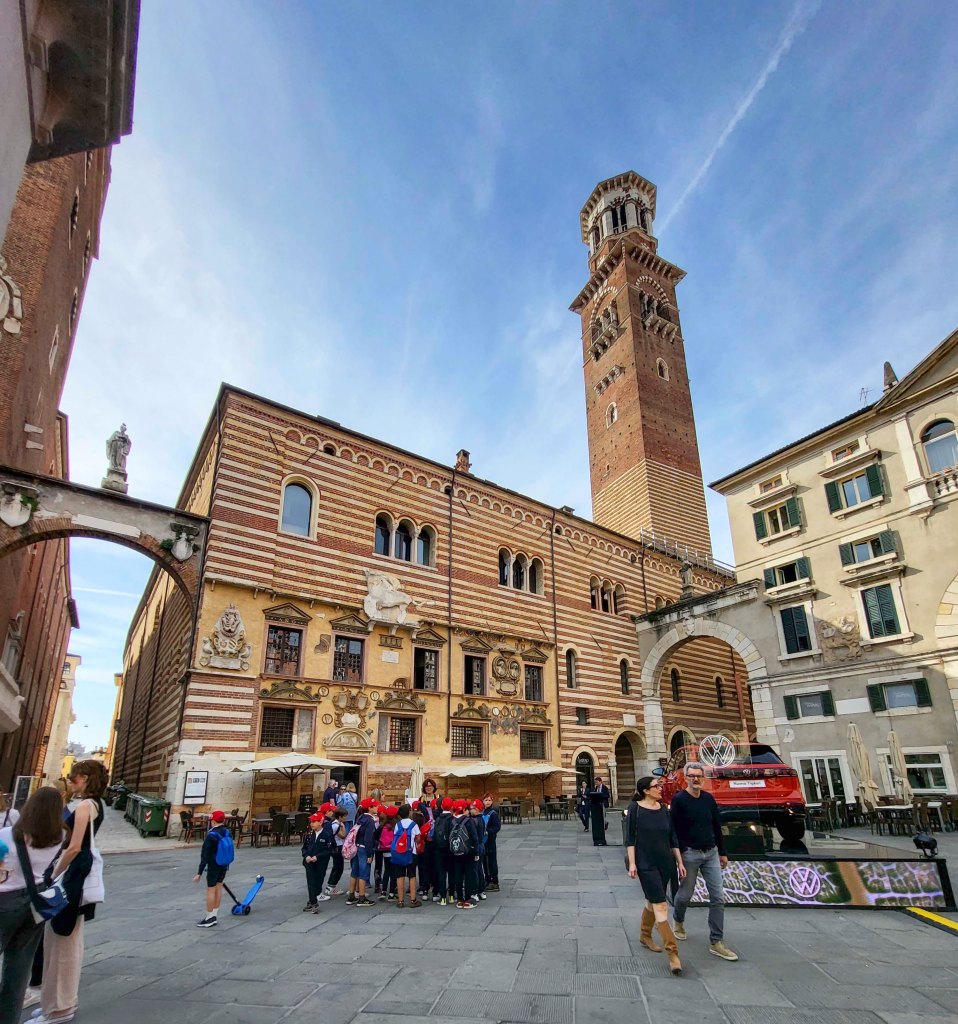
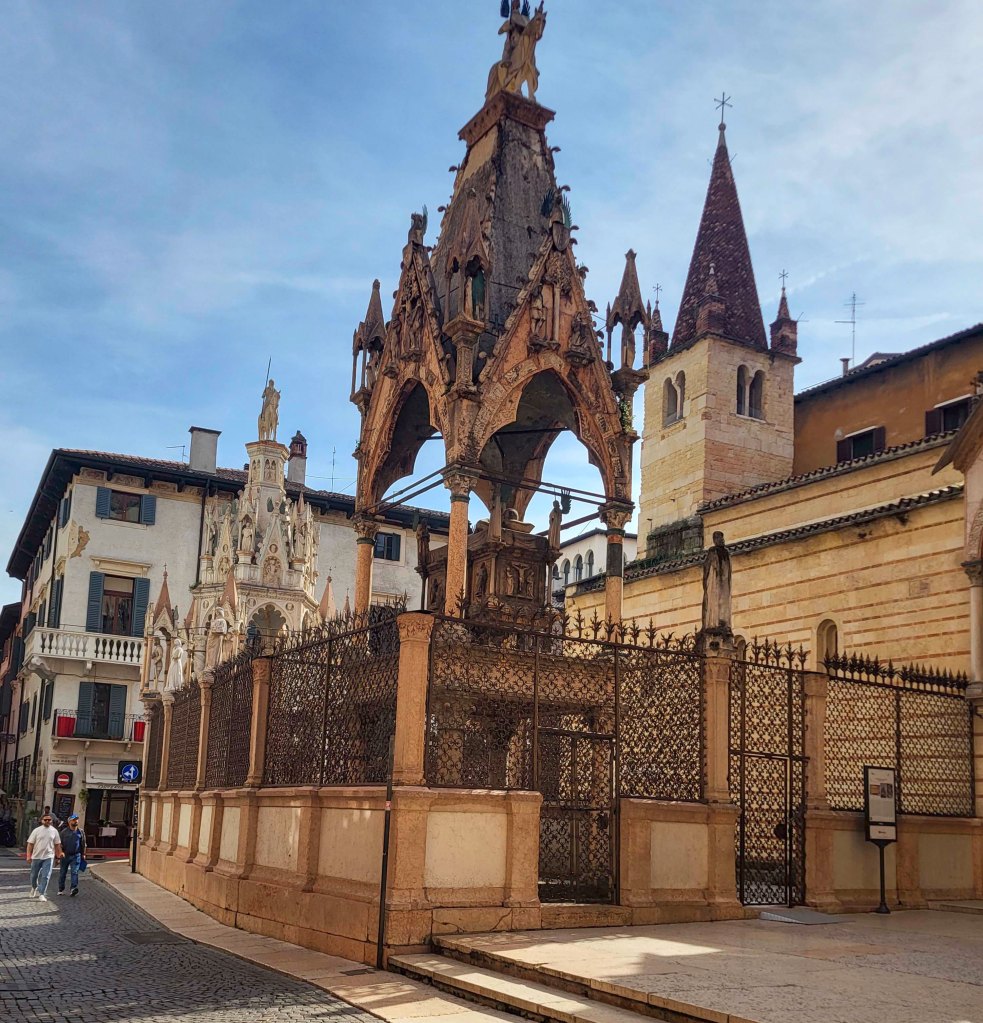
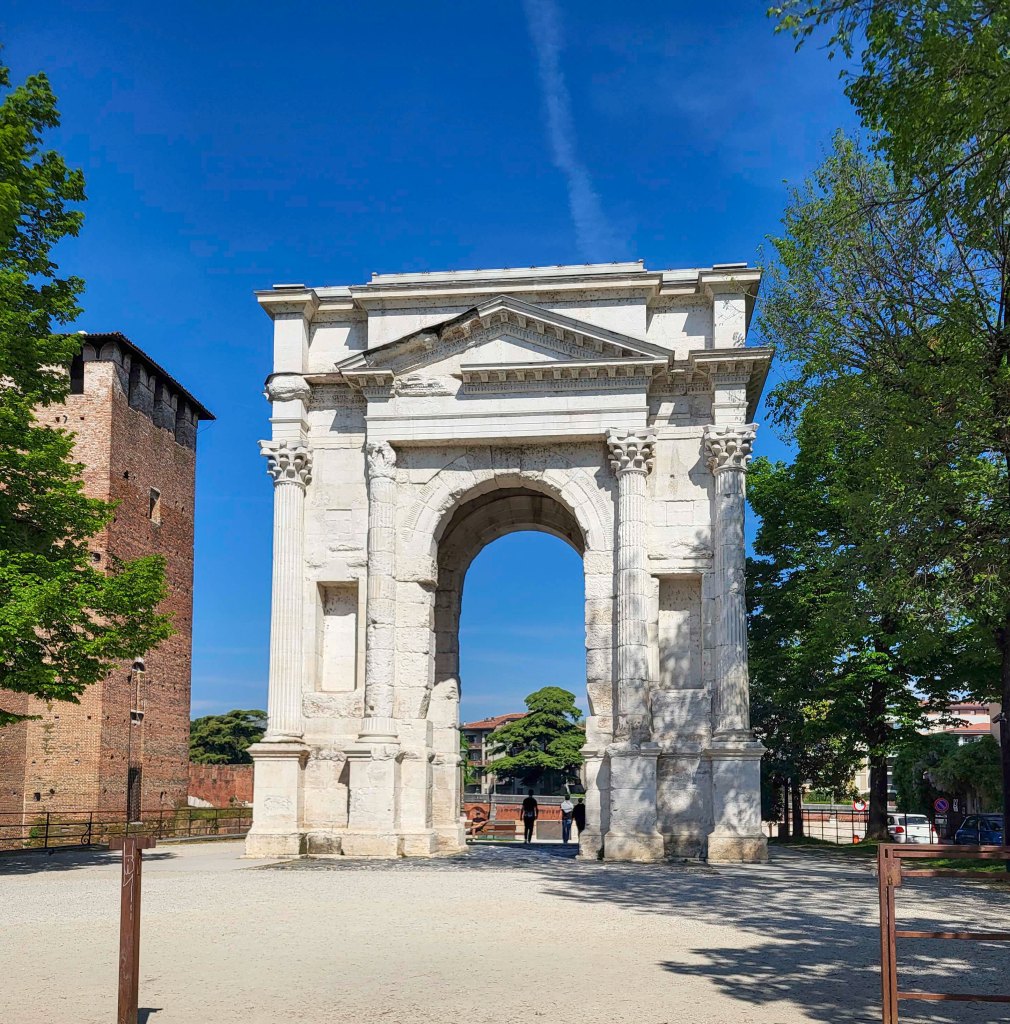
While Jim and Pasquale were tasting and spitting, I explored Verona. We have visited Verona several times, so I have already seen the biggest sights (the spectacular Roman arena that is still used today and the fictitious location of Juliet’s balcony from Shakespeare’s Romeo and Juliet). My objectives during these days were to enjoy the pleasant piazzas and learn more about some of the Veronese artists. I had plenty of time to peek into courtyards, wander the streets, and enjoy a cappuccino at the cafes. And I visited more than a few churches… but I have included pictures of only my favorite: Basilica di San Zeno.

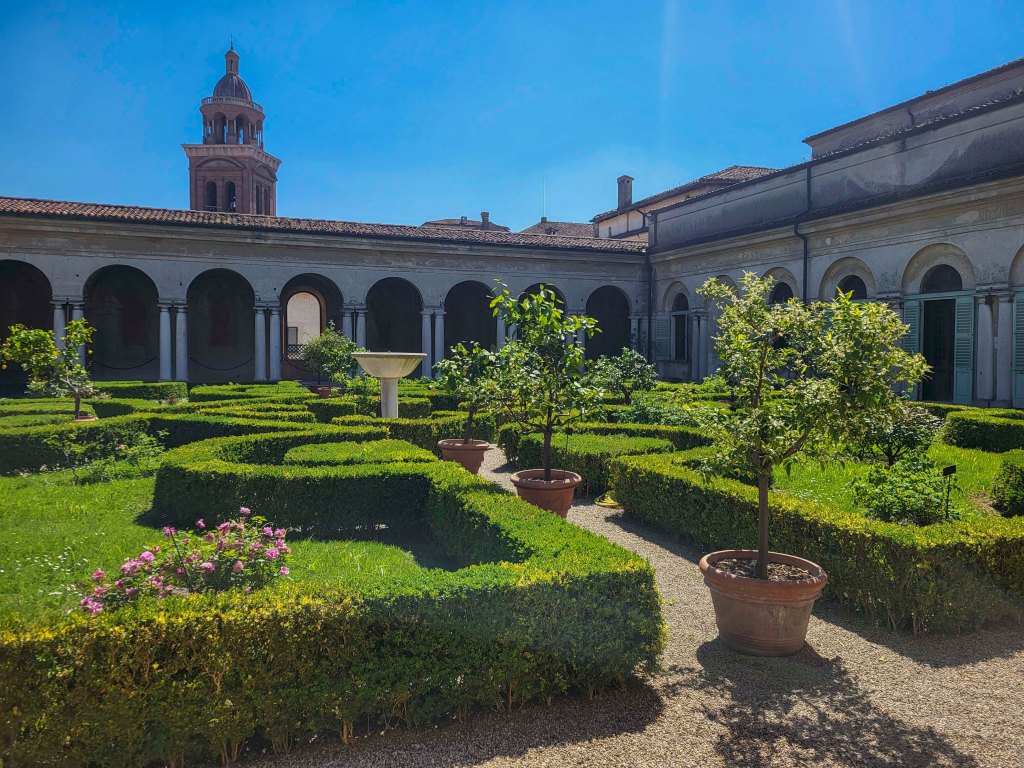
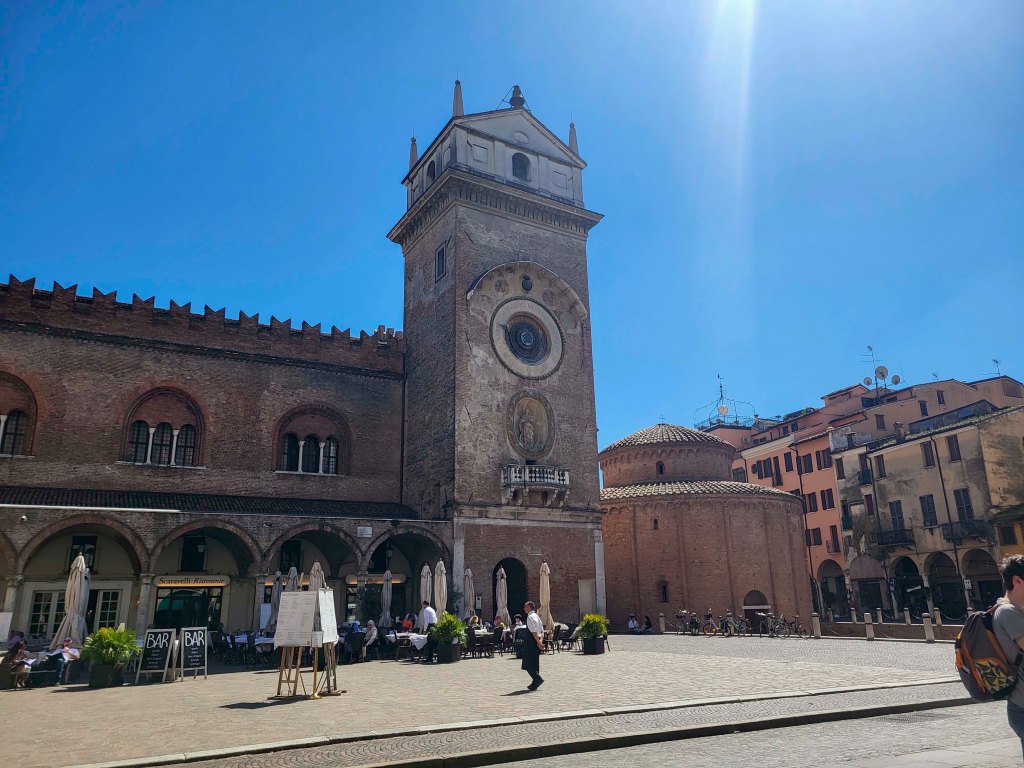
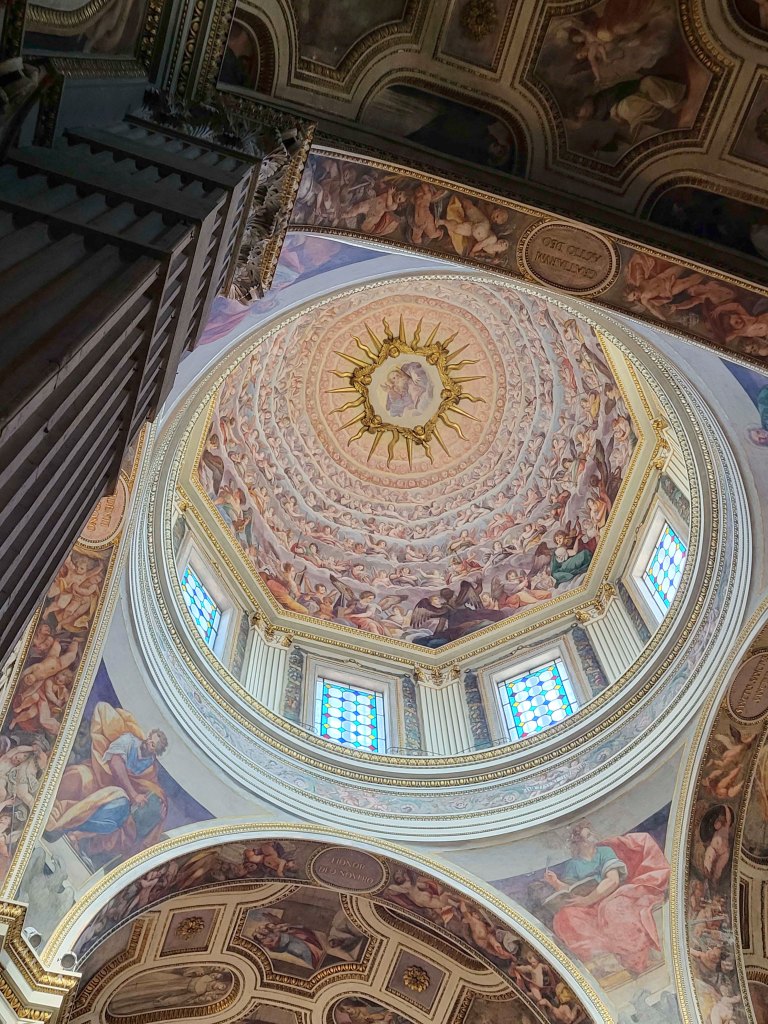
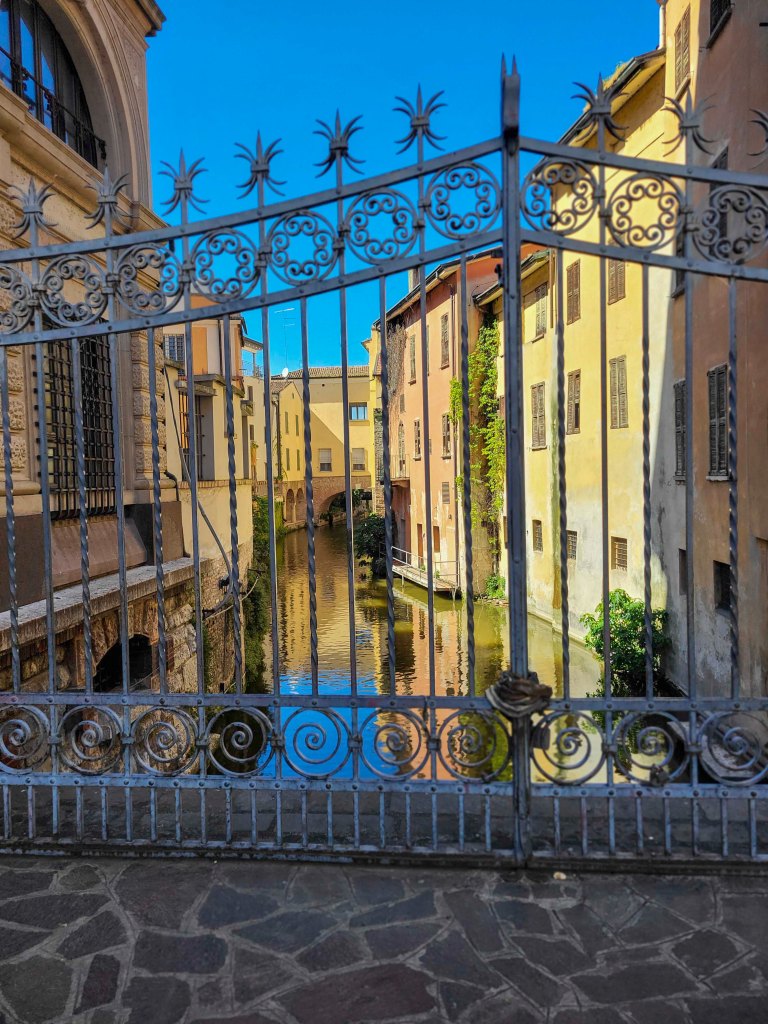
I took a 40-minute train ride south to spend the day in Mantua, “a city surrounded by 3 artificial lakes in the northern Italian region of Lombardy. It’s known for the architectural legacy of the Renaissance Gonzaga rulers, who built the Palazzo Ducale. This imposing building houses the Bridal Chamber, decorated with Andrea Mantegna frescoes.” Unfortunately, no pictures and only 5 minutes were allowed in the Bridal Chamber but I was very pleased with myself for finding a way to visit it for two 5-minute periods!

As I bid farewell to these enchanting places, I carried with me a sense of gratitude for the opportunity to uncover the secrets of this captivating country. Where to next?