
April 25 – May 7, 2026
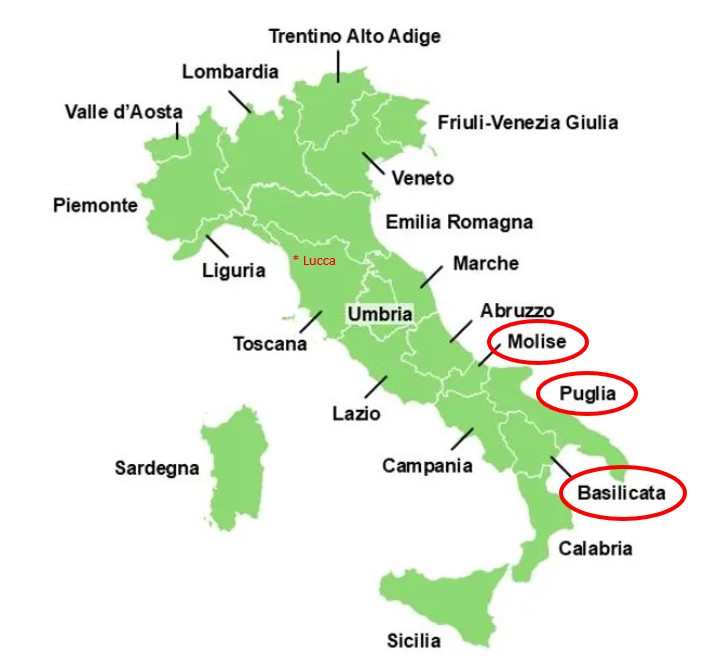
Italy is made up of 20 regions, think of them as the Italian equivalent of USA’s states. Jim and I made a promise to ourselves after we moved to Italy: we want to visit all of them. This trip let us tick three off the list in one go: Basilicata, Puglia, and Molise. This trip was our best “let’s explore a new region.” We saw a lot, did a lot, but had enough down time to enjoy it all.
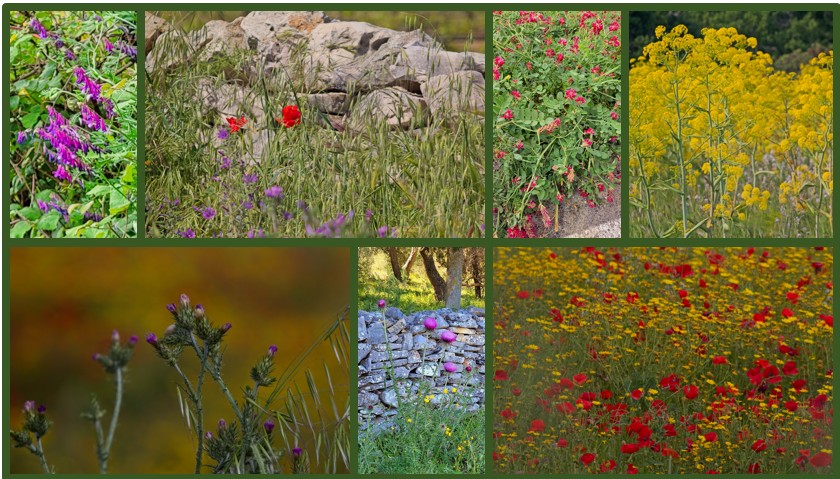
We hadn’t expected it, but the unofficial themes of the trip emerged quickly: birds everywhere we looked, and wildflowers carpeting every hillside and roadside. What lovely surprises!
Part 1 – The Volcanic South: Venosa & Matera
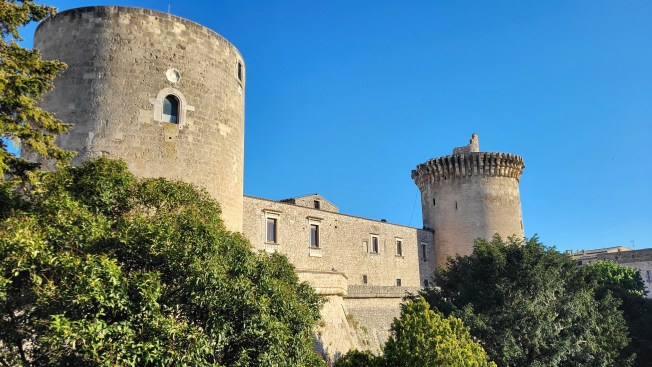
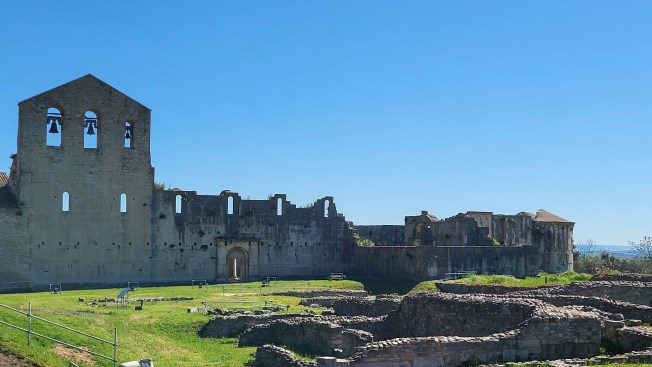
Our first stop was an overnight in Venosa, a friendly town in the northern part of Basilicata. We happened to arrive on April 25th, Liberation Day, a national holiday, and the whole town was out celebrating. There was a festive energy in the air that made the most ordinary piazza feel like a party. Very big and imposing castle in the main piazza, along with nice Roman ruins and a half-built basilica made this town more than just an overnight stop.
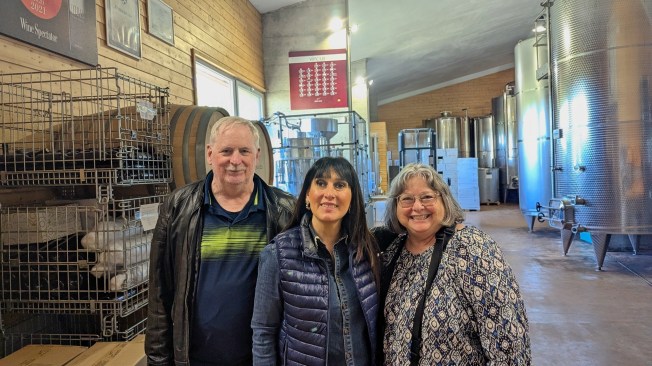
We then visited the Elena Fucci winery, where we tasted her Aglianico del Vulture — a rich, volcanic red wine that is one of the south’s best-kept secrets. The name comes from the ancient volcano nearby, and you can almost taste the mineral intensity of that land in the glass.
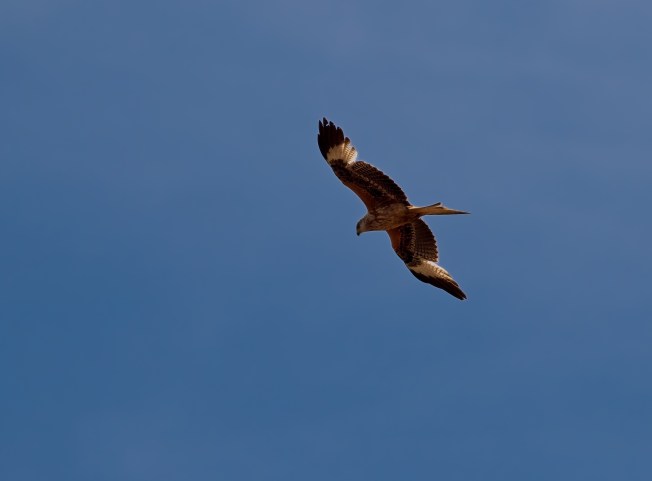
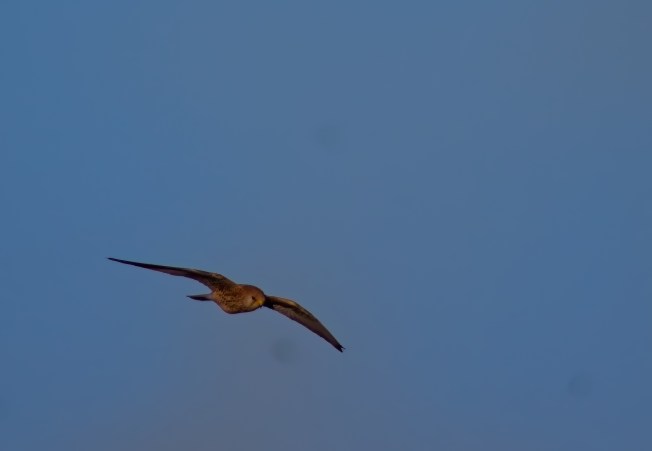
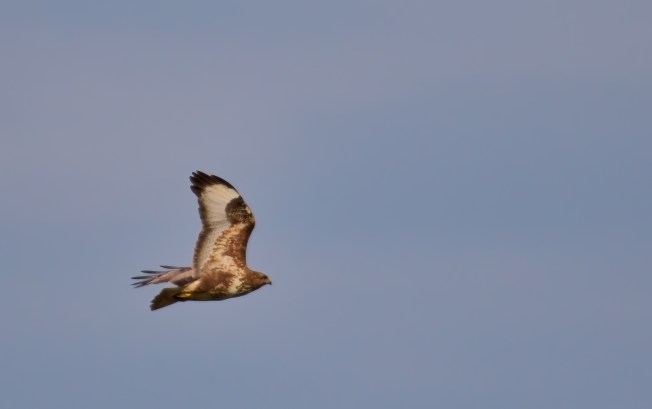
The drive to Matera was a delight in itself. Birds of prey circled above the ravines, and we pulled over more than once just to watch them and take pictures. Basilicata is a rugged, largely untouched landscape of rolling hills, deep ravines, and ancient volcanic peaks.
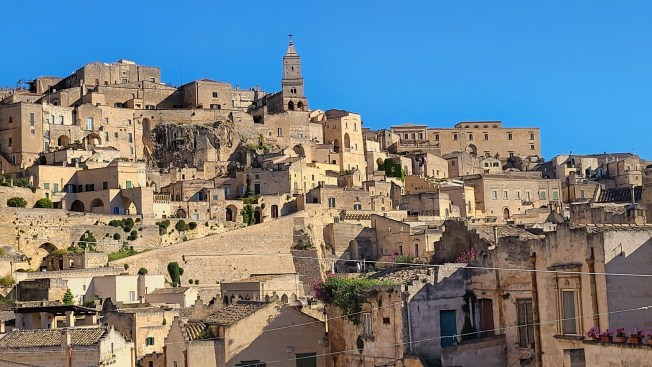
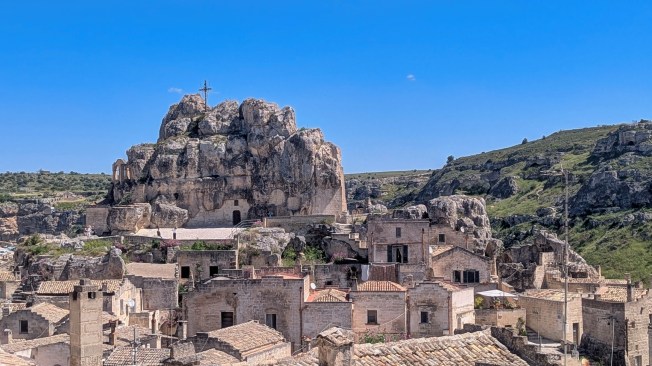
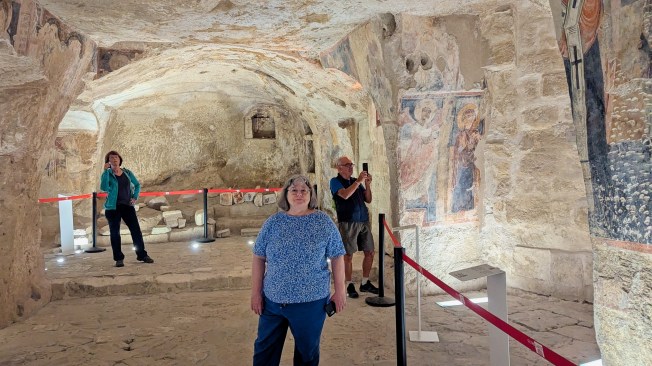
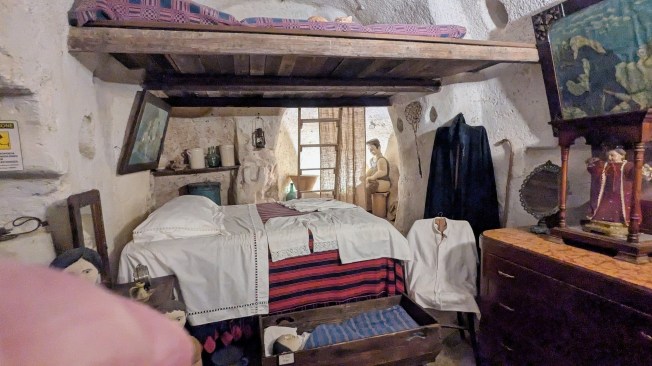
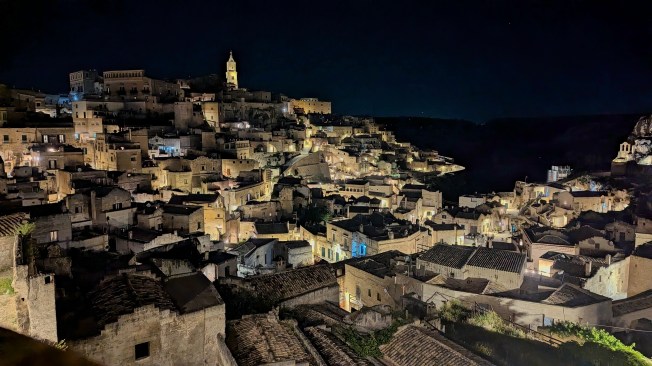
Matera is difficult to describe – not beautiful in the typical Italian sense, but striking. It is one of the oldest continuously inhabited cities on earth, with cave dwellings carved into the limestone ravines, called the Sassi, that date back over 9,000 years. In the 1950s, the Italian government considered the Sassi a national embarrassment and forcibly relocated its residents to modern housing; decades later, UNESCO declared those same caves a World Heritage Site. Today the Sassi have been transformed into boutique hotels, restaurants, and museums. Matera’s striking landscape has drawn filmmakers for decades, serving as the backdrop for Mel Gibson’s “The Passion of the Christ”, the James Bond thriller “No Time to Die” and many more.
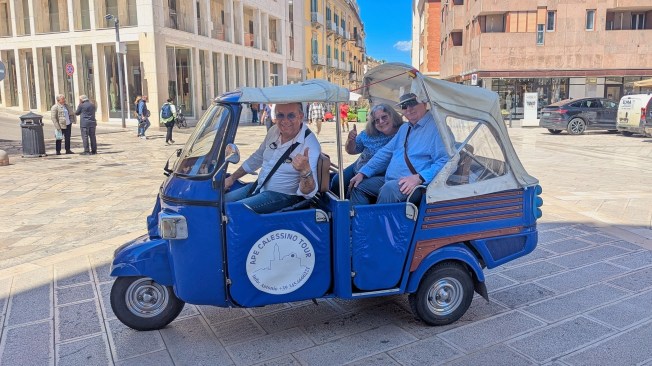
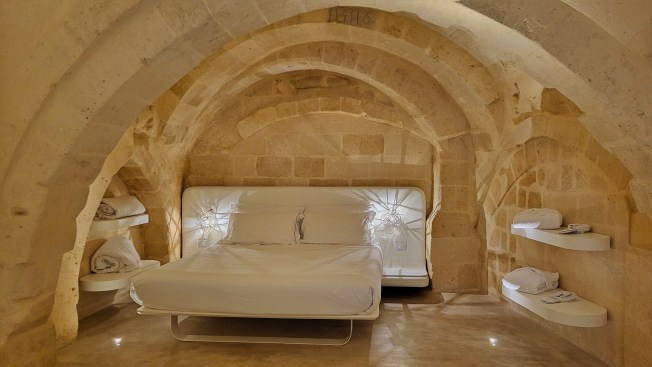
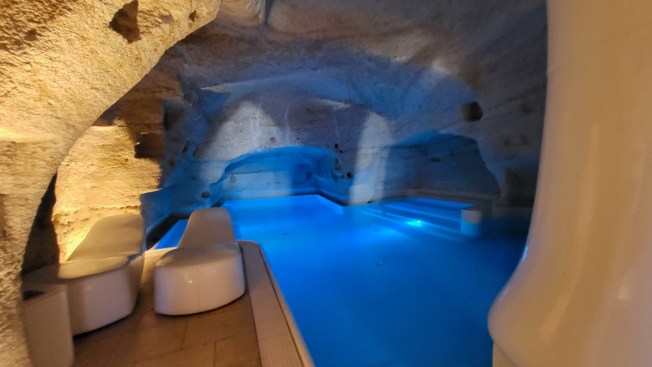
We stayed in the old part of town in a hotel where our room had literally been carved out of the rock. The spa was a bonus and a very welcome one after a day of walking. Getting around the Sassi on foot is rather difficult, with lots of iffy steps, the streets wind and double back on themselves in ways that make maps almost useless. We took a tour in an Ape, one of those tiny three-wheeled vehicles that are perfectly suited to navigating narrow lanes. It was the best possible way to get our bearings. It’s an odd feeling to know that you are just a few minutes away from your destination but you aren’t sure how to get there!
Part 2 – Baroque Puglia: Lecce
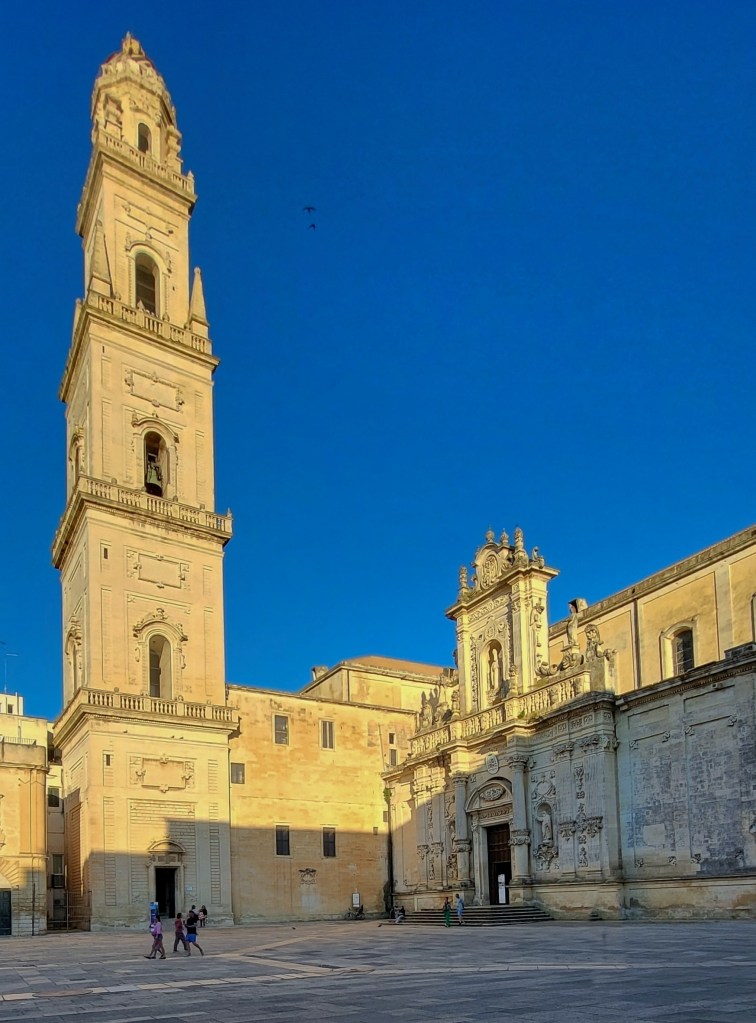
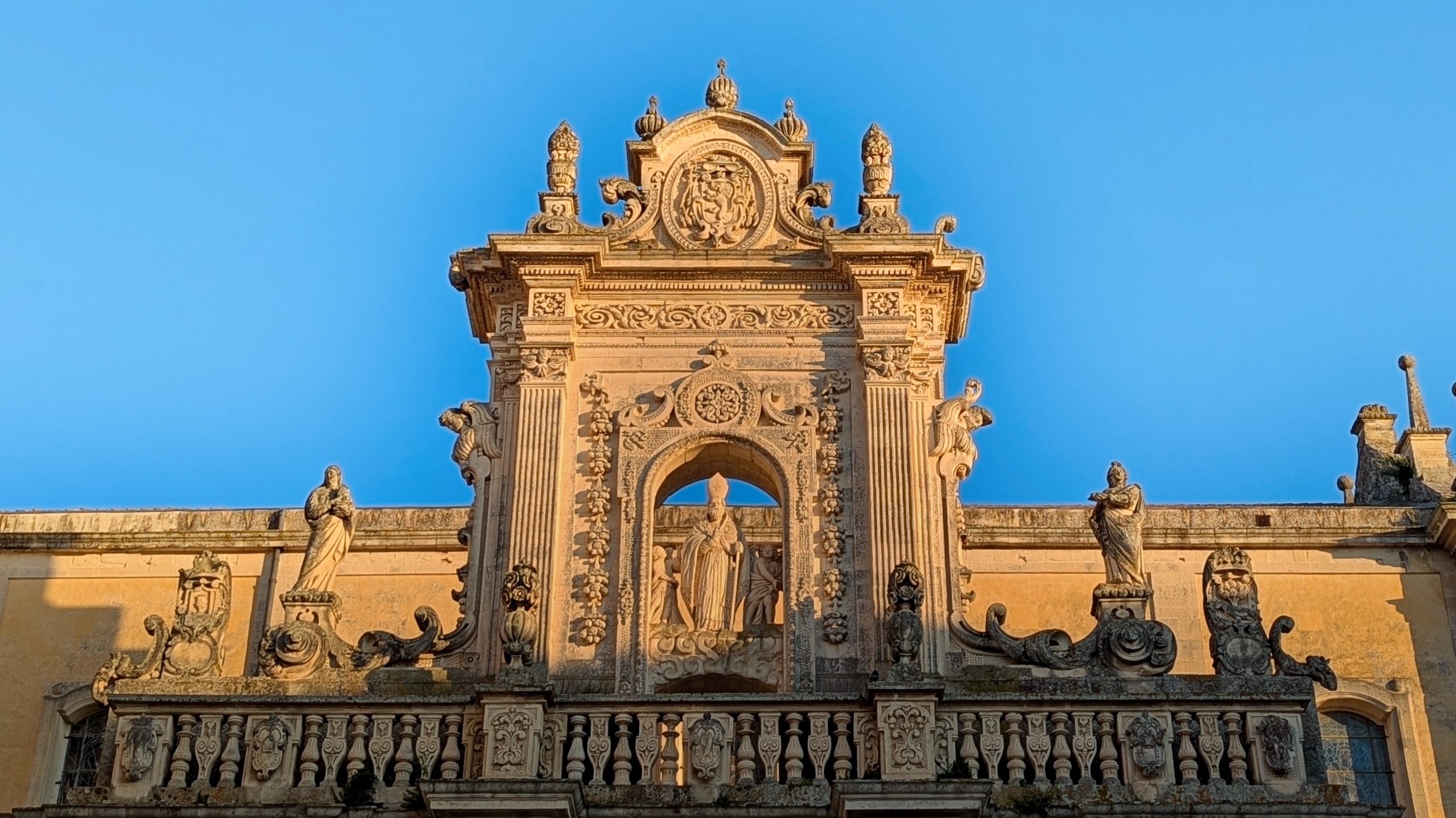
If Matera is all drama and geology, Lecce is all elegance and exuberance. Known as the Florence of the South, Lecce built its reputation during the 17th century when the Catholic Church funded a building boom of extraordinary ambition. Local craftsmen worked a uniquely soft, creamy-colored limestone into facades so intricately carved they look almost lacy. The style became known as Barocco Leccese, and it is unlike anything else in Italy.
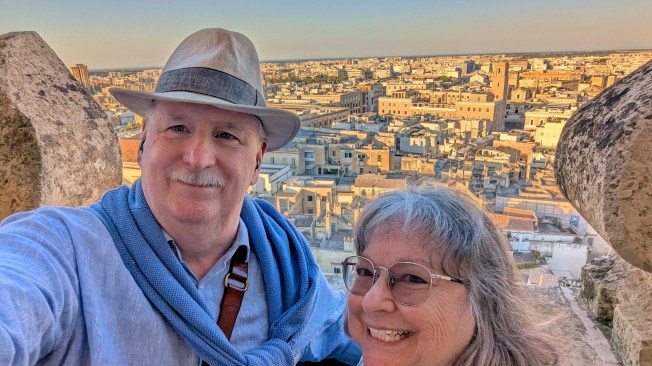
On two different evenings we went up the bell tower of the Duomo to watch the city change in the fading light. The first evening was about the architecture — the way the golden stone glows at sunset is something you have to see to believe. The second evening was about the birds. Kestrels and swifts by the hundreds flew around the tower in formations that seemed almost choreographed. We stayed up there longer than we intended both times.
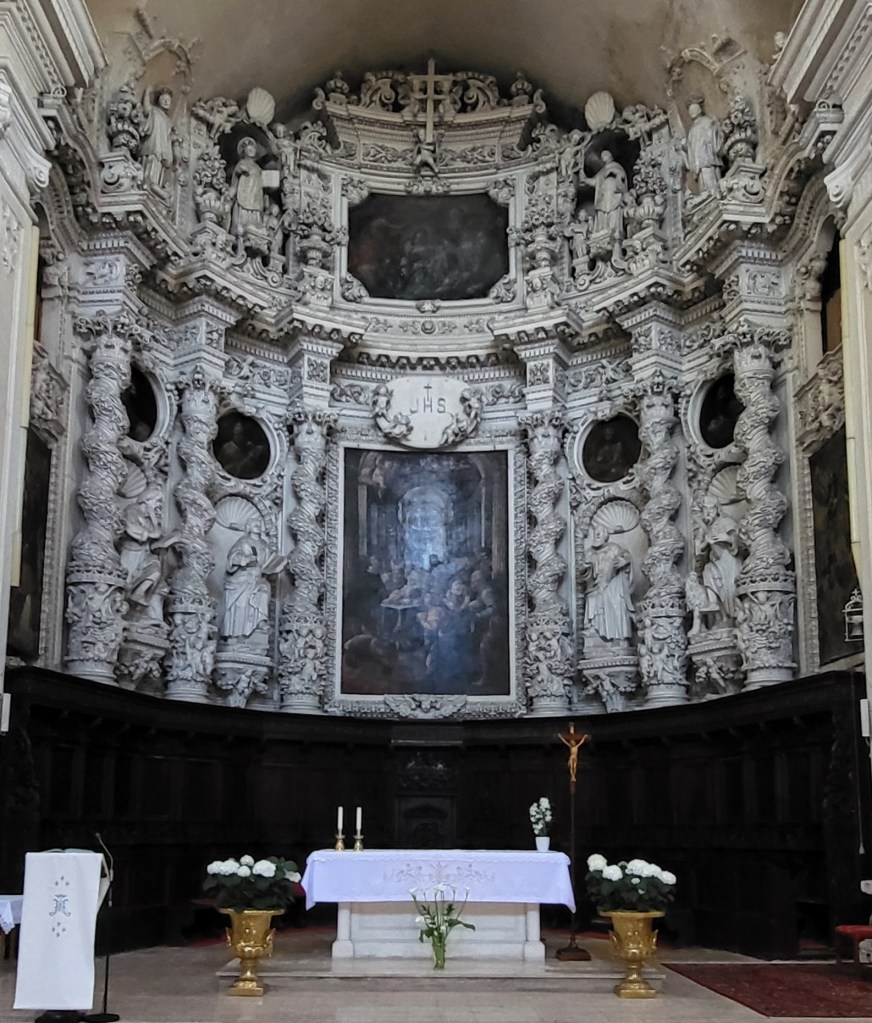
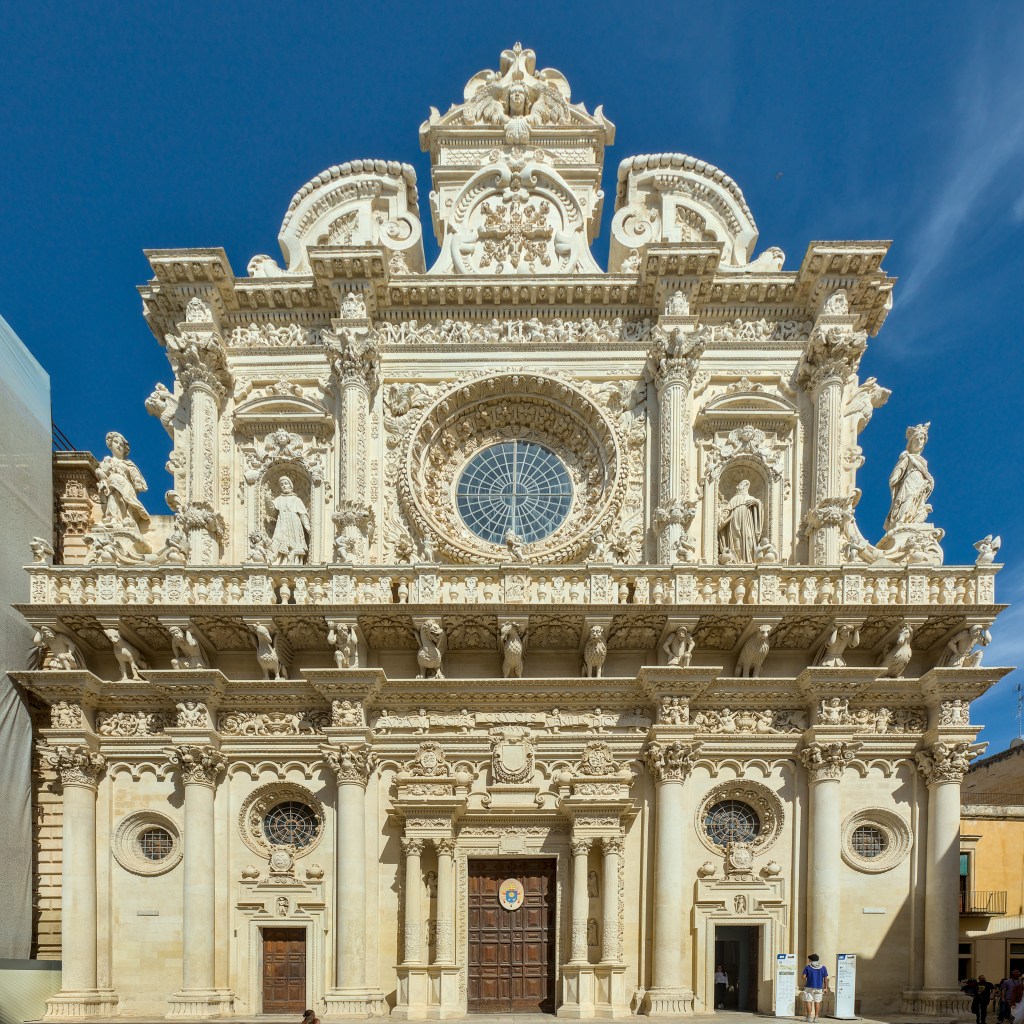
Our wine visit took us to the Leone de Castris winery, one of Puglia’s most historic producers. We tasted several wines, but the highlight was their Five Roses rosé, which has long been one of our favorites. We finally learned the story behind the name — which I’ll leave for you to discover if you visit. Some stories are better told in person.
Part 3 – Trulli, Coast & Countryside: Ostuni → Alberobello → Trani
I plan our trips carefully, but I’ve learned over the years that the willingness to adapt is just as important as the planning. This stretch of the trip gave me several opportunities to do that.
Ostuni, the White City, perched brilliantly above the olive-covered plain, was on our list, but the day we’d earmarked for it turned out to be stormy. Rather than wander a hilltop town in the rain, we pivoted to a nearby cave system that friends had recommended: the Grotte di Castellana. What an unexpected treat. The caves are vast and otherworldly, and they kept us completely dry while the weather sorted itself out above ground.
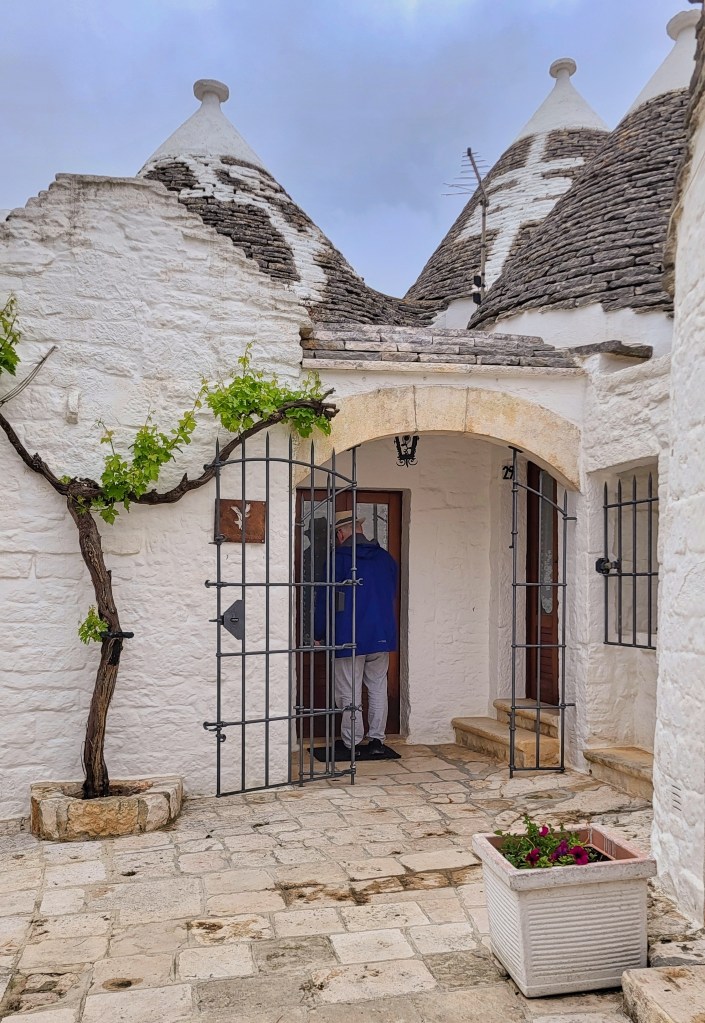
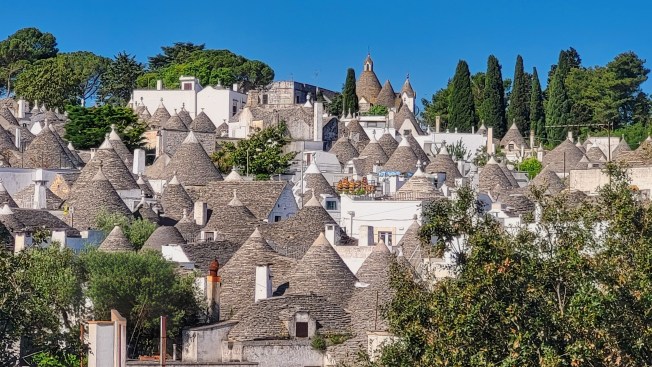
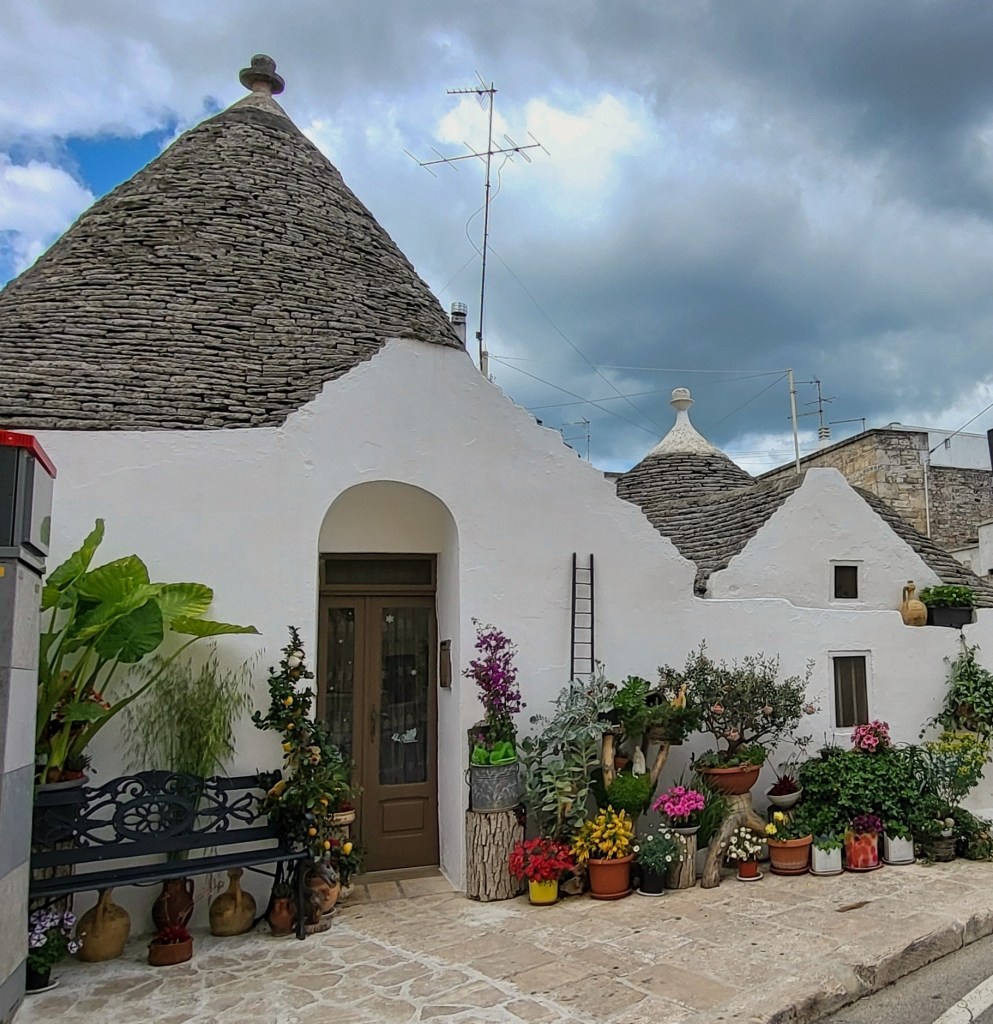
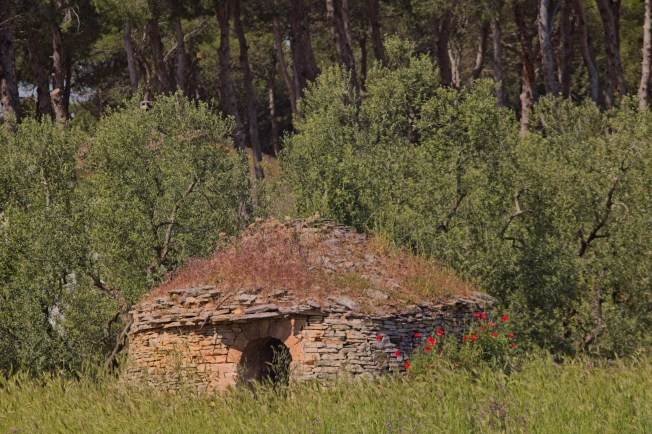
From there we headed to Alberobello, the capital of the trulli. These remarkable cone-roofed limestone dwellings date back to the 15th century, when local farmers built them without mortar on orders from the ruling Count of Conversano, the idea being that a mortarless building could be quickly dismantled if a royal inspector came to levy taxes on permanent structures. The trulli were essentially a centuries-long tax dodge, which somehow makes them even more charming. The town was designated a UNESCO World Heritage Site in 1996 and today has over 1,500 of these extraordinary structures.
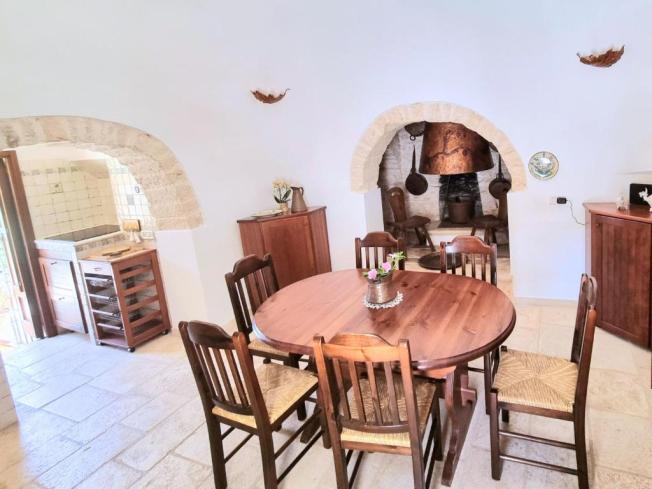
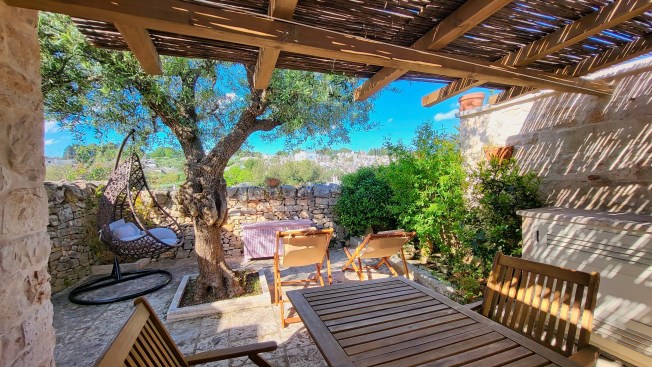
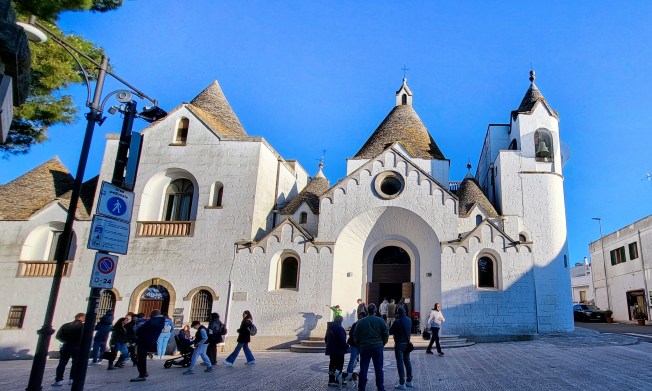
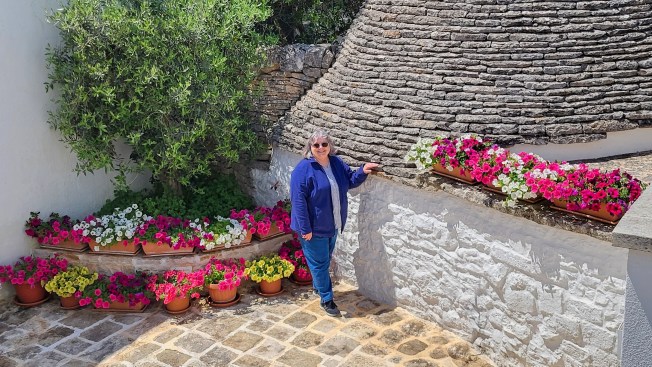
We didn’t just look at the trulli — we stayed in one. Our trullo had a terrazza with an amazing view over a hillside covered in those conical roofs, one cone after another as far as we could see -and even one trullo church! We took a walking tour, wandered on our own, but found that living inside one (the thick stone walls, the cool air, the unexpected coziness) told us more than any guidebook could.
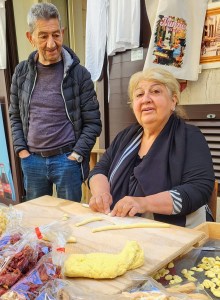
We made another unplanned detour when we dropped a winery visit in favor of a day in Bari. The highlight, without question, was enjoying the back street where women were making orecchiette pasta by hand, just as their grandmothers had; rolling and shaping each little ear of pasta on wooden boards set out in the open air. We bought a bag and were surprised at the thickness of the pasta… not quite our favorite, but I am glad that we experienced it! As for the city itself, a friend had warned us that Bari is “Puglia’s version of Naples” — chaotic, crowded and loud. He wasn’t wrong. We appreciated the orecchiette women and moved on.
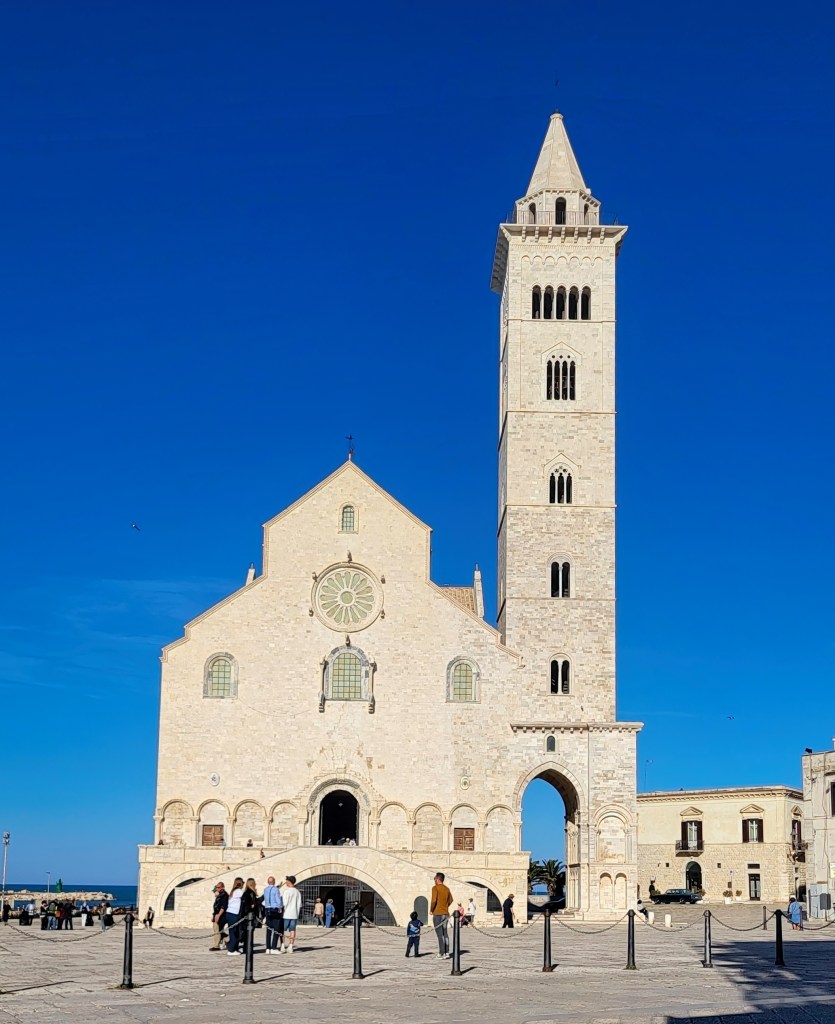
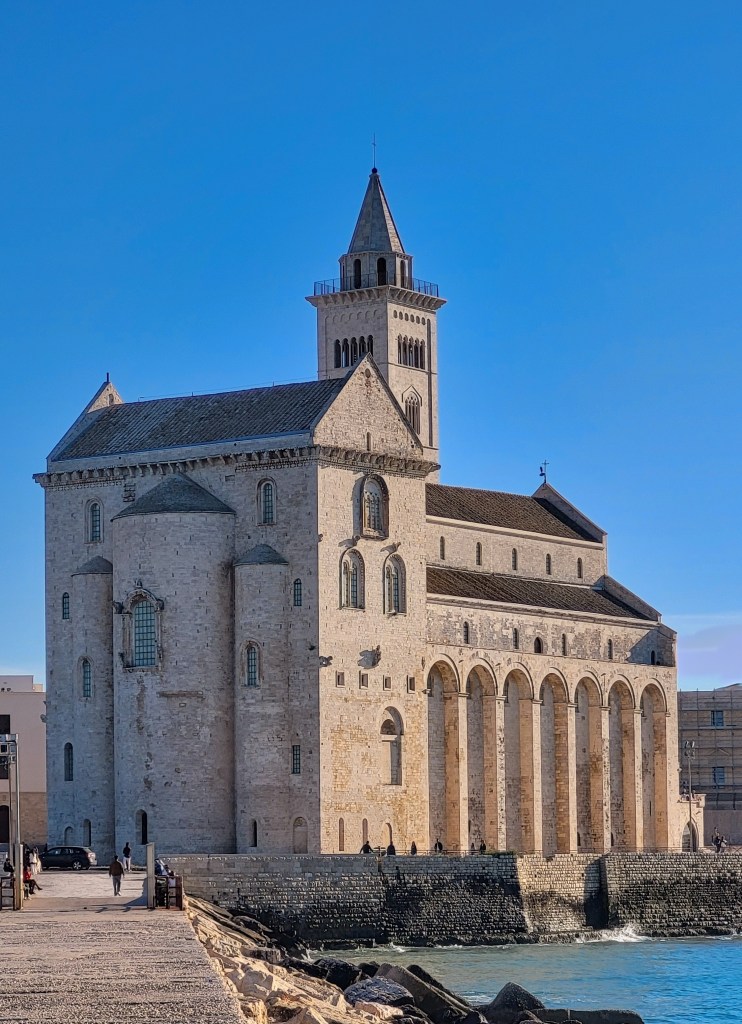
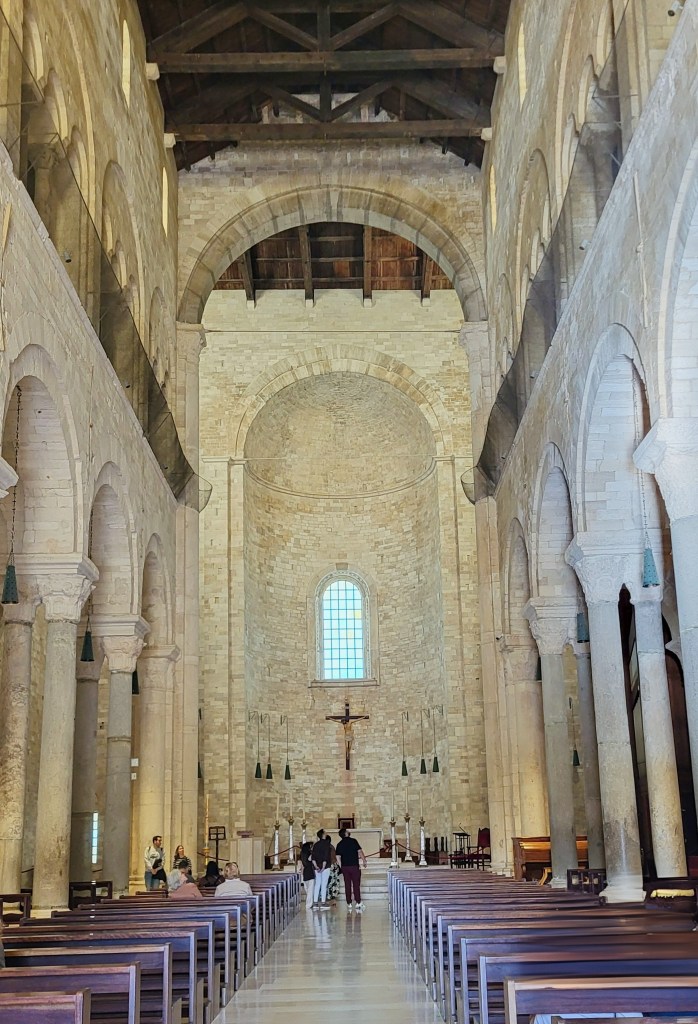
Our final stop for this part of the trip was Trani, a coastal city that doesn’t get nearly the attention it deserves. It flourished in the 11th and 12th centuries as a powerful maritime hub and a departure point for the Crusades, and its glorious Romanesque cathedral is built from a blush-toned local stone and seems to rise directly from the Adriatic Sea. The city had a wonderful ease to it: people out walking, enjoying themselves, not overwhelmed by visitors. After some of the more tourist-heavy stops on this trip, it felt like a gift.
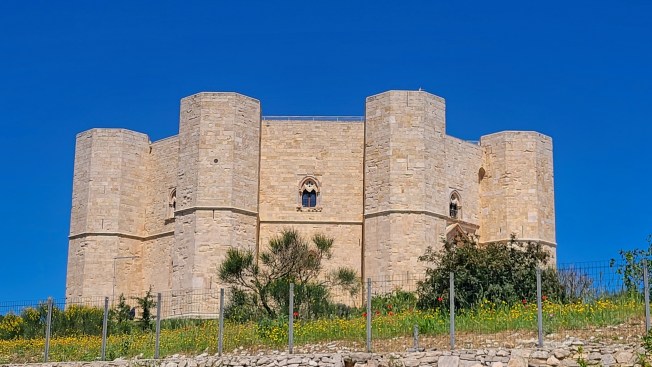
We got a bonus we hadn’t planned on. Driving back to our apartment one afternoon after visiting Castel del Monte, we stumbled into the tail end of a procession for the town’s patron saint, exactly the kind of scene you imagine when you dream of southern Italy. Priests in robes, banners swaying overhead, and a brass band filling the streets with horns and tubas. It was like something out of a movie, and I wished we’d known about it in time to see the whole thing. No pics, only fleeting views…
Part 4 – Forest, Frontier & the Road Home: TorreVento → Foresta Umbra → Molise
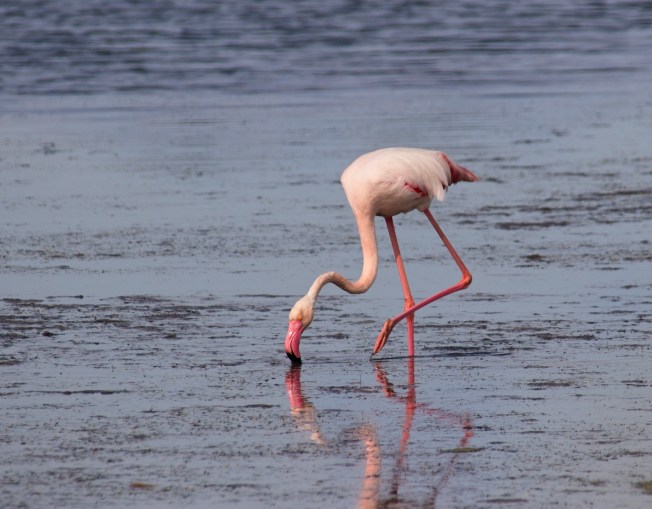
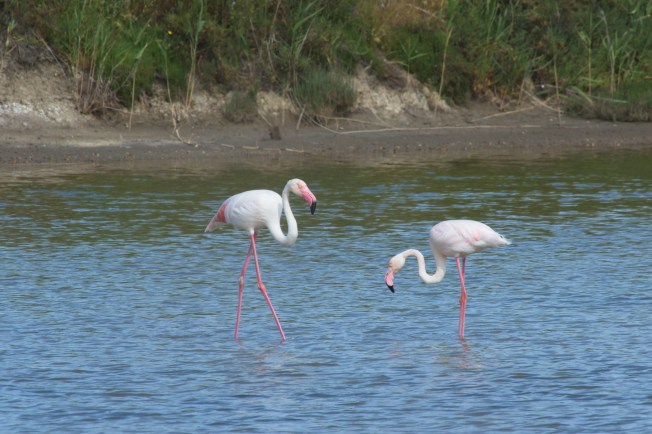
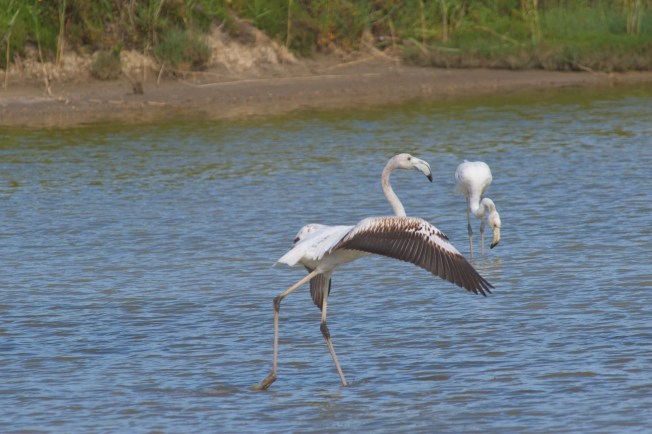
We made one more winery stop in the foothills near Castel del Monte before heading north: TorreVento, set amid vineyards and wildflowers and more of those wonderful birds. Then we pointed the car toward the Gargano Peninsula and the Foresta Umbra, the Shady Forest. On the drive up to the forest, we passed two roadside shallow ponds filled with flamingos – quite a surprise! We pulled over, stared and took lots of pictures.
The Foresta Umbra is the ancient heart of the Gargano National Park, one of the last remnants of the primeval beech and oak forest that once blanketed much of Central Europe. Its beech forests are now a UNESCO World Heritage Site, and driving into them you understand why — the trees are enormous, the light filtered and green, the silence deep.
Getting to the forest, however, tested our nerves. The road up was technically two-way but wide enough for only one car. We inched past four or five oncoming vehicles in a series of white-knuckle negotiations, each car easing half off the road to let the other squeeze by. The views were stunning, but the circumstances made it difficult to enjoy.
The destination was worth every hairpin turn. We stayed at the ELDA Hotel, a lovely property tucked right in the midst of the forest, in a cottage outside the main building with a table set perfectly for sitting outside, watching birds, and playing cribbage. We took a lovely walk through the old-growth forest to a quiet pond. The birdsong there was remarkable. I’ve been to a lot of beautiful places, but that morning walk felt like something set apart.
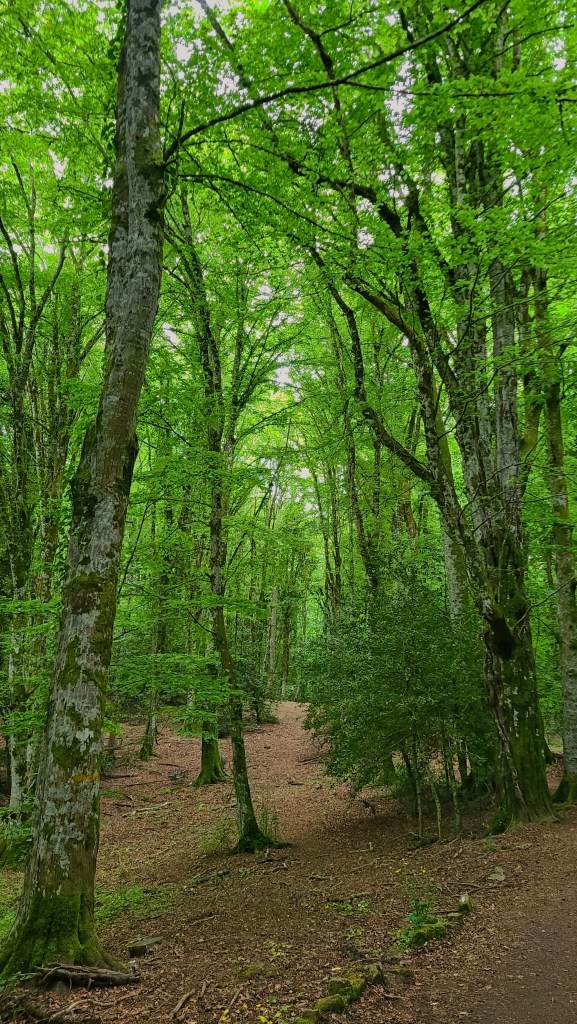
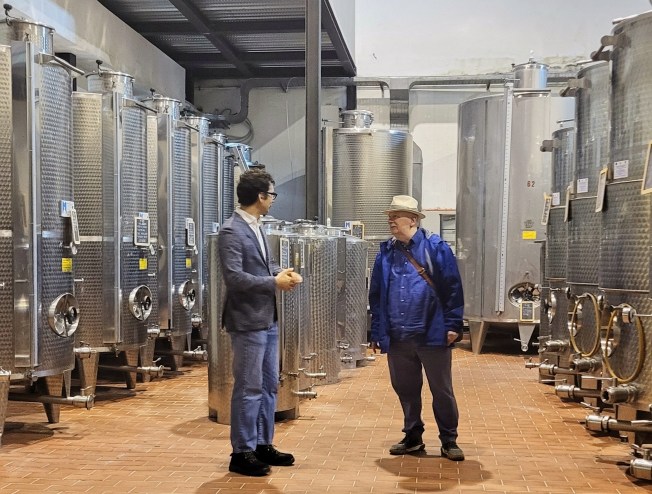
From the forest we crossed into Molise —the third region of this trip. Molise is tiny and largely overlooked region, which turns out to be precisely its appeal. The landscape is beautiful and peaceful: forested mountains, green valleys, and agricultural plains. We visited the Claudio Cipressi winery, and his story is worth telling. In 1990, an agronomist friend mentioned almost in passing that Molise farmers used to grow a grape called Tintilia. The variety had nearly vanished; it was too difficult to farm, too obscure to bother with, and quite acidic. Cipressi, who had come to winemaking from a completely different career, became obsessed. He cultivated the grape, submitted it to university researchers, and eventually helped get Tintilia officially recognized as a unique indigenous variety and entered on Italy’s national registry. He tweaked his vinification process until he could consistently produce a well-balanced wine, albeit with several years of aging before its release. Today he is widely credited with saving it from extinction. The wine is wonderful and the landscape around the winery was breathtaking. We bought way too much.
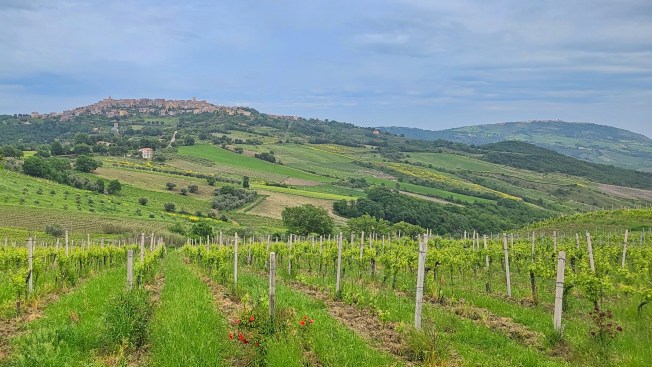
We drove home via an overnight stop outside Orvieto, arriving back in Lucca by noon the next day. Nearly two weeks, three regions, flamingos by the road, orecchiette women, cave hotels, a nearly-lost grape variety, and more birds than we could count — but no itinerary could have planned for the wildflowers that added their own vivid surprise to every road we traveled, from the rocky hillsides of Basilicata to the sun-drenched fields of Puglia. What a trip!


looks fabulous, we had reservations at that town all white with cone roofs as part of our Italy trip before the pandemic and it was canceled, still hoping to go
Well, perhaps it now time to come back for that visit! Matera and Alberobello were both truly unique places! Let us know if you decide to visit Italy!