
Living in Italy has changed the way I experience life and art. So much of Italy is old; our city has Roman, Medieval, and Renaissance structures and art. Being surrounded by centuries of art has slowed me down, encouraged deeper looking, and turned curiosity into long-term study rather than fleeting admiration.
Where My Love of Art Began
I have enjoyed art since I was young. On my first trip to Europe at age 17, I encountered works I didn’t fully understand, yet found beautiful and intriguing. Years later, as a senior in college, my schedule finally allowed room for a few “fun” classes alongside my math and science requirements, and I took an Art History course. That class transformed how I looked at art—not just as something beautiful, but as a reflection of its time and place, shaped by the artist’s life and influencing generations to come.
Learning One Artist at a Time
Over the years, museum visits in both the U.S. and Europe deepened that appreciation. After moving to Italy about six years ago, my relationship with Italian art grew more personal and immersive. In 2022, I read The Agony and the Ecstasy by Irving Stone, a historical novel about Michelangelo that inspired a quest to see his surviving sculptures in Italy (and a few beyond). Once I completed that journey, I began studying artists one at a time—Giotto, Botticelli, Leonardo, Raphael, Lippi, and others—allowing each to unfold slowly.
This Year’s Focus: Fra Angelico
This year, my focus (okay… perhaps my obsession) was Fra Angelico. His name may not be as recognizable, but he has completely captured my heart. Living at the transition between the late Middle Ages and the early Renaissance, his work evolved from flatter, more symbolic forms to the more naturalistic, three-dimensional style of the Renaissance. A Dominican monk, Fra Angelico was less interested in spectacle than in creating art for quiet devotion and prayer.
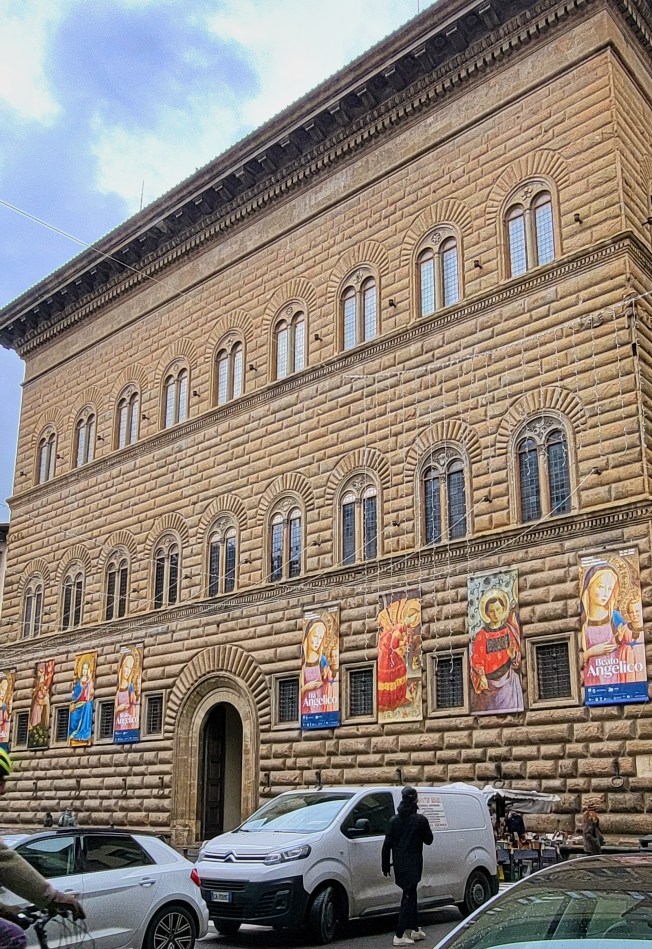
In the fall of 2025, a major Fra Angelico exhibition opened in Florence, split between the Museo di San Marco and Palazzo Strozzi. Jim and I went with a friend from Florence, committing to a full day immersed in his work, with a leisurely lunch in between to reset and reflect. Even so, by early afternoon we were overwhelmed—the exhibition included more than 140 works. My goal was simply to take it all in at an overview level, knowing I would return later to spend more time with selected pieces.
A side note… do you know that there is an illness that occurs in Florence from seeing too much beautiful art. Those inflicted experience rapid heartbeat, dizziness, fainting, confusion, and even hallucinations from overwhelming artistic beauty. It sounds dramatic, but it’s real… google “Stendhal Syndrome”. I’ve never experienced these severe symptoms, but I definitely reach a wall when viewing “too much art” that causes me to lower my gaze to the floor and head to the exit.
And so, we returned to Florence for a two-night stay. I spent one afternoon at Palazzo Strozzi and the next morning at the Museo di San Marco. I also really limited the pieces that I looked at. Jim opted out of my second Fra Angelico deep dive and wandered around the city on his own.
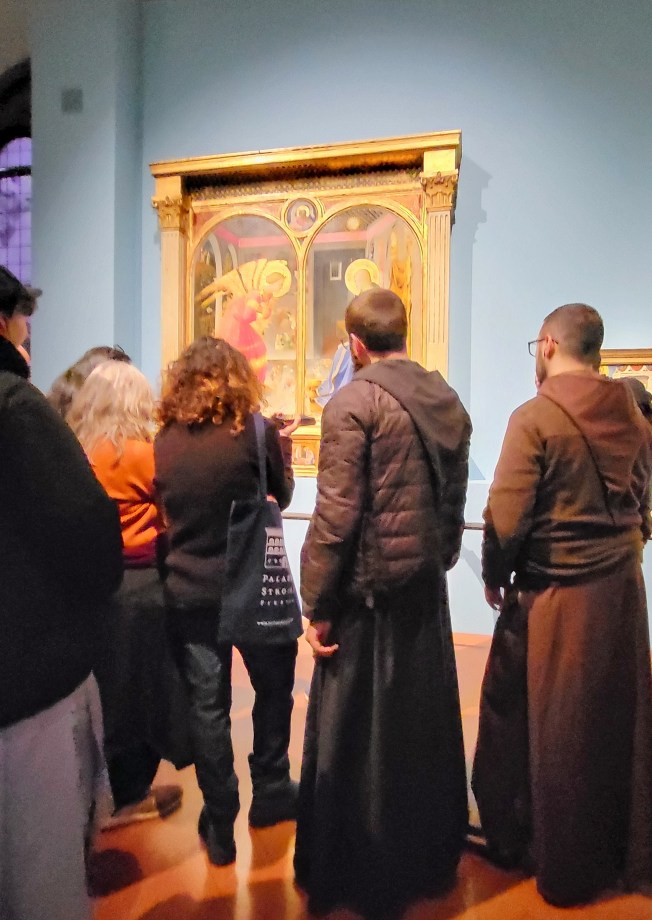
My favorite part of the exhibition was at the Museo di San Marco which also houses many of his works permanently. The building was once a Dominican convent where Fra Angelico lived. Each monk had a small room, or “cell,” used for sleep, meditation, and prayer. What makes San Marco extraordinary is that Fra Angelico painted frescoes in each cell—not for public admiration, but for the private devotion of the monk who lived there. Most are simple, a few more complex, but all were created to support quiet meditation and prayer.
On that same floor, in the hallway, is Fra Angelico’s most famous fresco, The Annunciation, depicting the angel Gabriel telling Mary that she will bear the Son of God. There are many fascinating technical aspects to this work, but what moves me most is Mary’s gentle expression and the soft, calming colors that create a sense of peace and stillness. Fra Angelico does not paint to impress—he paints to slow the viewer down.
Fra Angelico also created large altarpieces and fulfilled commissions by the wealthy patrons of the day, demonstrating that his deeply contemplative style was equally at home in major public commissions.
Here are three versions of The Annunciation for different places and intended uses:
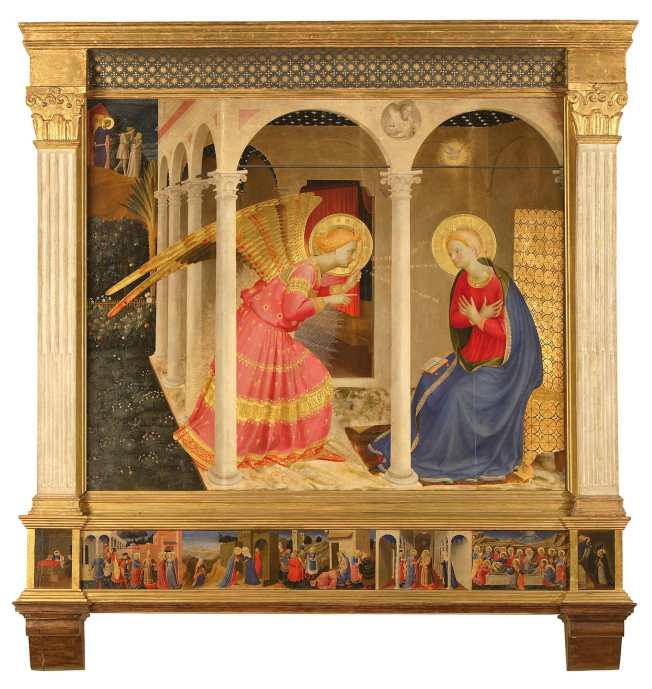
Annunciation of Cortona is an altarpiece intended for display in a church. Lots of gold, deep colors, decorations and complexity. 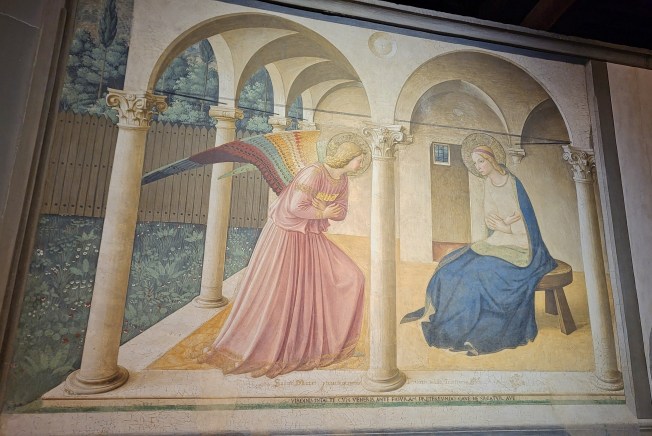
The Annunciation at San Marco is at the entrance to the residents’ area of the convent, in the hallway. The monks would see this every day. Gentle colors, simpler composition. No gold. 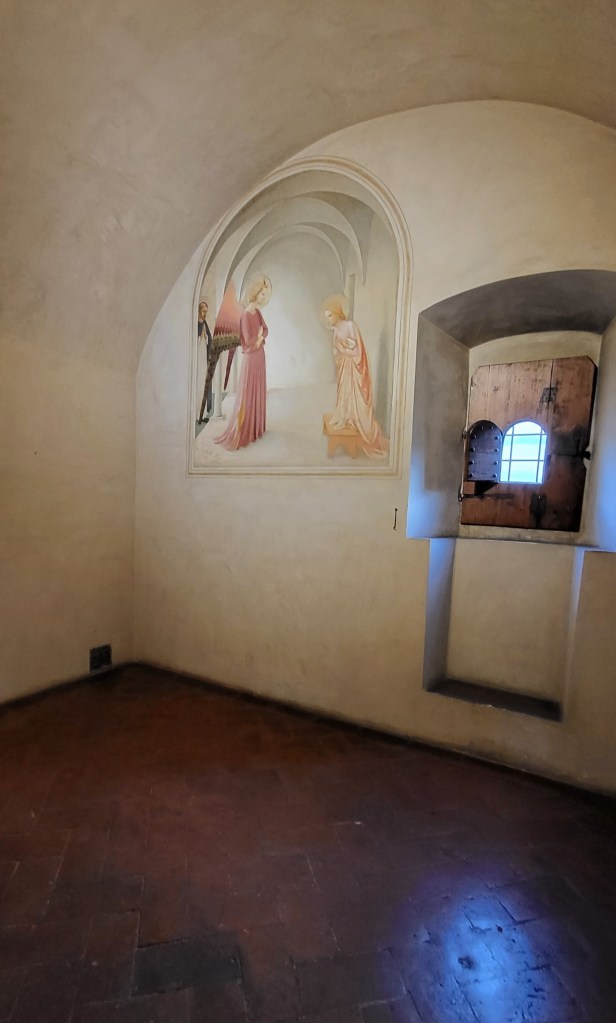
The Annunciation in one of the cells or rooms of the convent. The fresco is even simpler with just the essence of the story, intended for prayer and mediation. 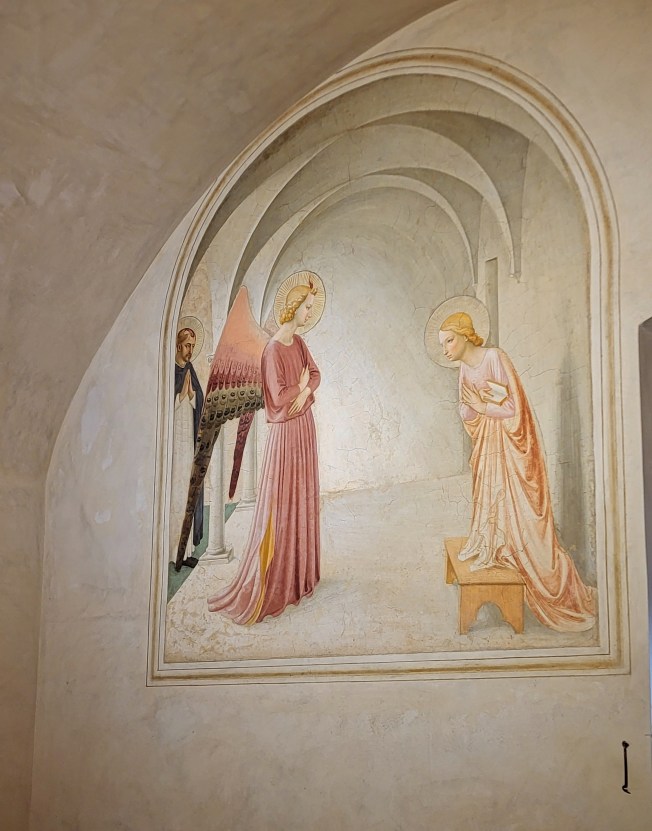
Closeup of the Annunciation in a cell. As founder of the Dominican Order, Saint Dominic appears as a model of prayerful contemplation for the friars living in the cells.
Although this exhibit ends on 25 January 2026, many of his works are permanently on display at the Museo di San Marco. If you visit Florence, I strongly recommend that you visit. It is a two-minute walk from the Galleria dell’Accademia which houses Michaelangelo’s David.
Who’s Next?
So, who will I study next? My current plan is Luca della Robbia and Donatello. And yes, Donatello will complete my study of the Teenage Mutant Ninja Turtles. 😊
Living in Italy makes this kind of slow, immersive exploration possible. Art here isn’t something you rush through —it becomes a companion over time. Studying one artist deeply, returning again and again, and letting understanding unfold gradually has been one of the great gifts of living here, and it’s a journey I’m grateful to continue.
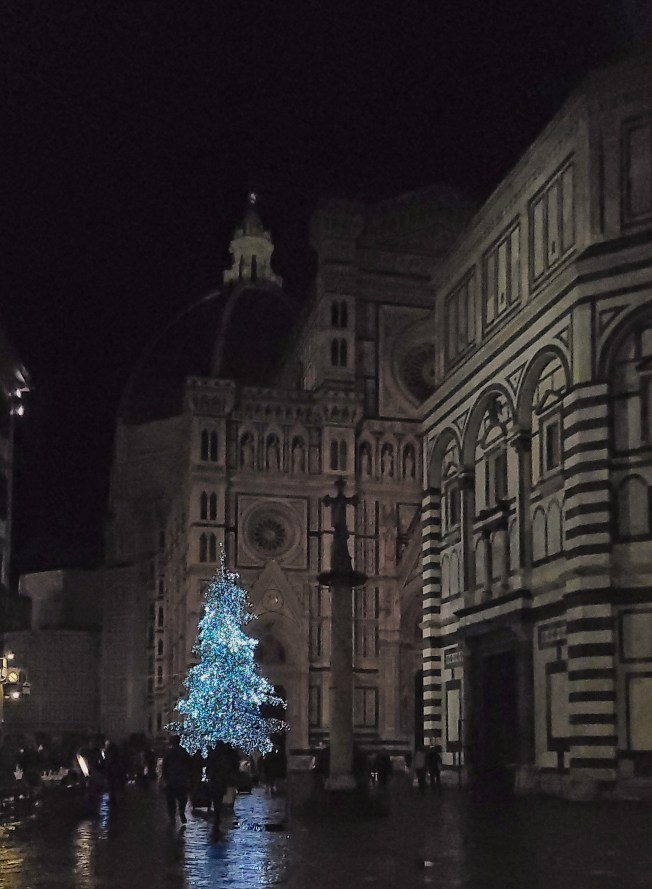
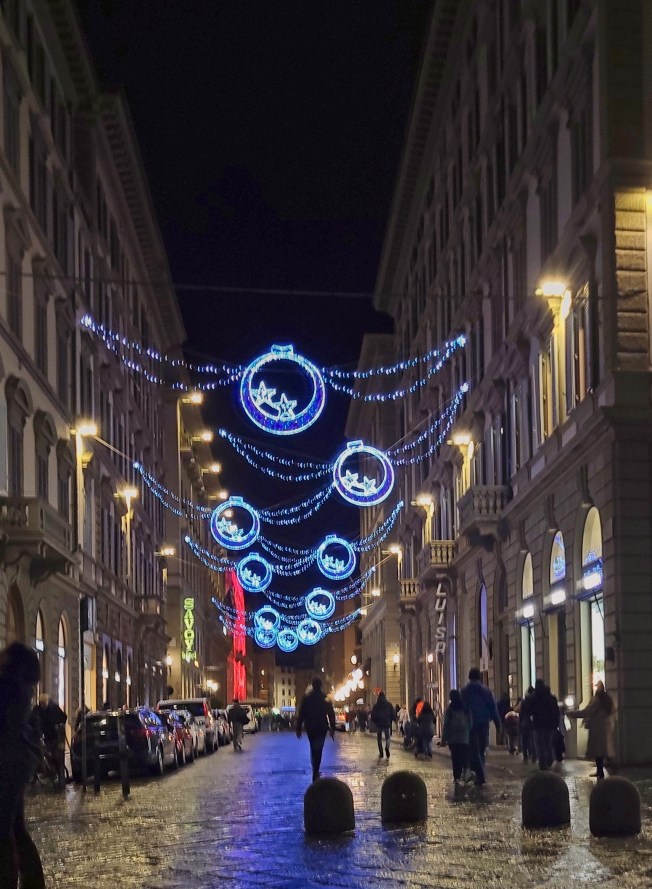
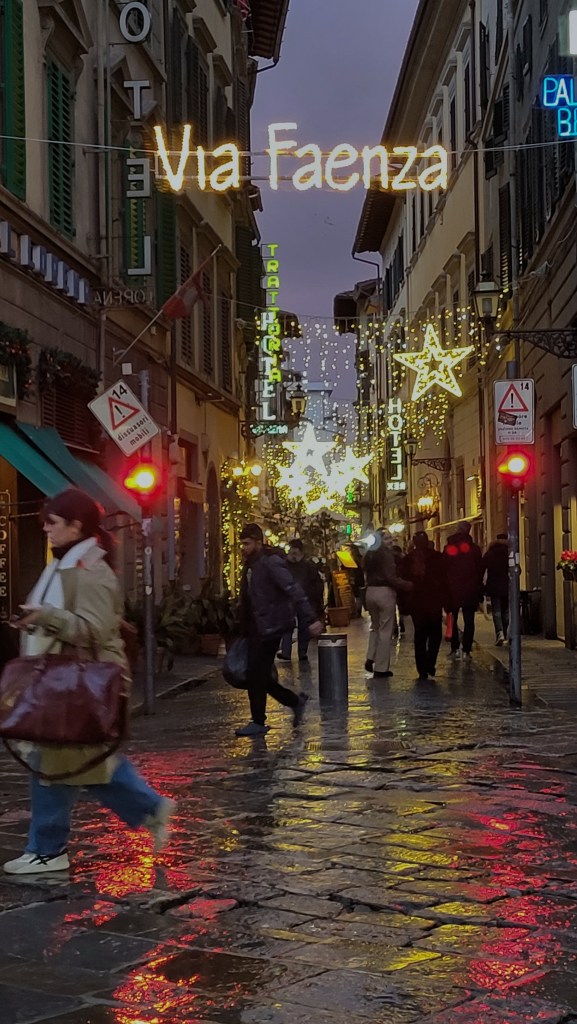
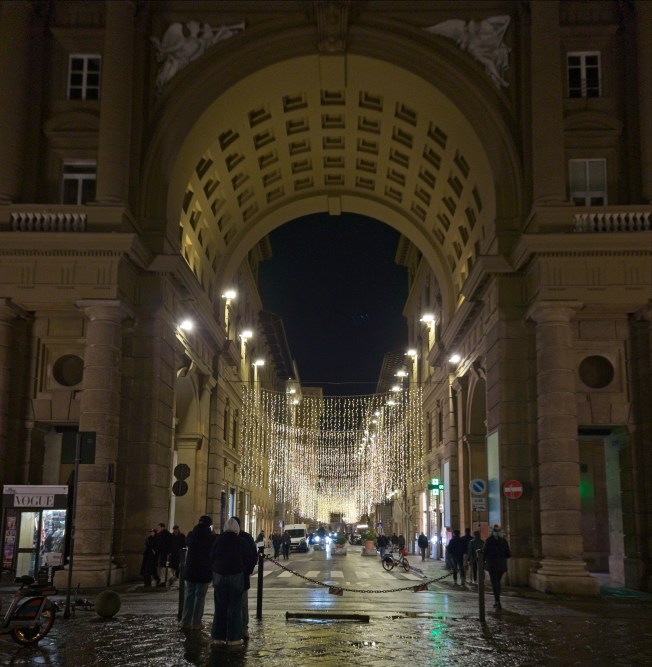
In closing, here are some of the Christmas lights we saw as a bonus on our weekend visit to Florence. Not all serious art, but also glitzy lights!




 My Next Adventure