When people visit Italy for the first time (or two), the biggest destinations that come to mind are Rome, Florence, and Venice. Each has spectacular and unique sights to see – and also lots and lots of tourists. After a few visits to Italy, people often want to visit locations that feel more authentic without the throngs of tourists. We visited two of these locations recently – the Dolomites of Northern Italy’s Alps and Verona, known as the city of Romeo and Juliet. I also visited Mantua (called Mantova in Italy) which is filled with important art and history and seems to be mostly visited by Italian schoolchildren. This blog post will highlight my visits to these lesser-known but wonderful locations.
Diana and Jed are friends from Lucca; they recently purchased a condo in the Dolomites so that they could enjoy the winters skiing. And from their property, they are just a few steps from the ski lifts! They invited Pasquale, Jim and I to visit in April, with a special request – that Pasquale set up a few visits to wineries in the area, using his in-depth knowledge of Italian wine producers. This turned out to be a bit of a challenge because many wineries were unavailable due to “out of season” or they were preparing for Italy’s largest wine show in just a few days – more on this later. We visited three:
Weingut Lieselehof – on a beautiful mountainside near a lake. And they have a very interesting “wine museum” that has over 100 different types of grapes growing from all over the world. They study how they grow in this environment and are particular interested in disease-resistant varieties.
Markus Prackwieser Gump Hof – a wonderful family-owned winery that weaved the story of family, local history, and hard work together leading up to a wonderful wine tasting. Our favorite winery of the three.
Kloster Neustift Abbazia di Novacella – a winery and an abbey together! This was quite a large winery that produces LOTS of different wines. The grounds, abbey and library were gorgeous. Too bad the wine wasn’t as good.
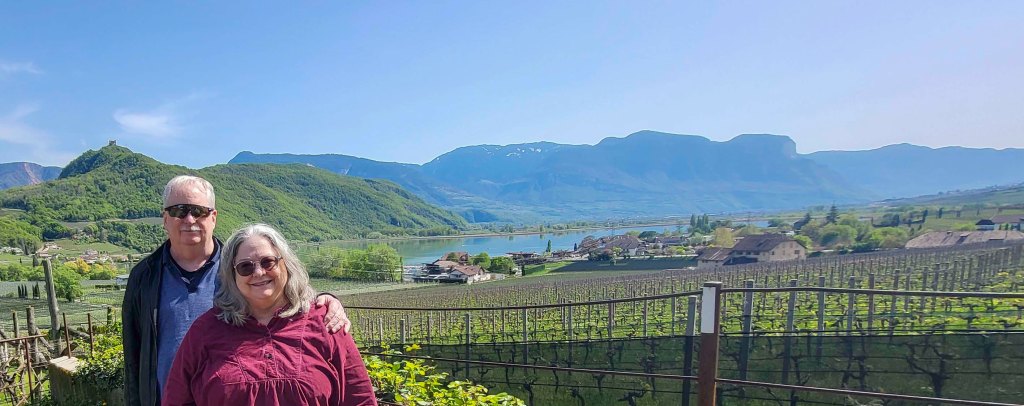
Beautiful and peaceful in the mountains – surrounded by vineyards and a surprise lake!
The vines grow on very steep slopes so all work must be done by hand.
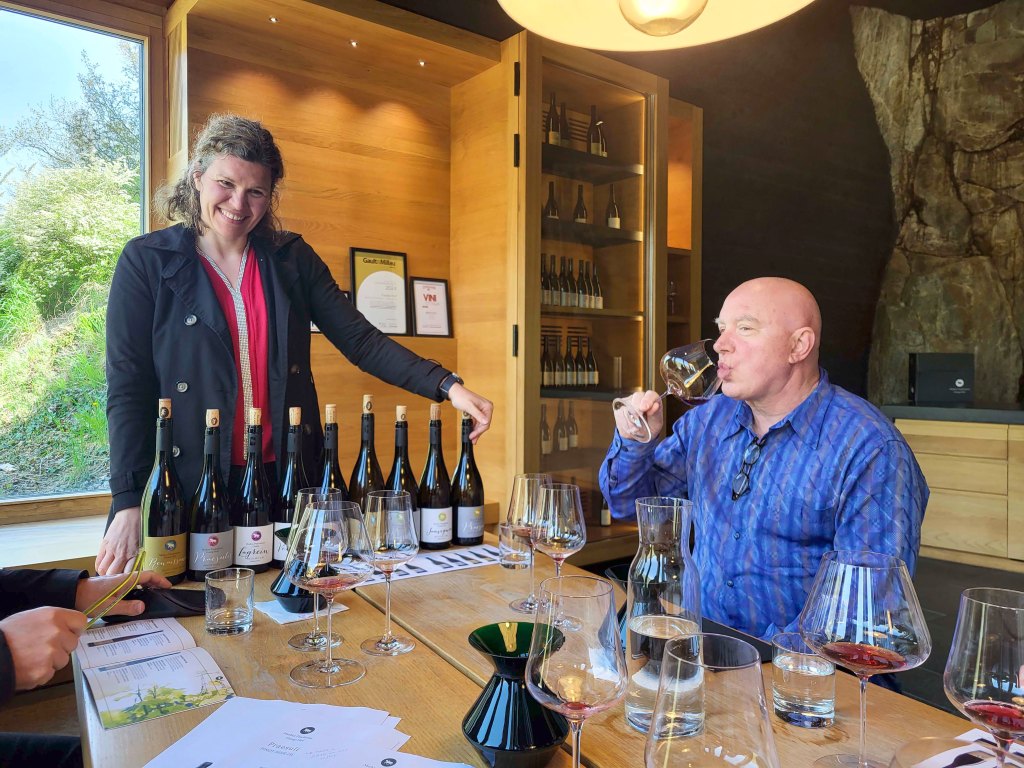
Pasquale enjoying the wine at Markus Prackwieser Gump Hof.
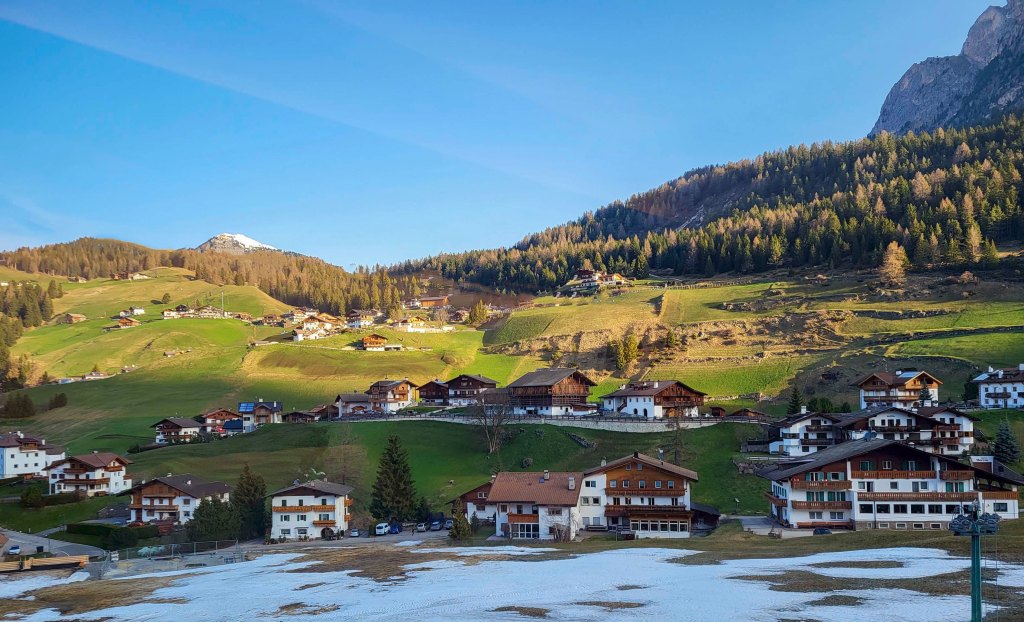
This area looks, sounds and feels more like Germany than Italy! More people speak German than Italian.
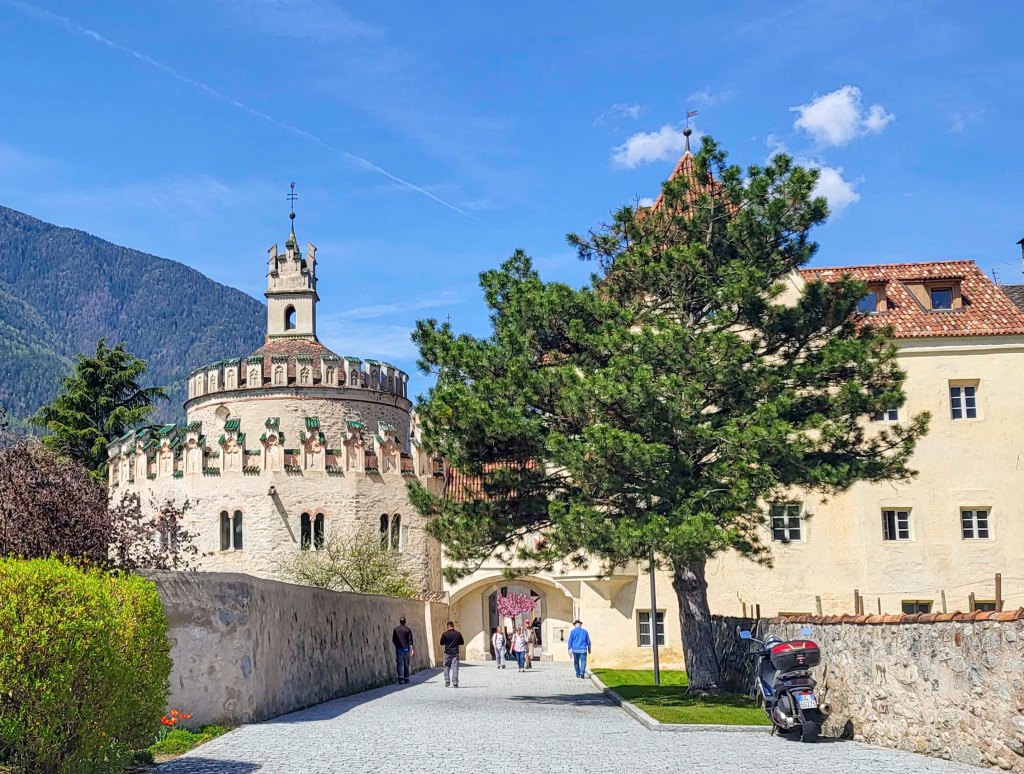
Entrance to the abbey complex. Note the cute round building on the left.
We explored that cute building but then realized that it was closed – the door was only opened for the men working inside. Jim and I exited quickly, but Pasquale and Diana had begun exploring upstairs. The men started locking the door but I tried to explain in Italian that there were two friends still inside. Apparently they spoke only German but they did understand once I got animated!
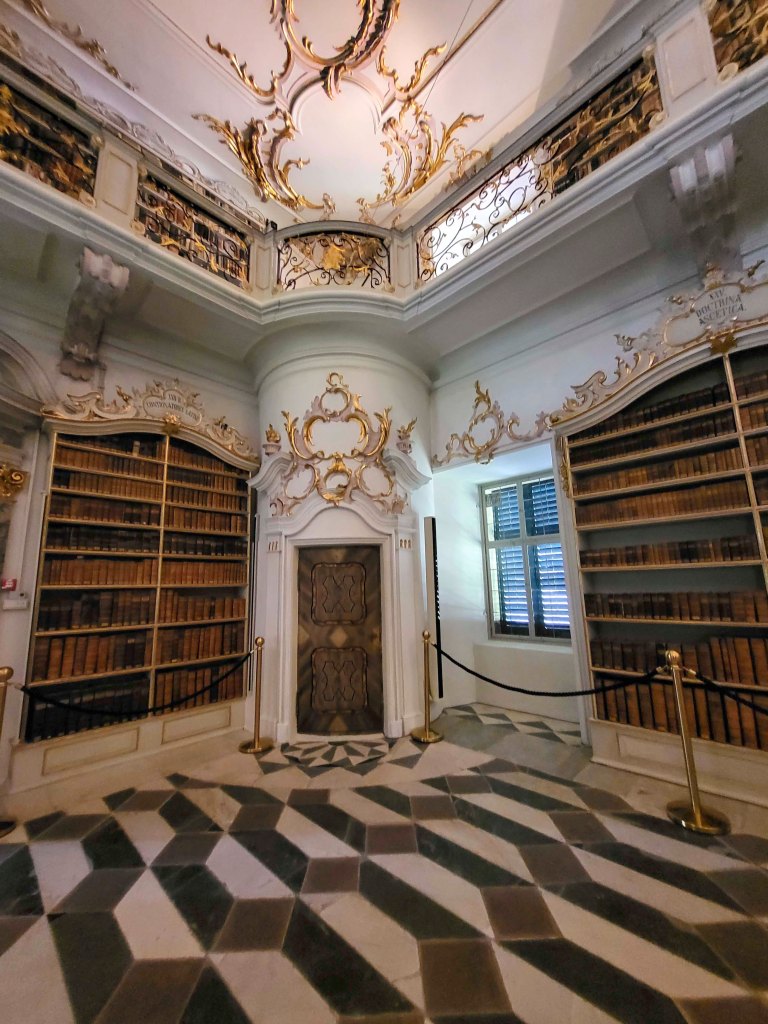
Beautiful baroque library of the abbey!
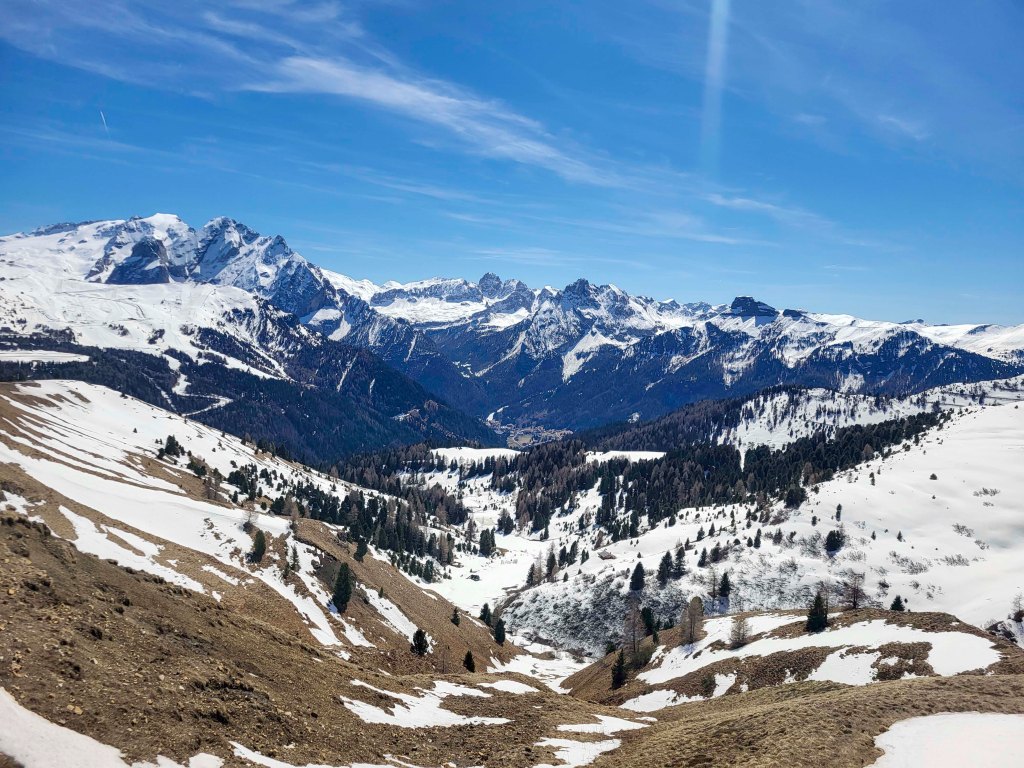
The following day, Jed and Diana took us on a drive around “their mountain”. The views were spectacular and even though it was quite late in the season, we were able to watch people ski. I was surprised to learn that you can ski from town to town and essentially spend all day skiing through the entire area. I was also surprised to learn that the weather could be so warm with snow still blanketed everything. I brought all of the wrong clothes. Diana and Jed are great hosts – they prepared several wonderful meals for us and we even played billiards in their cantina! What a fun visit!
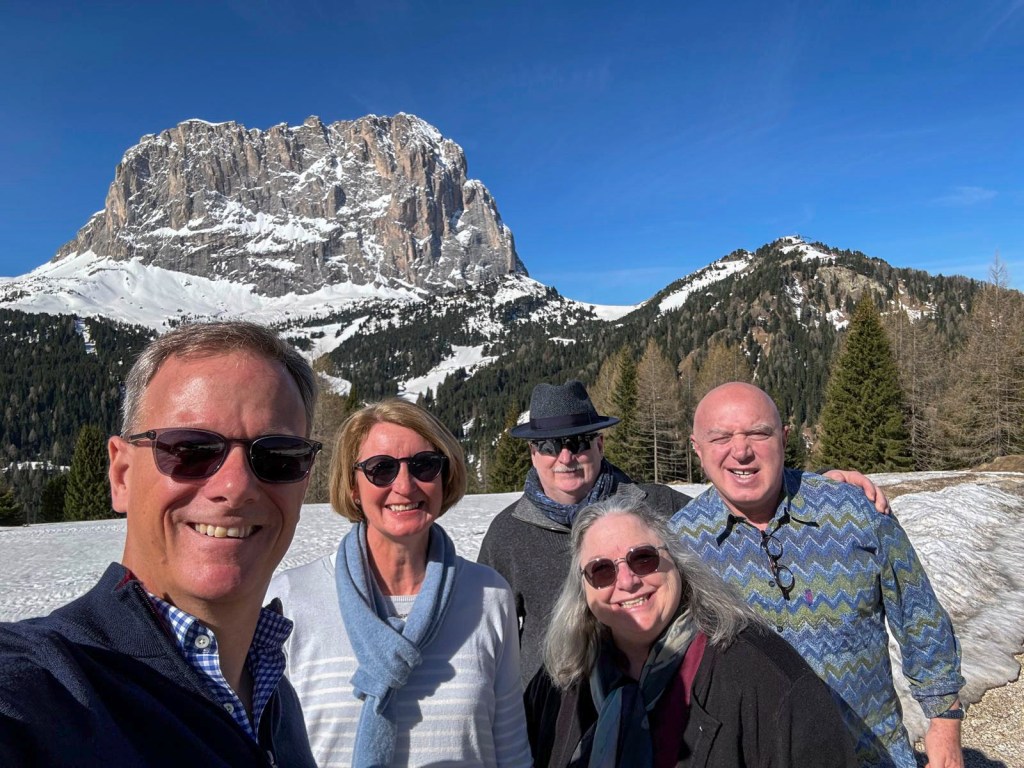
Group selfie! Pasquale, where are your sunglasses???
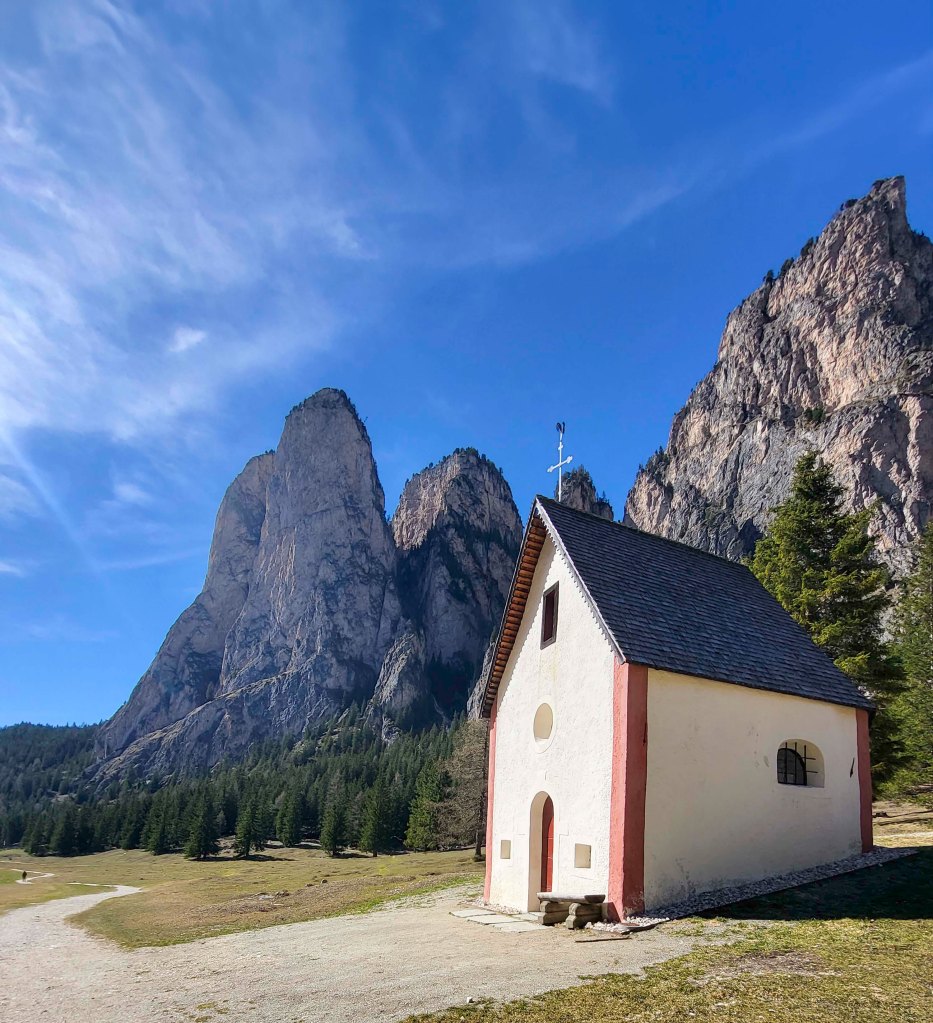
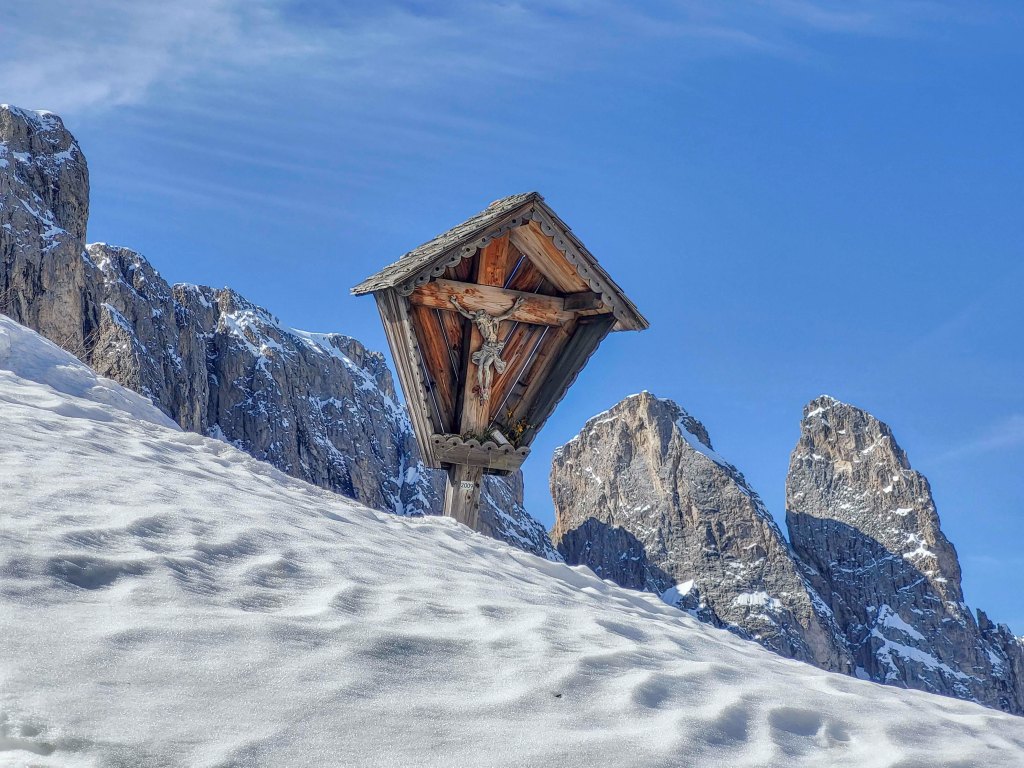
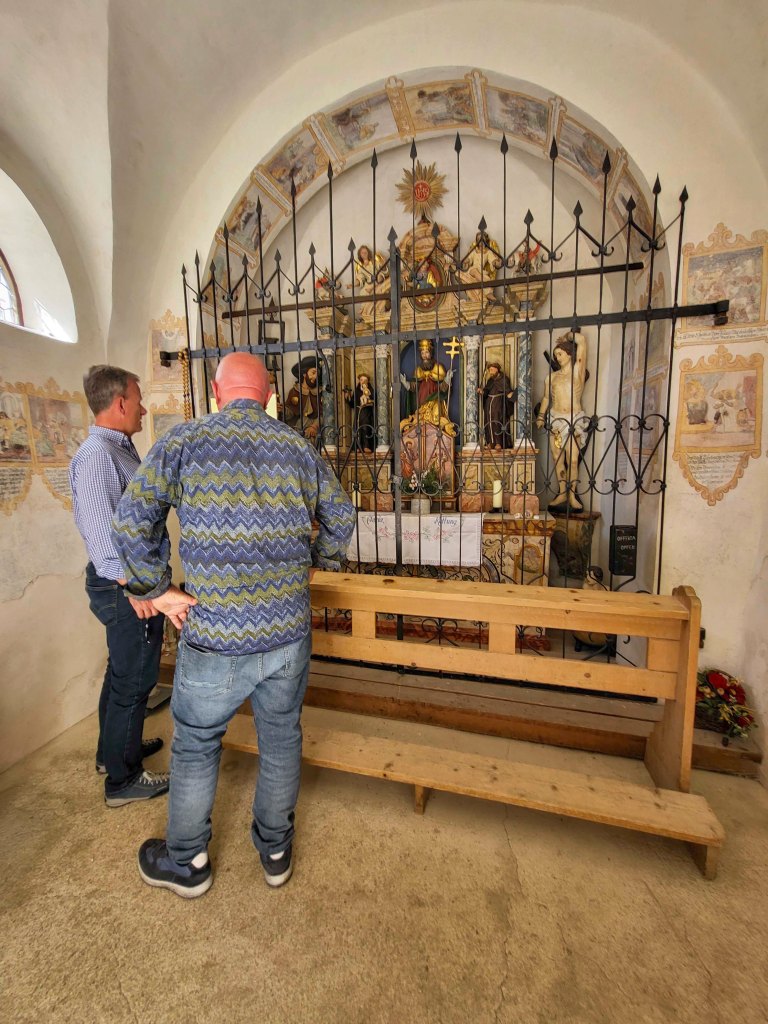
We went to a beautiful field surrounded on three sides by mountains. It was a gathering place for people and animals when invaders were coming. Today there is a beautiful community chapel for remembering locals who have died.
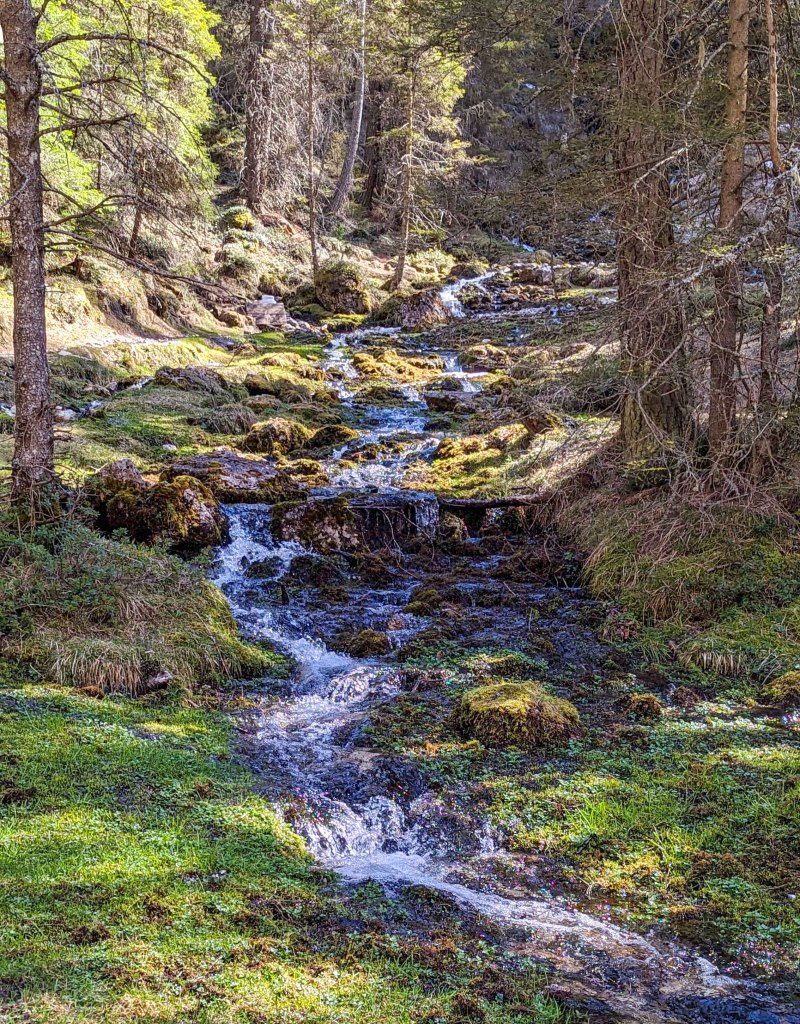
And a lovely mountain stream was flowing through the field.
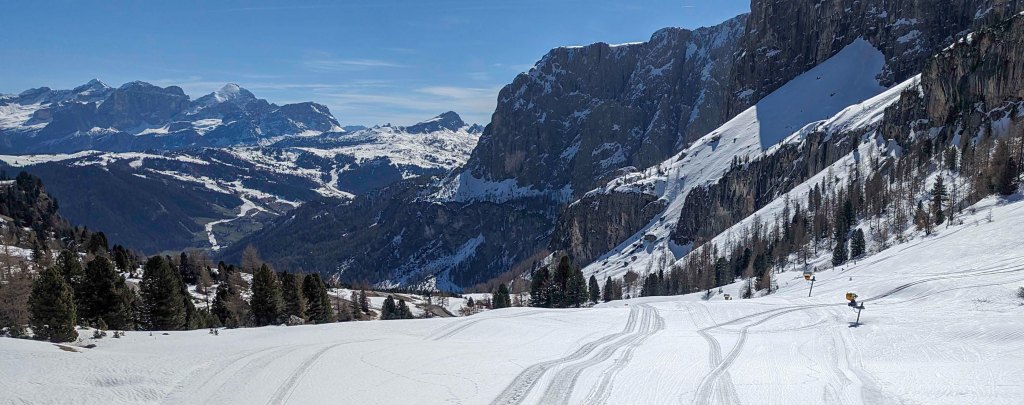
More slopes!
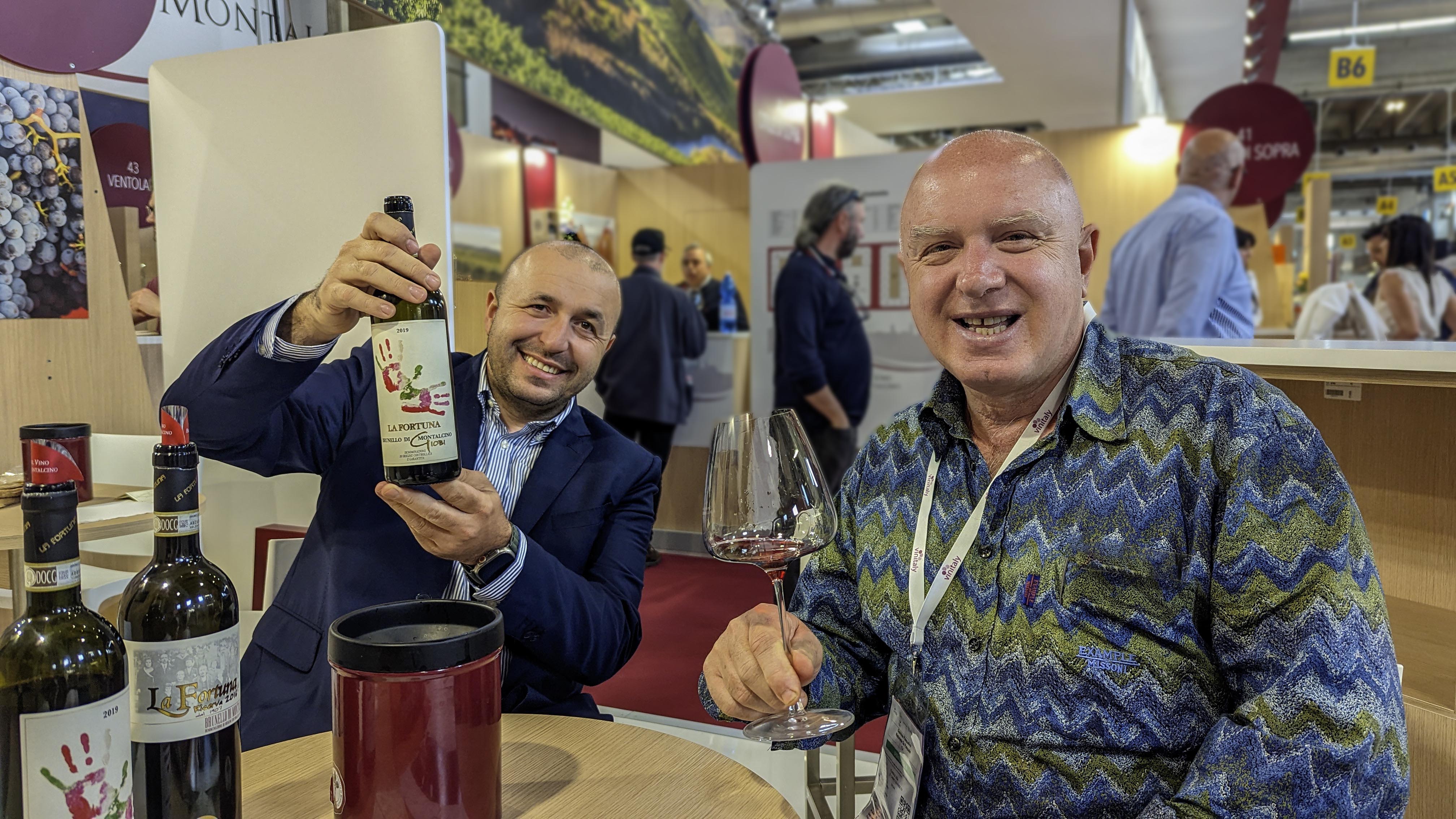
We then headed south to Verona. Jim and Pasquale attended VinItaly, the largest wine event of the year in Italy. It gives them an opportunity to enjoy old favorites, discover hidden gems, and visit with producers and wine lovers. There are thousands of wines to try, and they typically taste (then spit) over 100 wines per day!
While Jim and Pasquale were tasting and spitting, I explored Verona. We have visited Verona several times, so I have already seen the biggest sights (the spectacular Roman arena that is still used today and the fictitious location of Juliet’s balcony from Shakespeare’s Romeo and Juliet). My objectives during these days were to enjoy the pleasant piazzas and learn more about some of the Veronese artists. I had plenty of time to peek into courtyards, wander the streets, and enjoy a cappuccino at the cafes. And I visited more than a few churches… but I have included pictures of only my favorite: Basilica di San Zeno.
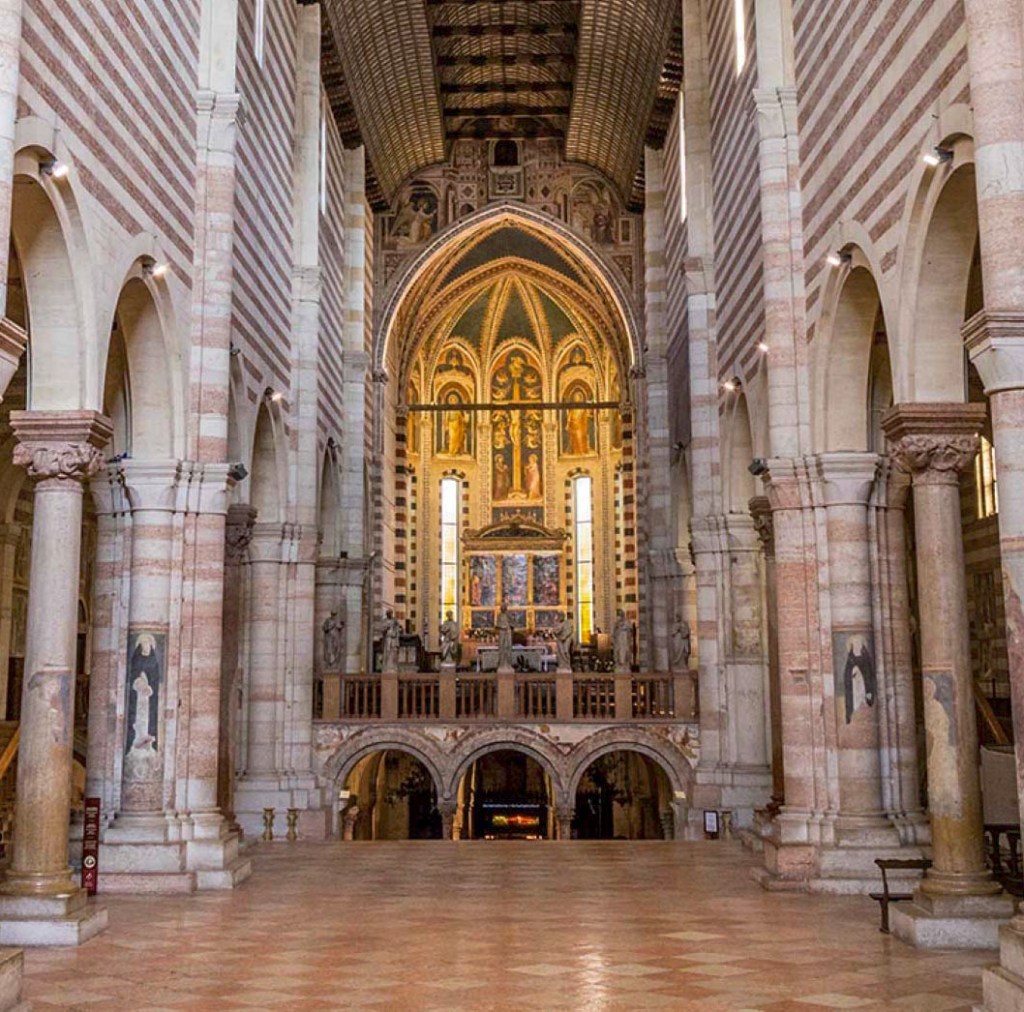
The basilica has a rather unusual layout – there are three different levels: the central church, a raised Presbytery and a lower Crypt.
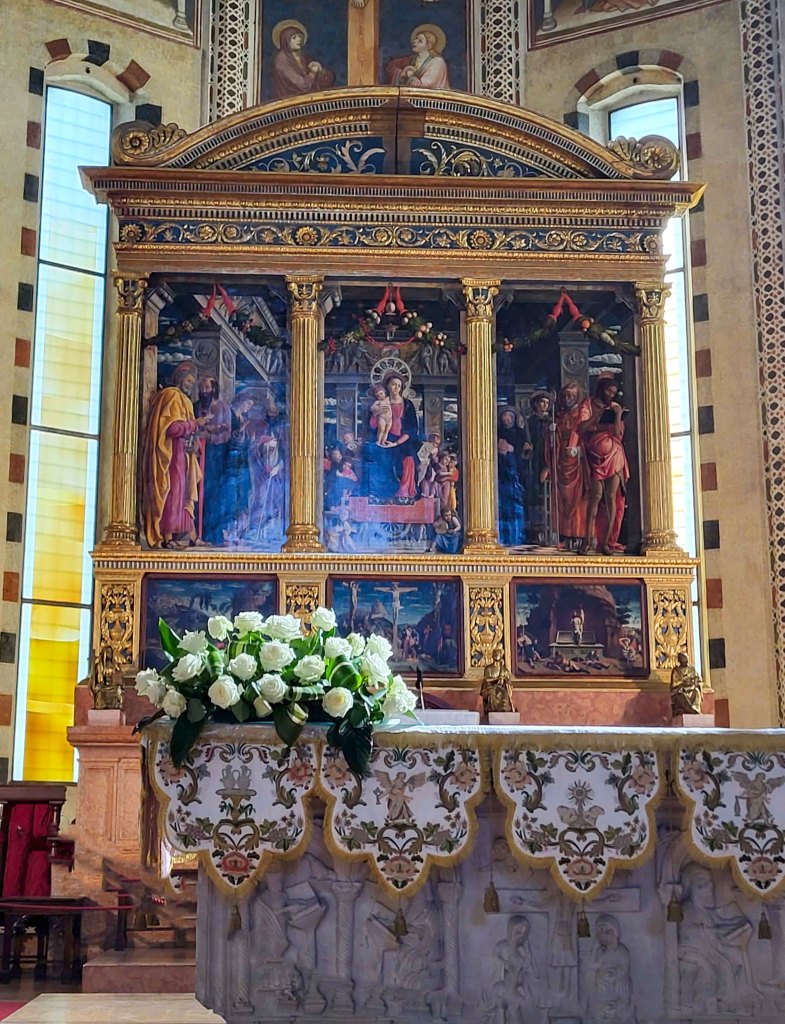
The San Zeno Altarpiece by Andrea Mantegna, an important Renaissance painter from Verona.
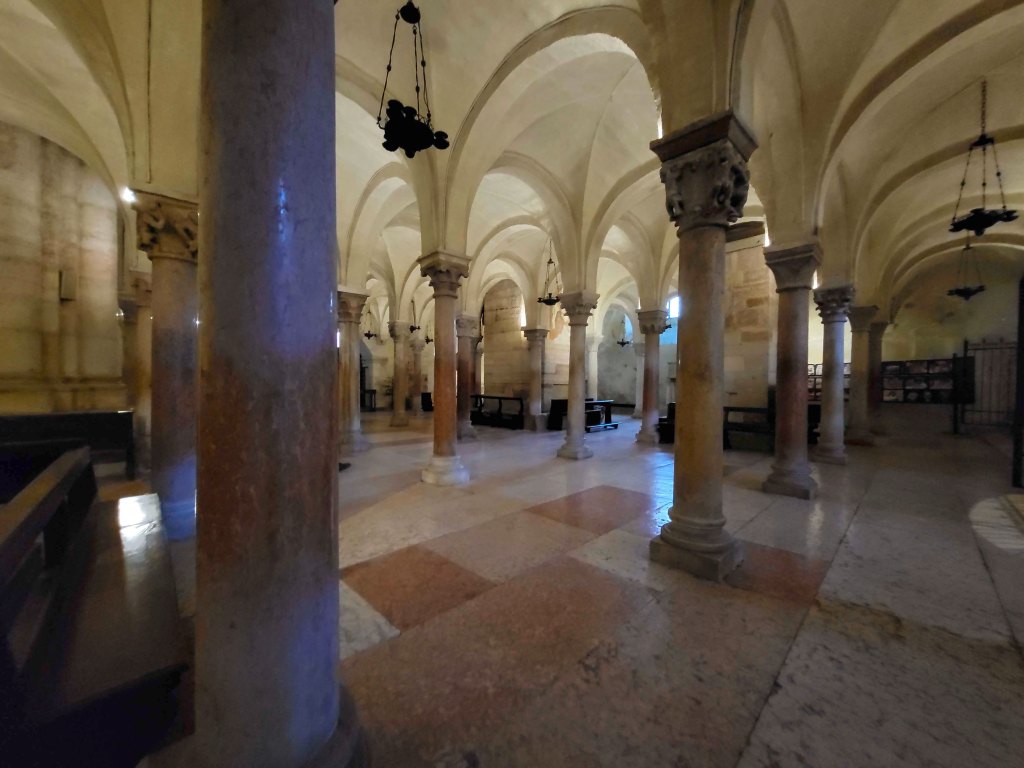
The crypt houses the body of Saint Zeno and has 49 marble columns! You can also see the giant columns from the main part of the basilica. Very cool space!
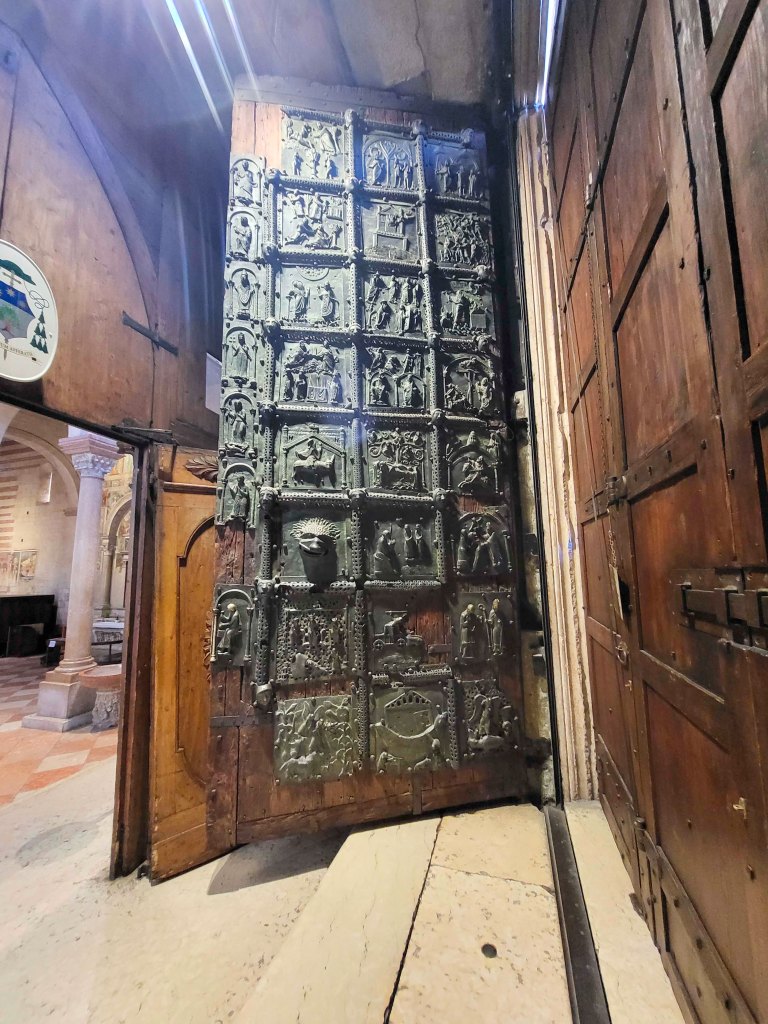
Bronze door from the Medieval times. I’ve never seen anything like this!
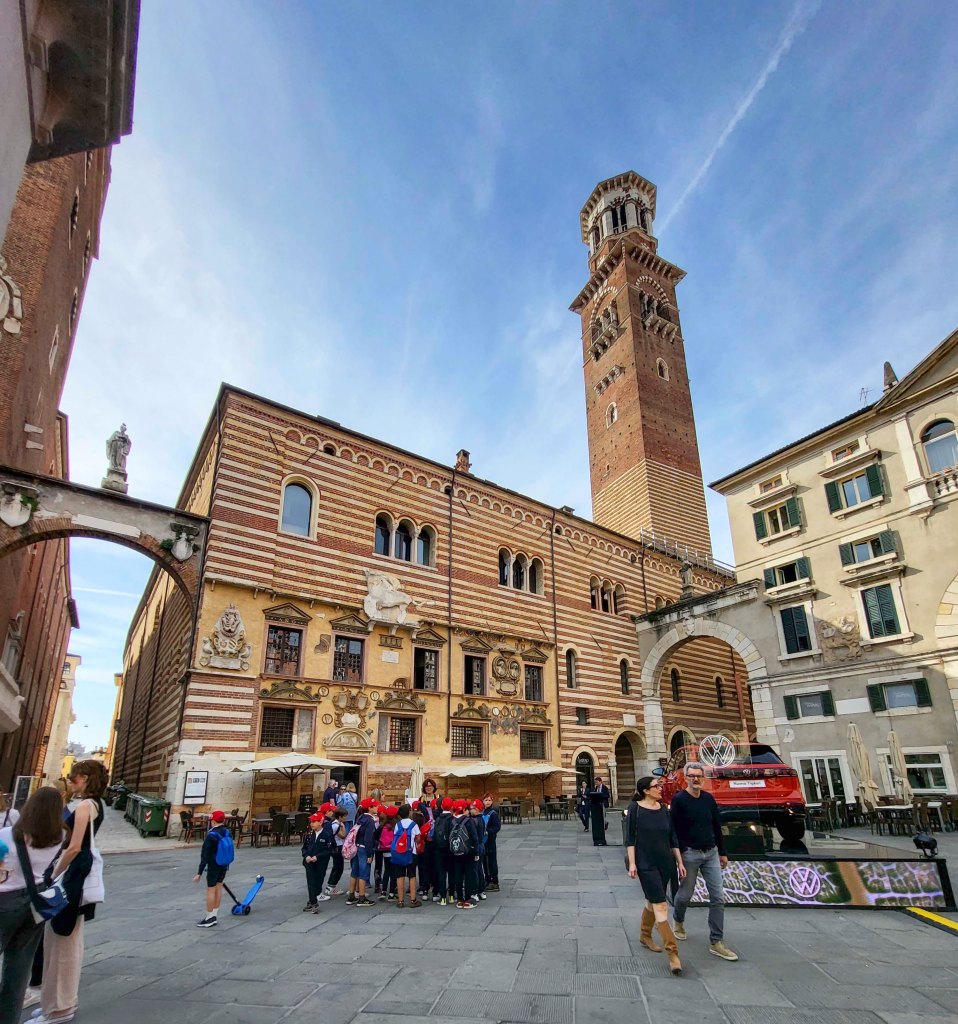
Piazza dei Signori with incredible architecture and art, along with a fancy car for the VinItaly crowd!
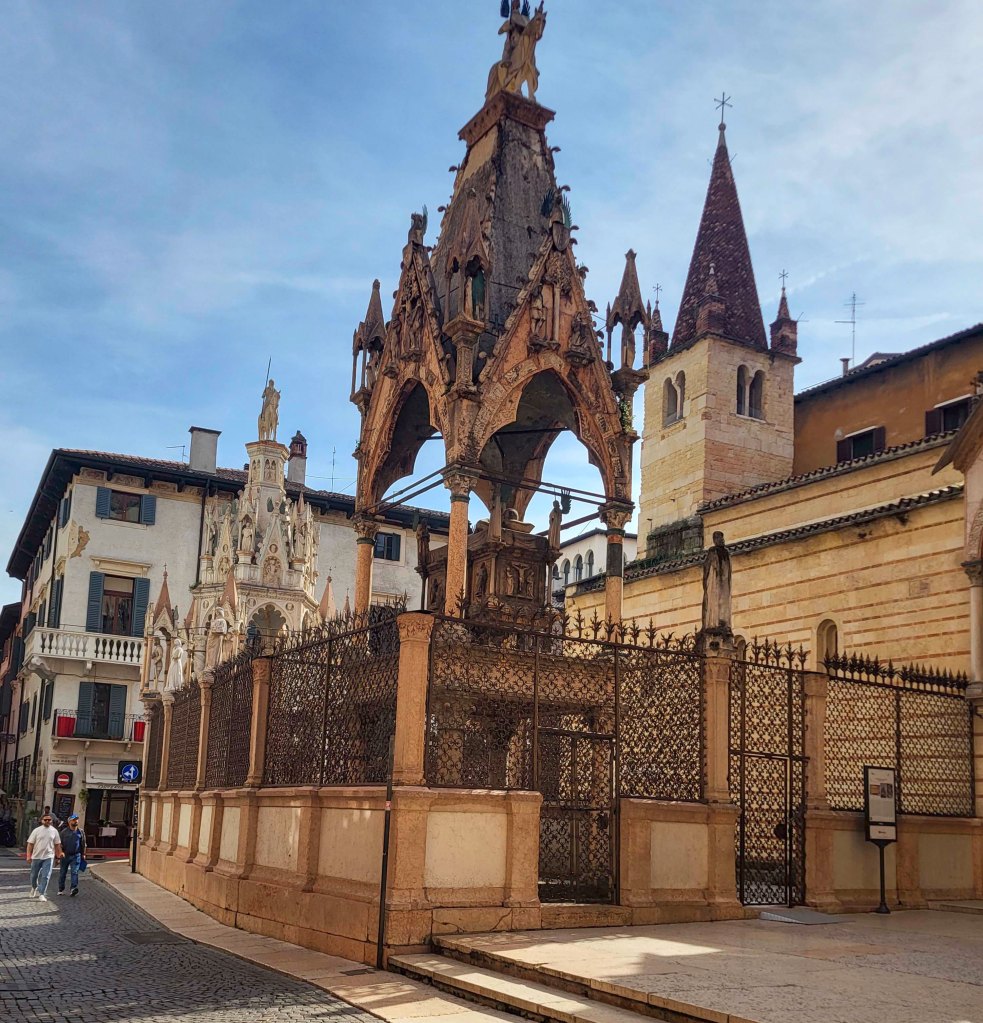
Very elaborate tombs for the Scaligeri family from the 14th century.
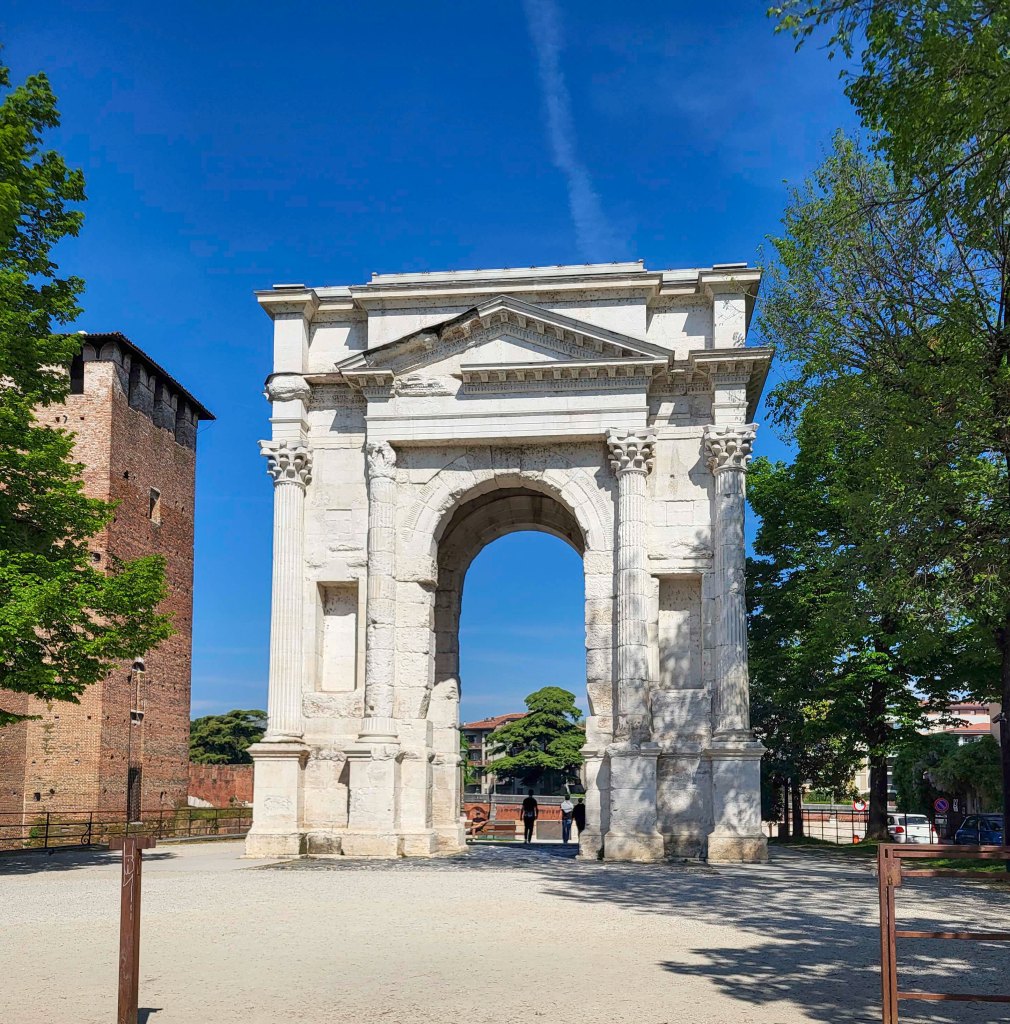
Arco dei Gavi, white marble arch from the Roman times!
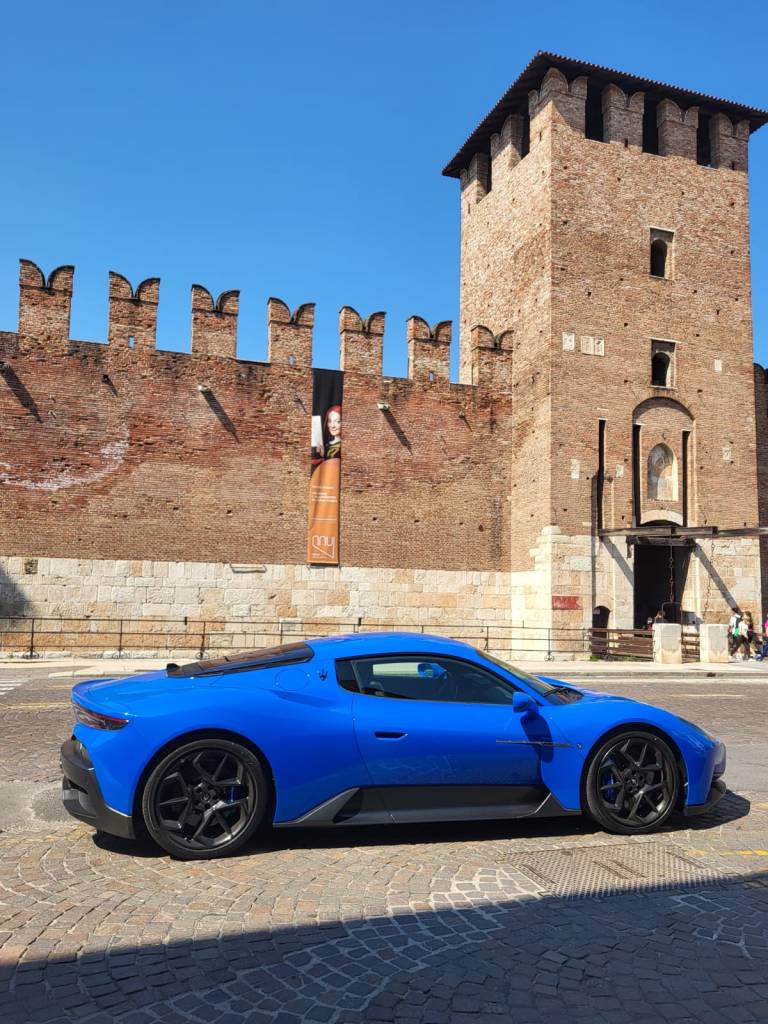
Verona is a very wealthy and elegant city, so I wasn’t too surprised to see this Masserati in front of the castle.
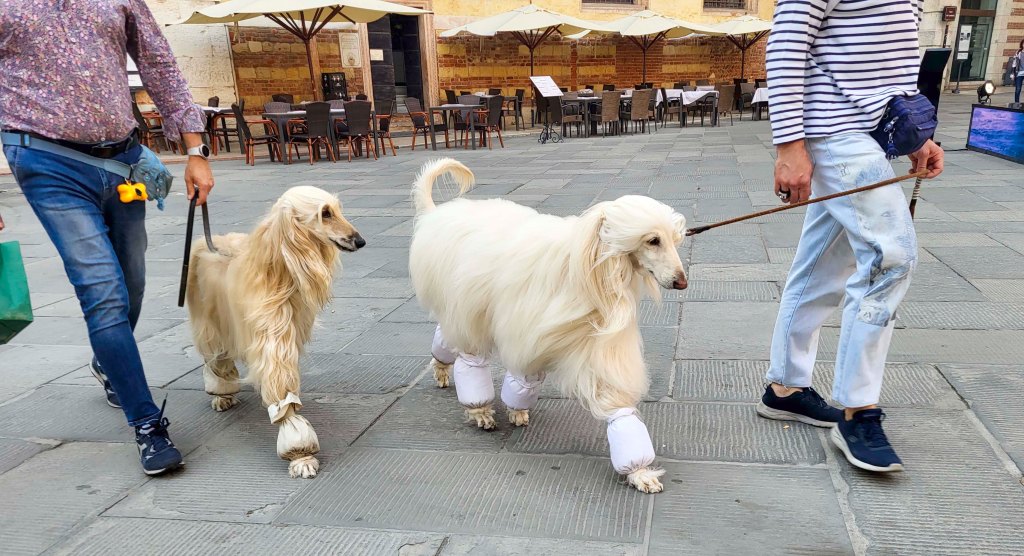
Nor was I surprised to see these elegant Afghan Hounds with their legs carefully protected.
I took a 40-minute train ride south to spend the day in Mantua, “a city surrounded by 3 artificial lakes in the northern Italian region of Lombardy. It’s known for the architectural legacy of the Renaissance Gonzaga rulers, who built the Palazzo Ducale. This imposing building houses the Bridal Chamber, decorated with Andrea Mantegna frescoes.” Unfortunately, no pictures and only 5 minutes were allowed in the Bridal Chamber but I was very pleased with myself for finding a way to visit it for two 5-minute periods!
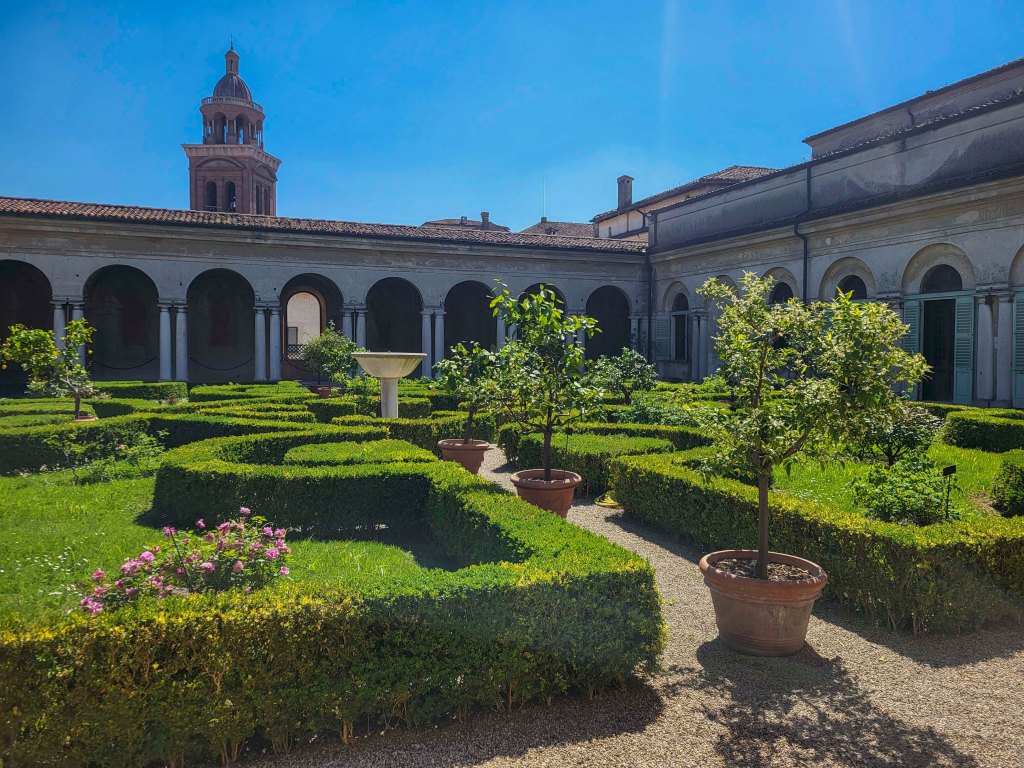
Beautiful and peaceful courtyard of the Palazzo Ducale
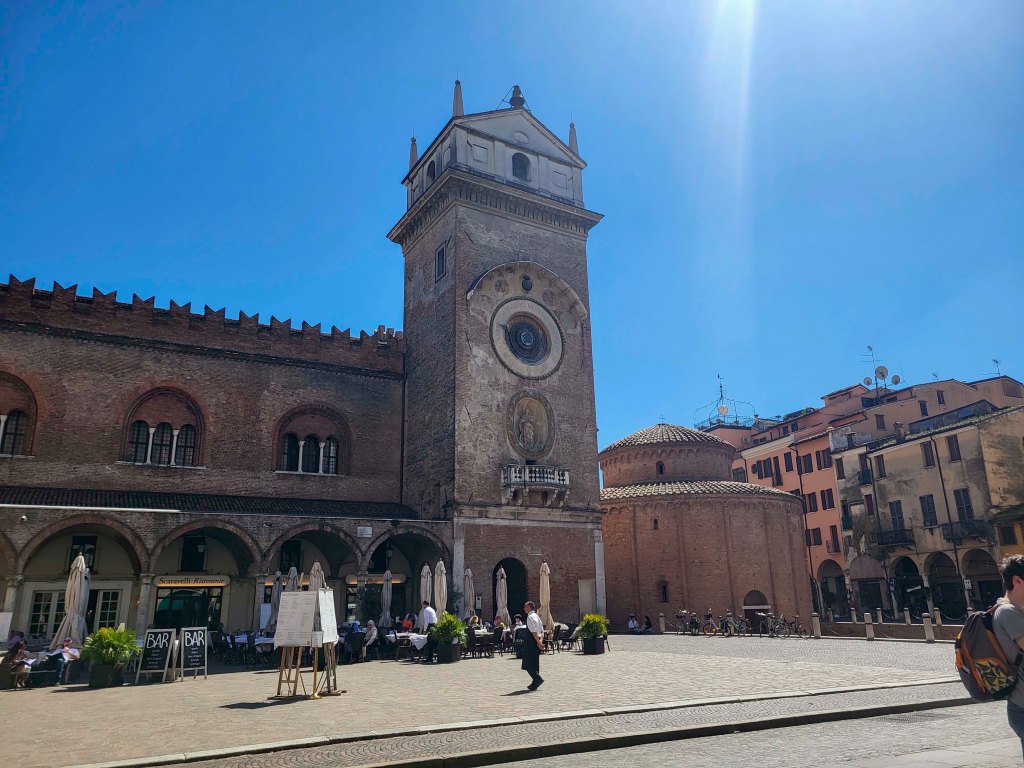
Piazza Erbe and Rotonda di San Lorenzo, a round church from the 11th century
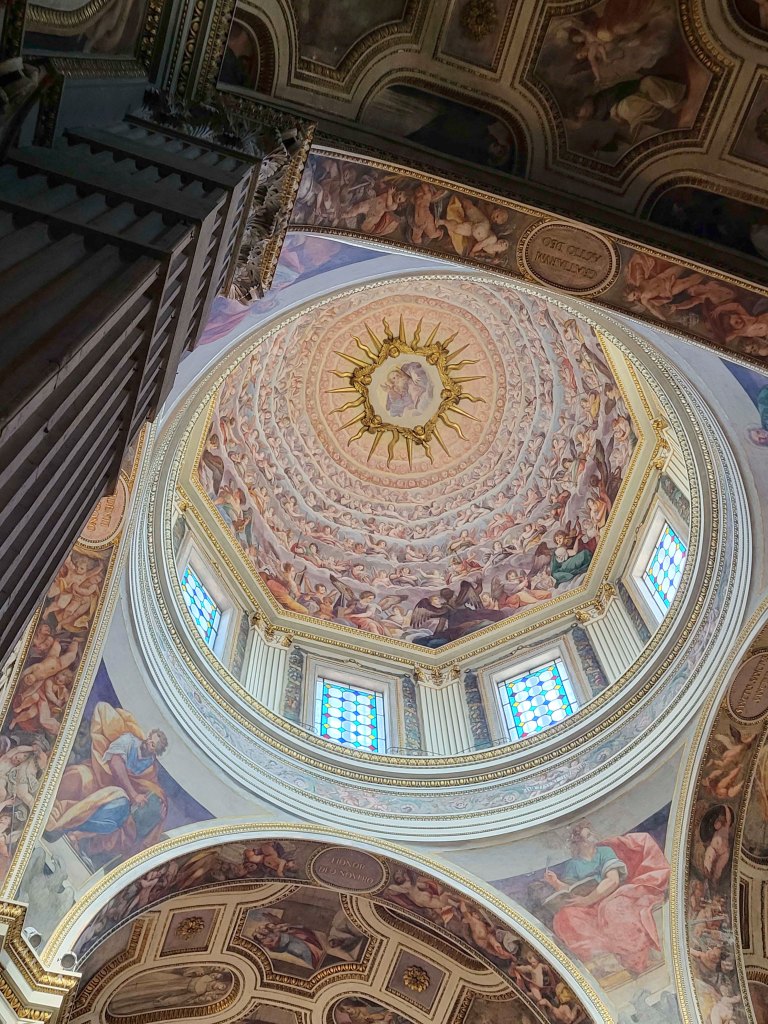
Mantova and Verona are known for their incredible domes, especially with tiers of people, some of which may look like they are reaching down from the dome.
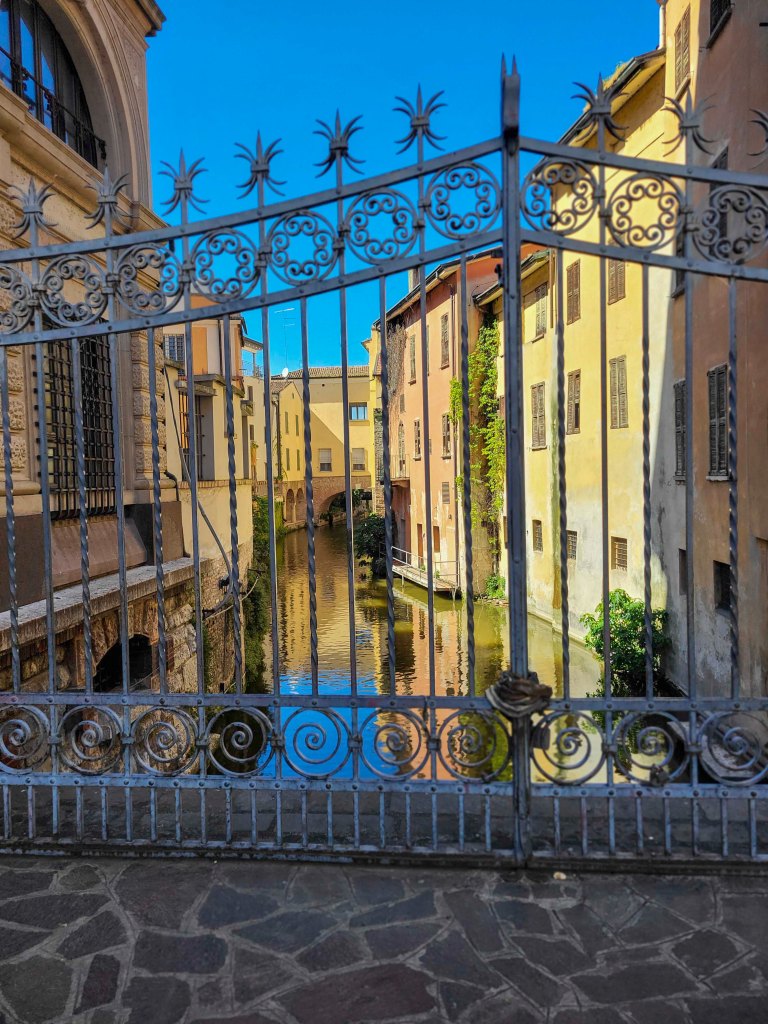
A quiet canal going through Mantova. I could live here!
As I bid farewell to these enchanting places, I carried with me a sense of gratitude for the opportunity to uncover the secrets of this captivating country. Where to next?
Jim enjoys attending wine tasting events with Pasquale, our friend who owns our favorite restaurant in Lucca. They attend several in Italy each year, and this is the second time visiting ProWein in Düsseldorf, Germany. I decided to come along this year, not for the wine tasting but for the travel and adventure.
The plan started out simple… Jim and I would stay in Cologne, Germany while Pasquale stayed with friends in Düsseldorf. Cologne is less expensive during ProWein and far more interesting. Then the plan grew a bit… why not go someplace else before or afterwards? We looked at the map and quickly picked Brussels. Hotels are expensive there so we decided to use some of my remaining Marriott points (leftover from all the business travel). Reserve 4 nights, stay the 5th for free. What a deal! We now had time for a day trip to Bruges and one to Ghent.
Brussels is the capital of Belgium and the administrative center of the European Union, giving the town two distinct flavors – historic/traditional versus international/modern. I liked the mix of the two…
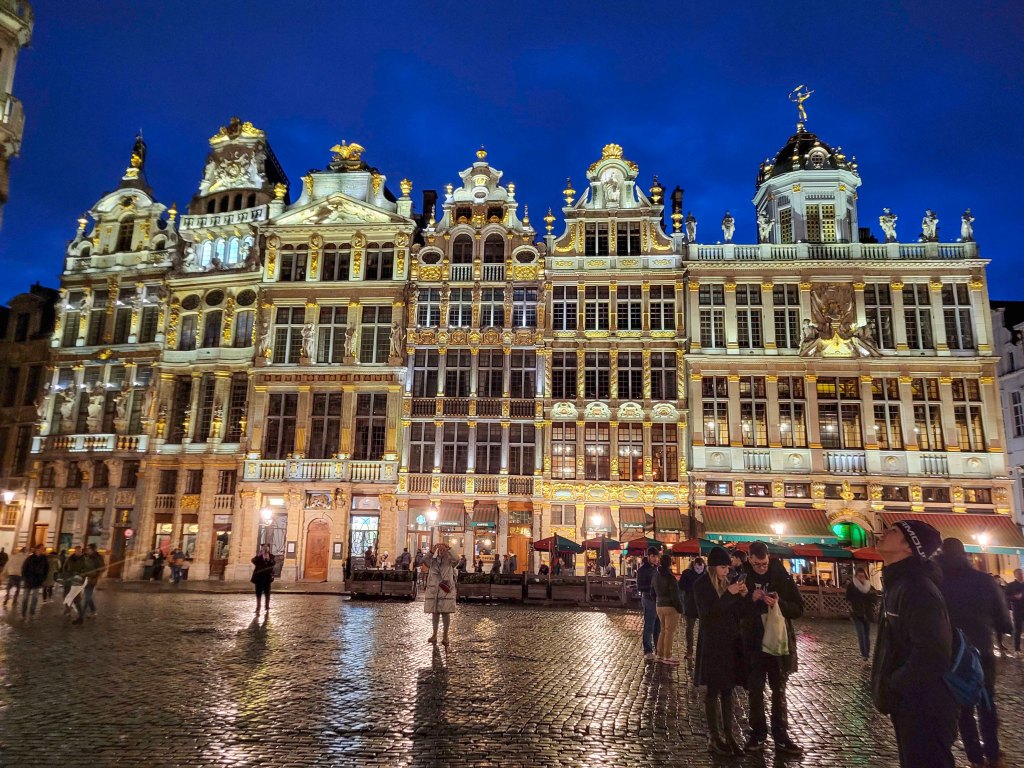
My favorite in Brussels was the Grand-Place (their main piazza/square) at night. Magical! This large square is surrounded by beautiful buildings decorated with gold paint. The combination of the architecture, decor, gold, and lighting make it truly unique. The square was filled with people enjoying this special site. We returned during the day when we could see the buildings’ details and statues better, but the nighttime view couldn’t be beaten. The buildings were built, rebuilt, and restored several times, but are generally in the Baroque style. They were mostly built by the different guilds as well as the Town Hall and the King’s house (although he never lived there). One explanation for the highly decorated facades is that the guilds wanted to remind the King and the Town government that they were equally wealthy and needed to stay in line! The only thing better would be a visit at Christmastime for the Christmas market and beautiful festive decorations. Check out this blog post by our friends Ilene and Gary.
Here are a bunch of pictures – be sure to read the captions for a bit of context.
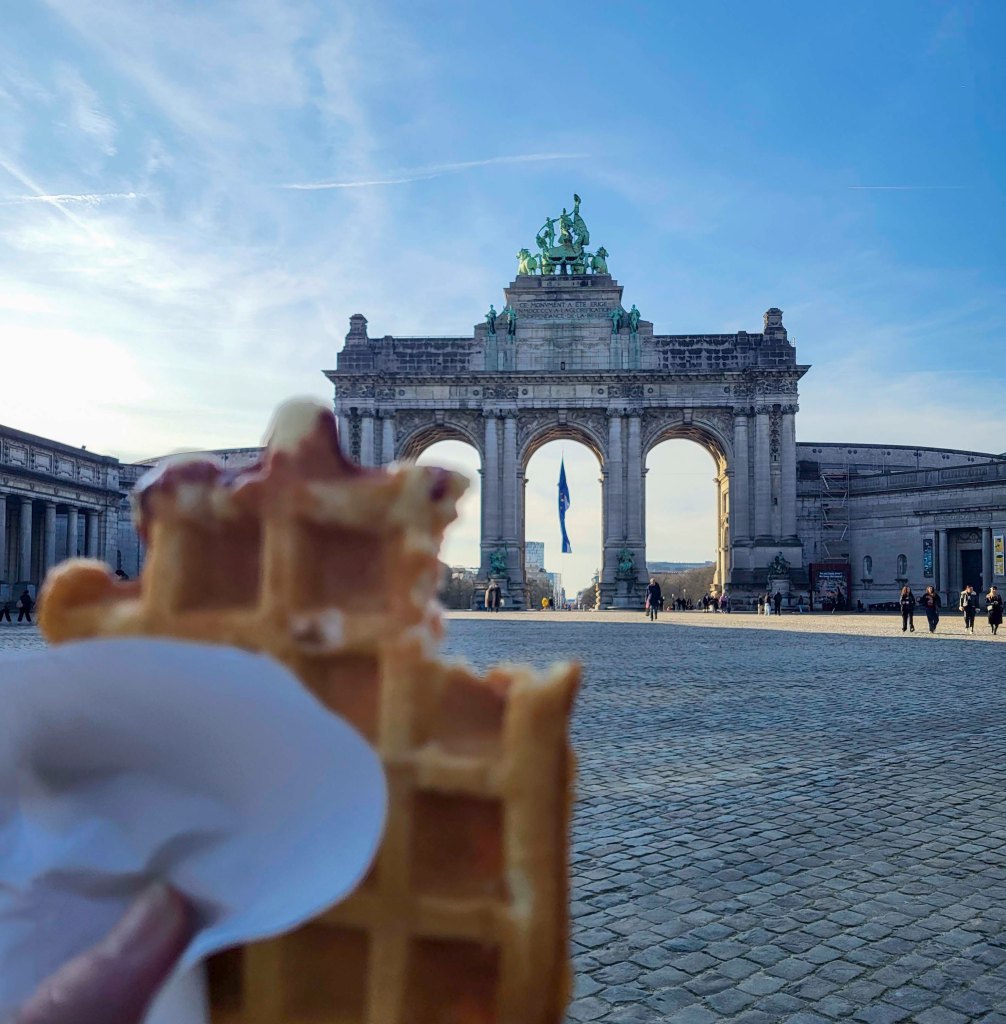
Enjoying our first Belgium waffle as we enter Parc du Cinquantenaire
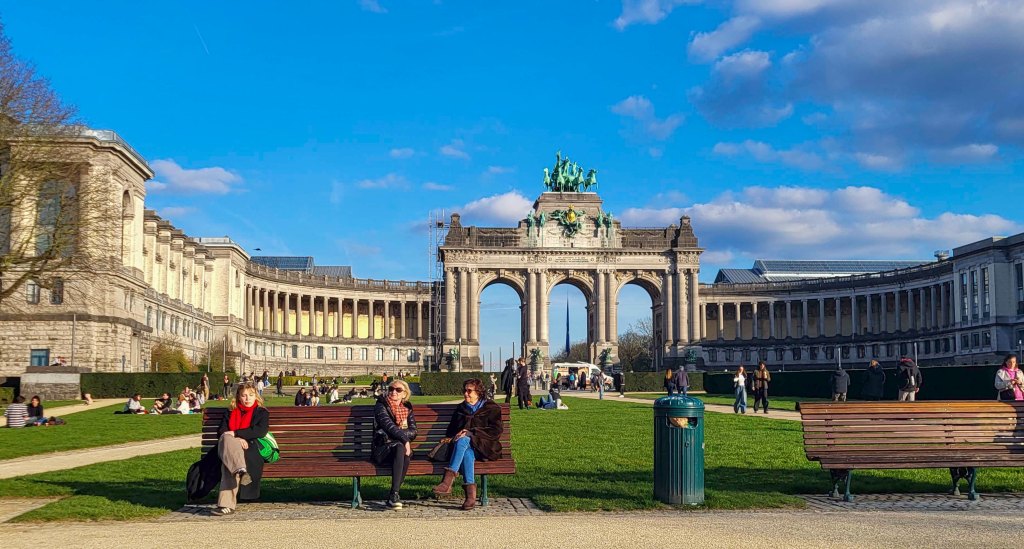
Parc du Cinquantenaire, was built in 1880 for the 50th anniversary of Belgian independence. Today there are museums and lots of green space. We arrived to one of the early Springish days, so lots of people were simply enjoying the warmth of the sun.
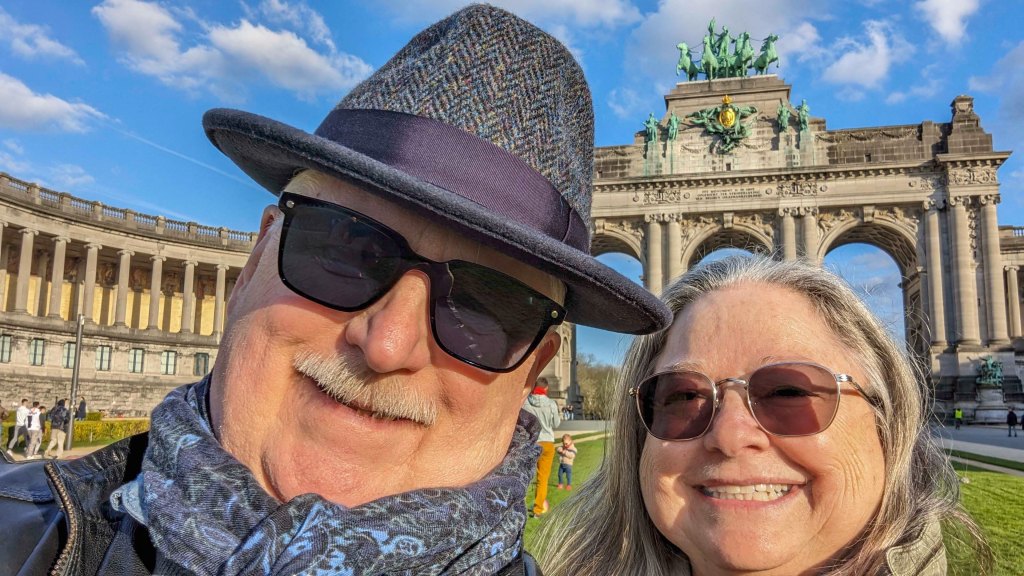
Parc du Cinquantenaire, required touristy selfie!
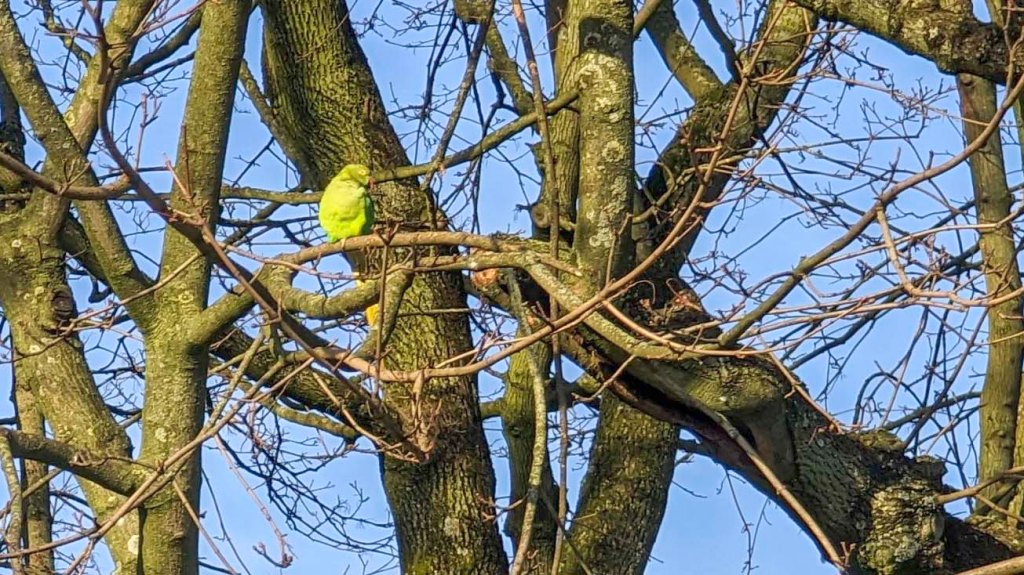
Parc du Cinquantenaire is the home to a group of parakeets. I know that I shouldn’t be pleased to be seeing an invasive species, but I did enjoy watching these brightly colored birds soaring through the skies and trees.
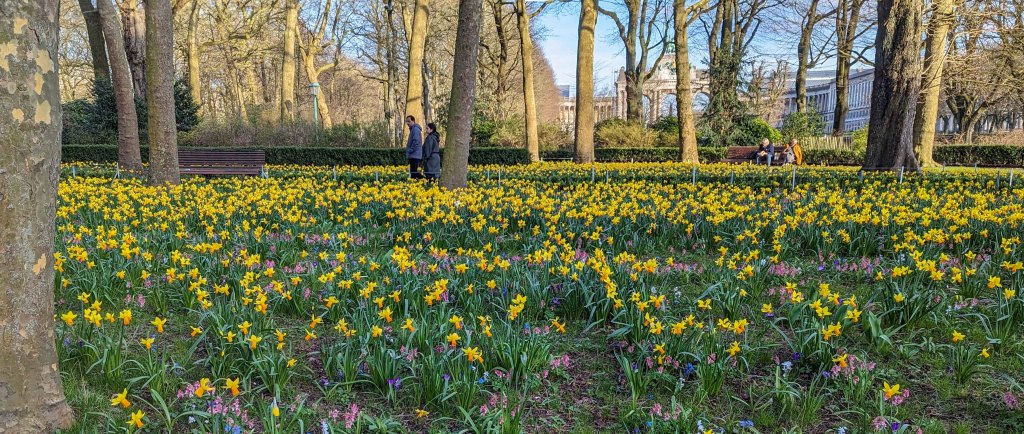
Parc du Cinquantenaire with early spring daffodils and other wildflowers.
The Grand-Place of Brussels
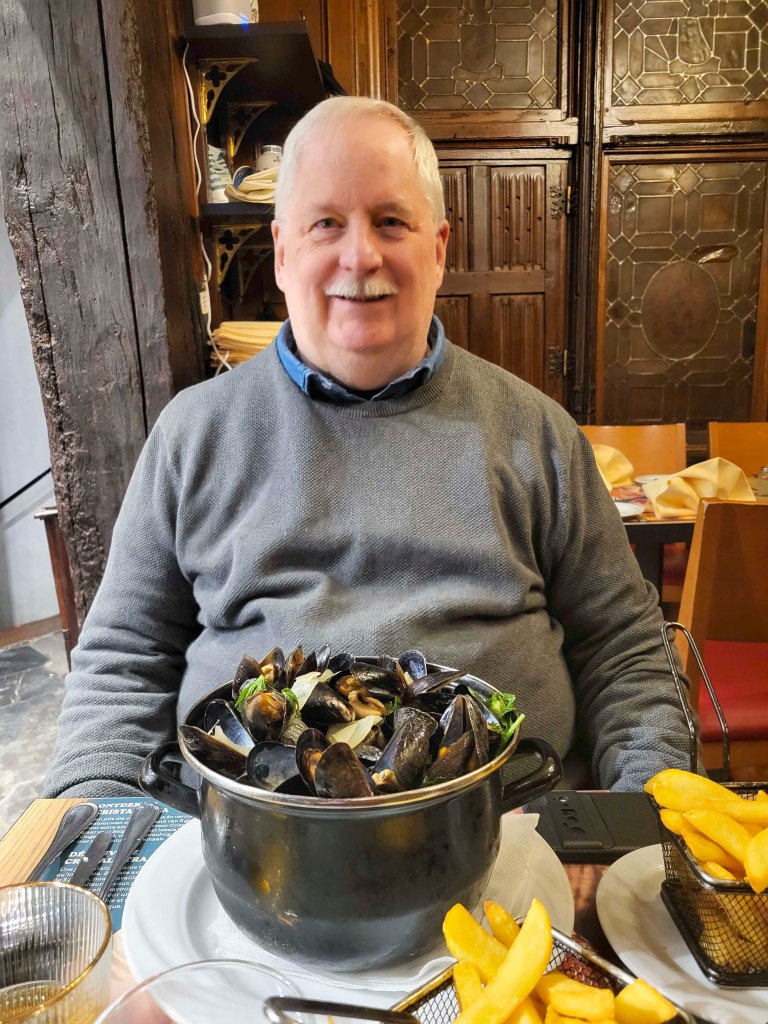
Mussels in Brussels is a must! Along with the ubiquitous French Fries, which Belgium claims they created.
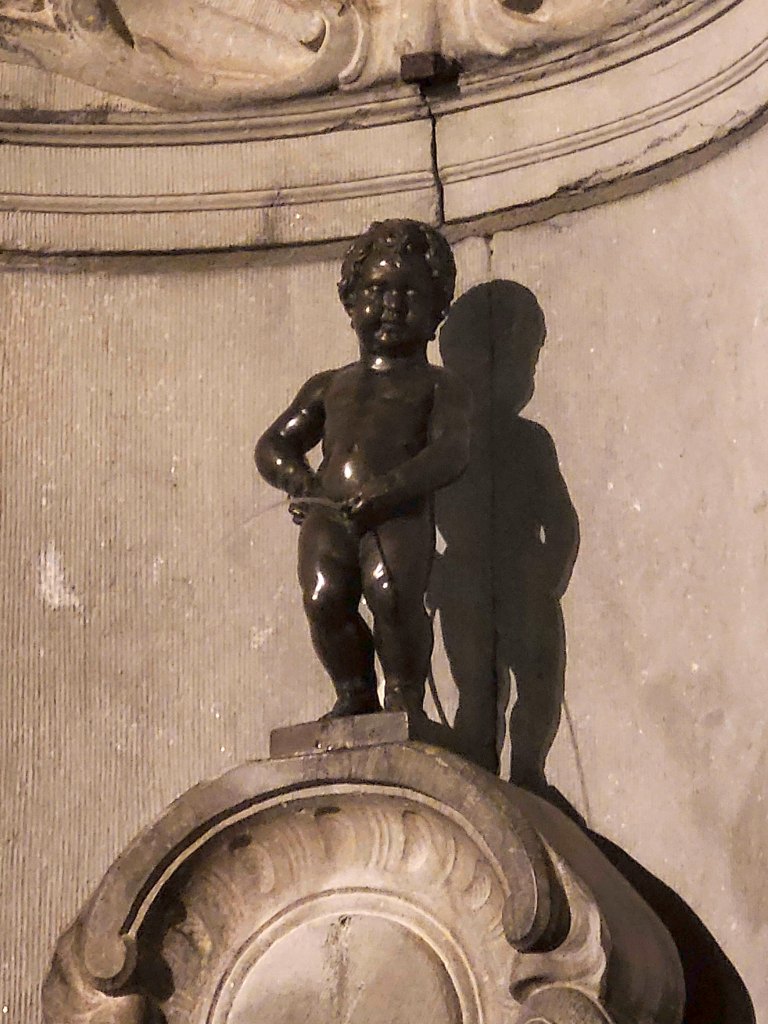
The Manneken Pis, the most visited (and small) tourist site in Brussels. Many legends regarding why they built the statue of the little boy peeing…
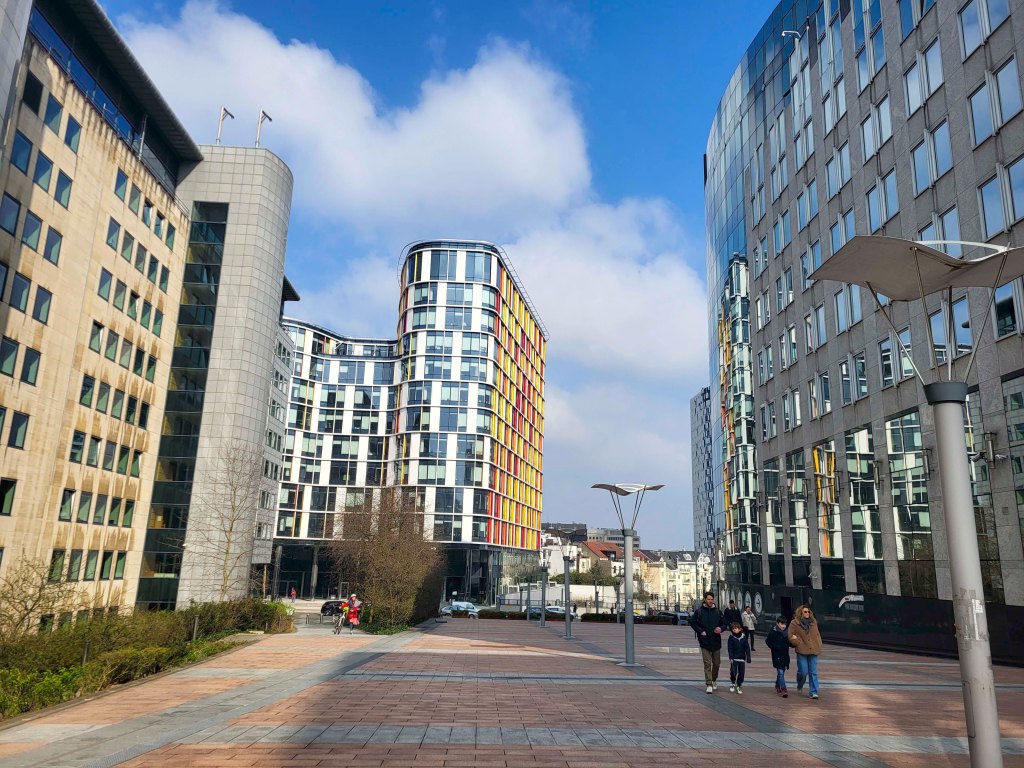
New and modern buildings in the European Union quarter. We visited an EU museum and learned a lot about the history and purpose of the EU.
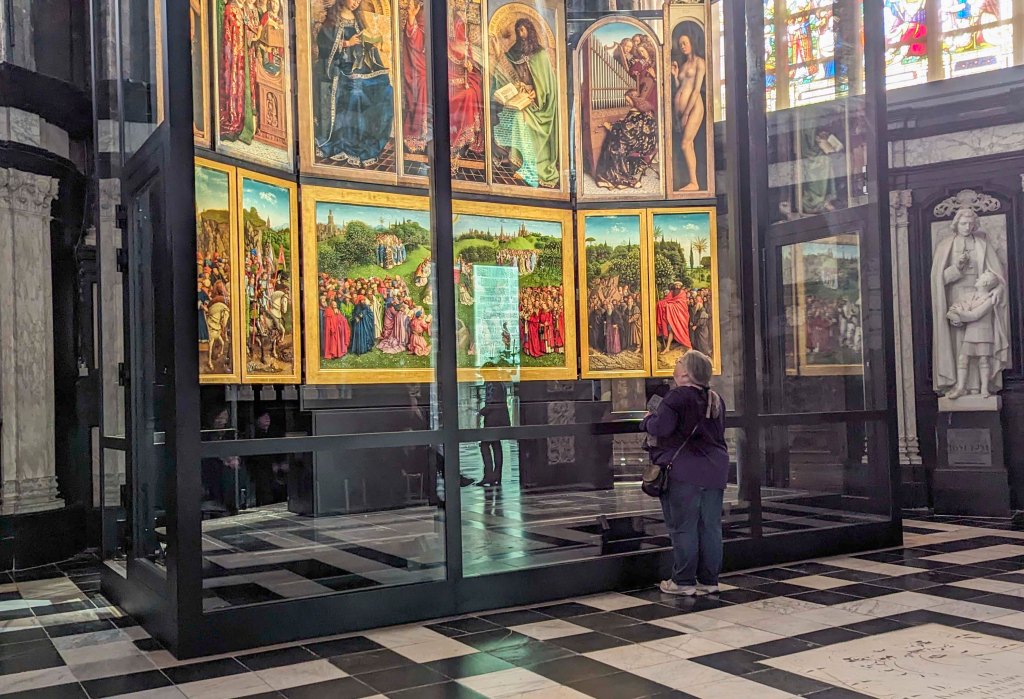
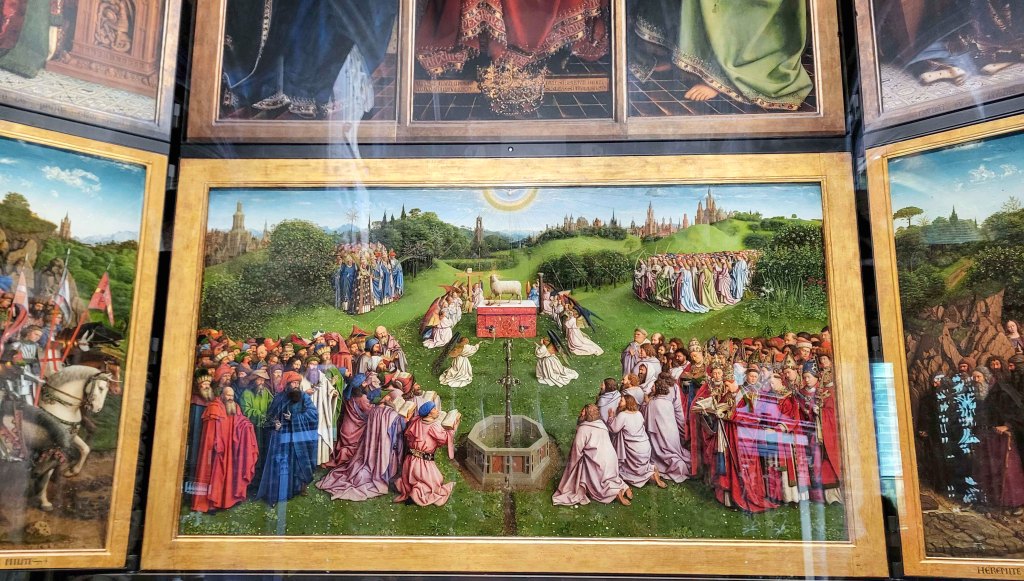
We took a 30-minute train through the Belgian countryside to the smallish city of Ghent, with one main objective – to see the Ghent Altarpiece. Many consider it one of the most important pieces of art in the world and was the first major oil painting. It represents the transition between Medieval art and the Renaissance in Belgium and the Netherlands. It was painted by Hubert and Jan van Eyck and was finished in 1432. It is also known as the most frequently stolen piece of art in the world, so there are lots of fascinating stories that go with the altarpiece. But the stories don’t compare to the beauty of the artwork – vivid colors, detailed faces, symbols, and depicted stories. I didn’t take a bunch of pictures because there are many high-quality pictures online that my phone’s camera can’t capture.
Oh, and we really liked Ghent. Parts of it are a bit seedy, industrial, and not beautiful – but the other parts have beautiful architecture. I especially liked one of its main squares that was filled with locals on this early Spring day. Check out this video I posted on YouTube.
Here I am contemplating (ok… perhaps gawking at) this great work of art.
Ghent Altarpiece, closer view of the Adoration of the Mystic Lamb panel
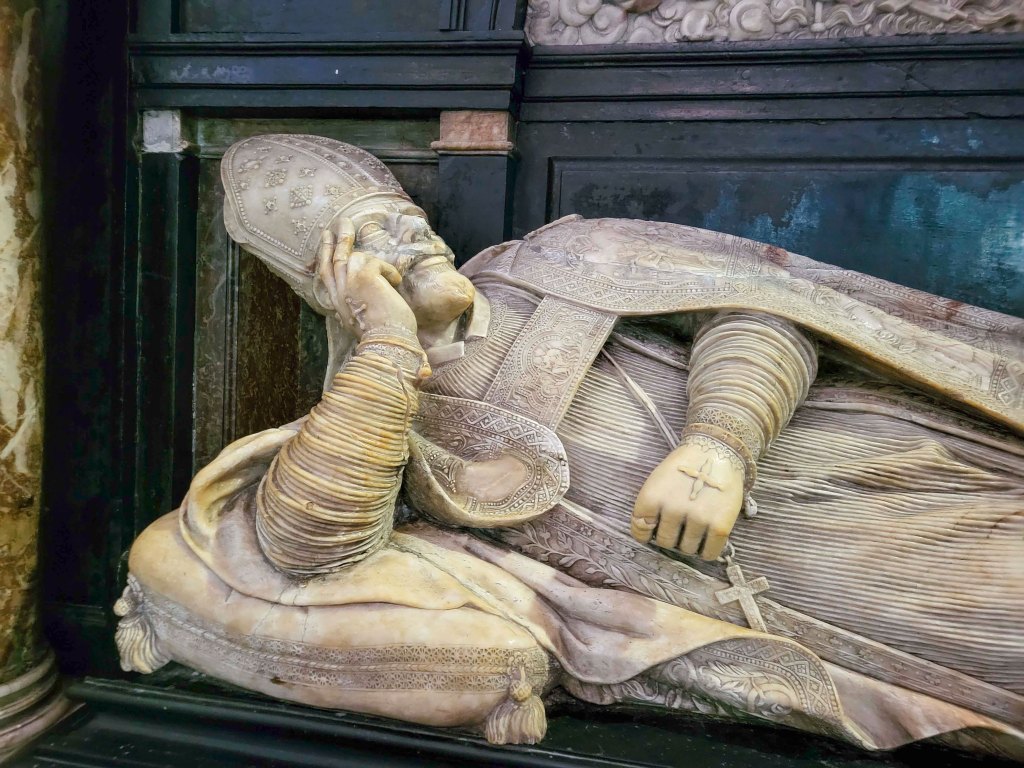
I saw lots of sarcophagus’ with the guy in this position. Just chillin… In Italy, they are usually laying all of the way down.
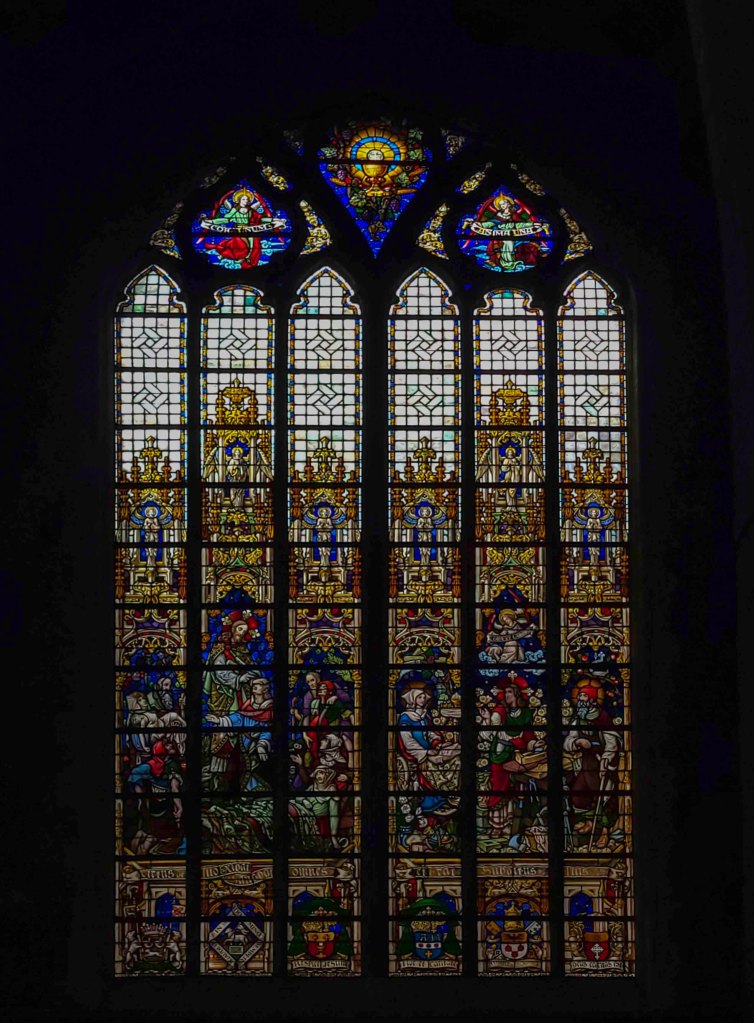
The stained glass windows in both Belgium and Germany were gorgeous. We don’t have a lot of windows like this in our Romanesque churches.
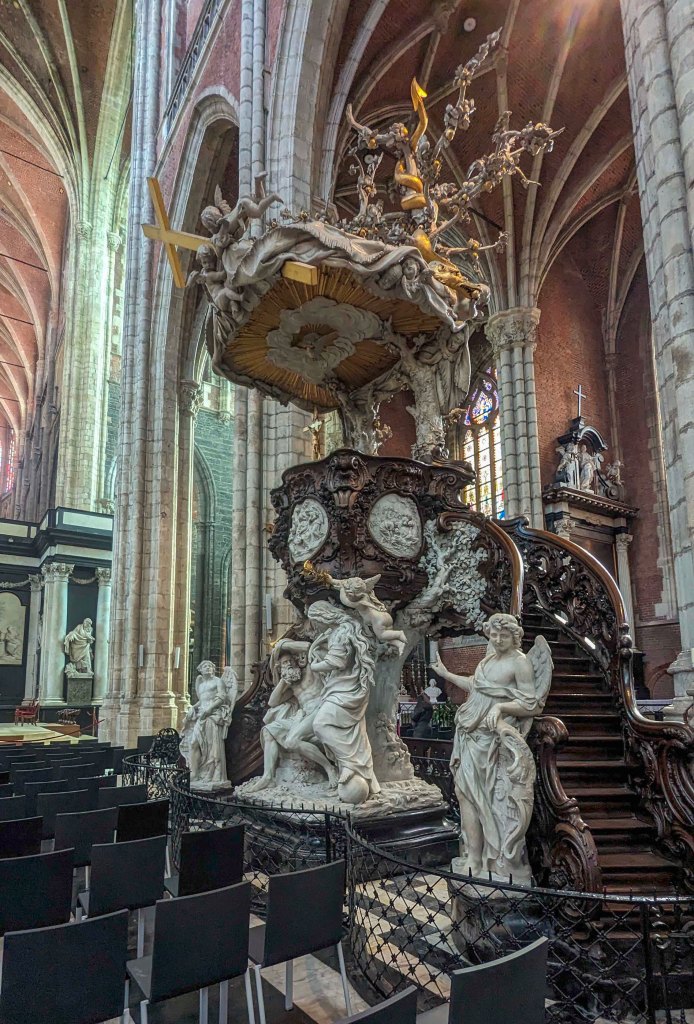
Italian churches usually have marble pulpits, but the ones in Belgium and Germany were mostly made of beautifully carved wood. So beautiful!
OK, this pulpit is a combination of wood and marble and looks like they were going for some prize in the fanciest pulpit!
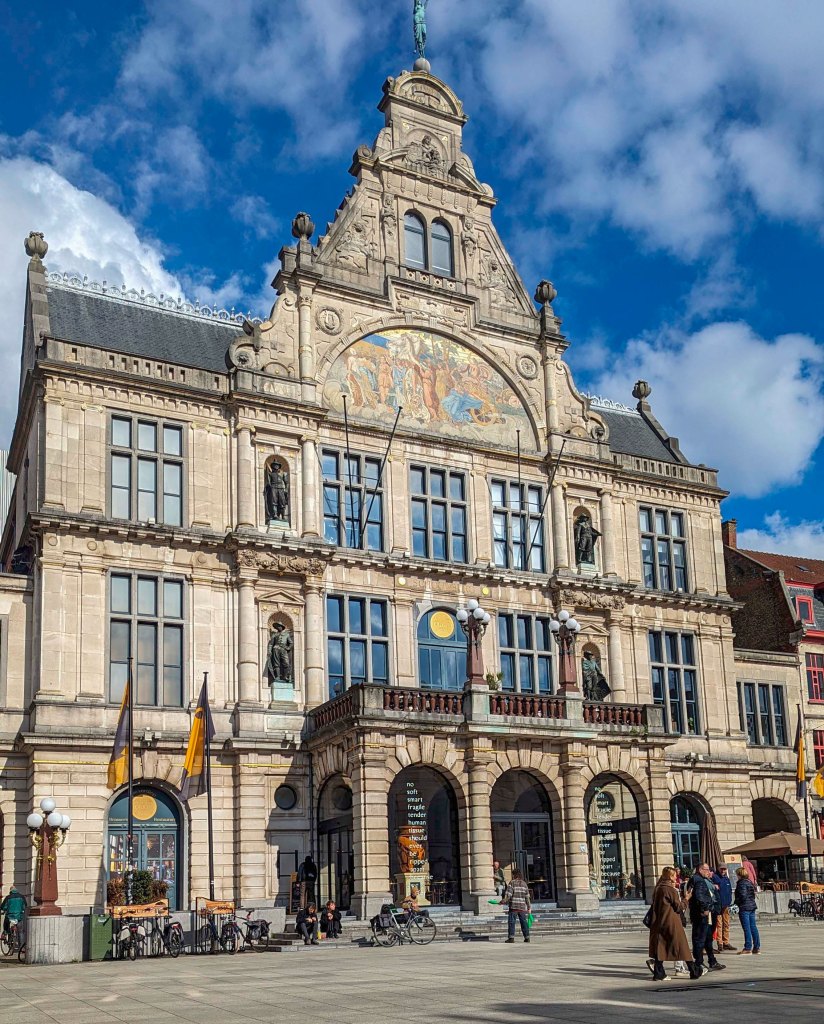
I loved the architecture in Ghent!
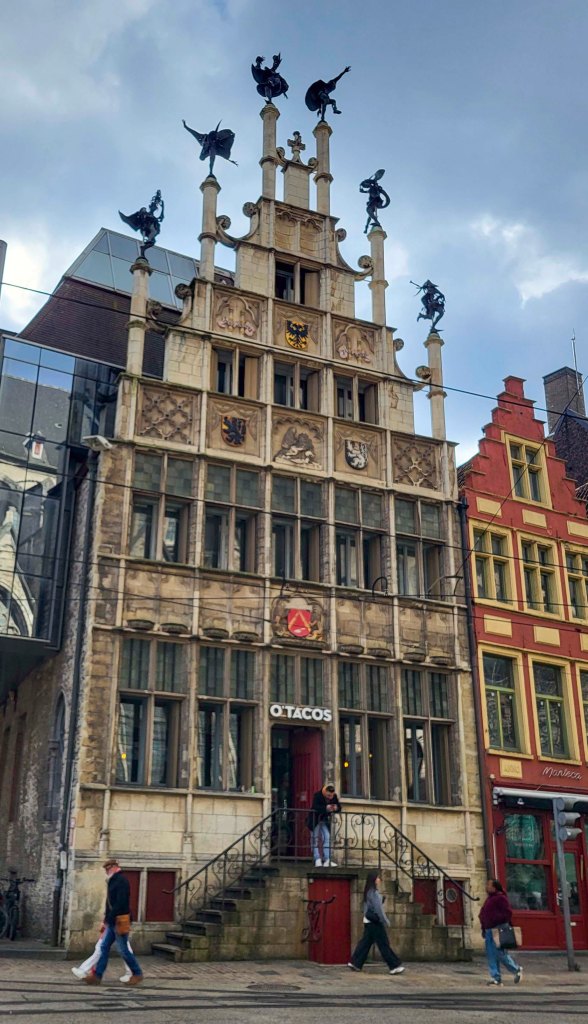
The Taco sign caught my attention – so out of place. But check out those sculptures at the top of the building! Apparently this is the Masons Guild House on Sint-Niklaasstraat and those are dancing figures leaping through the air. And O’Tacos is a French fast food chain!
Korenmarkt (Wheat Market), one of the main squares of Ghent. Again, I love the architecture and the tangle of bicycles!
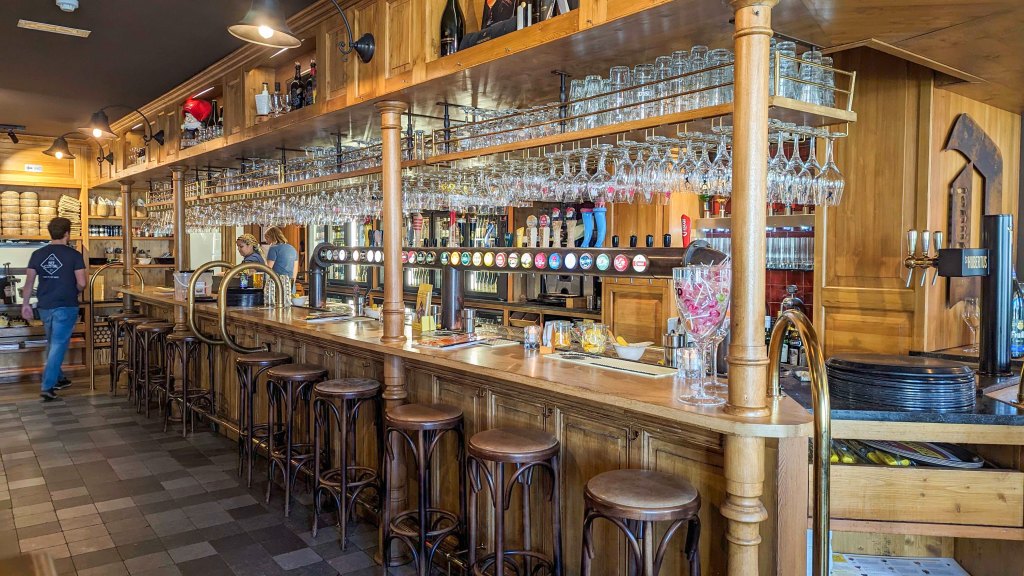
Belgium is serious about their beer. Lots of different kinds AND each one has their own glass. This was a fun stop for lunch, which did include a beer!
Selfie in front of Gravensteen Castle from around 1180. Right in the middle of Ghent!
Every castle needs a moat and we spotted this European Coot on a nest. Soon the male came up with a fresh fish lunch for mama. Fun to spot a bit of nature in the middle of this city!
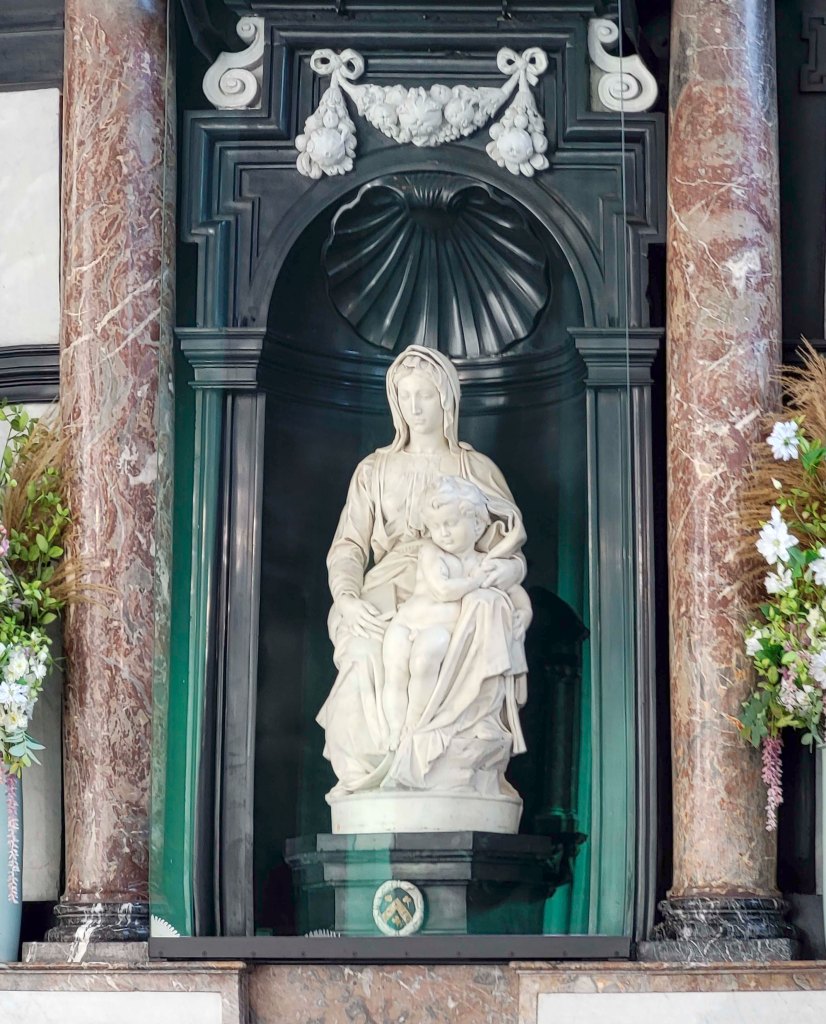
Bruges is home to the Bruges Madonna, a beautiful sculpture of Mary and Jesus created by Michelangelo. It was his only sculpture to leave Italy during his lifetime and I was eager to see it. It did not disappoint…
Both the Bruges Madonna and the Ghent Altarpiece are highlighted in the movie The Monuments Men. If you’ve never seen the movie or read the book, I highly recommend doing so. It’s a great story about how some art scholars were recruited into the Army near the end of WWII to find and return stolen art. And it’s based on a true story.
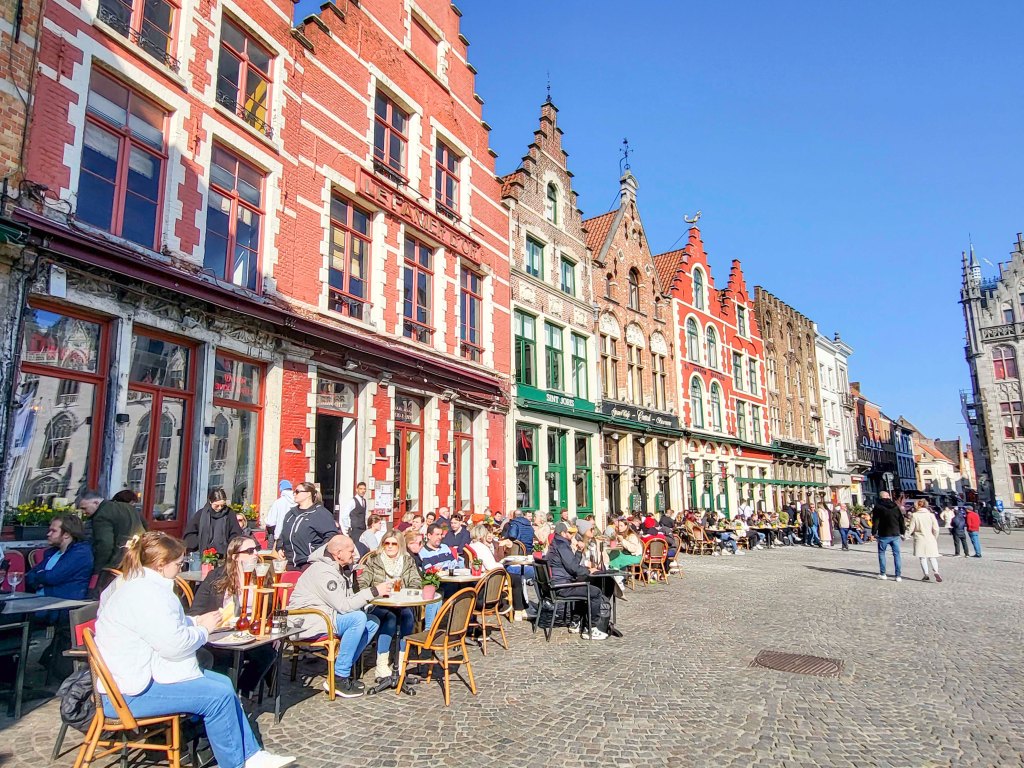
In addition to being the home of the Bruges Madonna, Bruges is a very cute town, but a bit touristy. The architecture is beautiful, lots of canals and waterways with bridges with cute squares. The one-hour train ride from Brussels was well worth it.
Madonna of Bruges by Michelangelo
Another one of those crazy wooden pulpits!
Colorful and cute town square, with everyone enjoying the early Spring sunshine
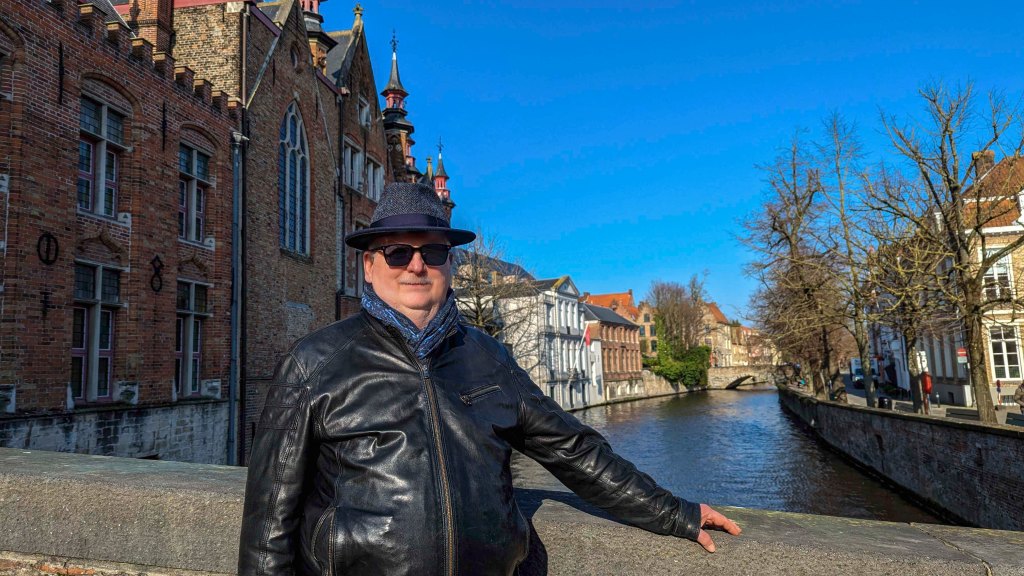
JoAn on a bridge over a canal
Jim enjoying the nice weather during our daytrip to Bruges
And our final stop was in Germany…
Jim’s wine event was in Düsseldorf but it is very expensive to stay there during the event and there is very little for me to do or see there. So, we decided to stay in Cologne (Köln), a 30 minute train trip from Dusseldorf. Jim would go back and forth each day and I would enjoy the sights of Cologne. I had heard that it was a beautiful city… quaint, fun, and the home to the most gorgeous Cathedral. We stepped out of the train station and there it was! We splurged on a hotel that was just a few minutes from the Cathedral and the train station. I was really looking forward to exploring this city. I had a list of things I wanted to see and do, but I also made time for wandering the city.
Our first morning I attended the church service at the Cathedral but couldn’t understand a word. But I enjoyed the beauty of the cathedral, watched the procession of priests and others with their candles, incense (lots of incense), staffs, etc. There was a choir made of young boys and men; they made beautiful music – a cappella, so I did not get to hear the church organs. Afterwards I crossed a bridge over the River Rhine and enjoyed the Sunday afternoon with many locals and tourists. It was delightful start for my time in Cologne.
Then it started to rain and frankly my visit went downhill from there… I tried and failed two times to go on a English-language tour of the Cathedral. I went inside one other time, but much of it was inaccessible due to another service. A bathroom attendant tricked me out of some money… I confronted him, but he denied it. It was just a few euros, but it was so annoying… I wandered up and down the main shopping street while getting slightly soggy despite having bought an umbrella.
Then we learned about the train strike planned for the last day of the wine event – Jim planned to take the train to and from Dusseldorf, and then we would both take a train to the Frankfurt airport for our early morning flight the next day. Some trains continued to run, so Jim made it to Dusseldorf but then decided to take a bus to Frankfurt instead of trying to get a train. I went to the train station early and planned to get on the next available train. One was supposed to come at 1:55, but was delayed 30 minutes, but then never came??? So, I got on one about an hour later.
Oh, I forgot to mention that Lufthansa was also striking and we had bought tickets through Lufthansa. Thankfully, the flight itself was provided by Air Dolomiti so we were fine.
Postscript… German precision was in play after the train strike. We returned to Lucca on Wednesday morning and I requested a refund from unused train tickets on Thursday. The money was in our bank account on Friday.
Cathedral Church of Saint Peter in Cologne
Cathedral Church of Saint Peter in Cologne, at night
Overall, I really enjoyed Belgium, struggled in Cologne and was glad to get home to Lucca after 10 days of travel. So how do they compare – a simple (over simple, for sure) chart:
Brussels
Cologne
Lucca
Languages spoken
French, Flemish and everything else
German and English for the tourists
Italian and English for the tourists
General attitude
Neat and tidy. Near EU: confident, busy, important
Compliant by day, boisterous in the evening
Relaxed
Foods
Chocolate, waffles, French fries
Pub food
Tordelli pasta
Drinks
Bottled Belgium Beer with matching glass
Local beer on tap
Italian wine
I hope that you enjoyed reading my blog post and looking through my pictures. Have you ever been to Brussels, Bruges, Ghent, or Cologne? How were your experiences similar or different? Leave a comment!
A month or so ago Jim told me that him and Pasquale would be heading to Montalcino for “Benvenuto Brunello” on 21 November and asked if I’d like to go with them. Pasquale owns a local restaurant and is a wine sommelier. Jim and Pasquale love to talk about wine, shop for wine, and drink wine. At this event they would be tasting the recent releases of Brunello di Montalcino, considered to be amongst the best wine of Italy. Nope… no interest in a 2.5-hour drive there, tasting a bunch of wine, then a 2.5-hour drive back all in the same day.
Two days before the big event, Jim asked again. He suggested that it would be helpful to have a “designated driver” but I protested – they don’t actually drink the wine; they taste it then spit it out. (Hence my lack of interest in attending.) But then Jim said that they would still be absorbing some of the alcohol into their system and they planned to taste a lot of wine. So, I agreed to go. And I started planning some places where I could drive to see some of the beautiful scenery of southern Tuscany known as “Val d’Orcia”.
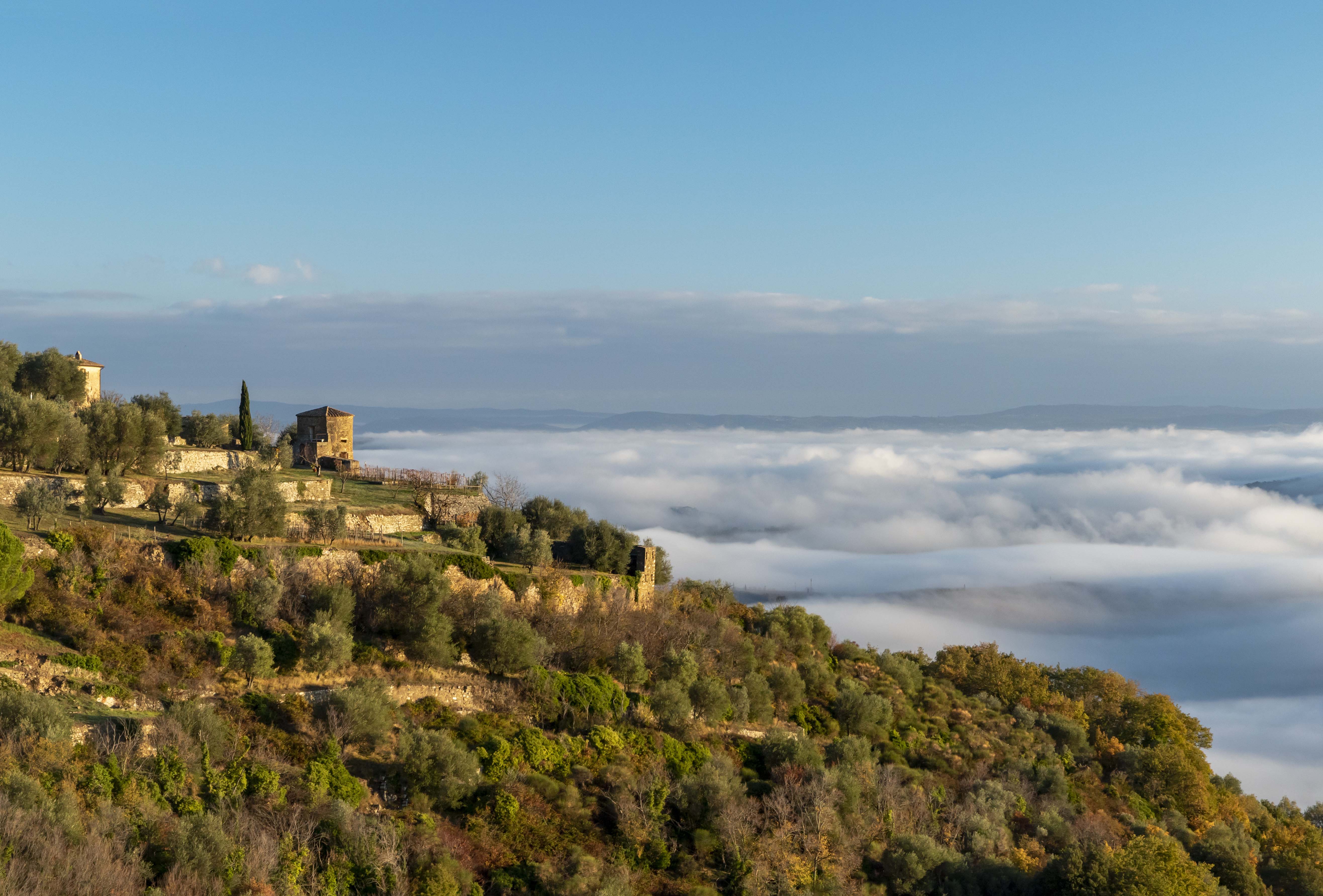
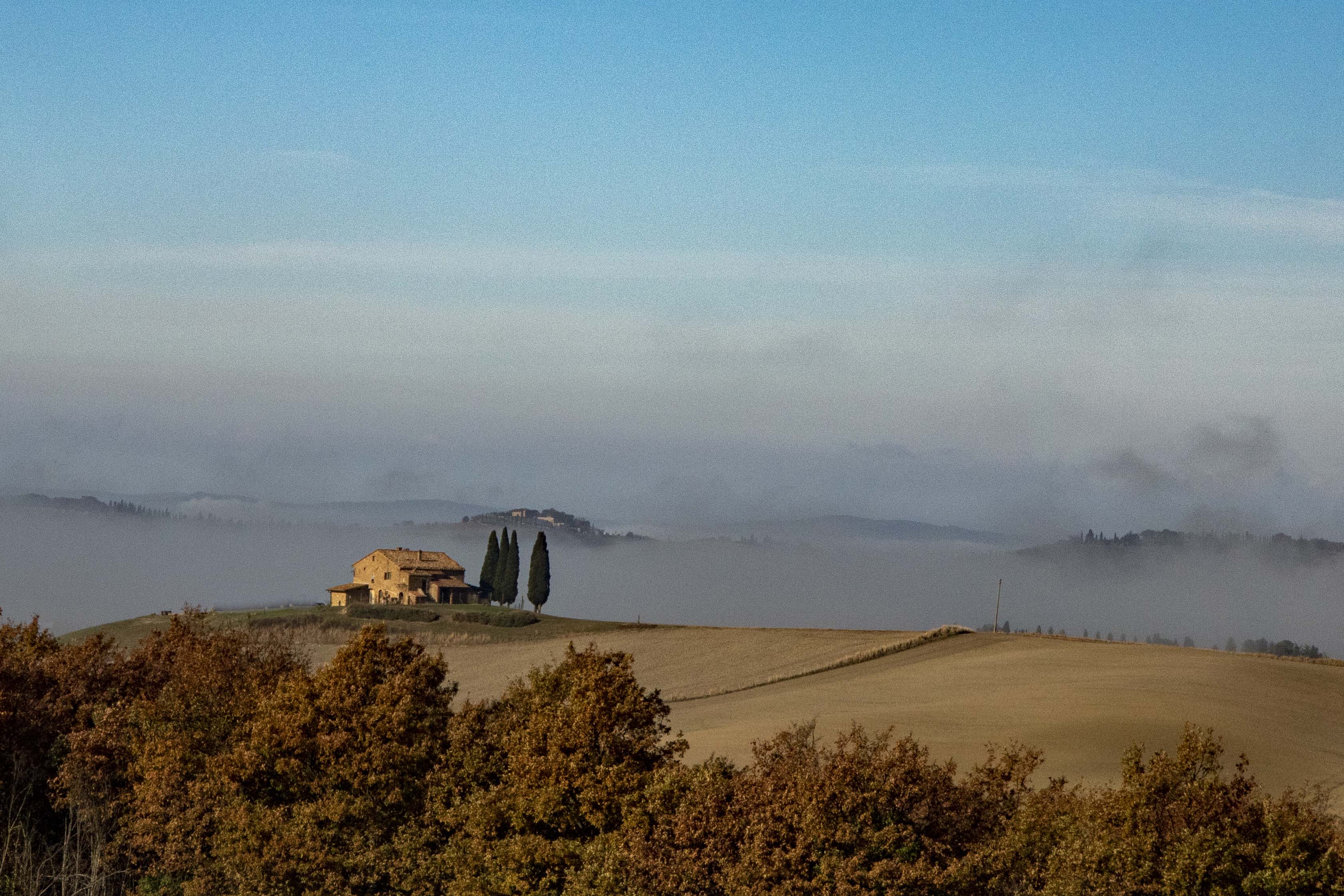
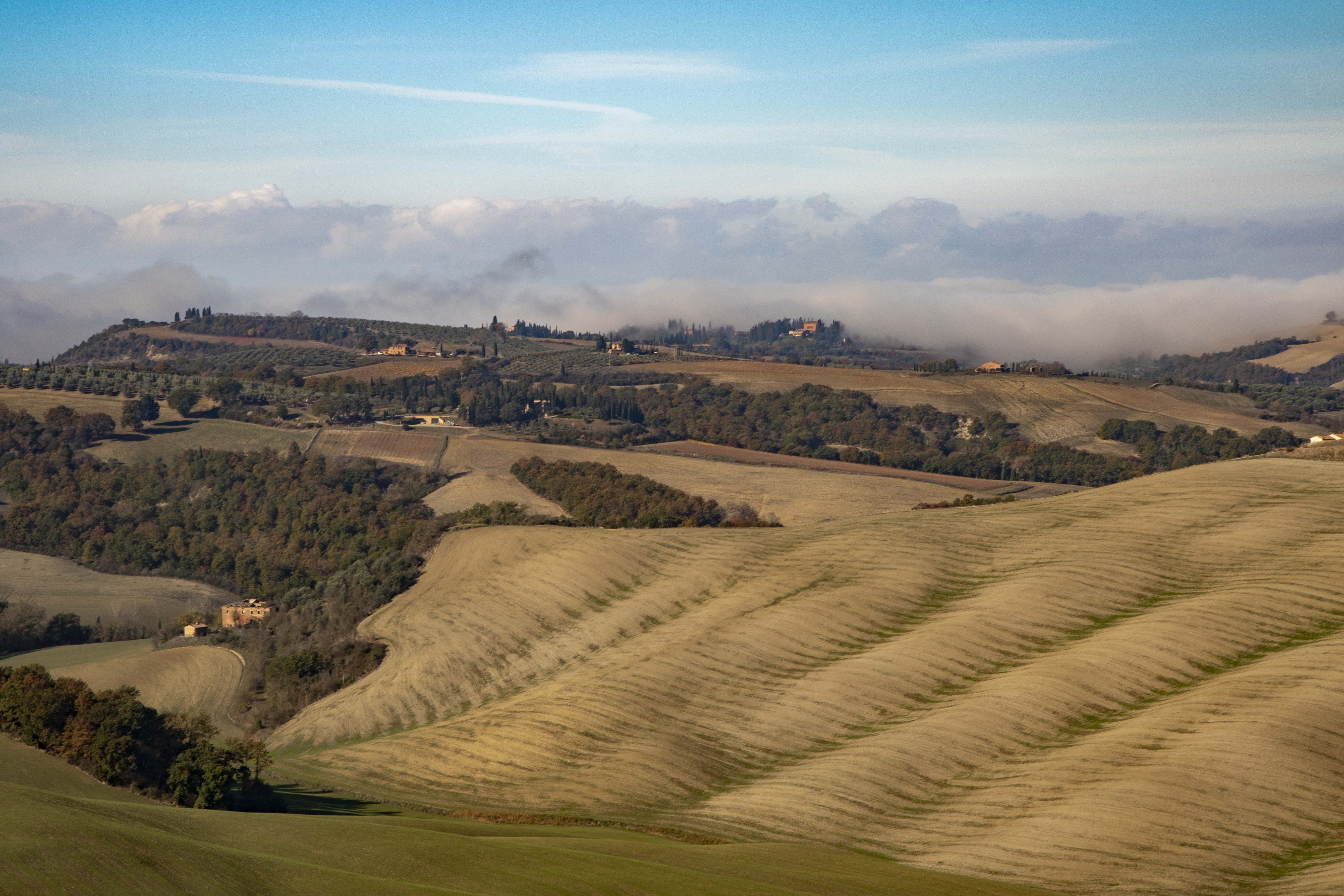
At 5:45am Pasquale came to our house, I got into the backseat and tried to make a bed in the back of a Mini Cooper. 2.5 hours later I woke up as we were close to Montalcino and was excited to see fog (oh, cool pictures!). Then realized that there was A LOT of fog. Perhaps I would get some cool pictures later in the morning?
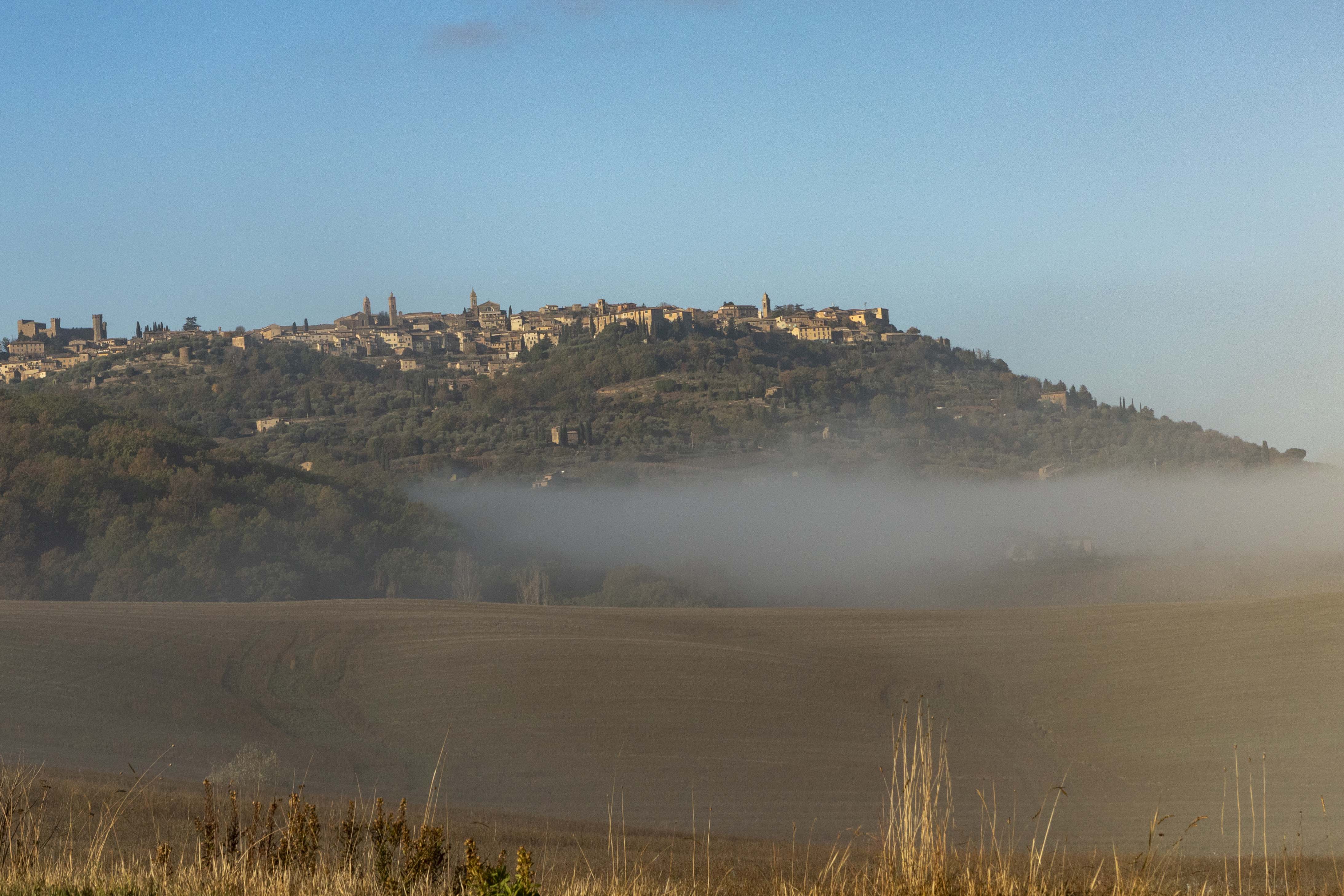
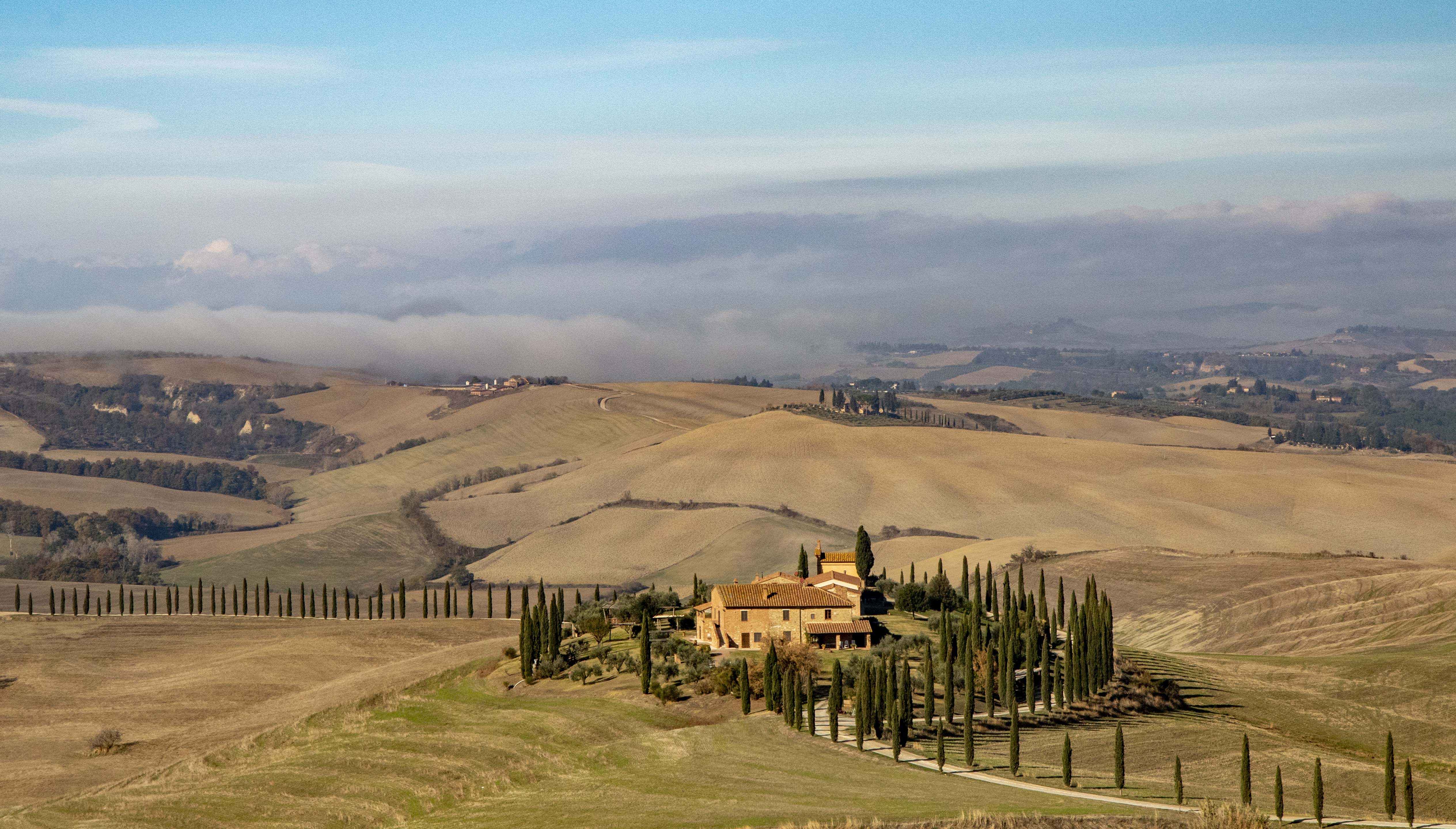
We had breakfast and coffee, they headed to their wine tasting which started at 9am (another reason for my lack of interest in attending) and I took off for a leisurely morning of driving around the countryside to look for beautiful scenery. I stopped about 3 minutes later and took my first pictures – with the edge of Montalcino on a hill top and layers of fog. Perhaps it was going to be a good day after all!
Montalcino with layers of fog
And a few minutes later, I took a picture of showing all of Montalcino with some wispy fog.
Montalcino, famous hilltop Tuscan town
In the meantime, Jim and Pasquale stopped for another coffee and had the opportunity to enjoy the foggy valley.
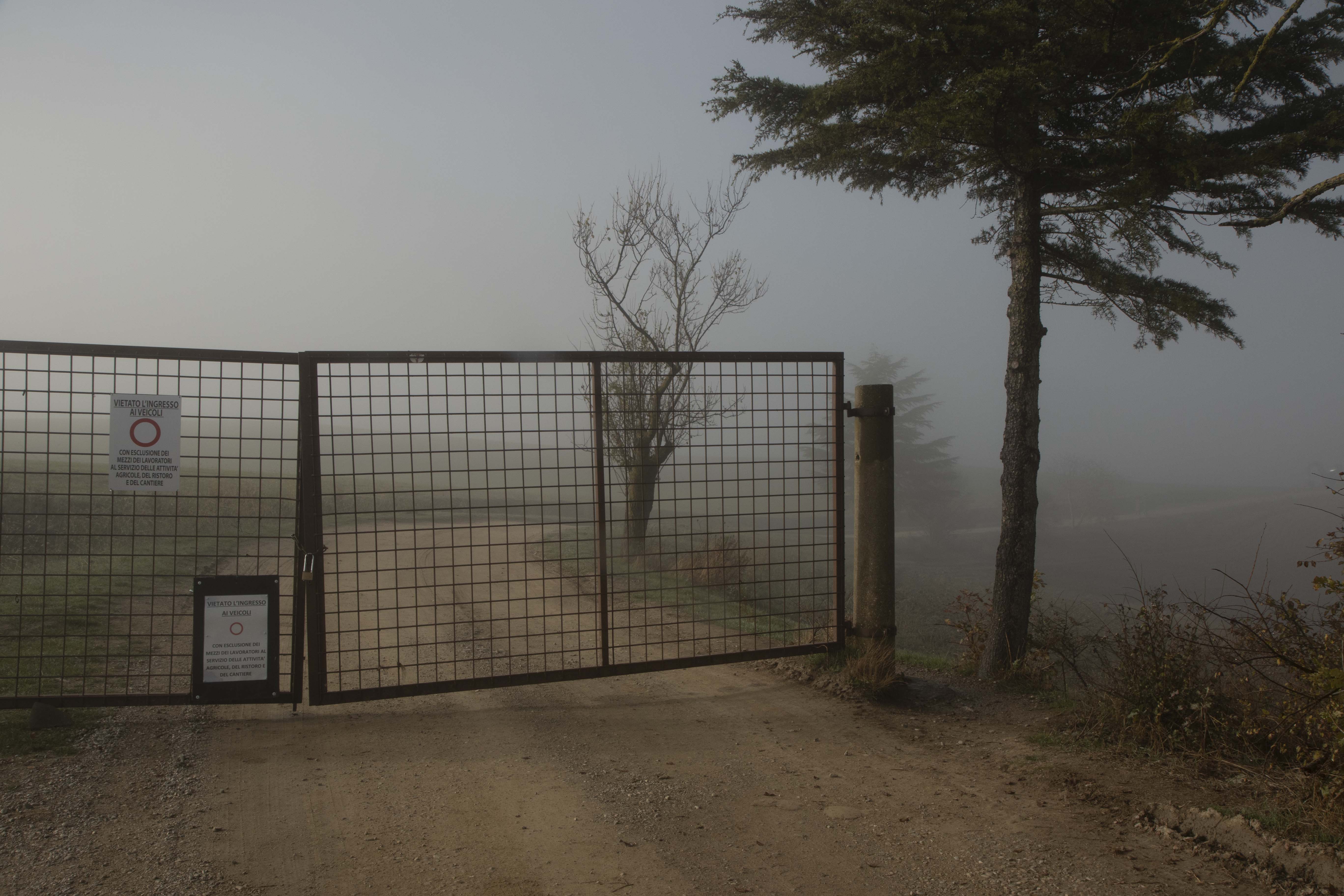
My first destination was Cappella della Madonna di Vitaleta, a small chapel in the countryside. This is one of the locations that photographers love and I was inspired from pictures like this and this and this. Although it was longish walk to get there (which sounded painful with my bad right knee), one of the pages showed a great spot where a photographer with a long lens could get great views. Not happening with this fog, so I prepared myself for the 15-minute walk and was “welcomed” by a gate that made it clear that you were to walk and not drive to the peaceful chapel.
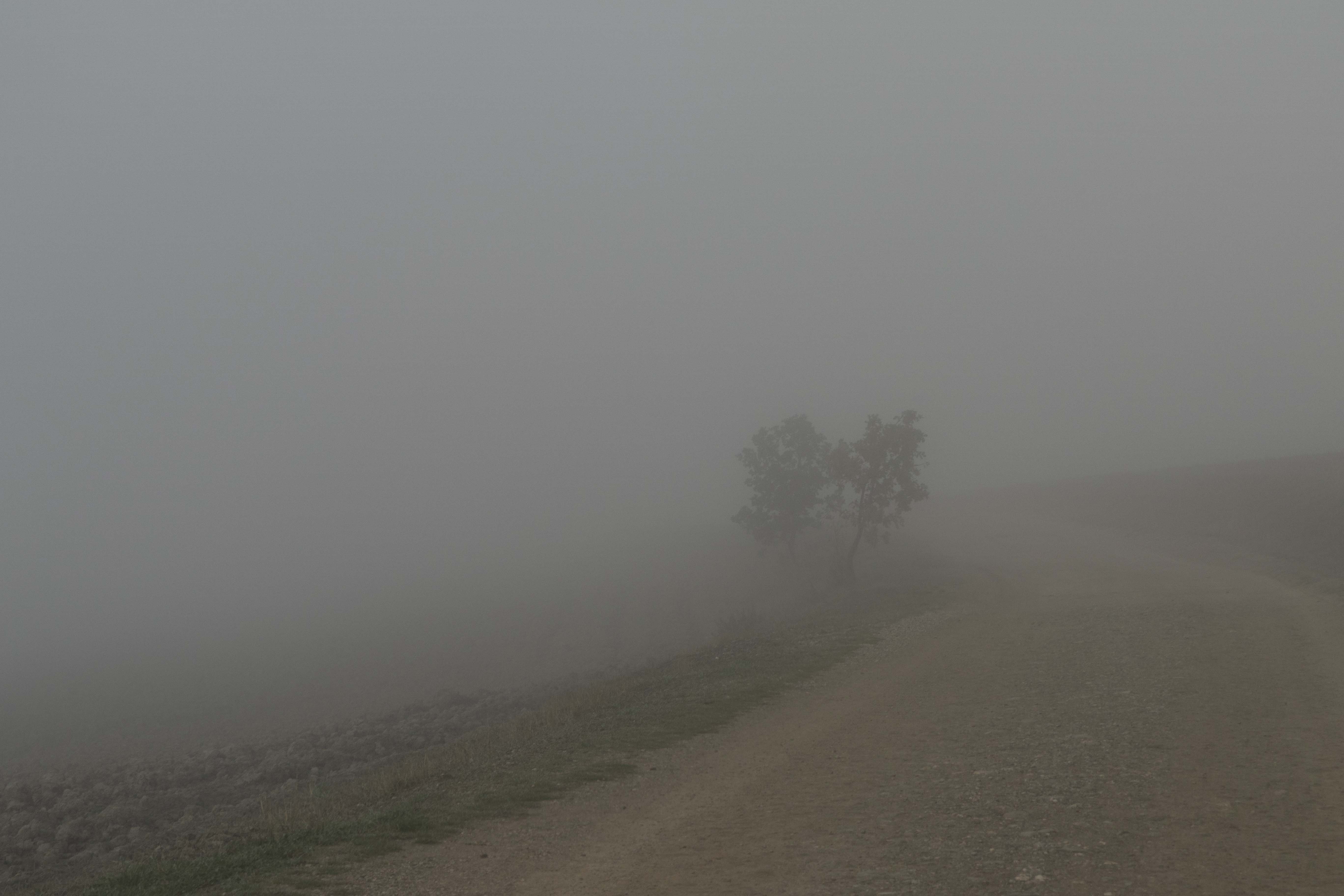
Within a few minutes I found myself on a dirt “road” with plowed fields on both sides covered in fog. And no people anywhere to be seen. It was a little eerie…
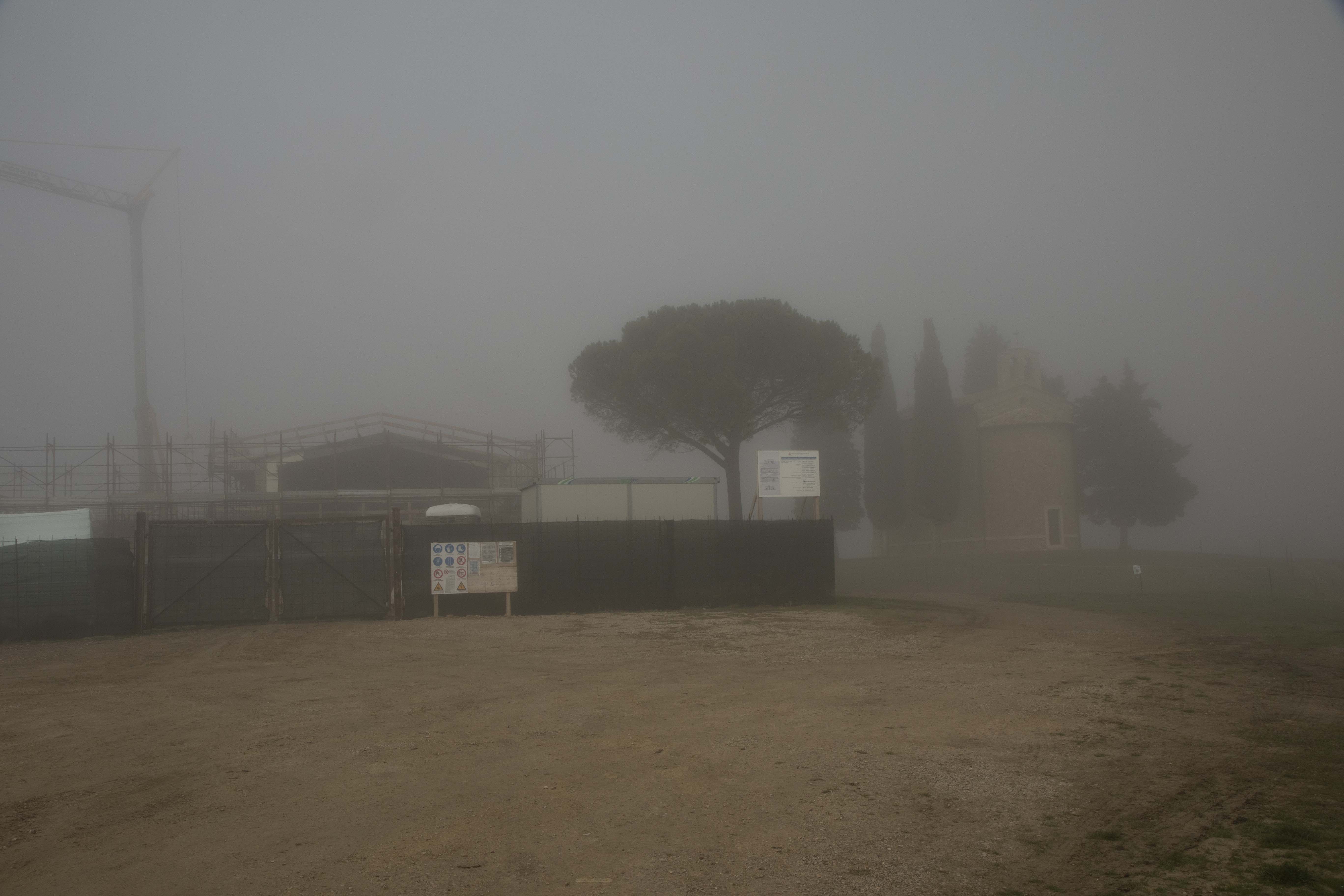
And then I finally reached my destination, but it did not look like the pristine “inspiration” photos that I saw. We are talking major constructions!
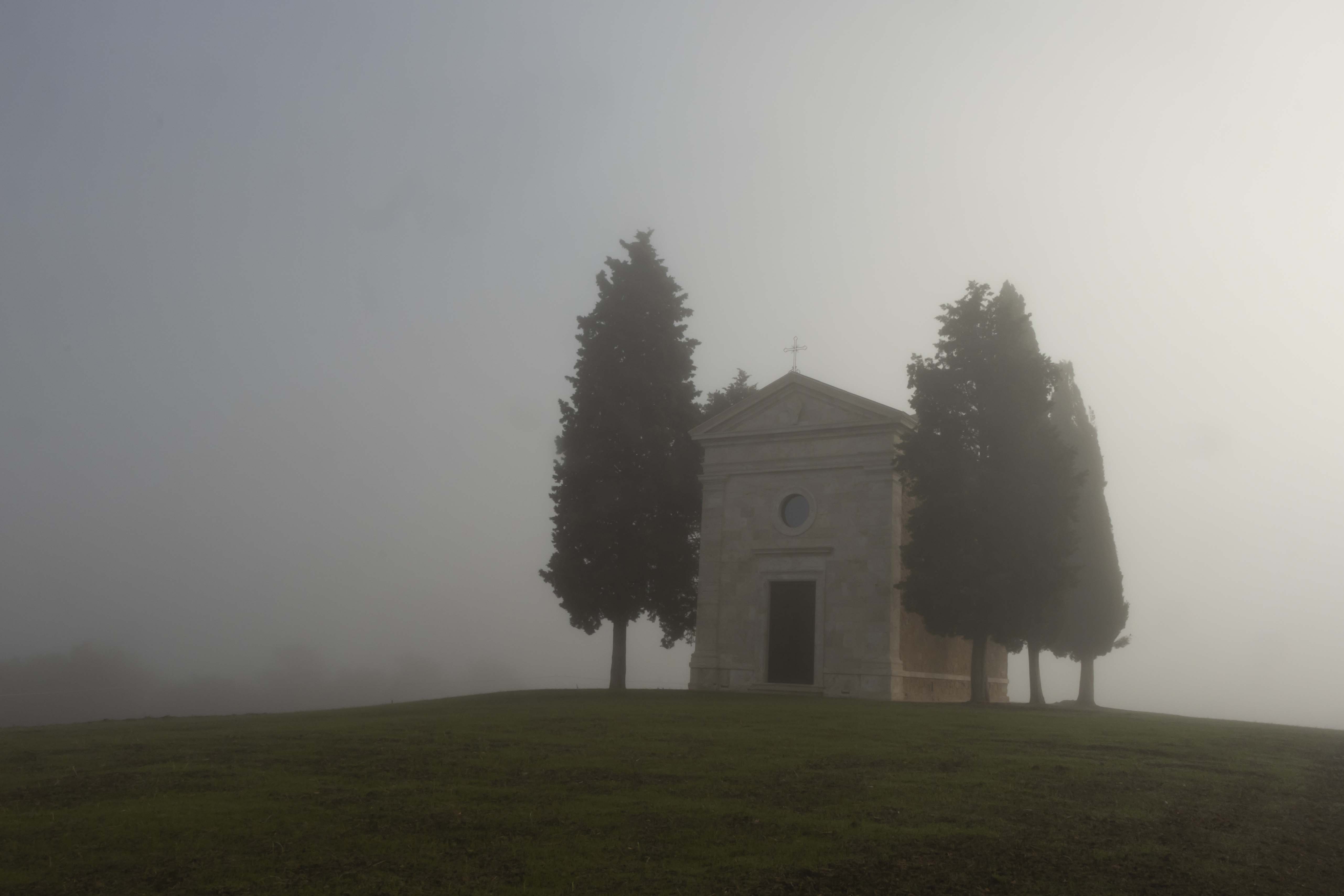
So, I spent some time, played with some different compositions, and came up with a few nice pictures of the chapel with a foggy, dreamy feeling. On the way back, I did see two different couples who were likely envisioning the perfect Instagram shot. I just gave them an update on how much further and let them discover the construction on their own.
Cappella della Madonna di Vitaleta (rear)Cappella della Madonna di Vitaleta (front)
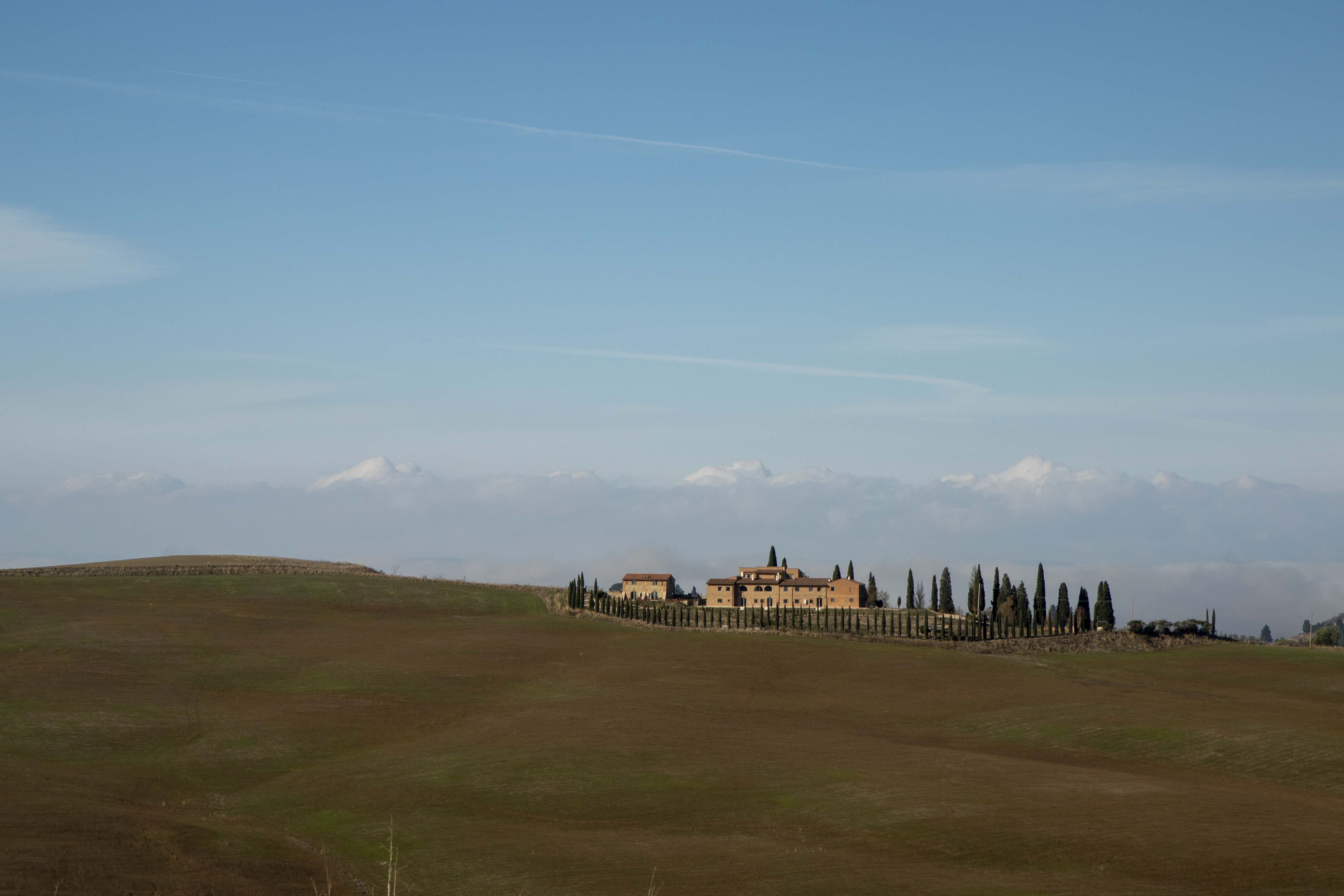
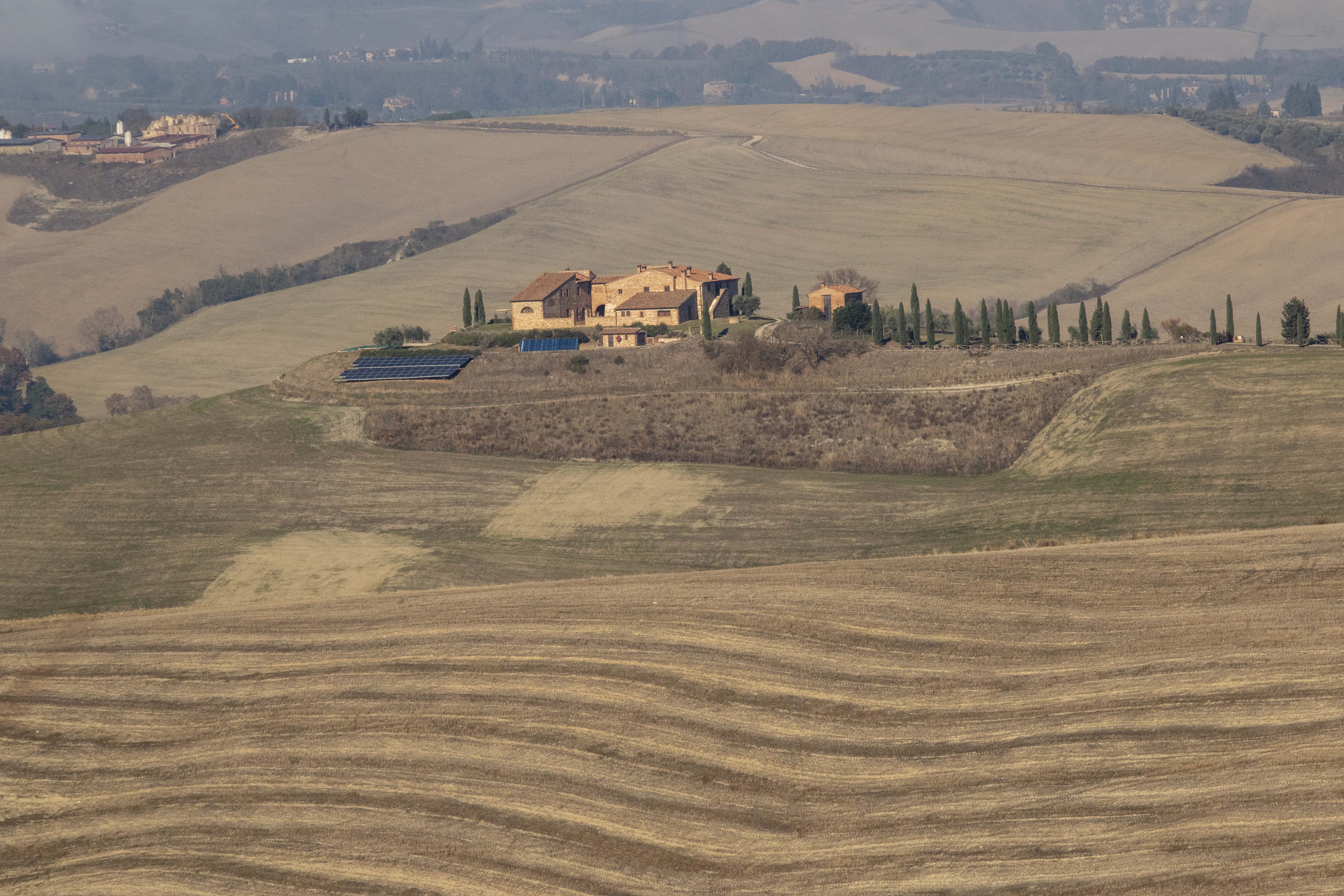
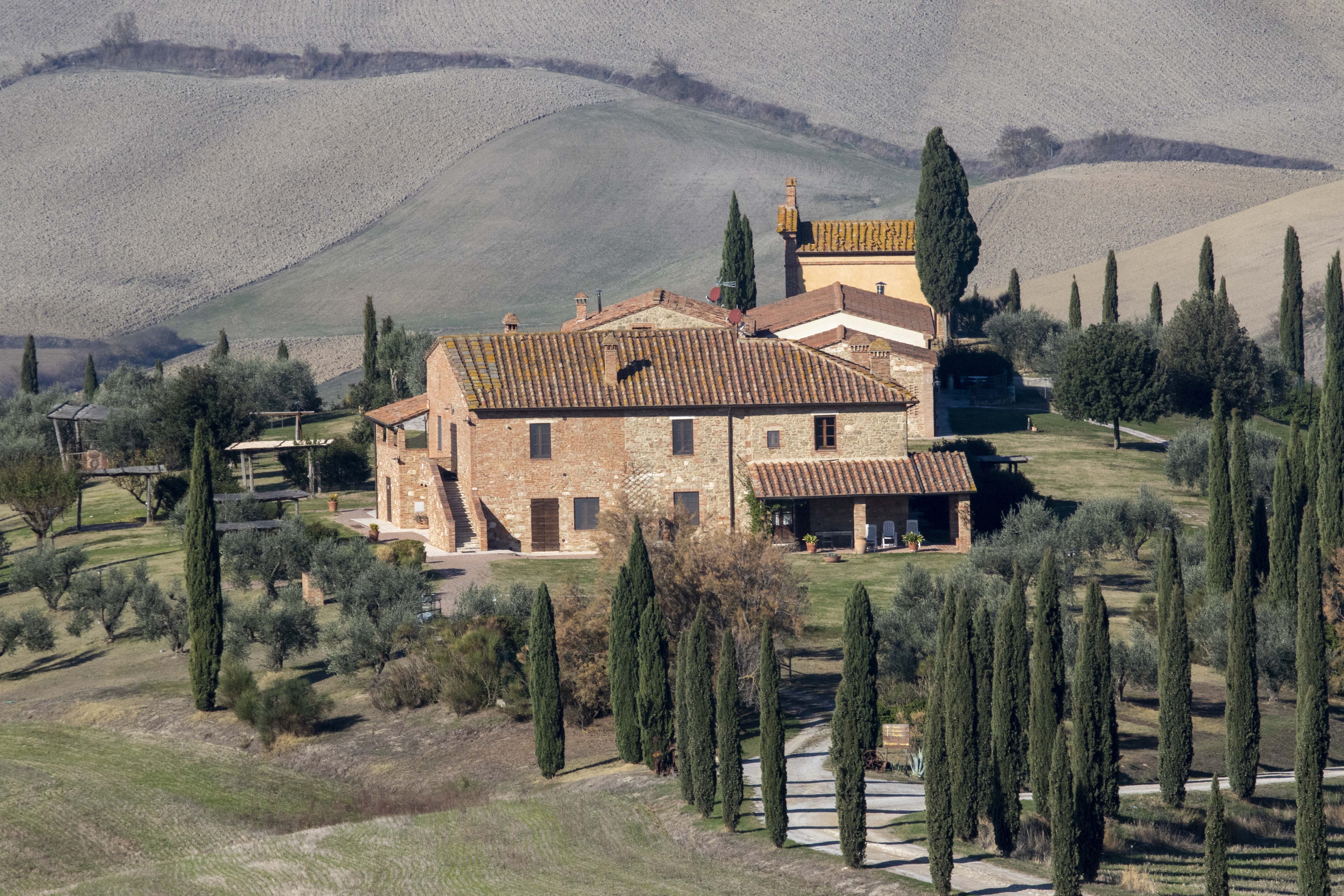
I then proceeded to drive around the countryside stopping often to take pictures of the beautiful landscape. There were so many beautiful scenes… it really was so lovely to just take them all in. Here are a few more shots that I took – click for full size.
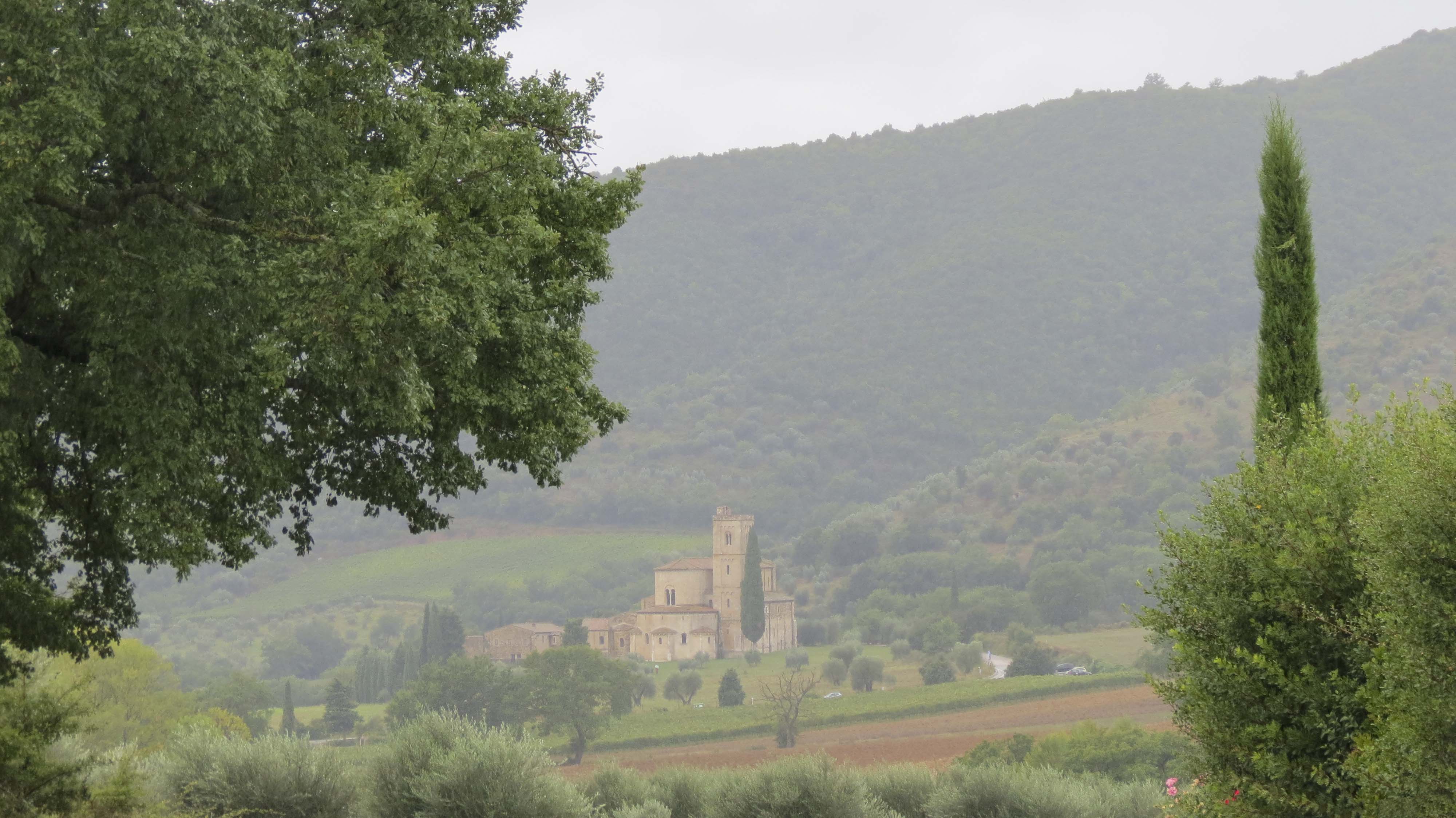
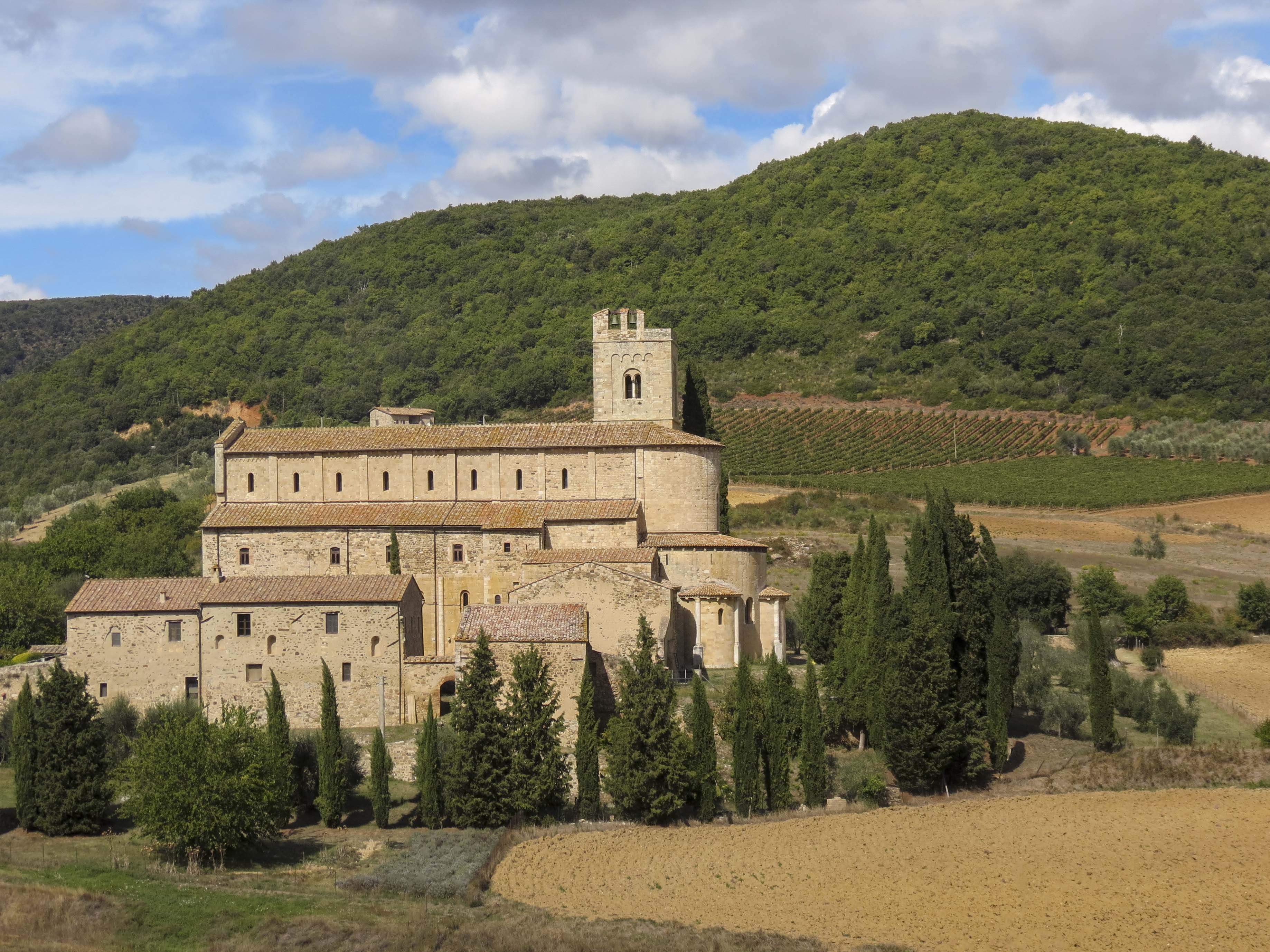
I planned to head to the Abbey of Sant’Antimo. Jim and I had seen it twice before, even attending one of the services where the monks chant throughout the mass. But this morning I had made too many stops, so I needed to head back to Montalcino to meet Jim and Pasquale. Here are a few pictures from those prior trips.
Abbey of Sant’Antimo in 2014, another foggy dayAbbey of Sant’Antimo in 2015, on a sunny day
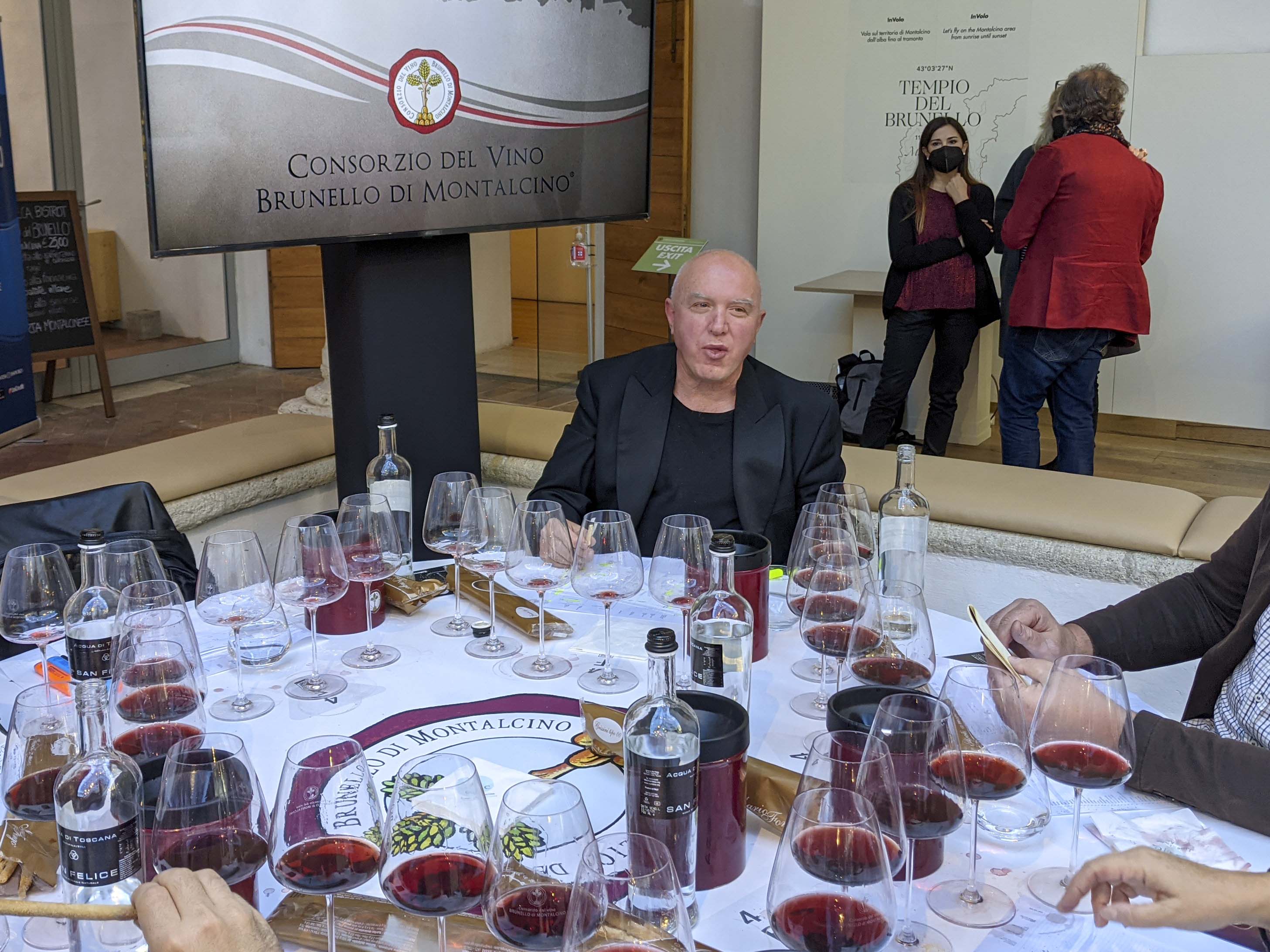
I headed back to Montalcino and found Jim and Pasquale. They had tasting 60 wines! We started the long drive home and they chatted about this wine and that wine. Until they fell quiet and rested. The day was a success – they enjoyed many of their old favorites, each discovered a few new ones, and noted those that they did not like.
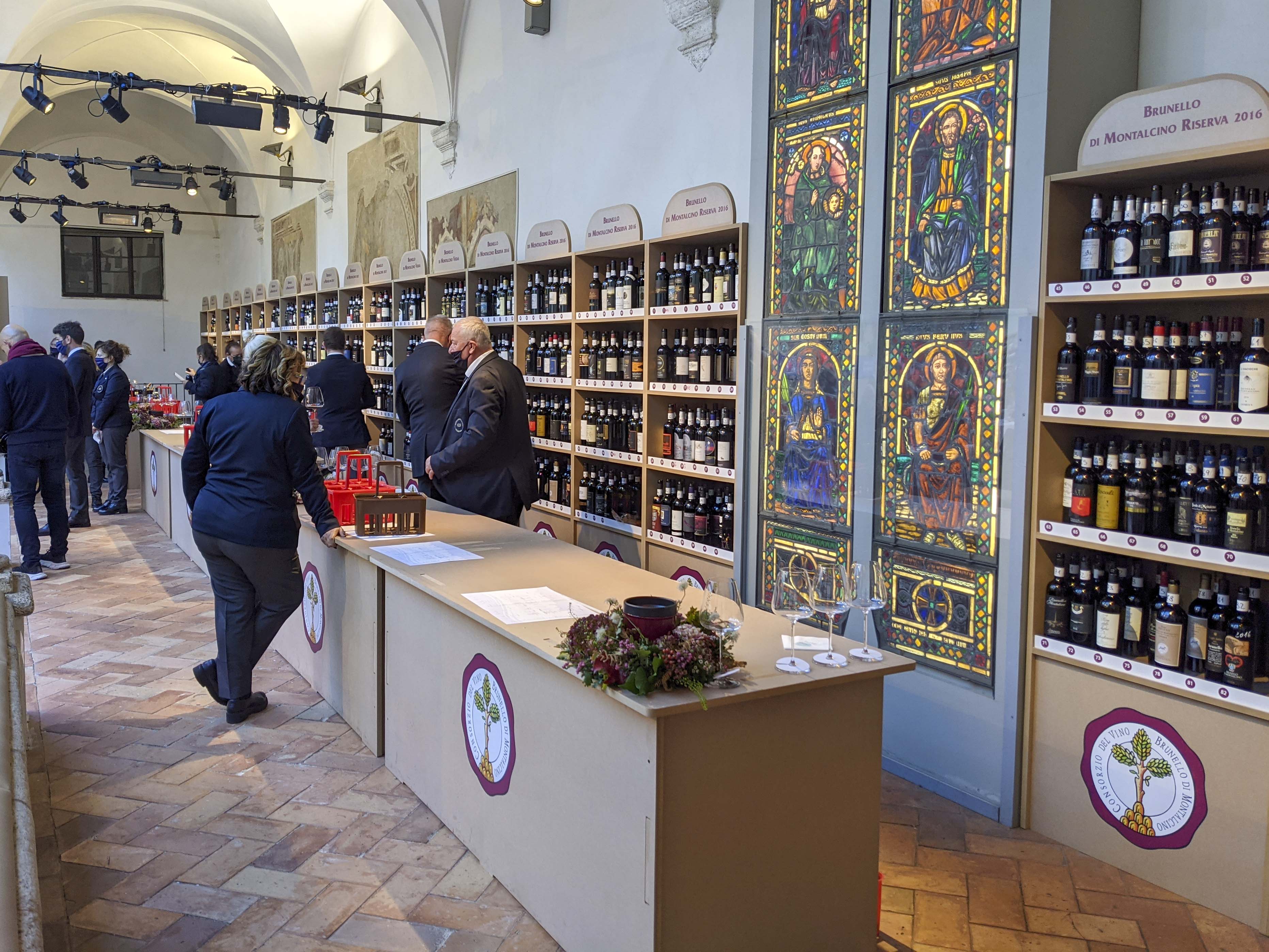
The tasting room – all available for them to taste!
We look forward to more visits to Montalcino, hopefully for a longer stay next time!
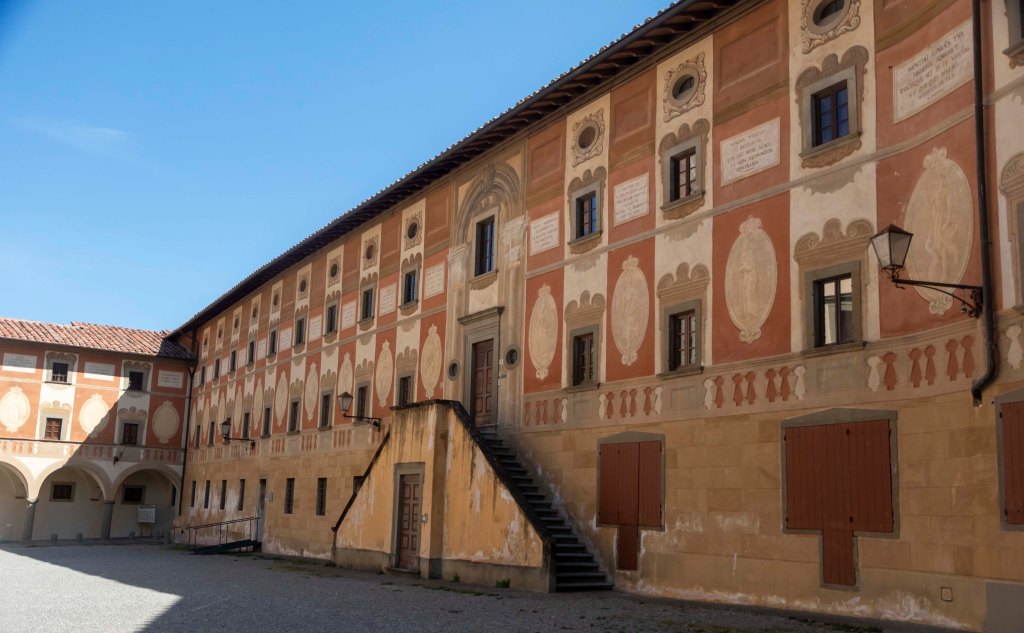
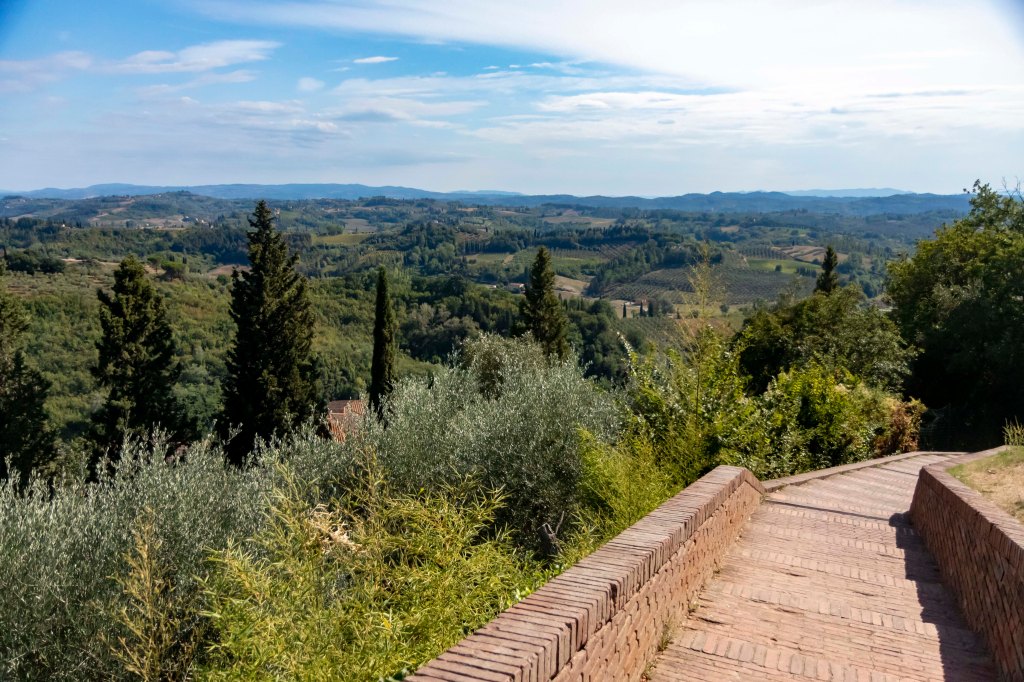
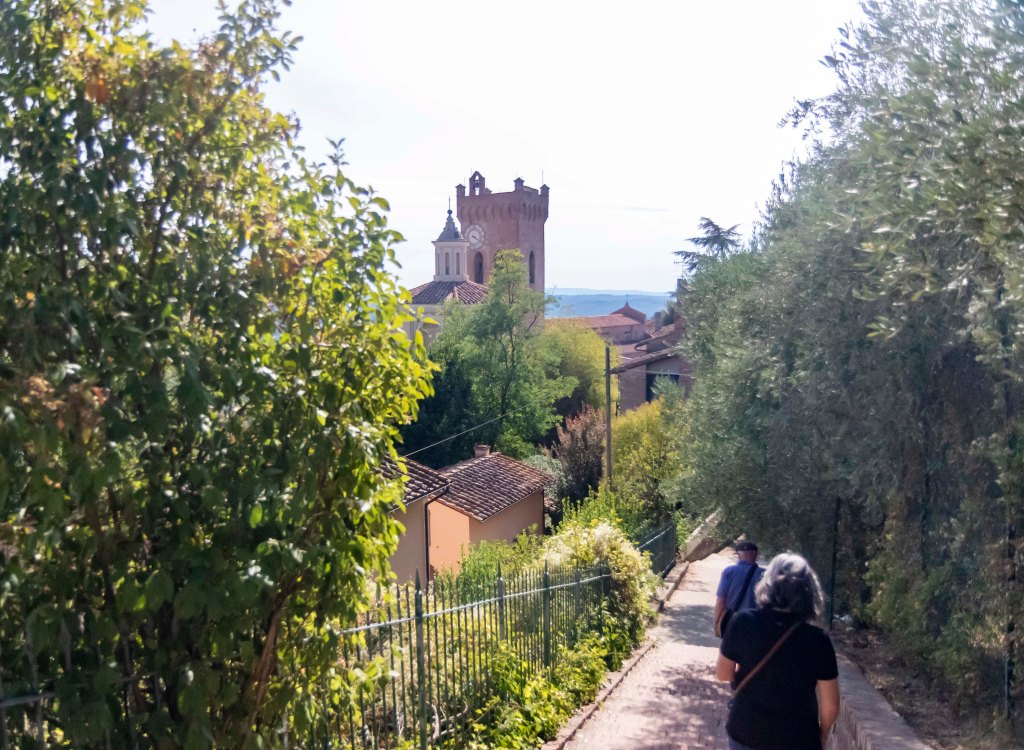
Ilene and Gary were invited to a dinner in a vineyard and asked if would like to come along. Of course! The winery is located outside San Miniato, a small town about an hour from Lucca, so we decided to spend the night there so that we could enjoy the dinner without the concerns of a longish drive home. The town is long, narrow, and perched on a hill. We enjoyed lunch then wandered through the town. I usually research towns before heading there, but I focused mostly on the winery, so was pleasantly surprised to find a beautiful seminary, cathedral, and tower. And the views of the Tuscan landscape!
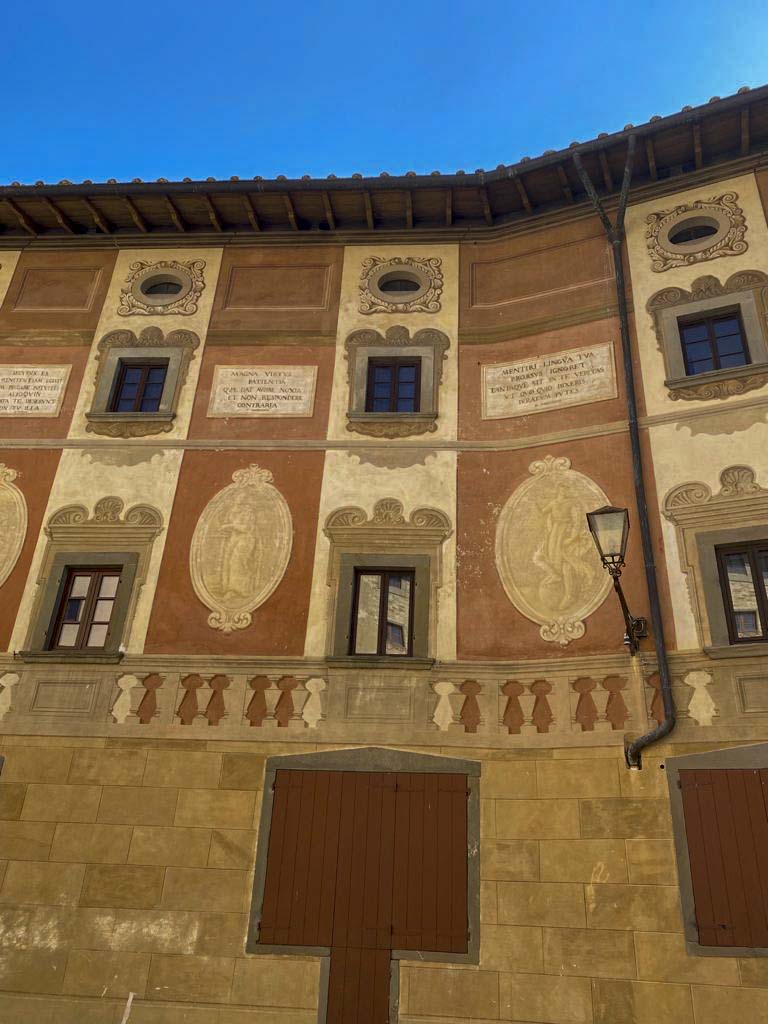
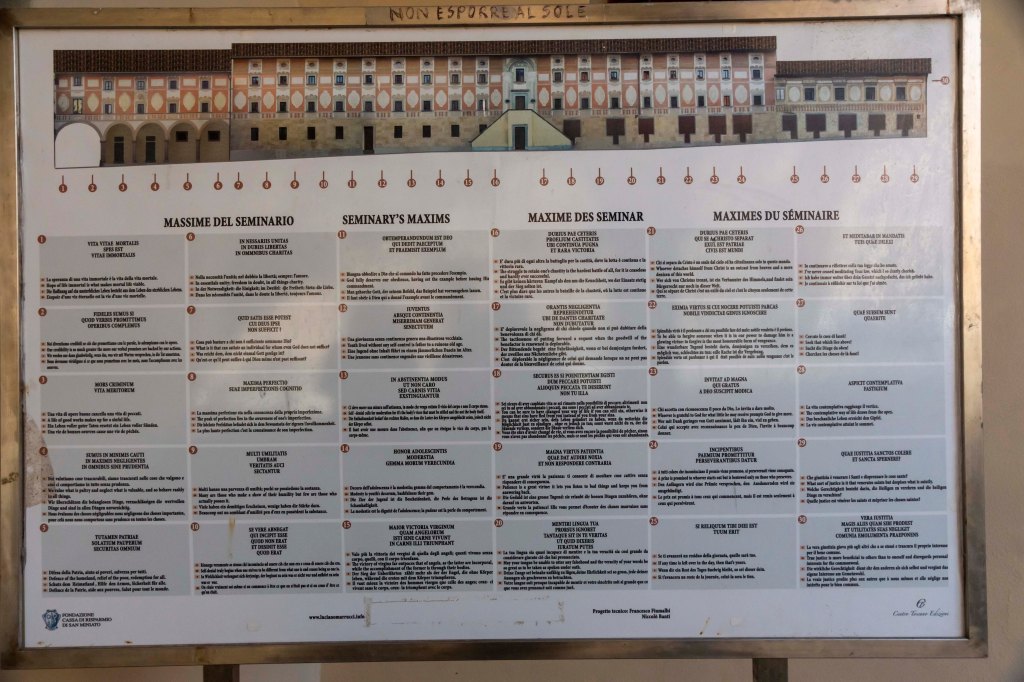
The seminary was started in 1650 and continually expanded until 1713. The exterior has beautiful fresco, including 30 sets of religious “mottos” (not quite scripture quotes). I was particularly pleased to find a sign that had the translations of these mottos in four languages, including English. I can imagine that the students spent time outside memorizing each and contemplating the meaning of them.
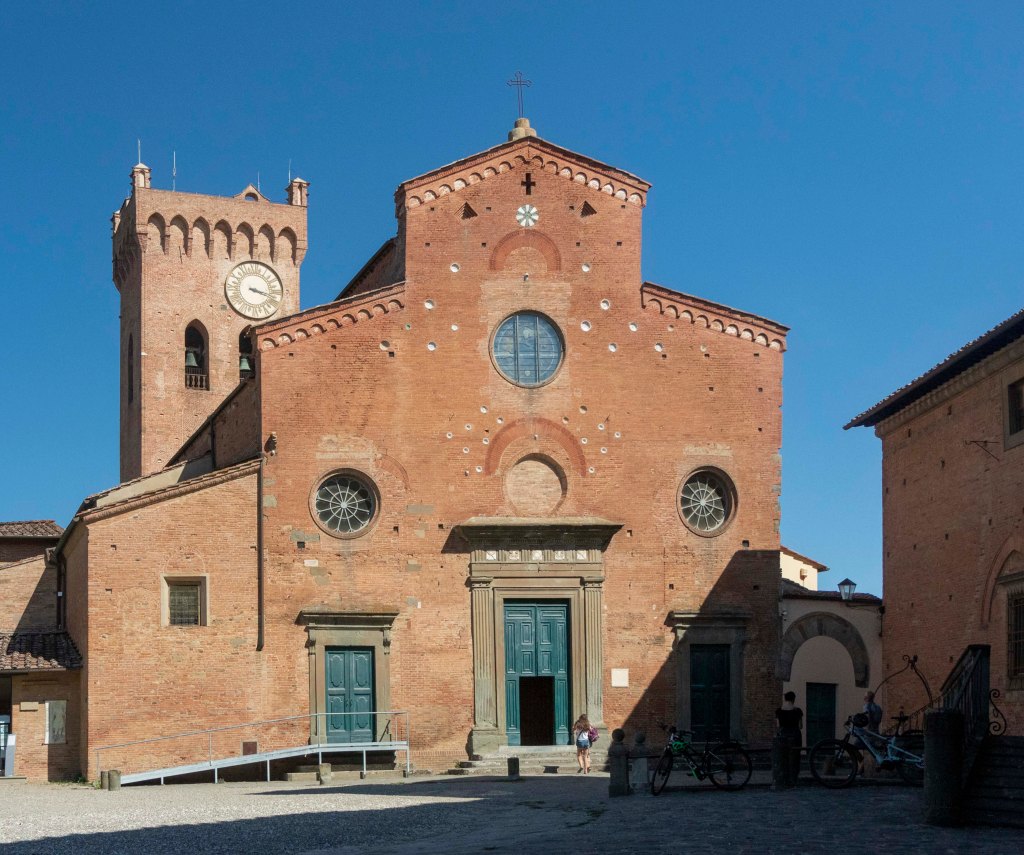
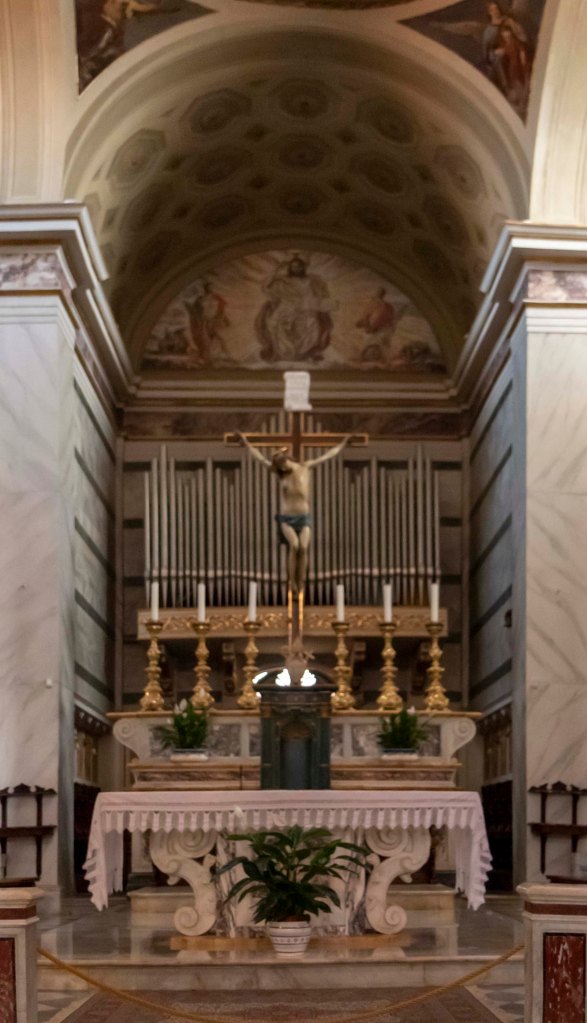
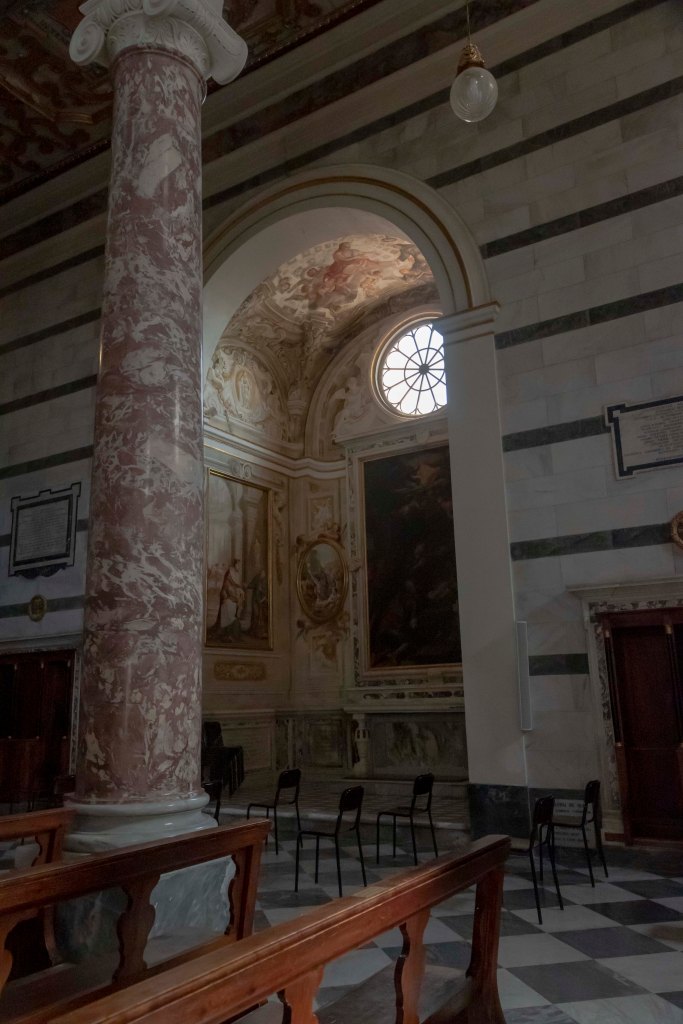
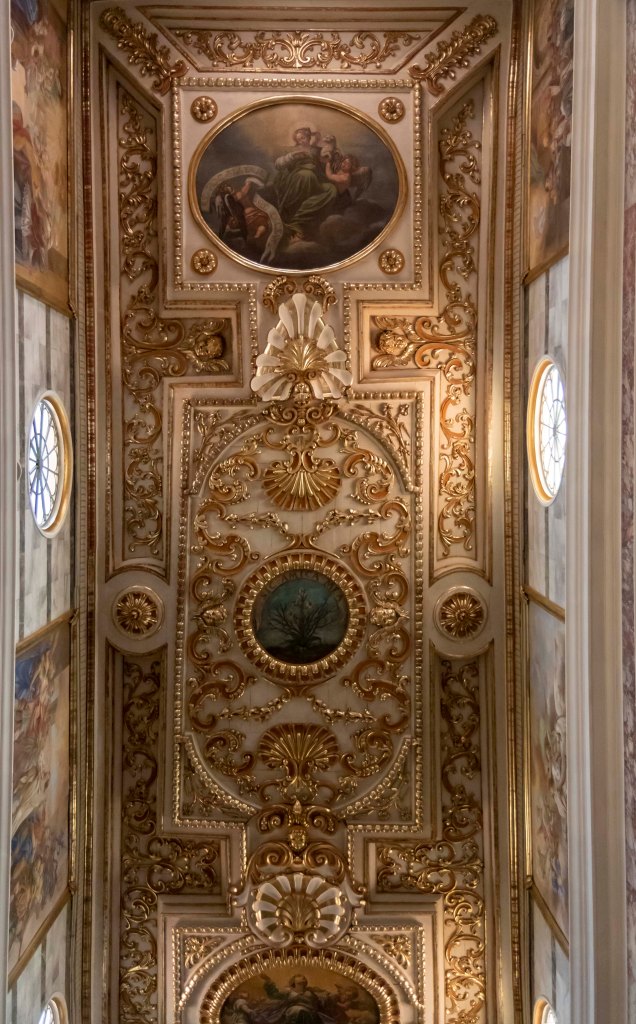
The Cathedral of Santa Maria Assunta e San Genesio required quite a climb, but was well worth it. The exterior is quite plain but the interior art, architecture, and marble are beautiful – and the ceiling is gorgeous! While inside the Cathedral, we realized that the walls were fake marble (or should I say “Faux Finish”) but while reading about the Cathedral I learned that the columns are also fake. I also read “On the 22 July 1944, an artillery shell from the United States military went through the church via the rose window on the southern side of the transept, and exploded in the right aisle, killing 55 people. The cathedral was full of citizens who had been gathered in the churchyard by the Germans.” So sad! Next time, I’ll remember to research the towns properly BEFORE heading there…
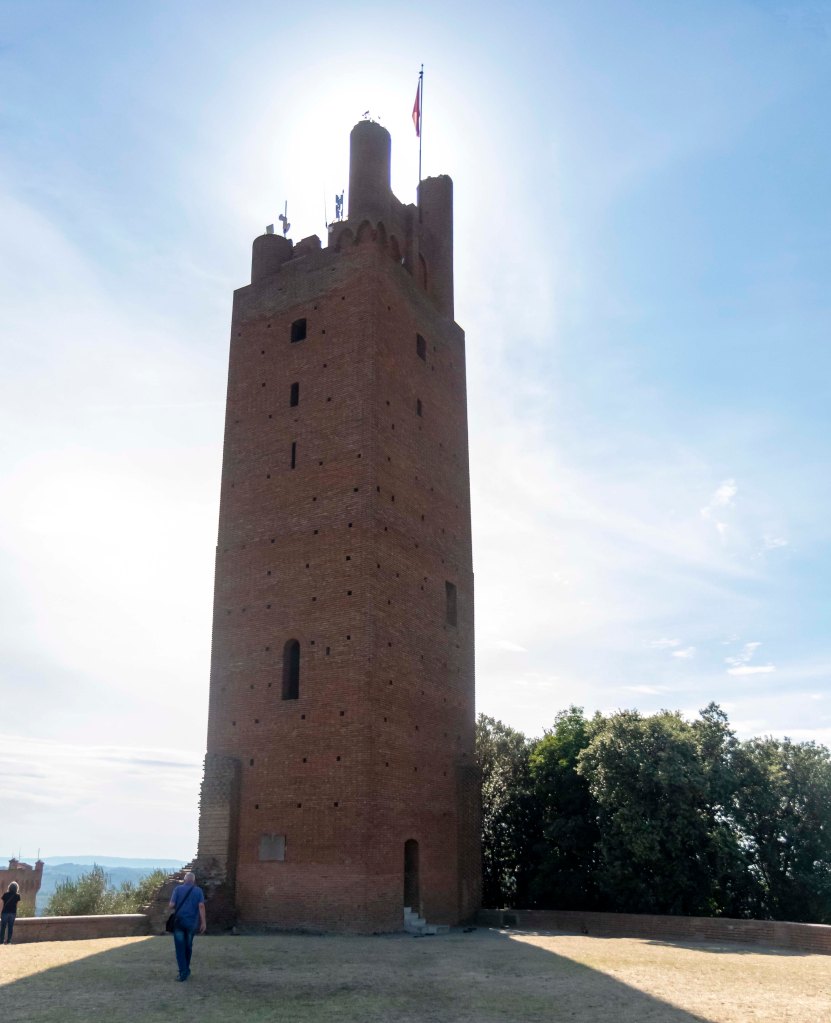
The Cathedral was quite a climb, so I skipped the next climb up to the Rocca di Federico II. Jim took my camera with him and took some beautiful pictures of the tower and the countryside. This tower served as a lookout to watch those moving between Florence and Pisa. During World War II German soldiers detonated charges inside and it was destroyed. It was rebuilt in 1958.
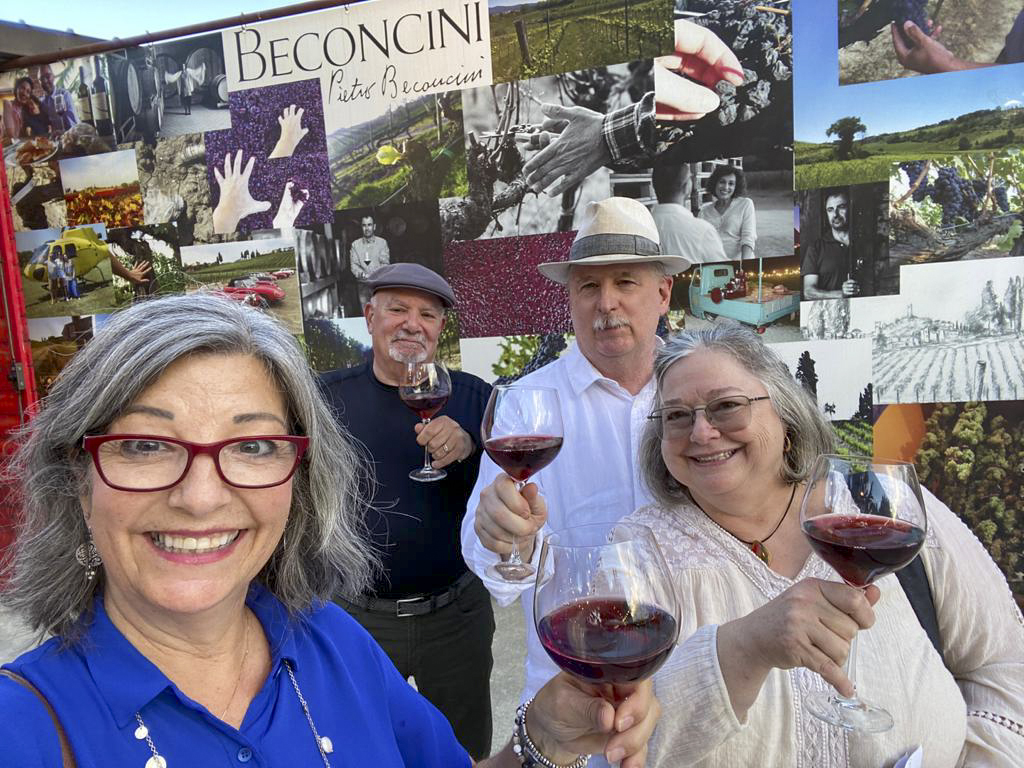
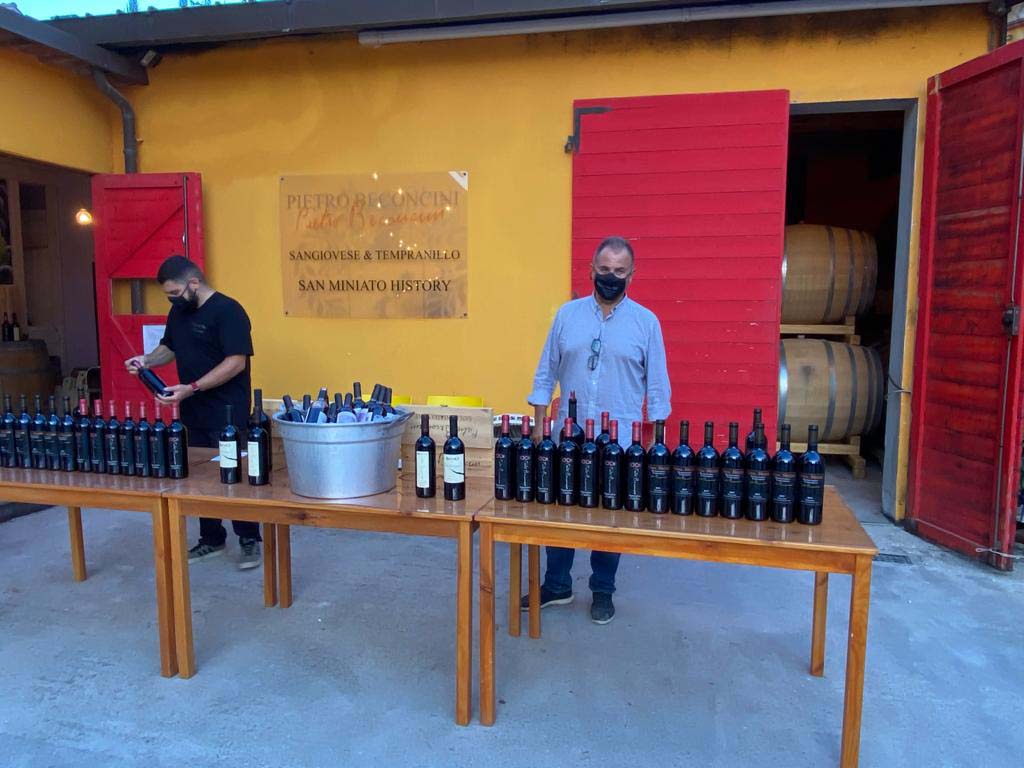
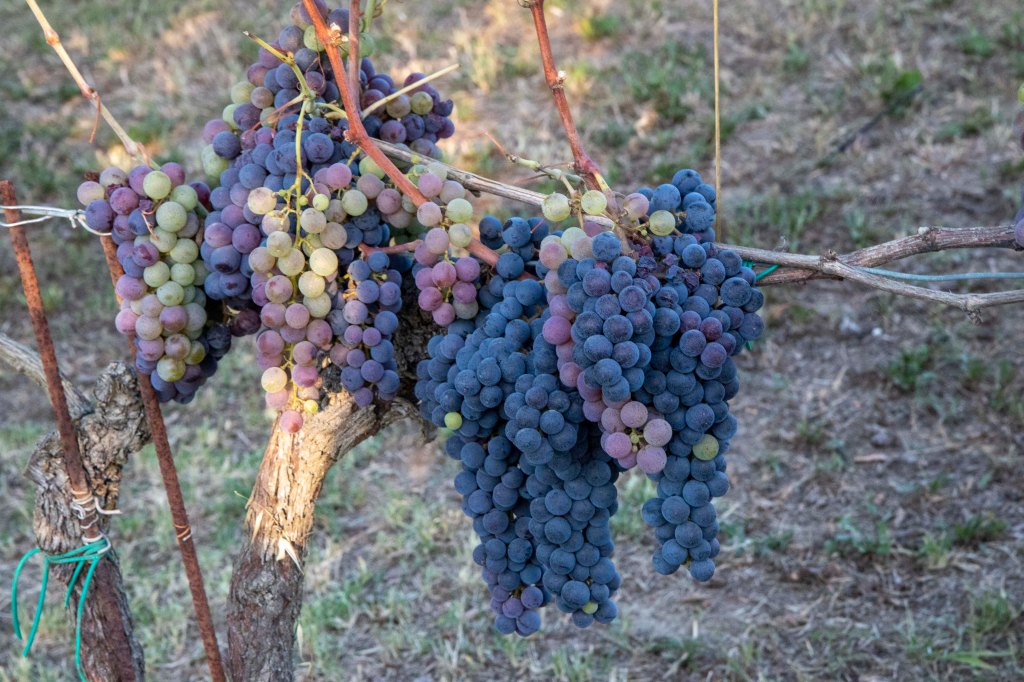
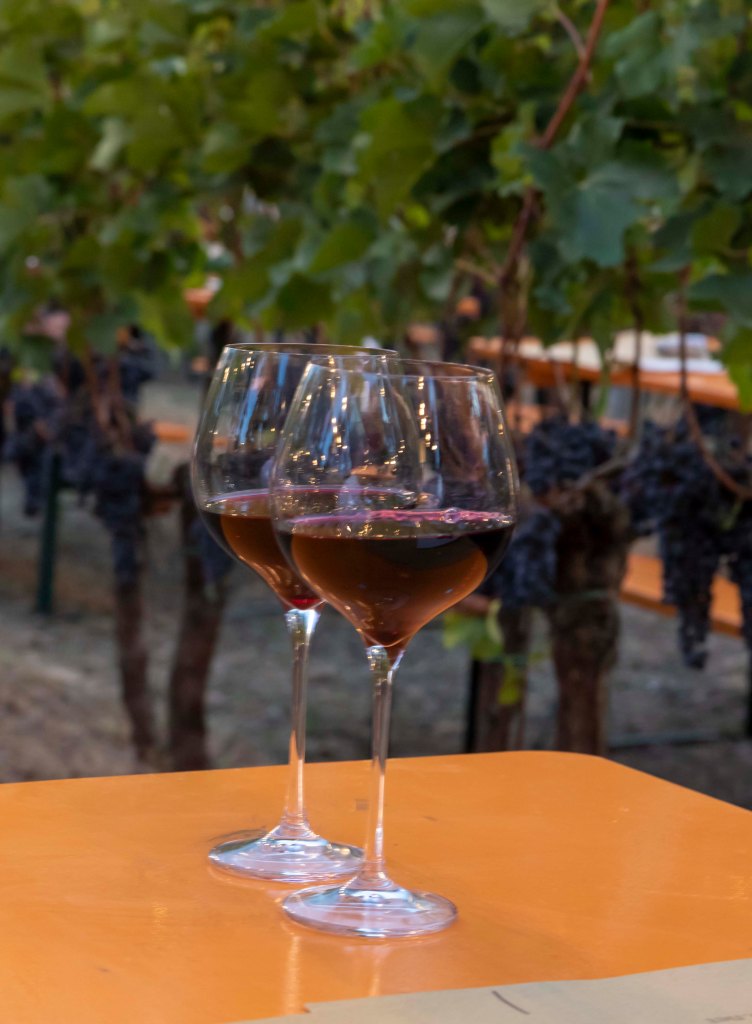
Time for the dinner that we had traveled here for! The vineyard is called Pietro Beconcini Agricola. They grow several types of traditional Tuscan grapes but also Tempranillo, a Spanish grape. After owning the property for about 7 years, the owner still couldn’t identify some of the grapes on his property. A DNA analysis showed that it was Tempranillo. The thinking is that a pilgrim from Spain left some seeds on the property as they traveled the nearby via Francigena path. Because the grapes were growing nicely on his property, he decided to plant additional Tempranillo vines. They now sell three wines made from Tempranillo – Fresco Di Nero (an Early Harvest wine), IXE (their mid-priced wine) and Vigna Le Nicchie (their Prephylloxera wine). Jim is always hunting for Prephylloxera wine, so this made him very happy!
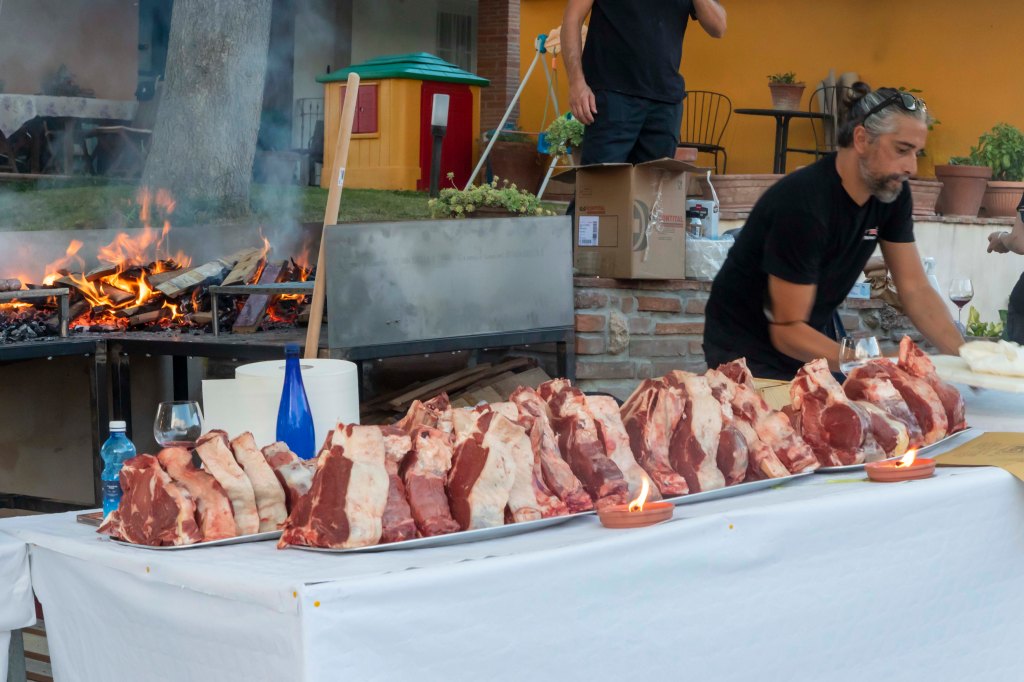
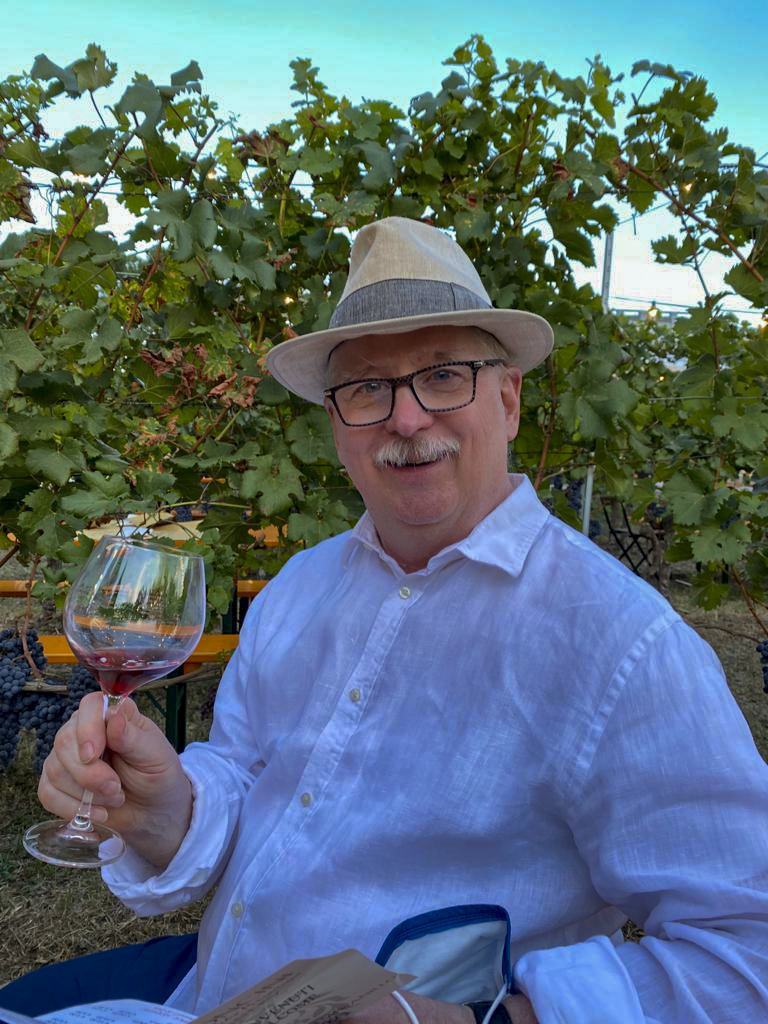
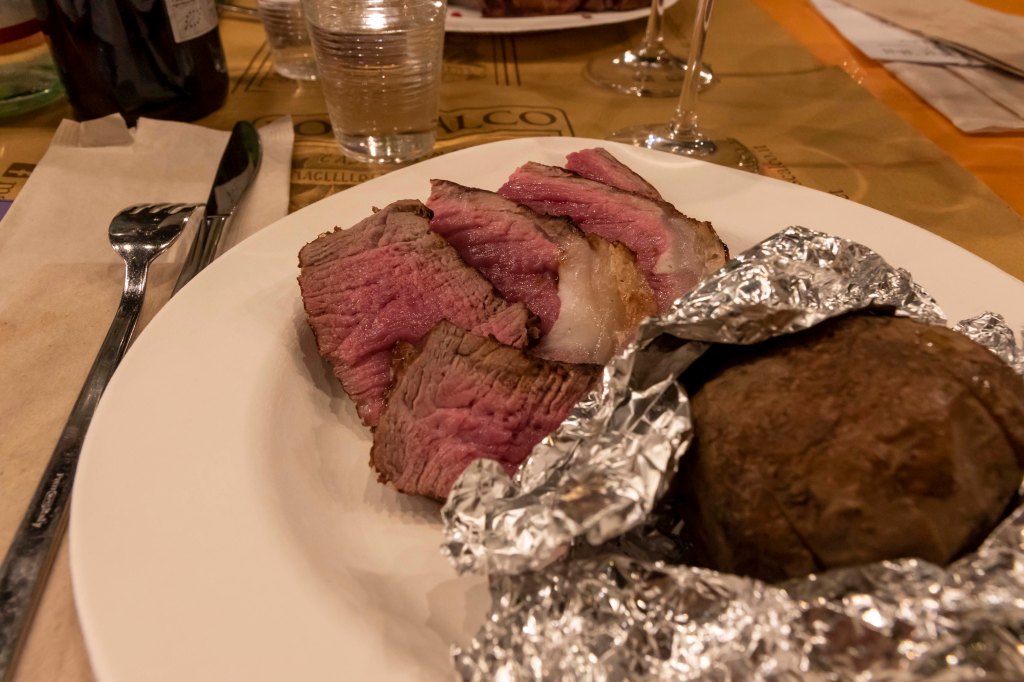
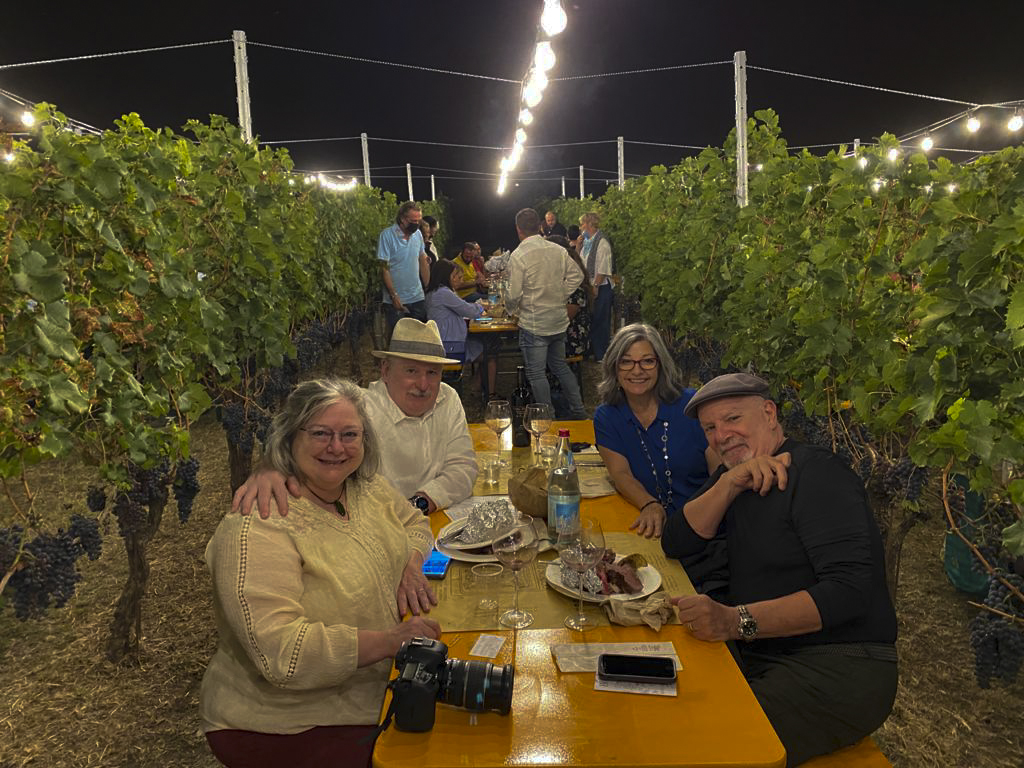
The Festa Del Tempranillo was held for three nights, with some of the tables set up within the vineyards. We each received a glass of the three Tempranillo wines and typical Tuscan food, including some some slices of Bistecca alla Fiorentina. The wine, food, live music and beautiful setting made for an exceptional evening.
Special thanks to Jim and Ilene Modica for sharing some of their pictures with me for this blog post. I suggest that you check out Ilene and Gary’s blog at Our Italian Journey. She’ll be posting about our trip to San Miniato and the dinner… and I’m sure that you’d enjoy reading a different version of the same story!