
Our Ireland trip by the numbers: 13 days, 5 hotels, 2198 pictures and 22 videos, 1500 KM/1000 miles driven, 2 beer breweries, 2 whiskey distilleries, 33 birds identified and many of them photographed, and countless ruins. Rather than providing a comprehensive description of our vacation, I will share my highlights along with some random observations that surprised us. Click left or right on each photo to see others from that location. At the end of this post, I provide a description of our itinerary and changes made during the trip.
Random Observation: I forgot some of my medicine. ☹ I printed my two prescriptions from my Italian doctor (who sends these via email) and took it to a pharmacy in a small town. One of them was filled quickly and at a reasonable cost. The second was not available anywhere in Ireland, so I couldn’t get it filled at any pharmacy. I was able to stretch that medicine out and all was fine, but I was very impressed how the EU medical systems work together so easily across country boundaries.
My favorite location was the Cliffs of Moher – the ocean, the green land, the birds and of course the cliffs. Together they were magical! The cliffs are 200 meters high and they run for 14 KM/9 miles. The scene in “Harry Potter and the Half-Blood Prince” in which Harry and Dumbledore venture to a cave in order to destroy a horcrux was filmed here!
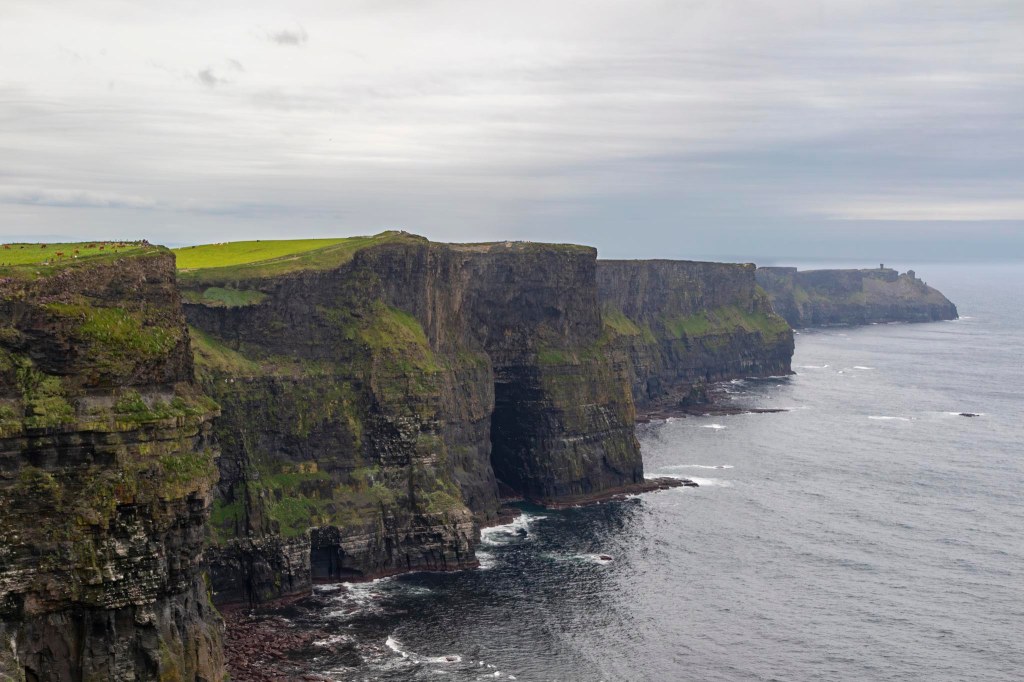
The Cliffs of Moher. The tiny dots on the green land are cows. Lots of cows everywhere! 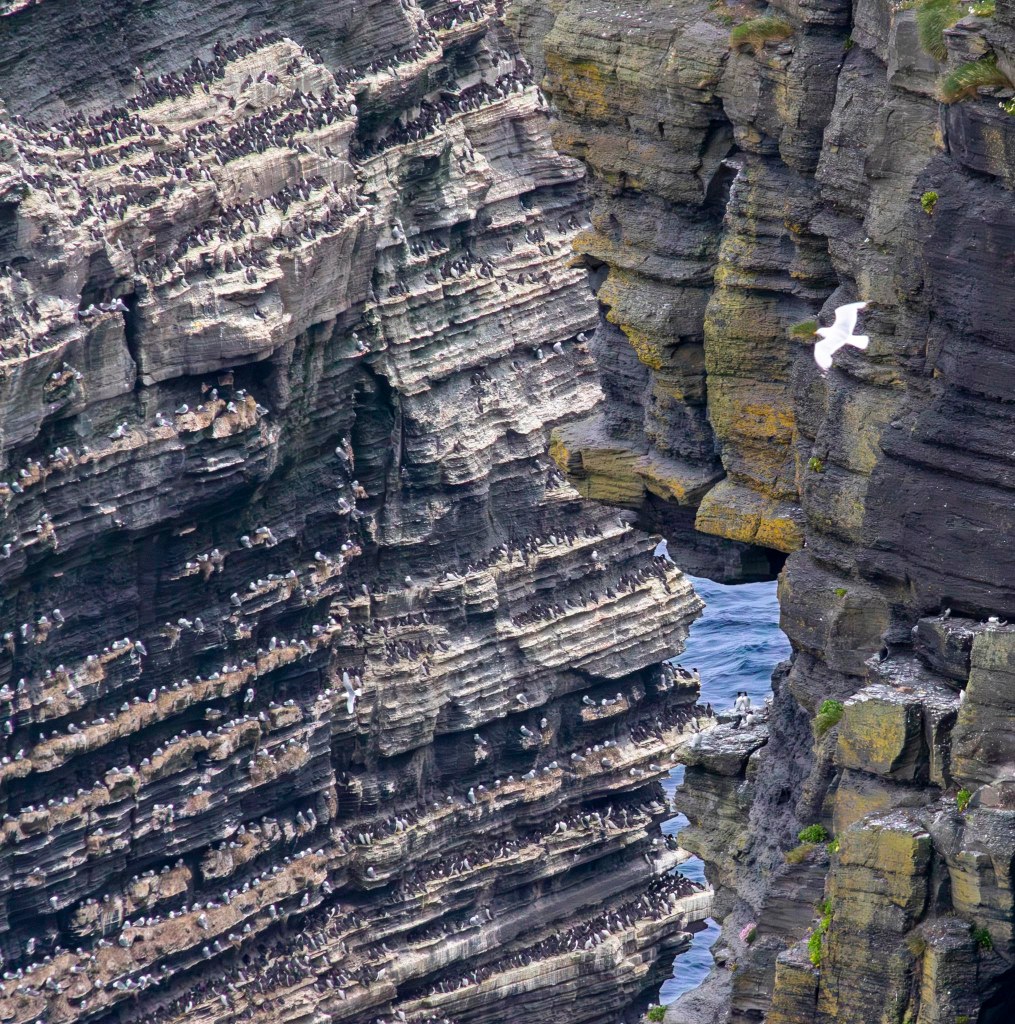
Closeup of one of the cliffs. Each of those dots is a nesting bird. The ones near the top and bottom are Gillimontes which are related to Puffins. And lots of seagulls in between. 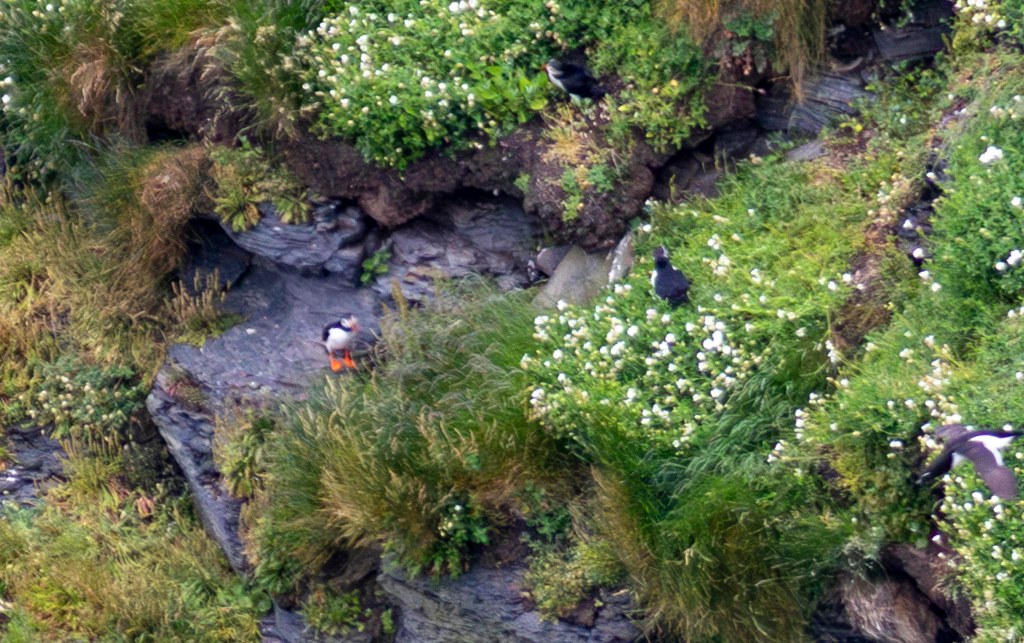
A zoomed in version of one of the cliff areas and we found puffins! A first time ever spotting for Jim and I. 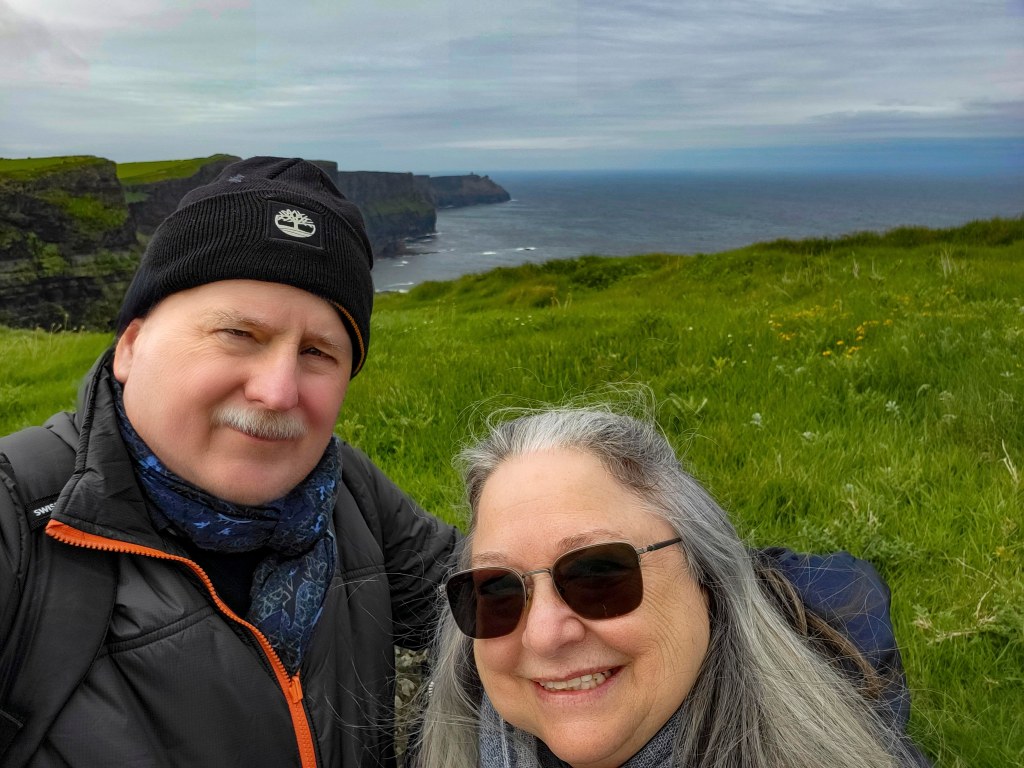
It was cold and windy, but the wind died down for this selfie.
Random Observation: The food is so hot! About half of the food served was so hot that we couldn’t eat it for five minutes or more. I like my food hot, but this seemed excessive. I burned my tongue twice.
One of the touristy things to do in Ireland is to participate in a falcon or hawk walk. We choose a Private Hawk Walk with Kingdom Falconry in Dingle, Ireland. We spent an hour with Emily, a very experienced birder and falconer, talking all things birds. We spent most of the time with one Harris Hawk then had a walk through their aviary to see their other birds of prey. Click on this link to see a video of “our” hawk flying to me.
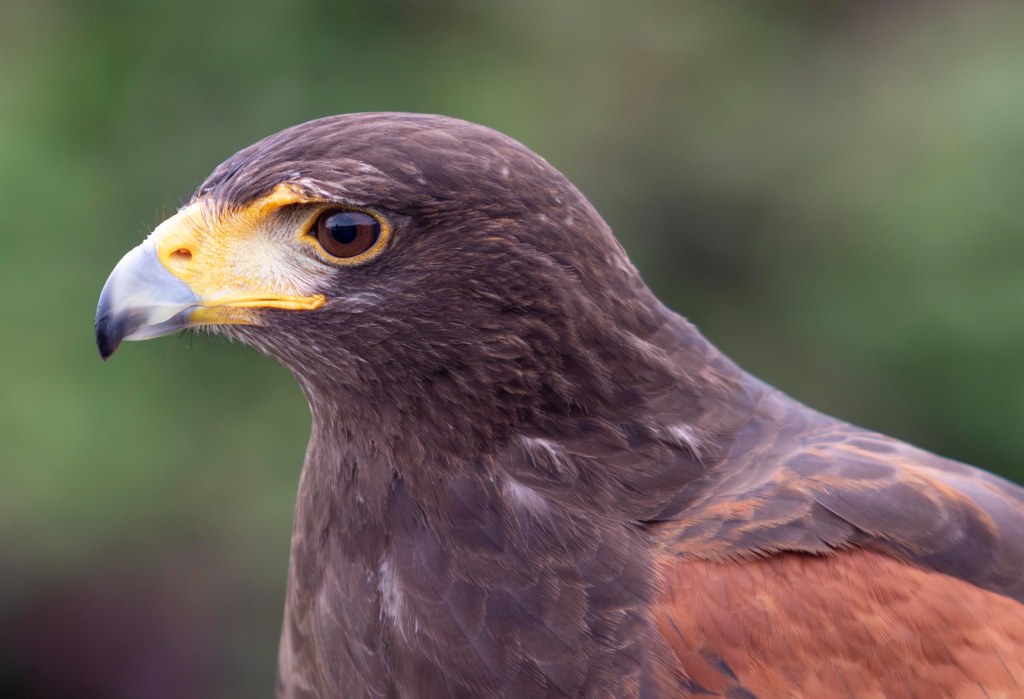
Closeup of “our” Harris Hawk. These are not native to Ireland but are brought here and bred here for hunting. They are very trainable and well-behaved. 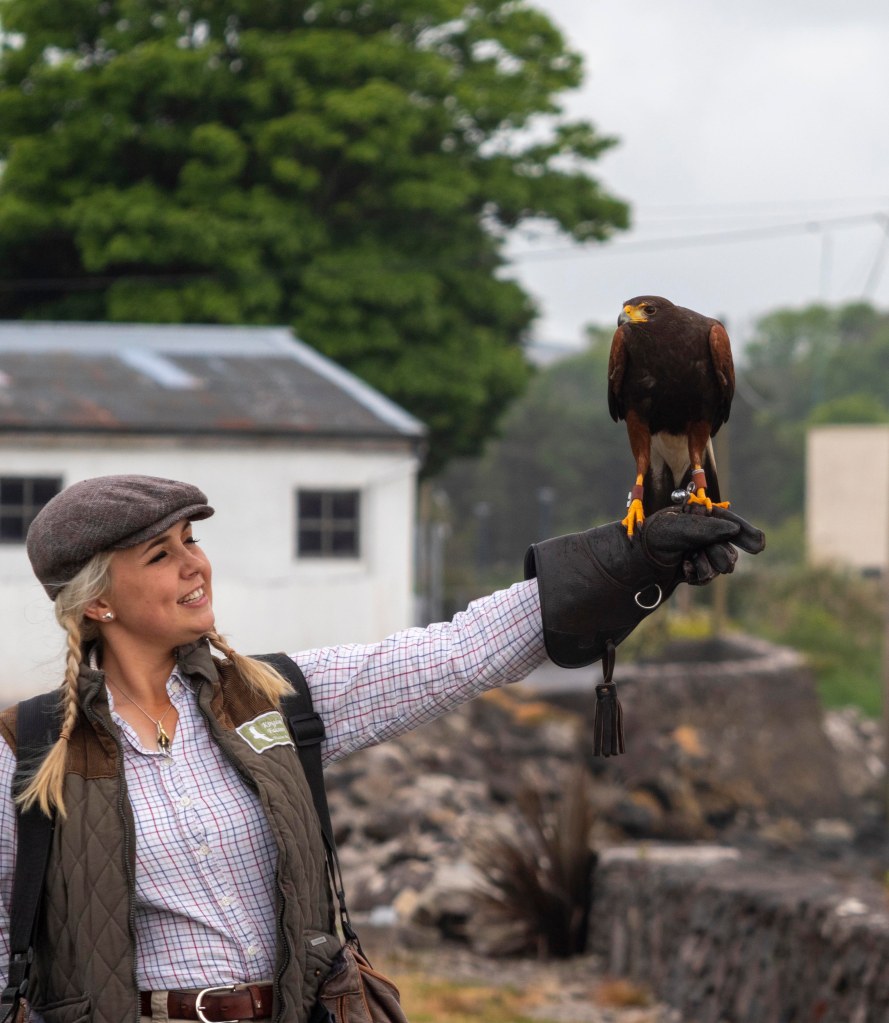
It was a delight to spend time with Emily and she clearly cares for the birds here and enjoys educating people about birds of prey. 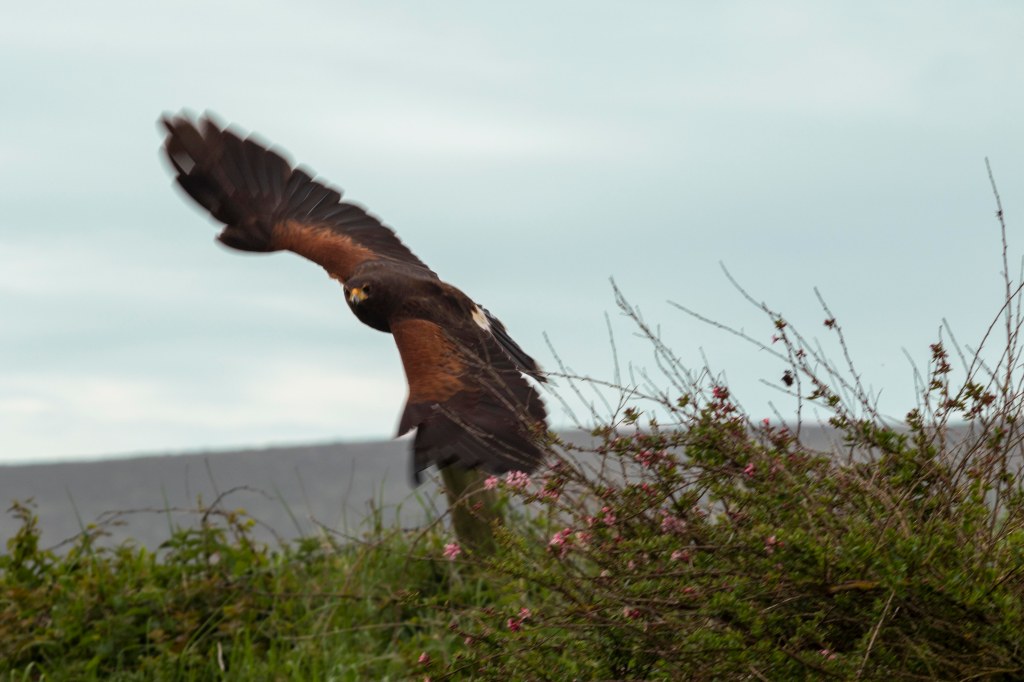
Harris Hawk in flight
Random Observation: We drove on many tiny roads, often for long distances. They typically have only one lane (but two-way traffic) with no space on the left between the vehicle and the stone wall, bush, trees, or signs. But speed limits are high; the most common speed limit was 80 KM/hour or 50 MPH. I didn’t get used to it – I learned to look away from the obstacles on the left.
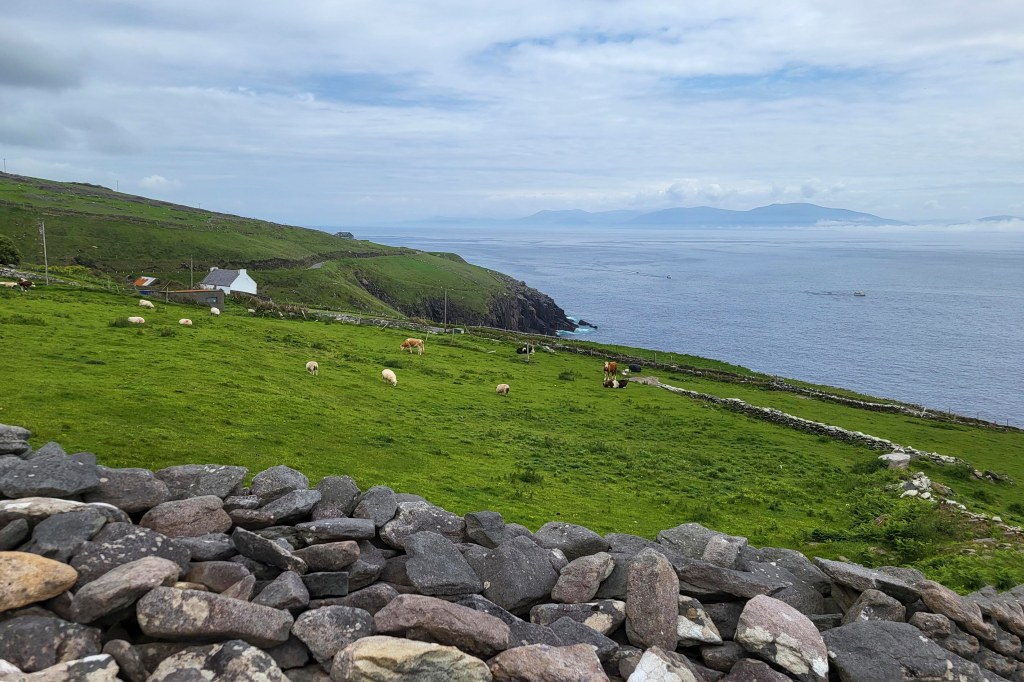
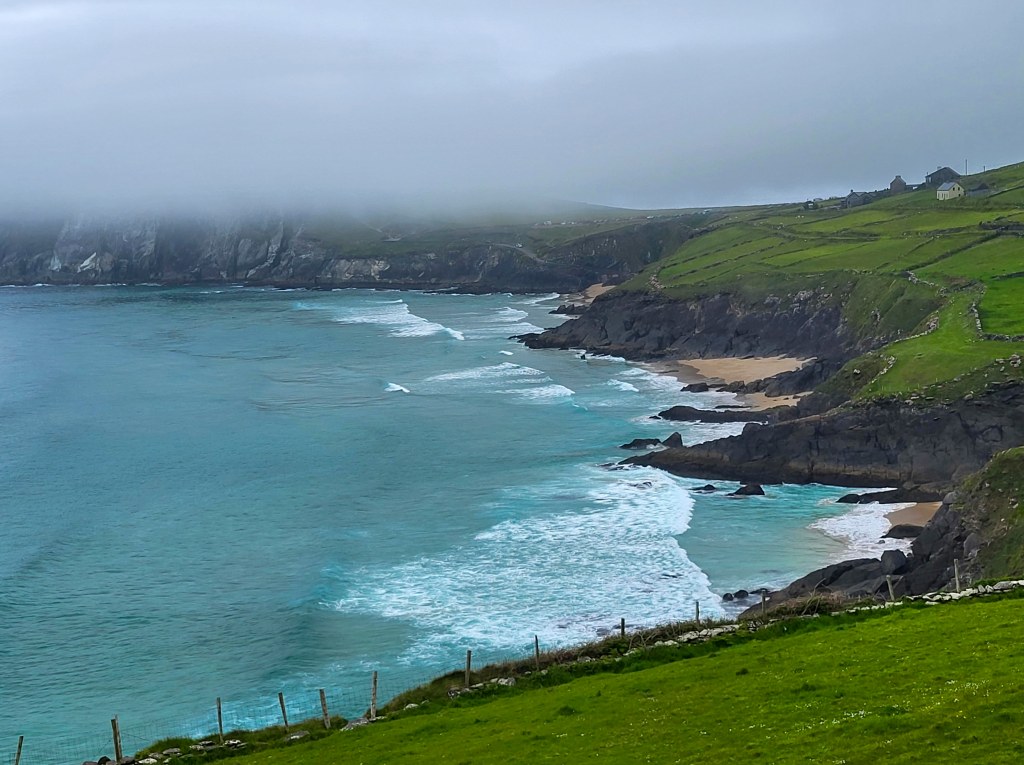
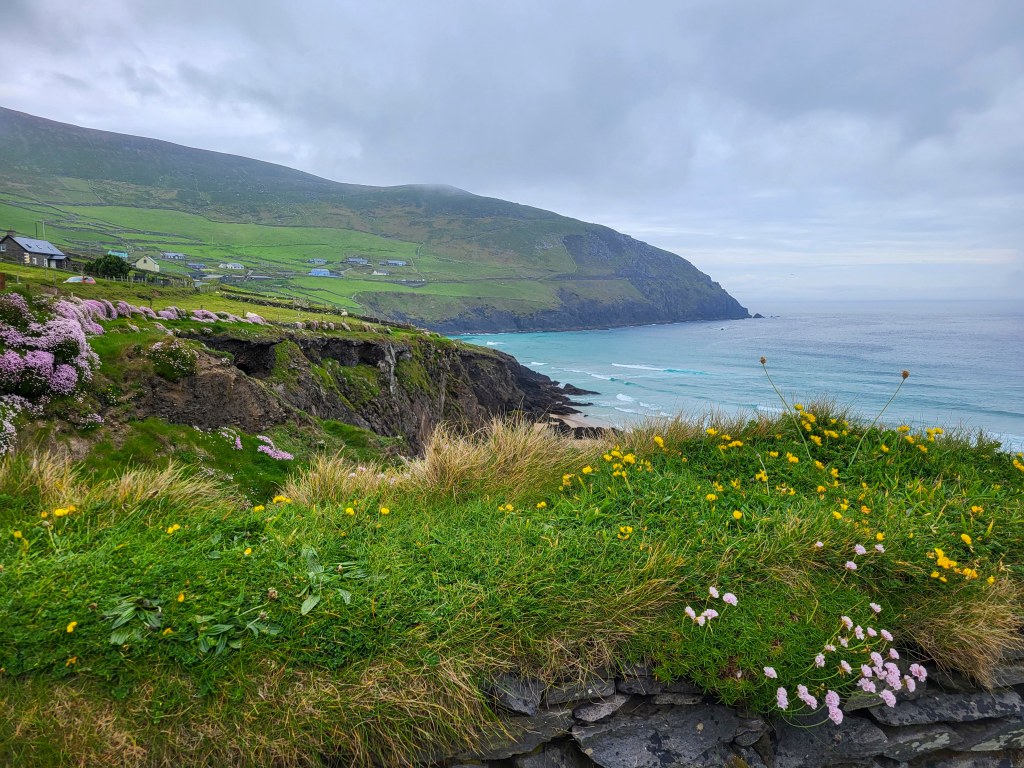
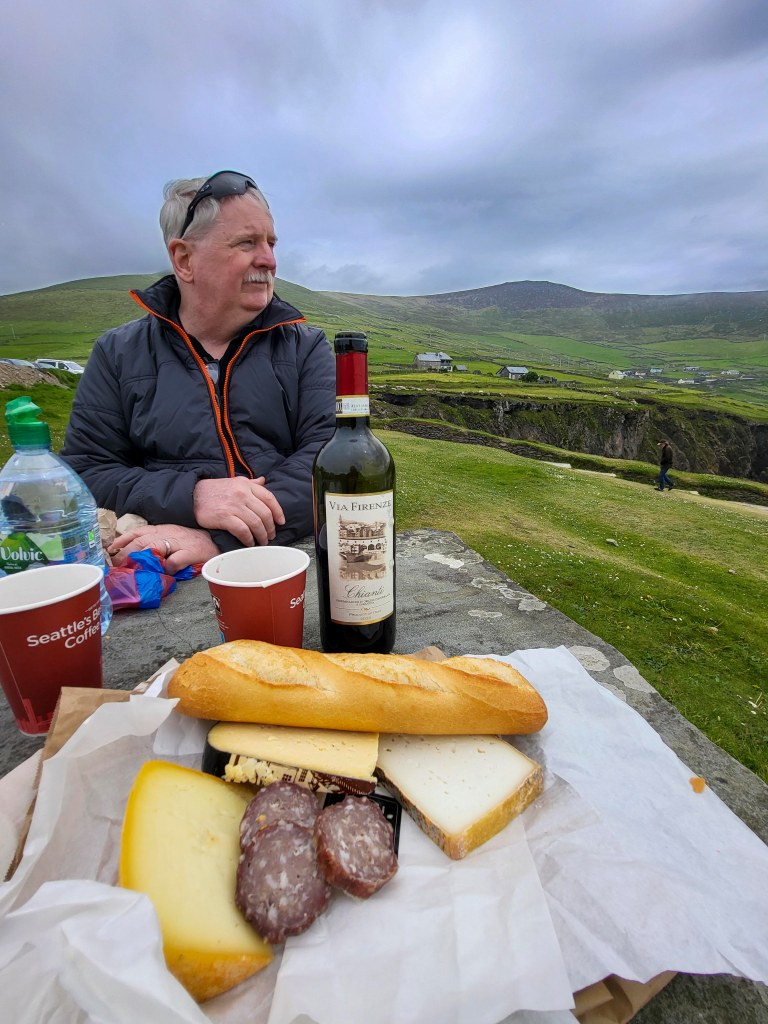
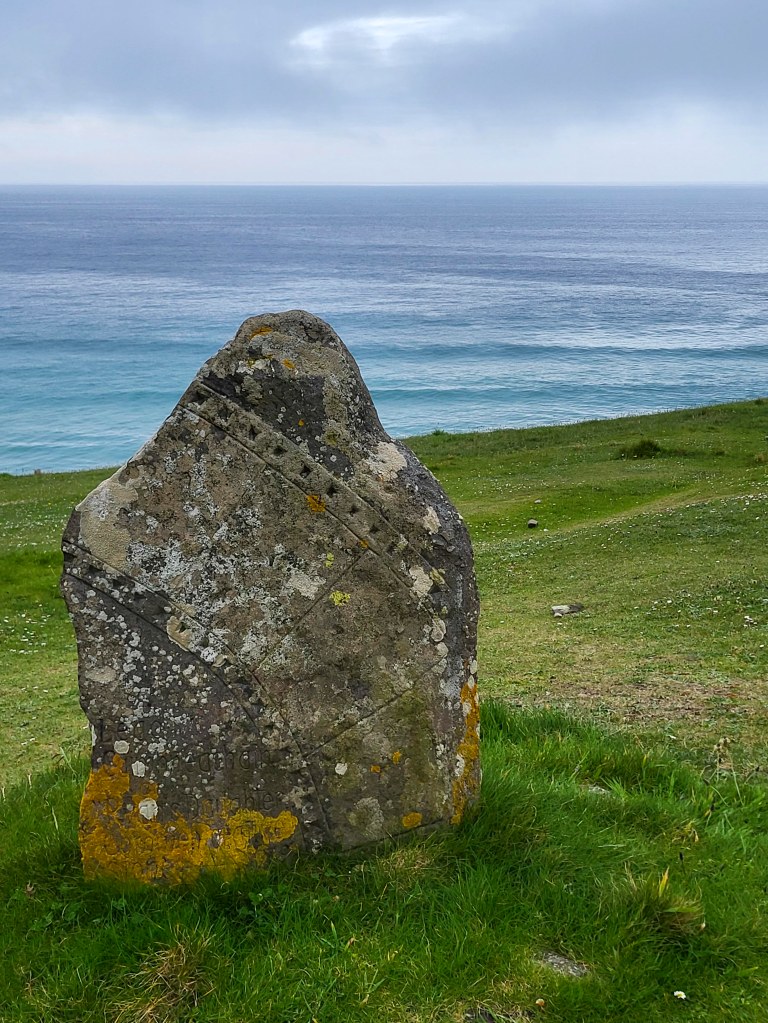
The Dingle Peninsula, on Ireland’s southwest Atlantic coast, is ringed by sandy beaches and craggy cliffs. Inland are rolling hills and mountains populated with interesting historic points, tourist stops, farms, many cows and many many sheep. The Slea Head Loop goes around the peninsula and is only 50 KM / 30 miles but the idea is to stop lots of times at beautiful vistas, ruins from prior civilizations, and everywhere in between. Most people take 3 hours… after 4 hours, we decided to skip the last few stops that I planned. Star Wars – The Last Jedi was partially filmed on this peninsula.
Random Observation: They had laundry machines at some gas stations! You just pulled up your car, loaded the washing machine, moved it to the dryer and drove off within the hour with clean clothes. So easy and fast but not cheap…
There are numerous ruins across the Irish countryside, including cathedrals, monasteries, castles, small churches, round towers, and many unidentifiable buildings. Some of the biggest, such as the Rock of Cashel, are considered national treasures with pre-booked timed tickets, guided tours, and souvenirs galore. Others simply have signs that describe what you are seeing and provide brief histories. And then there are the unmarked but still striking ruins that you can wander through with only your own imagination. We stopped at so many that we skipped one of our planned stops – another ruined monastery, no thanks!
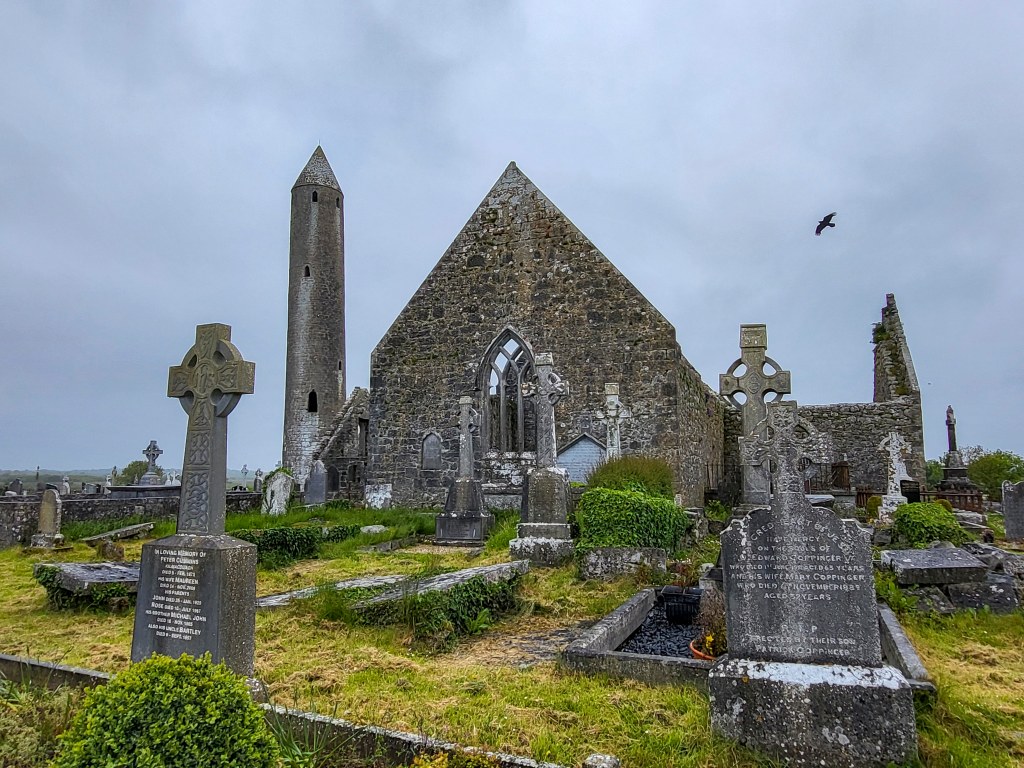
Kilmacduagh Abbey, near the Burren National Park. The cemetery included both old and new graves. The round tower was used by the monks for protection during attacks. The medieval days were violent! 
While I was photographing Kilmacduagh Abbey, this cow decided to check me out. She was a friendly cow! 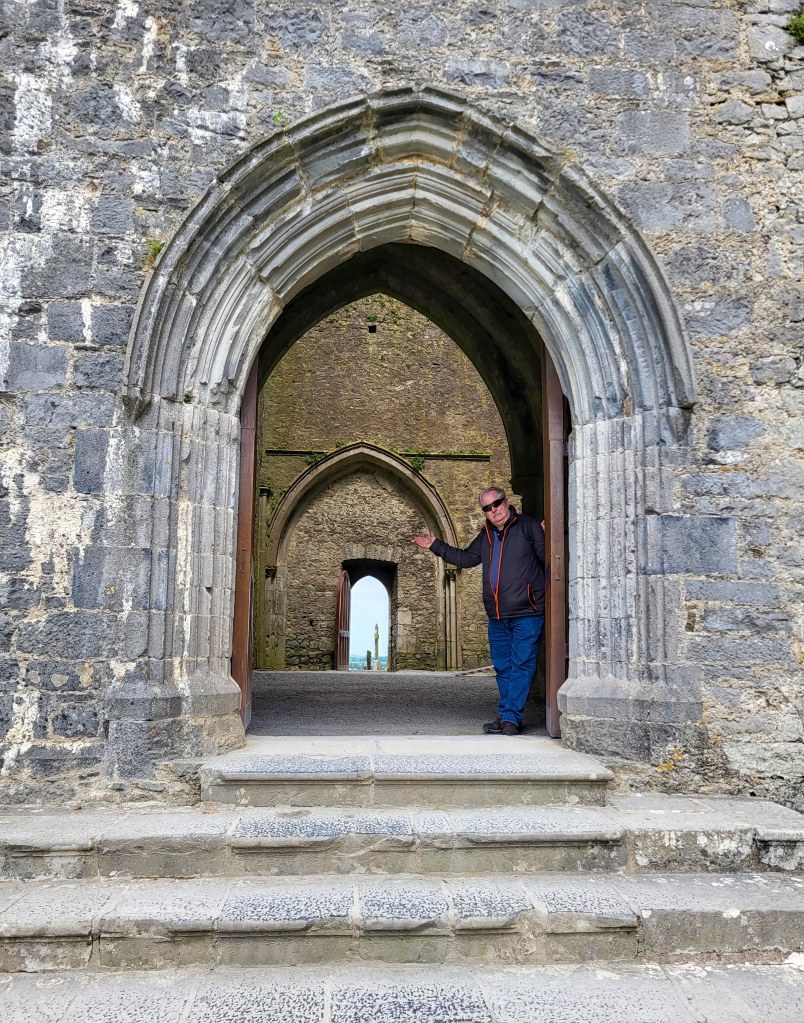
Jim welcoming me to the Rock of Cashel. “Cashel is reputed to be the site of the conversion of the King of Munster by Saint Patrick in the 5th century. The Rock of Cashel was the traditional seat of the kings of Munster for several hundred years prior to the Norman invasion.” http://www.wikipedia.org 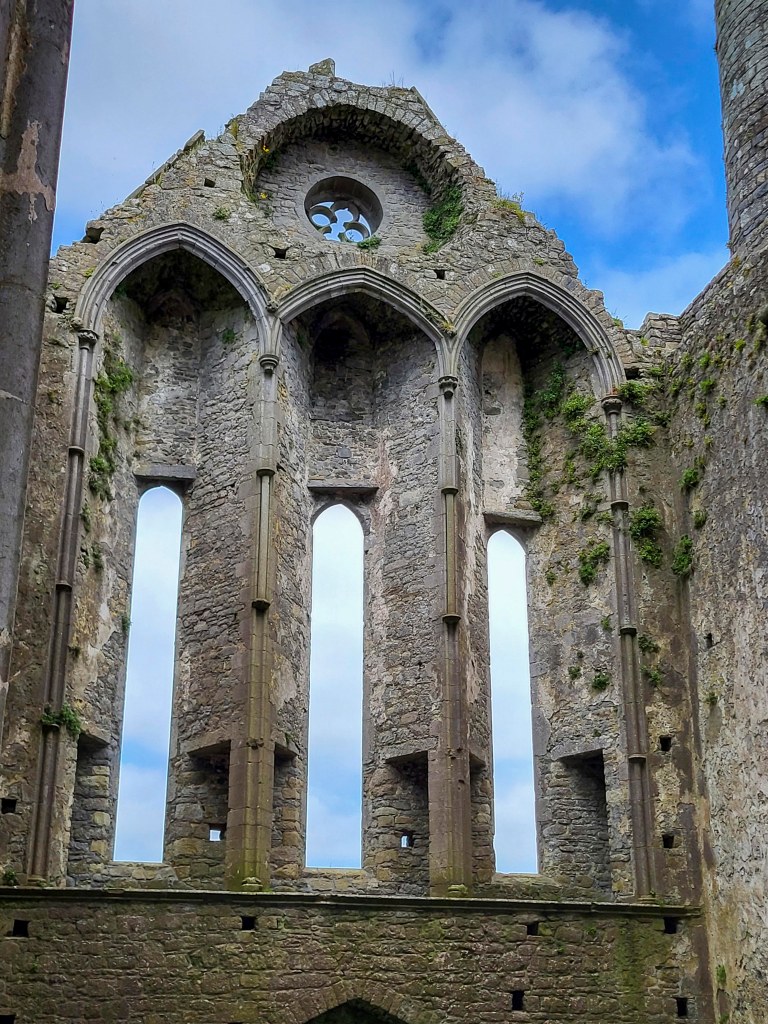
Interior of the Rock of Cashel 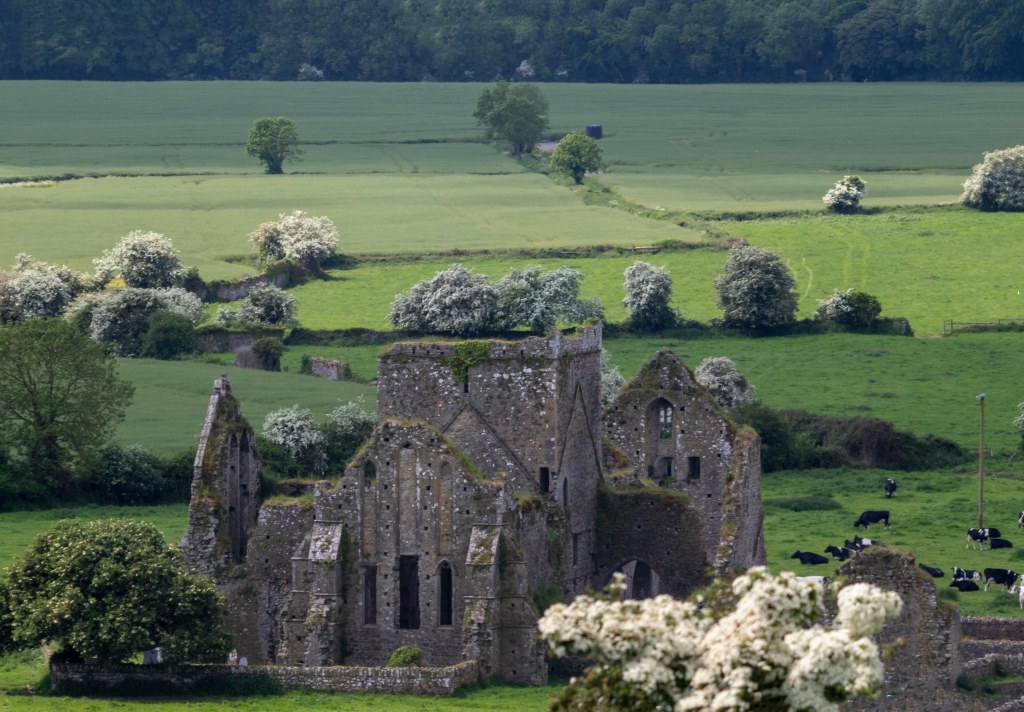
I spotted this ruin from the Rock of Cashel. Neighboring ruins?
Random observation: We stayed at five different hotels (yuck!) but I was surprised at the ease of check in and check out. Mostly I just said my name and they gave me a key. No forms, no passport checks, no receipts on checkout. I asked one person about it and they said “Well, you said your name and the name is on my list, so it seems likely that it is you!” So different from Italy where a passport is always required along with receipts and papers galore!
Throughout the trip Jim and I were on the lookout for birds. We didn’t have any specific birding activities, but took our binoculars and my “birding” lens whenever we wandered into birdy areas. We discovered several new species for us as well as many that we were already familiar with. It’s been a while since I did any bird photography so this was a fun additional activity for me.

European Robin: Much smaller than the American version. They have little fear of humans. 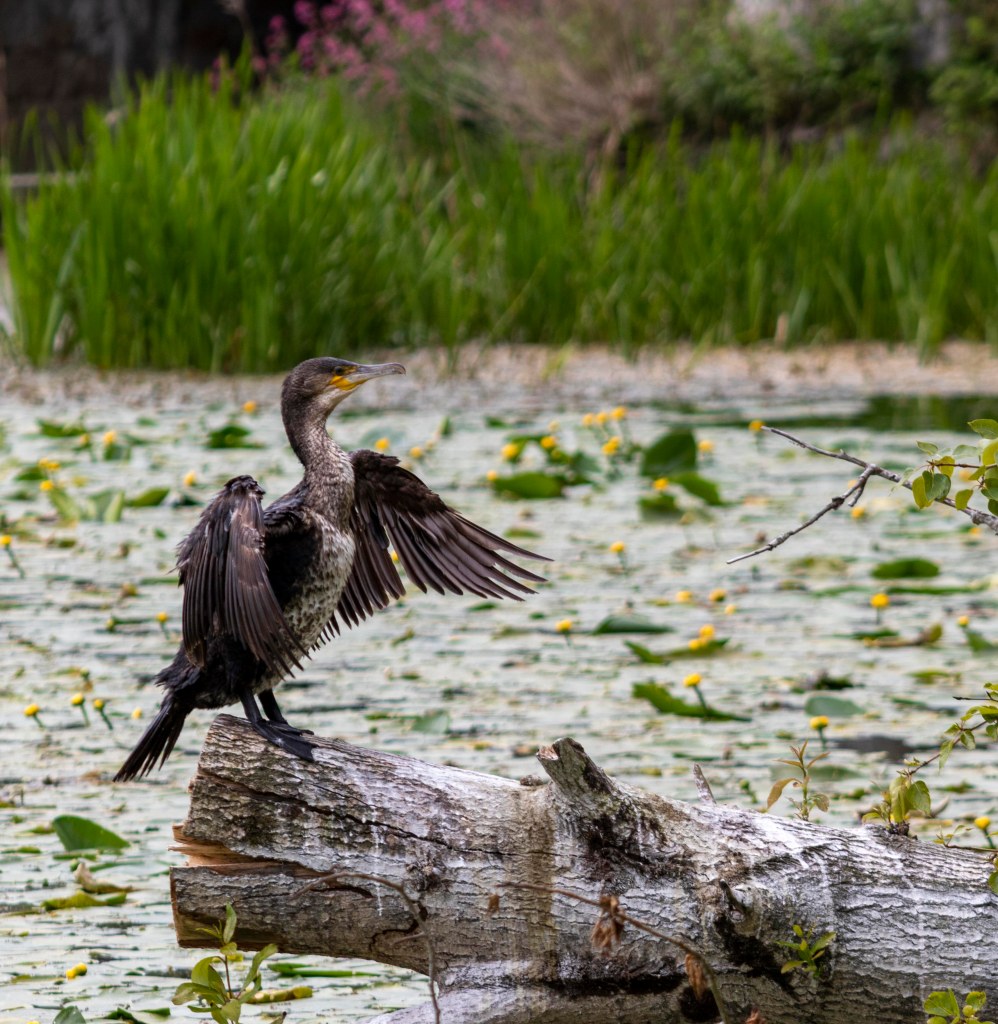
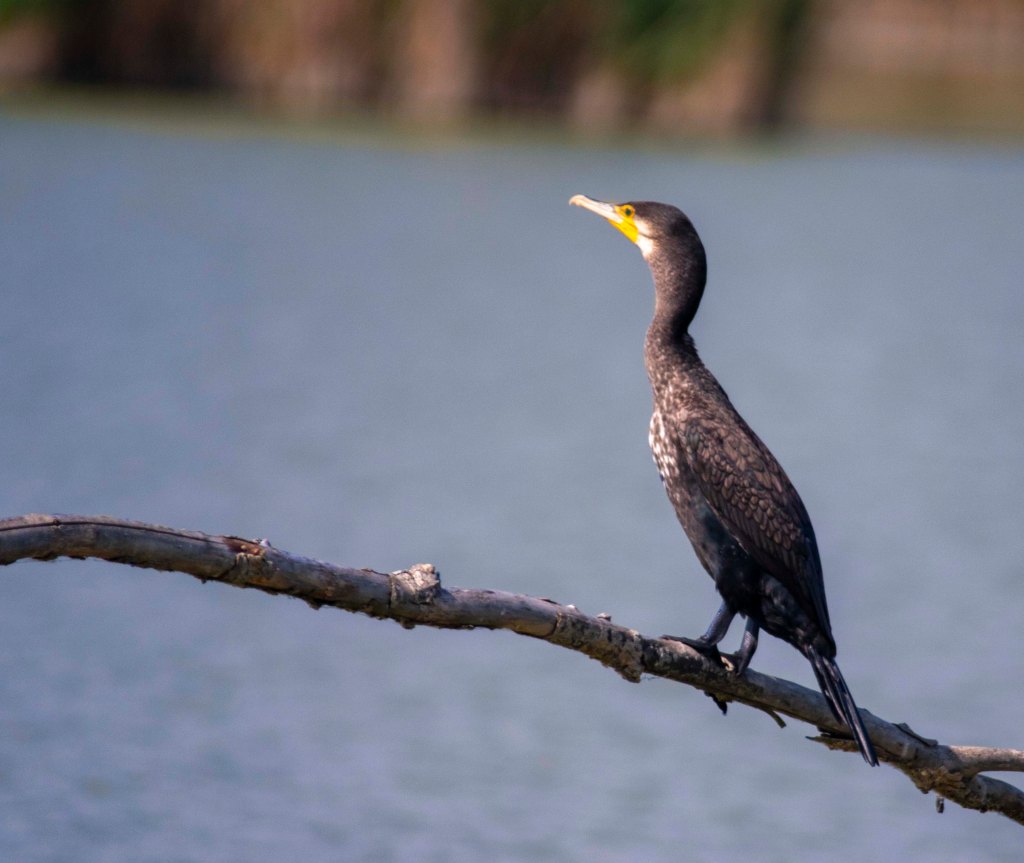
Great Cormorant: Similar to the Double-crested Cormorant in America. These are bigger and have a different color beak. 
Mistle Thrush: This is a pretty large bird that can be found scurrying along the ground. Love those markings! 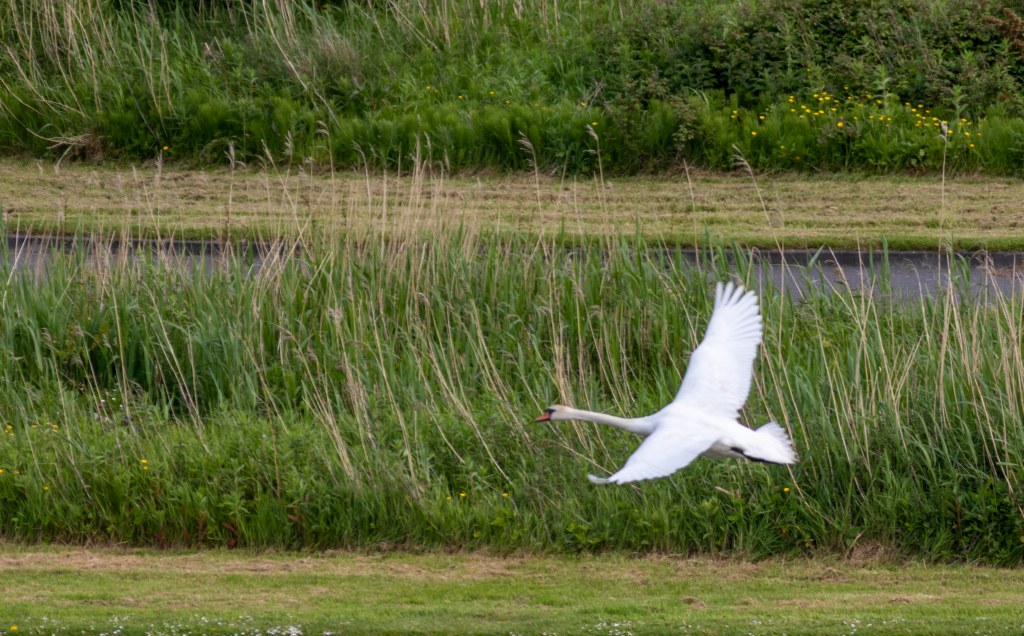
Mute Swan: Flying in a park. I seldom see them fly, they mostly seem to bob in the water! 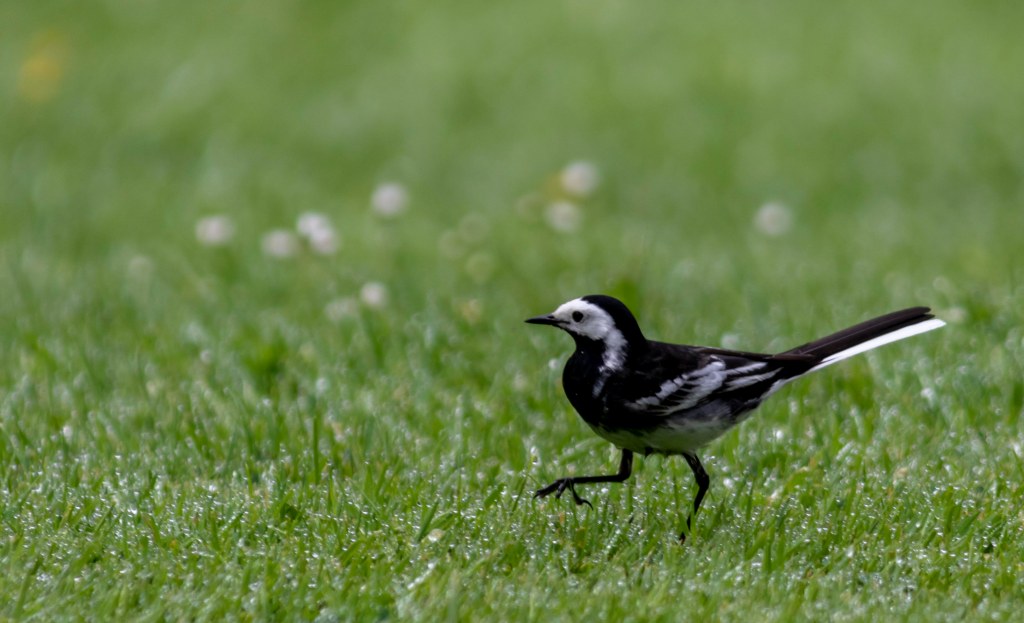
White Wagtail: Love this black and white birds that can be seen in the grasses! 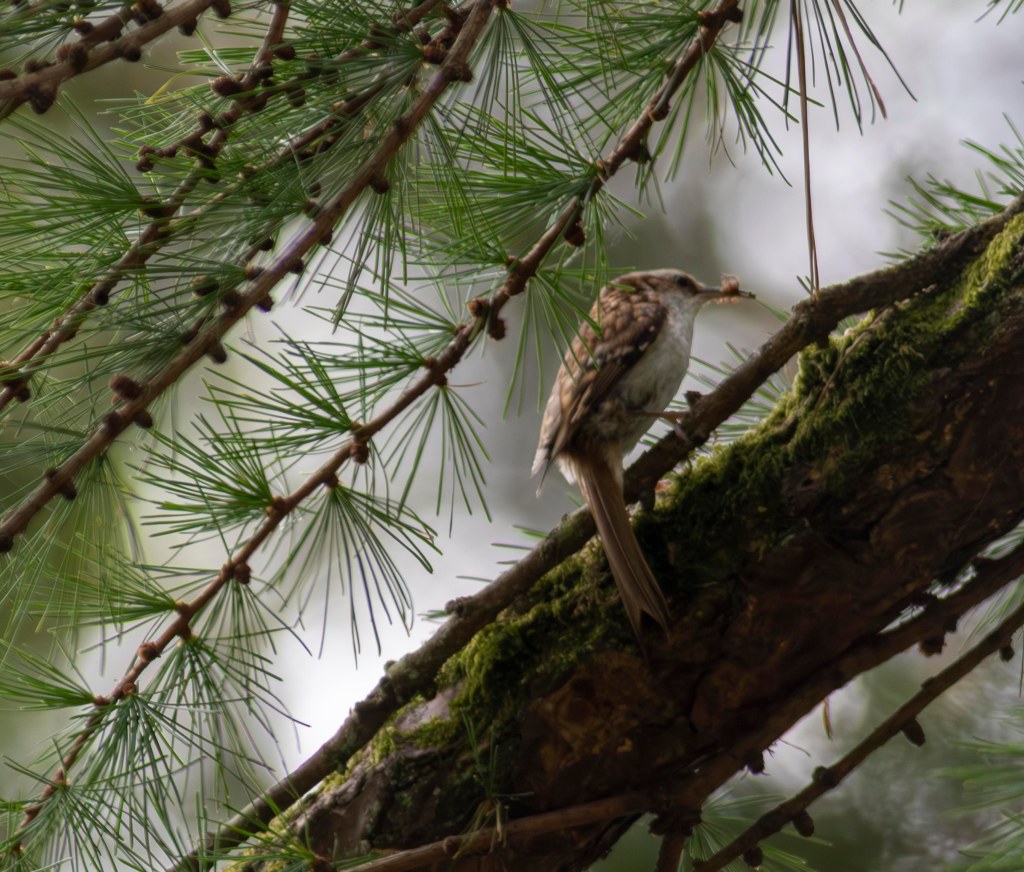
Eurasian Treecreeper: There are similar treecreepers in America. So much fun to watch… they creep up a tree then fly down and start over again.
Random Observation: Very few crosswalks in larger city, smaller towns, and the countryside! So, people crossed wherever they wanted to, whenever they wanted to. In Italy, the crosswalks are frequent and well-marked; people can cross at anytime and drivers are required to always stop.
We saved Dublin for last. Dublin is the capital of the Republic of Ireland and is well known for pubs, the Temple Bar area, breweries, and whiskey distilleries. We did all of that, but also learned more about Ireland’s difficult history during walking tours and museum visits.
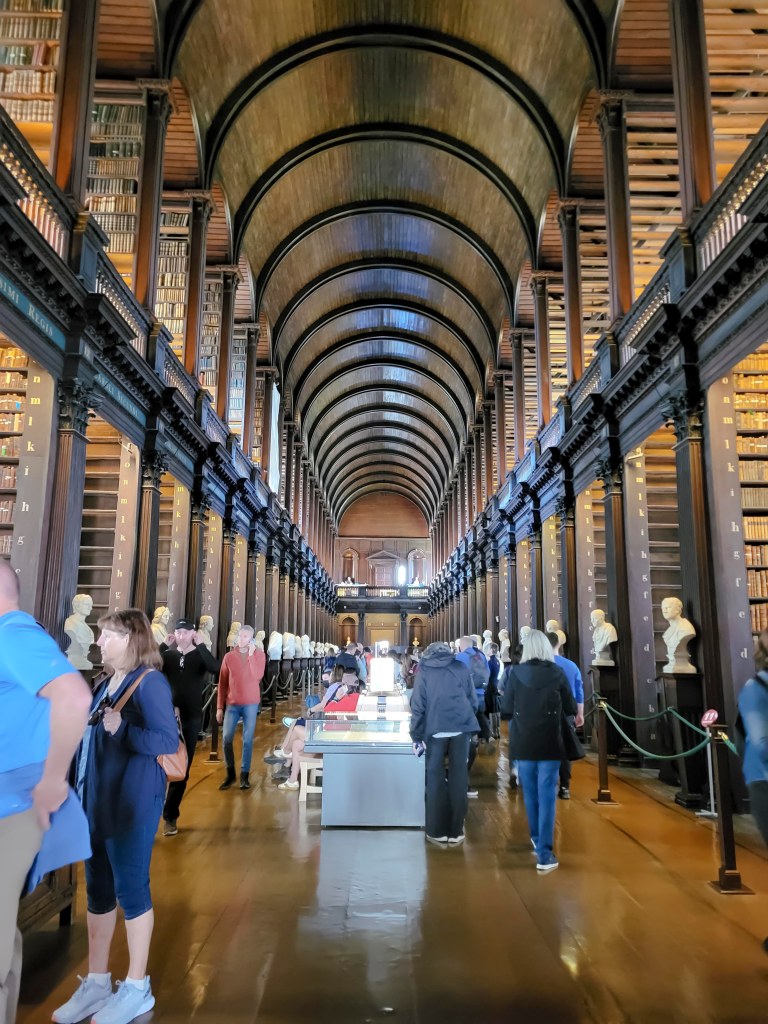
Trinity College’s Old Library was filled with precious and old books. They are currently undergoing a restoration project that includes removing all of the books – you can see some empty stacks in this photo. 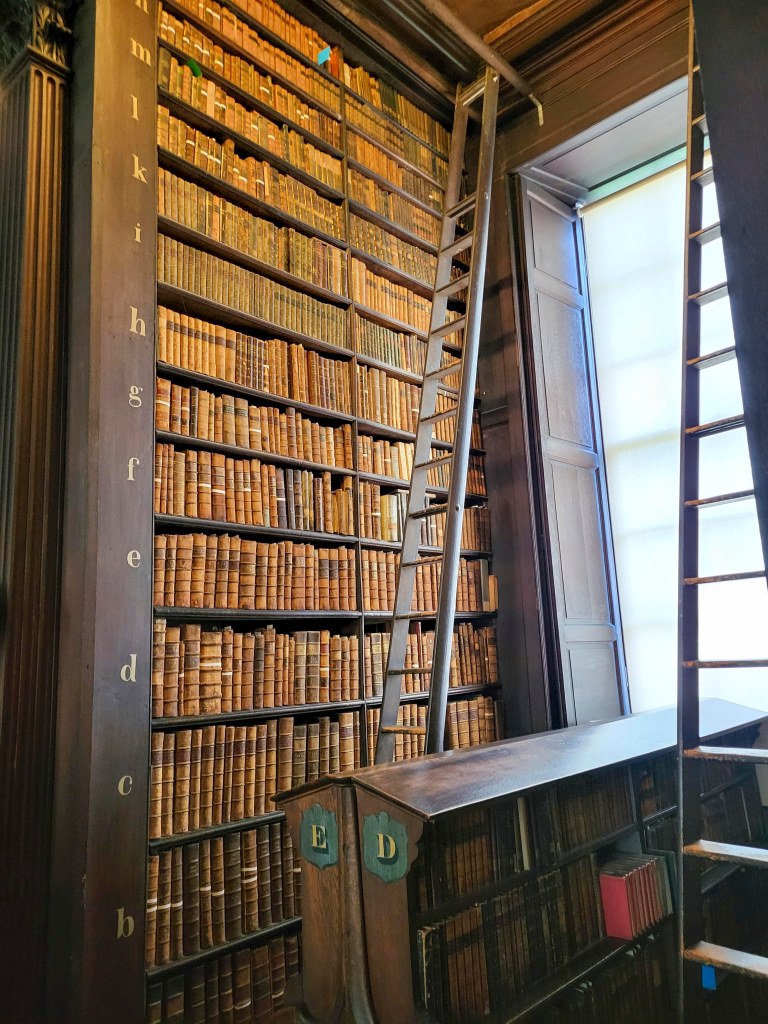
Oh, the smell and sight of old leather-bound books! 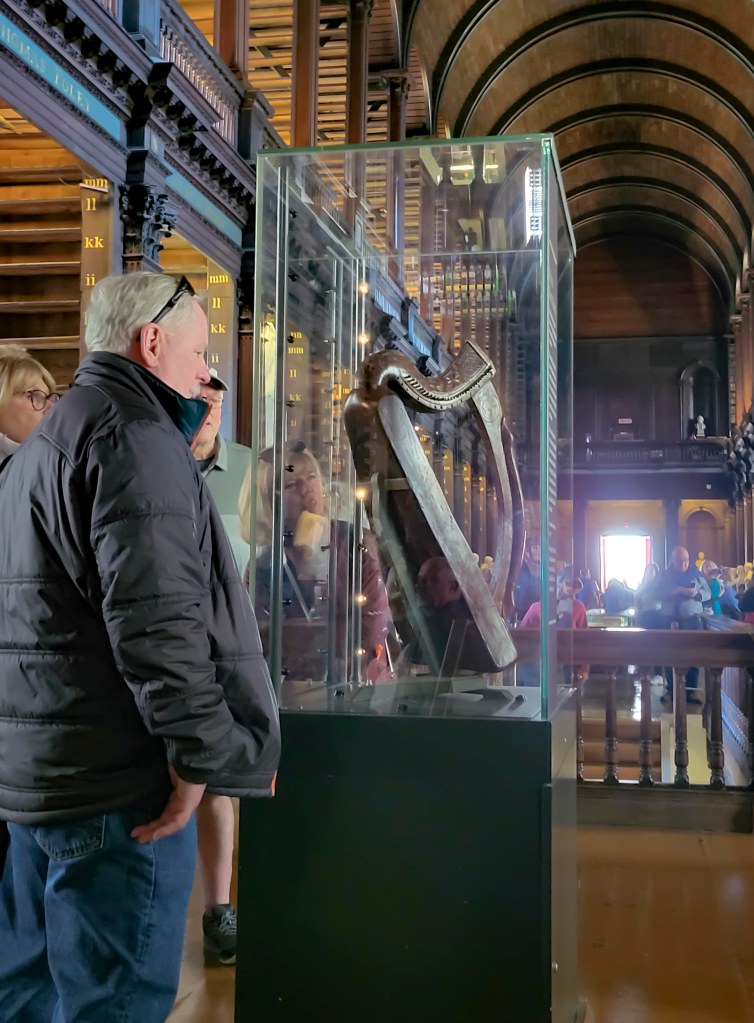
The Republic of Ireland uses a harp as a symbol for the country; this is the original! BTW, Guinness Brewery uses a different harp and even faces the opposite direction to prevent copyright issues. 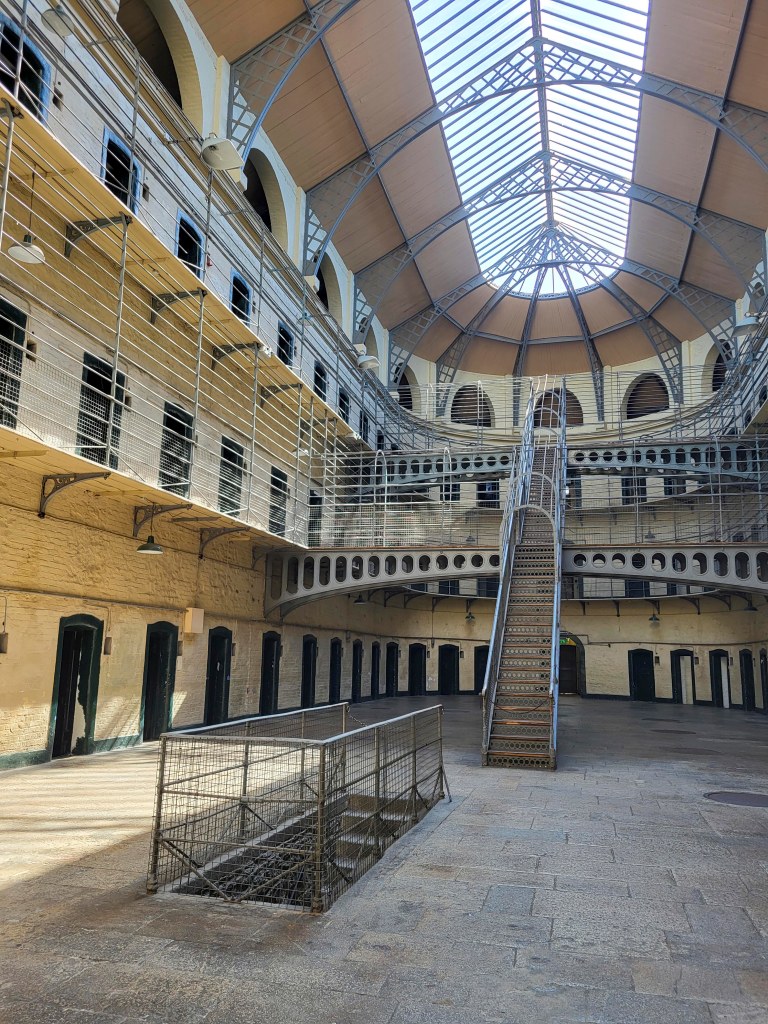
Interior of Kilmainham Gaol where many Irish revolutionaries, including the leaders of the 1916 Easter Rising, were imprisoned and executed in the prison. 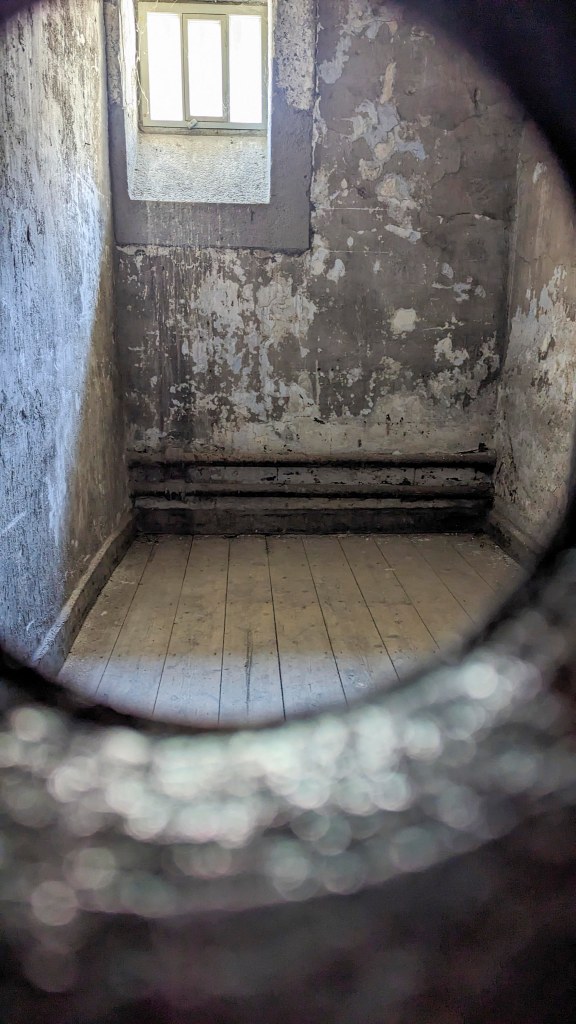
One of the many cells in the Kilmainham Gaol. 
Jim enjoying the beautiful weather we had in Dublin – the locals were all surprised to have several consecutive blue sky days! 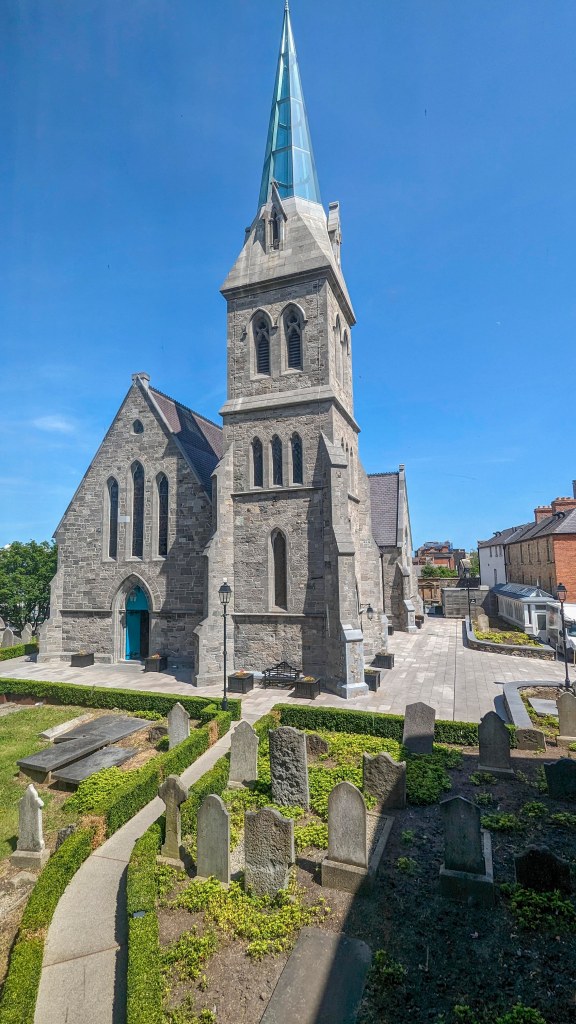
No longer an active church, the Pearse Lyons Whiskey company restored and renovated this beautiful local church and its cemetery. Check out the crystal spire – the original could not be restored. Now used as a distillery! 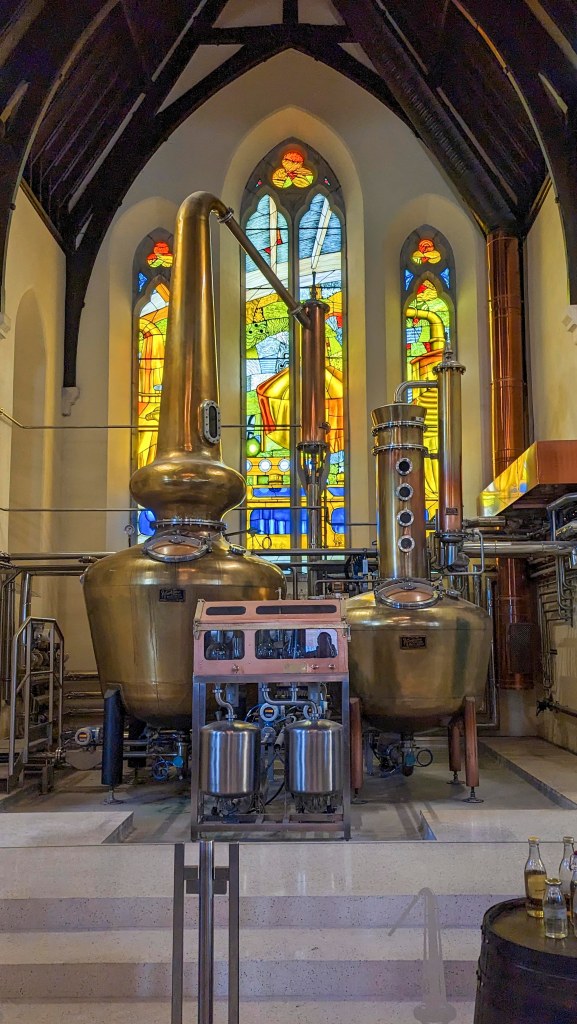
Pearse Lyons Whiskey Distillery interior. The copper stills were imported from Kentucky! 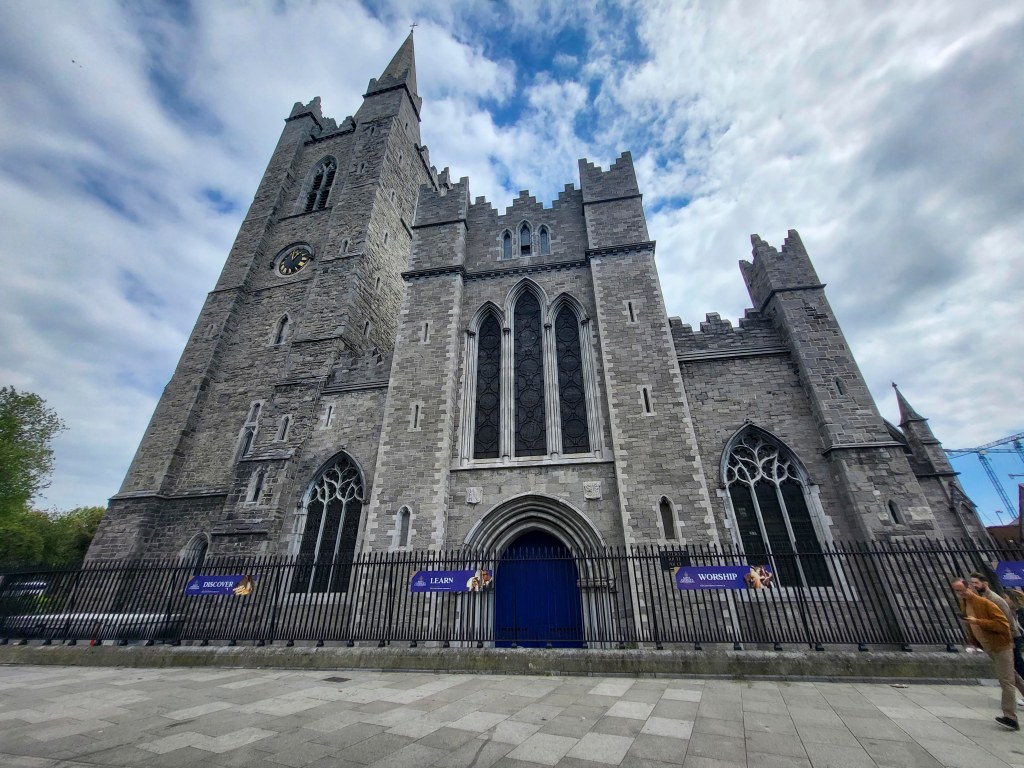
St Patrick’s Cathedral exterior (taken with an ultra wide lens that makes you feel like you are falling backwards!) 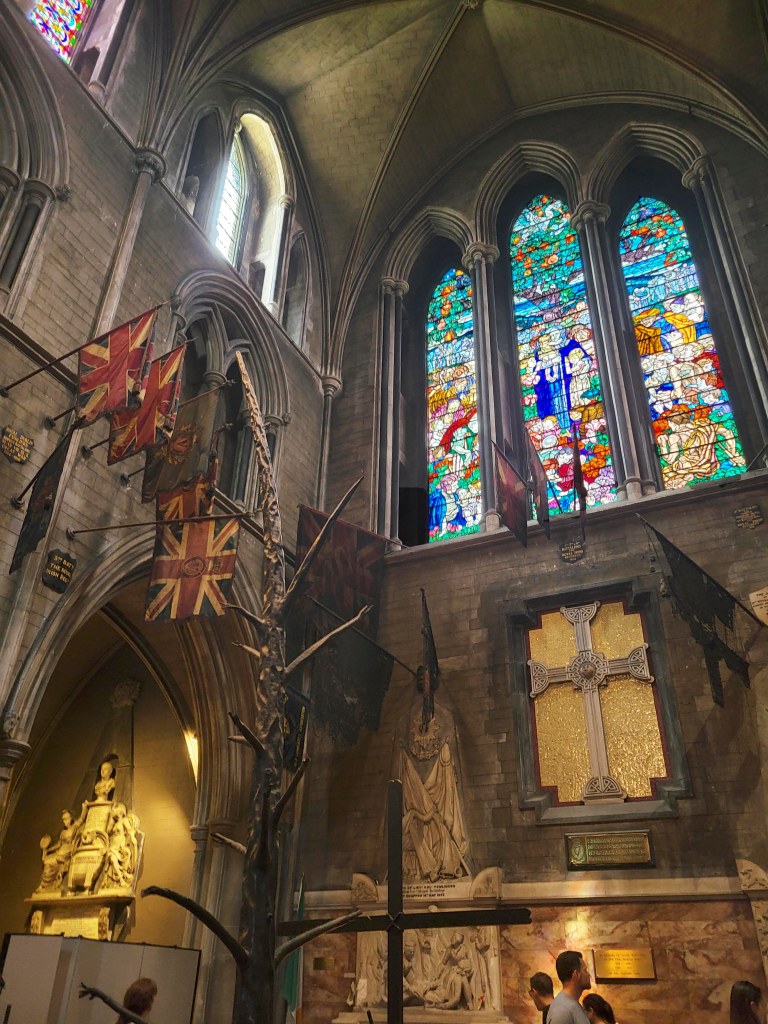
St Patrick’s Cathedral interior. This is the National Cathedral so it has items such as flags to remember past battles and losses. 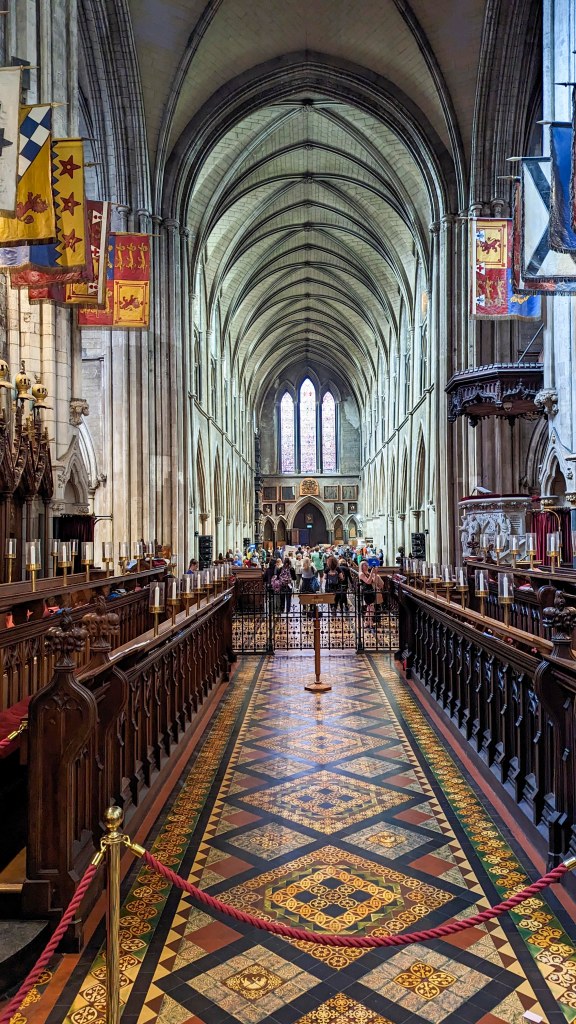
St Patrick’s Cathedral interior.
Random observation: Water pressure in the showers was great! The owner of one of the B&Bs we stayed at had the perfect explanation: “We have lots of water.” With all that rain, they don’t feel the need to limit it for showers and other usages. In fact, they have pumps in their plumbing system to increase the water pressure. I’m going to miss this!
Trip Itinerary and more
Here’s the day-by-day high-level plan:
| Date | Focus of the Day | Activities |
| Tuesday, 16 May 2023 | Welcome to Ireland | Fly from Pisa to Dublin (17:30 to 19:20). Rent car at Dublin airport and head to Slane, close to Bru na Boinne for our first night. |
| Wednesday, 17 May 2023 | Prehistory and first castle | Visit Bru na Boinne, one of the world’s most important prehistoric landscapes. Visit Trim Castle, the largest, best-preserved & most impressive Anglo-Norman castle in Ireland. Drive to Doolin, close to the Cliffs of Moher. |
| Thursday, 18 May 2023 | Cliffs of Moher and Burren | Drive to the dramatic Cliffs of Moher. Then explore the rocky moonscape of the Burren to learn about its unique ecosystem and hardy prehistoric residents. |
| Friday, 19 May 2023 | Heading to the Dingle Peninsula | Drive towards Dingle Peninsula. Along the way, stop to visit County Limerick’s lovely village of Adare, brimming with thatched cottages and flower gardens. Stay in Tralee, central to all of the nearby attractions. |
| Saturday, 20 May 2023 | The Dingle Peninsula | Experience some of Europe’s wildest natural beauty and most ancient Christian sites. Start the day in Dingle, the pastel-painted, quintessentially Irish harbor town. In Dingle, visit Kingdom Falconry for their private bird of prey activity. Then take the driving tour of the famous Slea Head Drive, one the most beautiful road in Ireland. Stop to tour the strikingly situated Great Blasket Centre, to get a close-up look at the language, literature, and daily life of a traditional Gaelic Blasket community. |
| Sunday, 21 May 2023 | Killarney National Park | Visit Killarney National Park to see forests (Ireland’s largest), mountains, and lakes. |
| Monday, 22 May 2023 | The Rock of Cashel | Drive from Tralee to Kilkenny. Stop to tour one of Ireland’s most historic and evocative sights: the Rock of Cashel. St. Patrick himself was here more than 1,500 years ago, and ever since, the Rock has been the spiritual heart of Ireland. Arrive at our beautiful country estate for two relaxing nights. |
| Tuesday, 23 May 2023 | Kilkenny | |
| Wednesday, 24 May 2023 | Glendalough and Powerscourt gardens | |
| Thursday, 25 May 2023 | Dublin Day 1 – History and Culture | Start our Dublin visit at Trinity College for an illuminating look at the remarkable Book of Kells, a beautiful illustrated copy of the Bible’s Gospel books and see the college’s Old Library. Take a historical walking tour through Dublin learning about the city’s often-calamitous history, from the days of Viking raids to the hard centuries of British occupation to its remarkable literary legacy to the modern city of today. |
| Friday, 26 May 2023 | Dublin Day 2 – The Gaol and Drinks | Start the day at Killmainham Gaol, where many of the leaders of independence rebellions were detained and executed in the jail, but many ordinary citizens, including children, were incarcerated here, too. Then shift our focus for a visit to the Guinness Storehouse then the Pearse Lyons distillery. In the evening we visit the famous Temple Bar area. |
| Saturday, 27 May 2023 | Dublin Day 3 – Museums | |
| Sunday, 28 May 2023 | Return to beautiful Lucca | We have time in Dublin in the morning to squeeze in any other activities, then start our journey home to Lucca. Fly from Dublin to Pisa. We arrive late in the evening so a driver picks us up and bring us to Lucca. |
My goal was to not be rushed… I generally planned two or three activities for each day. And then we cut out some activities (indicated with strikethrough above). It was nice to have activities that we could easily drop out of the plan; I wished that we didn’t have to pre-book so many reservations because this decreased our flexibility. And we moved around some of the activities in Dublin so that we could visit a second whiskey distillery.
We want to return to see the northern parts of the island and will likely visit Scotland on that trip as well.
Overall, we had a fabulous time – spending time in nature, learning so much history, being surrounded by people speaking English, and just enjoying the differences between Ireland and Italy. Before our trip I dug into my genealogy and learned about my Irish ancestors, including their names, when they traveled to America and some other tidbits. This added another dimension to the history – my ancestors emigrated to America due to the potato famine, along with millions of others.
Then we traveled home to Lucca and have re-started our day-to-day life here. A great trip, but this is “Home, Sweet Home”!




 My Next Adventure